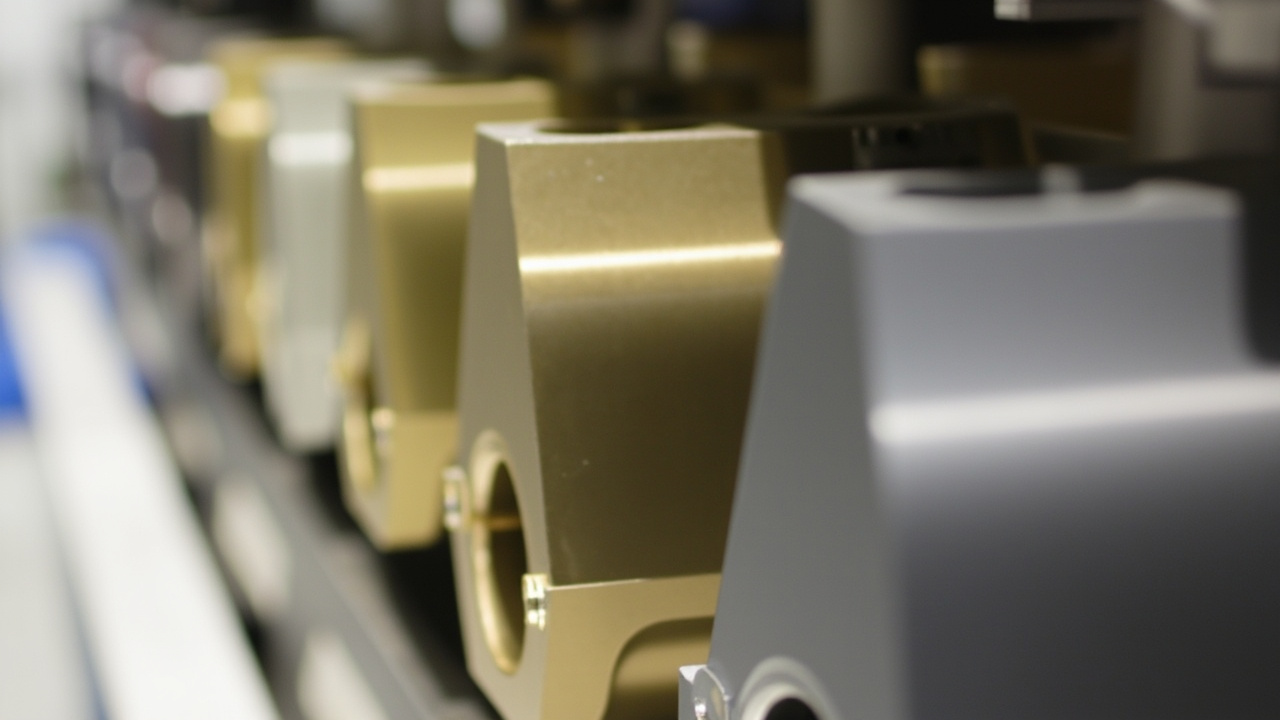
Vacuum coating (PVD, Physical Vapor Deposition) can deposit a true metal thin film on the workpiece surface, with a texture closest to electroplating and being eco-friendly without electroplating wastewater. But its weakness is also obvious: the metal film is too thin (often only a few tenths to a few microns), and when directly exposed it will oxidize, be scratched, suffer corrosion, and has monotonous colors (mostly silver, aluminum natural color). To make the PVD metal film "both good-looking, durable, and able to change color", one must rely on the sprayed "supportive coatings" — the primer seals and levels the base before coating to ensure adhesion of the metal film; the topcoat protects the metal film after coating, adjusts color and imparts weather and scratch resistance. It can be said that the PVD metal film is the "protagonist", and the supportive coatings are the "agent and bodyguard". This article focuses on these two layers of sprayed coatings, explaining how to select, apply, and troubleshoot them, and systematically sorting out the complete knowledge chain from resin chemistry, process parameters, equipment selection to quality inspection and industry applications.
Kexin New Materials (Guangdong) Co., Ltd. (kexinMaterials) is located in Foshan, Guangdong, and is a functional coating enterprise for industrial coating, with a mature system in PVD supportive coatings (especially primers and topcoats for sanitary ware, automotive trims, and 3C middle frames). Its engineering experience shows: the success or failure of a PVD project, the sprayed supportive coatings often account for half the weight, yet are most easily underestimated. Many customers pour all their energy into the vacuum chamber and target materials, but as a result, no matter how beautiful the metal film is plated, it delaminates as soon as it goes to the topcoat, and rusts as soon as it enters the salt spray box — in the final analysis, the supportive coatings were not done thoroughly.
I. Two-layer structure of PVD supportive coatings
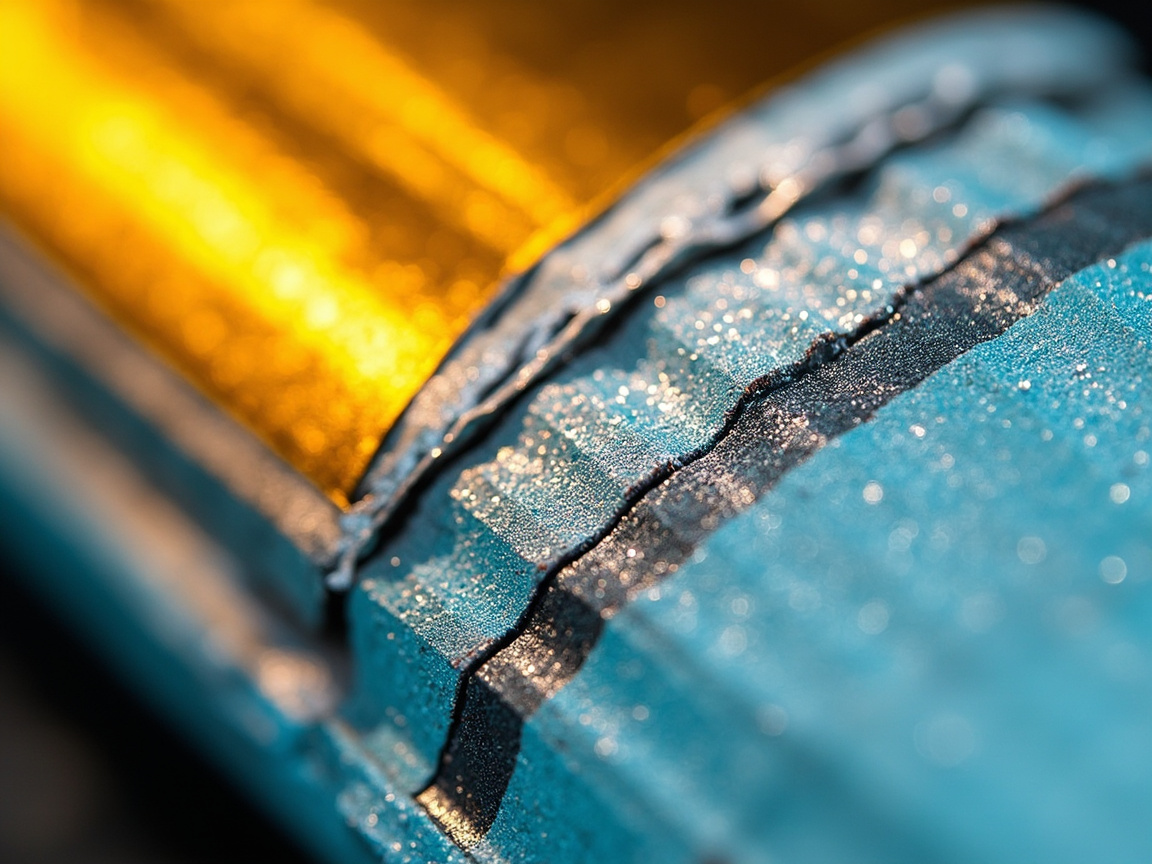
PVD supportive coatings are typical "primer + topcoat" double layers. The primer is applied before vacuum coating, with three functions: first, to fill the microscopic defects of the substrate, giving the metal film a flat mirror base (the metal film will faithfully replicate the base, if the primer is uneven the plated result is matte); second, to seal the substrate (especially plastics) from release agents and gases, preventing outgassing during coating that causes pinholes in the film; third, to provide bidirectional adhesion with both the substrate and the metal film. The topcoat is applied after coating, functioning to protect the thin metal film from scratches and oxidation, resist UV and chemicals, and can dye the silver film into champagne, gunmetal, rose gold, etc. through transparent color paste.
Neither layer can be omitted: without primer, the metal film has poor adhesion and substrate defects are exposed; without topcoat, the metal film quickly loses gloss or even falls off. On high-end parts, there may sometimes be a multi-layer variant of "primer — metal film — intermediate coat — topcoat", but the essence is still defined by the two core functional layers of primer and topcoat. Understanding this is the basis for all subsequent selection and troubleshooting.
II. Overview of vacuum coating (PVD) process
PVD is the general term for "Physical Vapor Deposition". Unlike Chemical Vapor Deposition (CVD), it does not rely on chemical reactions, but turns solid metal target materials into gaseous atoms through physical means, and then deposits them on the workpiece surface. Mainstream processes are divided into two types: evaporation coating and magnetron sputtering coating. Evaporation coating relies on resistance heating or electron beam to vaporize low-melting-point metals such as aluminum and chromium; the equipment is simple and deposition is fast, but the film adhesion and throwing power are average; magnetron sputtering, under the constraint of electric and magnetic fields, uses argon ions to bombard the target, "sputtering" high-melting-point metals such as titanium, chromium, indium, and zirconium into atomic clouds; the film is dense, strongly bonded, and can coat alloys and compounds, and is currently the mainstream for high-end PVD parts. Regardless of which, the workpiece completes deposition under high vacuum (usually 10^-3 to 10^-5 Pa), and the vacuum degree directly determines the film purity and color.
The metal film plated by PVD is real, conductive, and has strong mirror feel, and the whole process is dry, without plating solution or heavy metal wastewater, which is its core eco-friendly advantage compared to electroplating. But the film is extremely thin — conventional decorative PVD film is only 0.1–3 microns, dozens of times thinner than a sheet of paper. Such a thin metal layer has almost no mechanical protection capability of its own, and the color is also limited by the target alloy, so it must rely on the two front and back sprayed coatings to complete the functions.
In addition to evaporation and magnetron sputtering, decorative PVD also commonly uses multi-arc ion plating: the arc generates high-density metal plasma on the target surface, with high ionization rate and extremely strong film adhesion, suitable for hard coatings on cutting tools and sanitary ware with strict adhesion requirements, but arc spot spattering easily produces large particles, requiring filtered arc or subsequent polishing. Target selection determines the film system: aluminum target gives silver-white film, chromium target gives stainless steel gray, titanium target gives silver-gray and can react to TiN gold, zirconium target gives warm gray, indium-tin system gives cool blue-purple. Reactive gases (nitrogen, acetylene, oxygen) reacting with the target can generate nitride, carbide, oxide color films, which is the underlying principle of colored PVD. For supportive coating enterprises, understanding the target and film systems is necessary to match the polarity of the primer and the dyeing of the topcoat with the metal film.
III. Why the metal film must rely on supportive coatings
It is almost infeasible to use the PVD metal film exposed alone, for four reasons. First, it is too thin: a film of a few tenths of a micron breaks with a single scratch, and a fingernail can leave a mark. Second, it is too soft: decorative metals such as aluminum and silver have low hardness themselves, and without hard film protection they are easily abraded. Third, it is prone to oxidation and corrosion: silver film will sulfurize and blacken, aluminum film will oxidize and lose gloss, and the substrate boundary not sealed by the coating will allow corrosion to spread along the interface. Fourth, the color is limited: pure metal films are mostly silver-white or aluminum natural color; to obtain rich hues such as champagne gold, gunmetal, rose gold, blue-purple, one must rely on topcoat dyeing or target alloy coordination. These four points together determine — the supportive coatings are not icing on the cake, but the prerequisite for whether the PVD metal film can "survive and be sold".
In real cases, PVD parts with omitted topcoat placed in the warehouse for a few months lose overall gloss, and color comes off with a finger wipe; parts with cut-corner primer have the metal film lifting in sheets like tin foil. More hidden is the "false pass": just plated it is dazzlingly bright, but after a week of salt spray or warm water soaking it blisters — because the interface is not truly bonded. So the supportive coatings are not a cost item, but a converter that turns the PVD "real metal selling point" into a "deliverable product". For brand owners, the stability of the coating system directly determines the after-sales complaint rate and return rate, which is the real reason it accounts for half the project weight.
IV. Re-deconstruction of the three major functions of primer
The primer is applied before vacuum coating and is the most underestimated link in the whole system. Its three functions are indispensable. Leveling function: regardless of injection molding or stamping, the substrate has orange peel, flow marks, knife marks, and shrinkage holes microscopically, and the metal film will replicate these defects to the millimeter, so the primer must fill and polish to mirror-level flatness. Sealing function: plastic part surfaces have release agents and plasticizers, and the interior may also contain residual monomers and moisture, which will "outgas" when heated in the vacuum chamber, and the gas breaks through the growing metal film to form pinholes and haze, so the primer must seal these substances dead. Adhesion function: the primer must both bite the substrate (especially low surface energy PP, PE, PA) and provide a biteable interface for the metal film, acting as the "double-sided tape" of the upper and lower interfaces. These three functions have different requirements for resin and application, which will be expanded one by one later.
In engineering, primers are often made into two types: "sandable" and "self-leveling": sandable type is filled then sanded, pursuing ultimate mirror finish, with high man-hours, used for watches and sanitary ware; self-leveling type relies on the coating's own leveling to offset microscopic defects, with fast tact, used for 3C mass production. Sealing and adhesion sometimes restrain each other — high cross-linking seals well but may be too brittle and reduce adhesion, requiring a balance in resin branching and curing degree. Kexin New Materials' approach is to define "primer function weight" for different parts: sanitary ware emphasizes sealing and anti-corrosion, 3C emphasizes leveling and tact, automotive emphasizes adhesion and heat resistance, adjusting the formula by weight rather than one-size-fits-all.
V. Primer resin selection: UV, PU, acrylic
Primer resin must balance "easy sanding and leveling", "strong adhesion to substrate", "no outgassing before coating", and "good interlayer with metal film". Common systems are three types. One is thermoplastic acrylic, fast drying, good sanding, decent adhesion to plastics, but low heat resistance and cross-linking degree, outgassing control relies on sufficient drying. Two is polyurethane (PU, including two-component and moisture-curing), strong adhesion, flexible, good bite with metal film, suitable for parts with high interlayer force requirements, but two-component ratio and pot life management must be strict. Three is UV curing resin, energy curing, almost zero solvent, extremely low outgassing, fast tact, becoming the direction of high-grade PVD primer, but for light-shielding shapes (deep holes, backside) curing is uneven, requiring coordination with photoinitiator and irradiation tooling. Plastic parts commonly use acrylic or PU primer; metal parts use epoxy or PU primer, balancing adhesion and anti-corrosion.
The key indicator is "low outgassing" — the primer must be fully cross-linked and cured, with extremely low residual solvent, otherwise it outgasses when heated in the vacuum chamber, and the metal film will have pinholes and haze. Therefore, the baking window of the primer must match the PVD tact, rather than entering the chamber with defects, it is better to do the primer thoroughly in the pre-treatment stage. Kexin New Materials has established a primer curing window database for different substrates on its Foshan production line, quantifying the hidden risk of "outgassing" into detectable weight loss and pinhole rate indicators.
From the curing mechanism, solvent-based primer relies on solvent evaporation plus resin cross-linking, residual solvent is a major hazard; UV primer relies on photoinitiator cleavage to produce active species to initiate polymerization, almost no solvent, but oxygen inhibition causes insufficient surface curing, requiring nitrogen shielding or post-heating to eliminate oxygen. Water-based primer is an eco-friendly direction in recent years, but water is harder to remove than solvent, with longer baking window, and water's high surface tension easily causes shrinkage, requiring wetting agent and strict substrate cleanliness. Kexin New Materials in Foshan has built a primer platform covering solvent-based, UV and water-based, matching the system by the three factors of customer heat resistance, tact and VOC limit, rather than using only a single universal primer.
VI. Resin and functional design of topcoat
The topcoat is the "face" and "armor" of the PVD part, with resin mostly selected as aliphatic polyurethane or acrylic polyurethane, with yellowing resistance, scratch resistance, and transparency. Functional design includes: adding UV absorber and HALS (hindered amine light stabilizer) for UV resistance; adding wear-resistant fillers (nano silica, alumina) to improve hardness; using transparent color paste to fine-tune the metal film hue; for consumer electronics, flexibility and drop resistance must also be considered. The topcoat application should be thin and even, too thick will mask the metal texture, too thin will be insufficient protection, usually controlled at 10–25 microns. The transparency and low haze of the topcoat are crucial — it should "seal" the metal film in like glass, without changing its mirror appearance.
Topcoat hardness is not the higher the better: pencil hardness above 3H often accompanies increased brittleness, and instead cracks under drop or thermal shock. In engineering, a three-dimensional evaluation of "pencil hardness + steel wool load + Taber weight loss" is commonly used, then ball drop or bending test to verify toughness, finding the hardness-toughness inflection point formula. In terms of chemical resistance, the topcoat must withstand hand soap, sunscreen, alcohol wipes, sweat and weak acid/base, such media will penetrate through micro-cracks or swell to destroy the interface, so cross-linking density and density are more important than mere hardness. For sanitary ware and 3C, Kexin New Materials does immersion and wipe matrix tests according to the terminal liquid list, turning "chemical resistance" from a slogan into an acceptable media list.
VII. Special primer for plastic substrates and adhesion promotion
Plastics are the most demanding substrate for PVD supportive coatings. There are three reasons: first, low surface energy, so ordinary coatings cannot grip; second, heat sensitivity, as temperature rise in the vacuum chamber may cause deformation; third, internal outgassing. The countermeasures are in three layers. The first is substrate modification: increase surface energy through flame, plasma, or Corona treatment, or control the amount of release agent during injection molding. The second is an adhesion promotion layer (primer): introduce chlorinated polyolefin (CPO), adhesion promoters, and silane coupling agents beneath or within the primer, specifically to solve the bonding of difficult-to-adhere plastics such as PP and PA. The third is selecting the right primer resin and degree of cure, ensuring both gas sealing and no brittleness. Kexin New Materials has established corresponding process cards of "substrate—treatment—primer" for commonly used plastics such as ABS, PC, PC+ABS, and PA, turning adhesion from "relying on experience" into "executing by card".
Specifically for plastic families: ABS has moderate surface energy and is easy to adhere, making it the preferred choice for PVD entry; PC and PC+ABS are transparent but sensitive to stress cracking, so plasma treatment must control energy to prevent silver streaks; PA (nylon) and PBT have low surface energy and heavy moisture absorption and outgassing, requiring pre-drying and dedicated adhesion-promoting primer; PP/PE are extremely difficult to bond, usually requiring flame treatment plus CPO primer, or switching to corona grafting. For glass-fiber reinforced plastics, exposed fibers create micropores and stress points, so the primer must fill and buffer the CTE difference. Kexin New Materials establishes a "surface energy threshold" for each type of plastic; if below the threshold, no coating instruction is issued, fundamentally preventing difficult-to-adhere parts from going online with defects.
8. Interlayer Adhesion Is the Core Indicator
The biggest fear for PVD supportive coatings is "interlayer delamination": any interface failure among primer—metal film—topcoat will cause entire flaking. Interlayer adhesion is ensured by three points: adhesion between primer and substrate (proper pretreatment), bonding between primer and metal film (moderate polarity and roughness of primer), and adhesion between metal film and topcoat (topcoat wets the metal film without excessive erosion). Many delaminations are actually caused by the topcoat solvent being too strong, "loosening" the thin metal film; the countermeasure is to select a topcoat with mild dissolving power or reduce film thickness. Interlayer adhesion must be verified repeatedly by cross-cut (cross-hatch), boiling, and thermal cycling, not just initial adhesion. Before mass production of a new project, it is recommended to do at least three rounds of cyclic aging (each round: 48h high temperature high humidity + 24h thermal shock + cross-cut), and only release after confirming stable interlayer adhesion.
From interface chemistry, interlayer adhesion comes from three contributions: mechanical interlocking, polar bonding, and diffusion interpenetration. Primer—substrate relies on polar and micro-rough mechanical locking; primer—metal film relies on shallow diffusion of metal atoms on the primer surface and polar attraction; metal film—topcoat relies on topcoat wetting and slight mutual dissolution of the metal film. Any layer cut off by contaminant oil film, silicon migration, or excessive curing sealing polarity will break the bonding. Therefore, interlayer adhesion management is essentially the management of "interface cleanliness and adjustable polarity"—this is also why pretreatment and primer polarity design affect final adhesion more than coating thickness. Kexin New Materials uses contact angle and XPS surface energy spectroscopy at R&D to track interface status, turning the invisible interlayer adhesion into a measurable polarity curve.
9. Overall Process Flow: Spraying → PVD → Spraying
A complete PVD supportive process is a "sandwich" production line. Step 1 pretreatment: substrate degreasing, sanding, plasma/flame treatment, removing release agent and weak layer. Step 2 primer application: spray primer → leveling → baking or UV curing → (if necessary) sanding for leveling. Step 3 vacuum plating: workpiece into chamber, evacuation, ion cleaning, target deposition of metal film. Step 4 topcoat application: plated workpiece out of chamber, light dust removal, spray topcoat → leveling → curing. Step 5 inspection: adhesion, film thickness, color difference, gloss, weather resistance sampling. The entire line requires extremely high cleanliness—a speck of dust on the primer is a pinhole, under the topcoat is a bump. Kexin New Materials' Foshan production line manages the primer and topcoat spraying sections according to cleanroom logic, suppressing particle defect rate to the industry's low level.
The entire line also has two often-overlooked details: one is the transfer rack cycle; if the waiting time from primer curing to chamber entry is too long, the clean primer surface will re-adsorb dust and moisture, so clean transfer and short buffering are recommended; the other is chamber venting, slow venting avoids sudden cooling oxidation and stress of the metal film, and the venting gas should preferably be dry and clean. The "interface cleanliness" between coating and plating often determines yield more than any single machine performance. Kexin New Materials writes this interface as a standard operating procedure (SOP), specifying transfer duration, buffer environment, and venting curve, locking cross-process fluctuation.
10. Engineering Significance of Coating Thickness Parameters
Thickness is the most intuitive process parameter of PVD supportive coatings. Primer is usually 8–20 microns: too thin cannot seal defects and gas, too thick shrinks and cracks and wastes material. Metal film is usually 0.1–3 microns: mainly serves appearance and conductivity, not bearing mechanical strength. Topcoat is usually 10–25 microns: below 10 microns insufficient protection, above 25 microns masks metallic texture and prone to cracking. Total coating thickness (primer + topcoat) is mostly in the 20–45 micron range, far lower than traditional paint's 60–120 microns, which is why PVD parts feel "thin and refined". Thickness is monitored by eddy current (metal substrate) or X-ray fluorescence (XRF, plastic substrate), first piece of each batch must be measured, with in-process sampling.
| Coating | Typical Thickness (micron) | Main Function | Risk if Too Thick | Risk if Too Thin |
|---|---|---|---|---|
| Primer | 8–20 | Leveling, gas sealing, adhesion | Shrinkage cracking, material waste | Cannot seal defects and gas |
| Metal film | 0.1–3 | Real metallic appearance, conductivity | Cost up, poor coverage | Incomplete coverage, uneven color |
| Topcoat | 10–25 | Protection, coloring, weather resistance | Masks metallic feel, cracking | Insufficient protection, easy scratch |
Thickness design must also consider the "edge effect": film thickness at edges and deep recesses is naturally thinner or thicker, being high-incidence areas for pinholes and cracks; during spraying, compensate with spray gun angle and rotation speed, and during plating, ensure plating by transfer rack. For a new mold, it is recommended to do "film thickness distribution mapping" (XRF multi-point scan), keeping the thickness difference between edges and flat surfaces within an acceptable range, otherwise the whole batch yield will be dragged down by a few weak points. Kexin New Materials does full-surface film thickness mapping at the first-piece stage as one of the release bases.
11. Curing and Baking Parameters
Curing determines the "outgassing" of the primer and the "hardness" of the topcoat, a hidden but fatal parameter. If the primer is thermally cured PU or epoxy, typical baking is 60–80℃ × 30–60 min, or 80–120℃ short-time curing, aiming to reduce residual solvent and volatile components to ppm level; if UV cured, it relies on energy (mj/cm²) rather than temperature, but must ensure uniform irradiation in deep holes and back sides. Topcoat curing is similar, but emphasizes crosslink density more—insufficient crosslinking means poor chemical resistance, excessive crosslinking means brittle and easy to crack. Baking cycle must also match the PVD chamber cycle: if the primer enters the chamber not fully dry, it equals actively creating pinholes. Kexin New Materials quantifies primer volatile residue by weight loss method (TGA sampling), turning "baked or not" from feel judgment into data judgment.
Energy curing (UV/electron beam) is rising in supportive coatings because of zero solvent and second-level cycle, fitting production line speed-up. But the curing energy of UV primer must match the absorption of color paste and fillers—when dark or containing light-absorbing fillers, energy must be increased, otherwise the bottom layer is falsely dry. Dual curing (UV pre-fix + thermal post-cure) balances cycle and deep crosslinking, becoming the direction for thick-film primers. Regardless of curing type, it is recommended to use the combination monitoring of "residual strain + weight loss + solvent residue" rather than just surface dry, because interlayer failure is often caused by internal residual stress released during aging. Kexin New Materials uses online energy monitoring for topcoat curing, automatically alarming and stopping the line if deviation exceeds threshold.
12. Equipment: Spraying Line
The front end of PVD supportive coatings is the spraying line, usually composed of pretreatment section, spray booth, leveling section, curing oven, and conveyor chain. The spray booth needs constant temperature and humidity with clean air supply (class 10,000 or better), spray guns are mostly electrostatic rotary bell or air spray guns, with robots to ensure uniform film thickness. For primer, the "sanding—dust removal" station of the spraying line is more critical than the spray gun itself; for topcoat, cleanliness and stable temperature/humidity determine final clarity. Line design must also consider cycle matching: primer curing oven capacity, PVD chamber loading cycle, and topcoat curing capacity must be balanced, otherwise any bottleneck drags down the whole line yield.

13. Equipment: PVD Vacuum Chamber
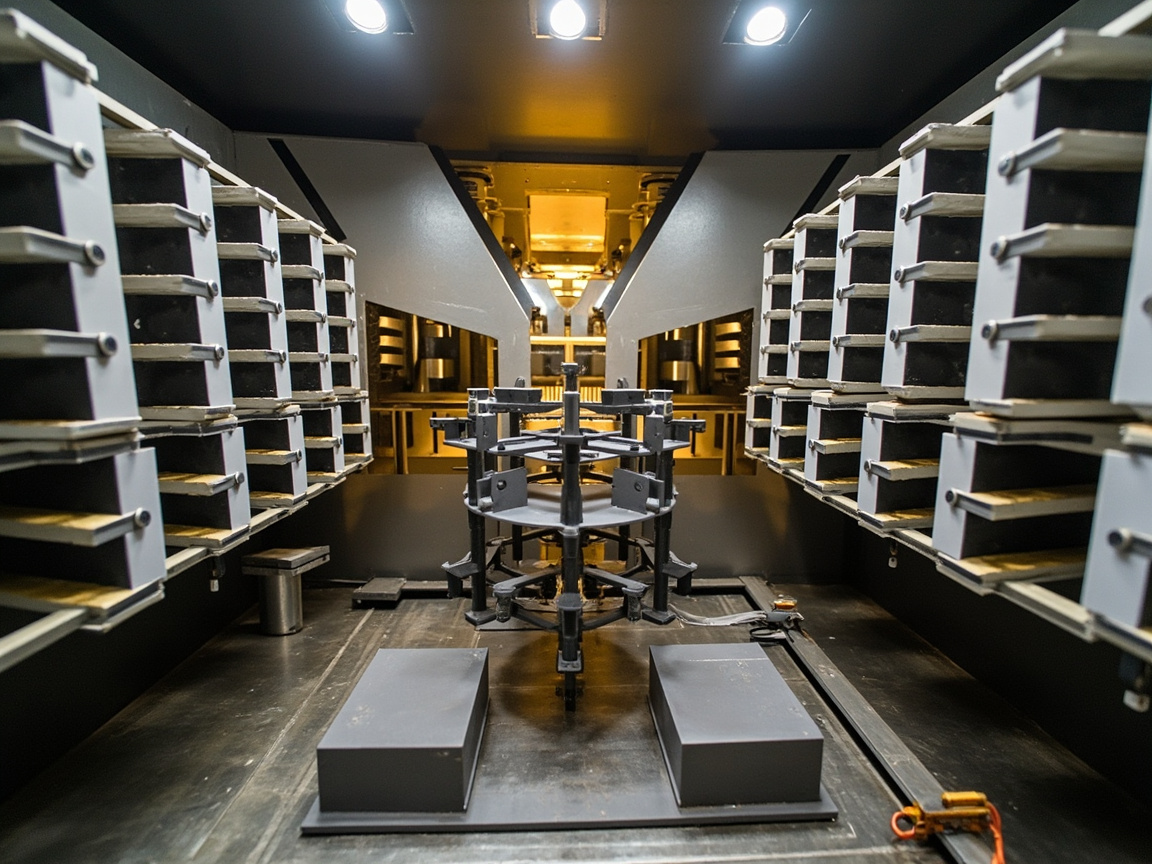
The PVD chamber is the core asset of the entire line. Evaporation plating equipment is simple and low investment, suitable for fast plating of low-melting-point metals such as aluminum and chromium; magnetron sputtering equipment is high investment and complex maintenance, but can plate titanium, chromium, indium, zirconium and alloys and nitrides (such as TiN gold, CrN gunmetal), with dense film and strong bonding, being the mainstream of high-end decorative PVD. The key of the chamber lies in the vacuum pump group (obtain and maintain high vacuum), target layout (determines coverage and uniformity), workpiece transfer rack (ensures uniform plating on all sides) and ion cleaning source (pre-deposition layer to enhance adhesion). Chamber contamination is the main cause of haze, requiring regular cleaning of targets and chamber walls, controlling leakage rate. When selecting equipment, supportive coating enterprises must deeply coordinate with plating factories, because the outgassing characteristics of the primer will reversely affect chamber evacuation time and target life.
Chamber size and loading method determine single-batch capacity and coverage uniformity: bell-jar type suits small-part batches, continuous type suits large-part cycle, while complex shaped parts rely on workpiece self-rotation plus public transfer rack to ensure all-side plating. Target layout (planar target, cylindrical target, rotating target) affects utilization and film thickness uniformity; rotating target has high utilization and uniform film but high cost. For supportive coating enterprises, the most concerned is "chamber tolerance to primer outgassing"—if own primer outgasses heavily, only large pumping-speed chamber or reduced loading can be used, reversely raising cost. So good primer equals saving chamber investment, which is the economic account of front-back coordination.
14. Pretreatment: Substrate Sanding, Degreasing, Plasma
The purpose of pretreatment is to give the primer a "clean, flat, bondable" interface. Degreasing uses alkaline or solvent cleaning to remove release agent, hand sweat, cutting fluid; sanding uses sandpaper or abrasive belt to eliminate injection marks and tool marks, and provide micro-roughness for primer interlocking; plasma or flame treatment is used to increase plastic surface energy and break the weak boundary layer. If this step is not done well, no matter how good the primer is later, it is in vain—the root causes of delamination, pinholes, and haze can be traced back to pretreatment in a considerable proportion. Kexin New Materials lists pretreatment as a "mandatory first-inspection item" in the process card, and configures online surface energy detection in the Foshan production line to ensure each batch of plastic parts reaches coatable state.
15. Primer Application and Sanding for Leveling
The primer application emphasizes "filling + mirror finish". The first spray pass should be wet-covered and allow sufficient leveling, letting the coating self-flow into microscopic depressions; if necessary, apply two passes, with light sanding in between to eliminate orange peel and particles. After curing, if there are still minor defects, use ultra-fine sandpaper (e.g., 1000–2000 grit) with water sanding and polishing to achieve a mirror finish—this step directly determines the flatness of the metal film, because the metal film replicates the primer surface. After sanding, dust and water must be thoroughly removed, otherwise the topcoat or metal film will show flaws. For high-end sanitary ware and watch parts, the primer mirror requirement is "no streaks to the naked eye, no pits under magnification", which is the most labor-intensive process among the supporting coating layers.
16. Metal Film Deposition in Vacuum Coating
After entering the vacuum chamber, first evacuate and ion clean (use argon ions to bombard the workpiece surface, removing nano-scale contaminants and roughening it to improve metal film adhesion); then the target material vaporizes or sputters under the electric field, and the metal atom cloud uniformly covers the workpiece. During deposition, chamber vacuum level, target power, workpiece rotation speed, and deposition time are the four core variables that jointly determine film thickness, color, and uniformity. After metal film deposition is complete, the workpiece is taken out of the chamber under protective atmosphere or slow venting to avoid sudden cooling oxidation. Although supporting coating enterprises do not directly operate this step, the outgassing and cleanliness of the primer will significantly affect deposition quality—therefore the front and back processes must be collaboratively designed.
17. Topcoat Application Parameters
The core of topcoat application is "thin, even, transparent". The spray gun should have good atomization and even stroke; film thickness controlled at 10–25 microns; leveling time should be sufficient to let the coating self-level and eliminate spray marks; curing set according to the resin system. The topcoat solvent should be "mild"—too strong dissolving power will dissolve and loosen the underlying thin metal film causing delamination, which is the most common pitfall in topcoat selection. For dyed topcoats, color paste dispersion and film thickness uniformity jointly determine color consistency, requiring regular calibration with a color difference meter (ΔE). The topcoat environment has the highest cleanliness requirement, because any particle will appear on the final mirror surface, so the topcoat spray room cleanliness class is usually higher than that of the primer.
Topcoat application also has a "temperature and humidity window": too high humidity easily causes sagging and blushing, too low easily causes static dust attraction and orange peel; temperature affects viscosity and leveling, requiring constant temperature and humidity with coating temperature control. For dyed topcoats, slight changes in spray pressure and stroke speed will alter film thickness and hue, so high-end lines generally adopt robots with flow closed-loop to minimize human fluctuation. Kexin New Materials uses robotic electrostatic spraying and online film thickness feedback in the topcoat section, controlling color difference fluctuation within ΔE 1.0, meeting brand customers' hard requirements for batch consistency.
18. Quality Inspection (QC): Adhesion
Adhesion is the first QC checkpoint for PVD supporting coatings. Methods include cross-cut test (hundred-grid, use tape to peel and observe脱落 area), pull-off test (measure interlayer tensile strength), adhesion after boiling (retest after boiling water or high temp high humidity to verify湿热 stability), adhesion after thermal cycling. What is judged is not "initial stick or not", but "still sticks after aging or not"—many projects pass initial hundred-grid fully, but peel in sheets after one boiling round, with root cause in primer curing or topcoat erosion. Kexin New Materials lists "three-stage adhesion" (initial, after boiling, after thermal cycling) as mandatory batch inspection, with clear acceptance thresholds set, to intercept interlayer risks from the source.
19. Salt Spray and Neutral Salt Spray Test
Metal parts and sanitary ware must pass the salt spray test. Neutral Salt Spray (NSS, 5% NaCl, 35℃ continuous spray) usually requires 24–96 hours with no substrate corrosion, no blistering; Acetic Acid Salt Spray (AASS) and Copper-accelerated Acetic Acid Salt Spray (CASS) are more stringent, used for automotive and high-end sanitary ware. Salt spray failure of PVD supporting coatings often manifests as: topcoat micro-cracks let corrosive media penetrate, primer insufficient edge sealing lets corrosion spread along the interface, or the metal film itself has pinholes as corrosion starting points. Improvement means include increasing topcoat crosslinking and film thickness, complete primer edge wrapping, and proper pre-coating ion cleaning. Salt spray is a comprehensive indicator that simultaneously exposes weaknesses in pre-treatment, primer, topcoat, and coating.
More close to reality than continuous salt spray is Cyclic Corrosion Test (CCT): salt spray—dry—humid heat alternation, simulating day-night and seasonal changes, able to expose interface fatigue and micro-crack propagation in shorter time. Automotive and high-end sanitary ware mostly adopt CCT as acceptance. When interpreting, don't just count rust spots, but also look at "blister area, scribe expansion width, adhesion retention rate"—especially whether hundred-grid after salt spray is still full grade, which is the evidence that the coating system truly protects the metal film. Kexin New Materials implements "NSS baseline + random CCT" dual-track for sanitary ware parts, controlling both daily yield and long-term risk, avoiding the awkwardness of passing one salt spray but failing in actual use within half a year.
20. Abrasion and Scratch Resistance Test
PVD parts are mostly used for touchable appearance parts, so abrasion resistance is key. Common methods: Taber abrasion (use specific grinding wheel with load rotating, measure weight loss or haze change), steel wool friction (No. 0000 steel wool with certain load back and forth, see if marks left), pencil hardness (measure topcoat surface hardness, often required ≥1H to 2H). Improving abrasion resistance relies on three points: high-crosslinking topcoat resin, nano silica/alumina filler, sufficient but not excessive film thickness. But note the balance between hardness and toughness—too hard easily brittle cracks, too tough easily leaves scratches, need to design differently per end-use scenario (phone touched daily vs sanitary ware occasionally bumped).
21. Reflectivity, Gloss and Color Difference
The "metallic feel" of the metal film is quantified by reflectivity and gloss. Reflectivity (especially specular reflectivity) determines mirror-like or matte; 60° or 20° gloss meter measures surface gloss; color difference meter (CIE Lab) measures hue consistency after topcoat dyeing, batch ΔE usually required ≤1.0–1.5. These indicators turn "good-looking or not" into manageable data. Kexin New Materials keeps samples and archives for each batch of PVD parts, using color difference and gloss trends to monitor process drift, early discovering hidden dangers such as target consumption and topcoat color paste decay.
Reflectivity and color difference are also affected by "topcoat refractive index": same metal film with different refractive index topcoats, visual brightness and saturation change, which is a "hidden color adjustment" means beyond tinting. High refractive index topcoat makes the metal film more "deep and bright", low refractive index more "soft and watery", which to choose depends on the texture the brand wants. Therefore for high-end parts, the topcoat is not only for protection, but also participates in appearance definition as part of "optical design", which is why topcoat formulation often needs joint adjustment with industrial design department. Kexin New Materials includes topcoat refractive index in the appearance specification for brand color projects.
22. Common Defects and Countermeasures
| Defect | Cause | Countermeasure |
|---|---|---|
| Metal film pinhole | Primer outgassing, substrate defect | Primer fully cured, sanding and leveling |
| Haze after coating | Chamber contamination, primer unclean | Clean chamber, improve primer cleanliness |
| Topcoat delamination | Topcoat erodes metal film | Change to mild topcoat, reduce film thickness |
| Color deviation | Topcoat color paste/film thickness uneven | Standardize spraying, calibrate color paste |
| Poor weather resistance | Topcoat insufficient UV protection | Add UV absorber and HALS |
| Scratch | Topcoat insufficient hardness | Add nano silica, increase crosslinking |
| Salt spray blister | Topcoat micro-crack/primer poor edge wrap | Increase crosslinking, complete edge wrap |
| Cracking | Film too thick/over-cured | Reduce film thickness, adjust curing curve |
This table is a "quick reference card" for on-site troubleshooting, but behind each defect there are specific causes in the process chain, which will be dug deeper one by one from the next section.
23. Cracking Troubleshooting
Coating cracking mostly occurs when primer or topcoat film is too thick, over-cured, or the coefficient of thermal expansion (CTE) difference between substrate and coating is too large. Primer cracking replicates the defect onto the metal film forming "crazing"; topcoat cracking directly lets corrosion and scratches enter. Troubleshooting: first measure actual film thickness whether exceeding standard (especially corner paint buildup); then check if curing curve is over-baked (too high temp or too long time makes coating brittle); finally evaluate substrate CTE and coating match, for high-temp plastics like PA, PPS consider adding flexible primer layer to buffer. For prevention, controlling single-pass film thickness, optimizing curing, and introducing elastic intermediate layer when necessary, is Kexin New Materials' common combo for heat-sensitive plastic parts.
24. Delamination Troubleshooting
Delamination is the most fatal failure of PVD supporting coatings, manifesting as entire coating lifting from an interface. By interface divided into three types: substrate—primer delamination (insufficient pre-treatment, substrate contamination), primer—metal film delamination (primer outgassing or polarity mismatch), metal film—topcoat delamination (topcoat solvent erosion or topcoat non-wetting). Troubleshooting first locates "where it breaks"—use microscope to see fracture, use pull-off to measure each interface strength. The most common topcoat erosion type delamination, countermeasure is to change to mild dissolving power topcoat, reduce topcoat film thickness and baking intensity, or first coat an extremely thin "transition protective film" on the metal film. Substrate delamination requires tracing back to pre-treatment and plasma treatment effect.
25. Haze and Pinhole Troubleshooting
Haze makes the metal film lose mirror and look like covered with a layer of ash, root cause mostly in "contamination" and "outgassing". Contamination includes dirty chamber, oxidized target, particles or silicone oil on primer surface; outgassing includes primer not fully cured, internal residual volatiles in plastic parts. Pinholes are "holes" where outgassing breaks through the metal film, also pointing to primer curing and substrate sealing. Troubleshooting prioritizes "controlled experiment": same batch primer, one group fully cured, one group under-cured, into same chamber for comparison—if fully cured group has no pinholes, problem locked on primer outgassing; if both groups haze, then check chamber and target. This structured investigation is much more efficient than trial-and-error by experience.
26. Colored PVD and Topcoat Dyeing Technology
Colored PVD is the biggest hotspot in recent years. Two implementation paths: one is target alloy and reactive gas coloring, such as titanium + nitrogen gives TiN gold, chromium + nitrogen gives CrN gunmetal, zirconium series gives black-gray, indium-tin series gives blue-purple, color comes from thin film optical interference rather than pigment; two is transparent topcoat dyeing after coating, using extremely fine transparent color paste to dye the silver film into champagne, rose gold, sapphire blue, etc., flexible and low cost. The two paths often combine: target gives base color, topcoat does fine-tuning and protection. Topcoat dyeing has extremely high requirements for color paste—must be transparent, weather-resistant, not react with metal film, and dispersively stable without flocculation, otherwise color deviation and haze occur. Kexin New Materials has accumulated standard color boards such as champagne gold, gunmetal, rose gold in the topcoat dyeing system, for customers to directly benchmark.
The coloring essence of colored PVD is thin film interference: light reflects on upper and lower surfaces of the metal film producing optical path difference, specific wavelength constructive interference shows color, film thickness changes every tens of nanometers the color jumps, similar to soap bubble and oil film. So the nitride film generated by target reaction, its color is determined by "film thickness + refractive index + substrate" jointly, extremely thin but intense and non-fading—which pigment dyeing cannot do. Topcoat dyeing is "physical tinting": add extremely fine color paste in transparent film, dye the silver film overall toward target color, advantage is flexible color change on same silver film without changing target. When combining both, target sets base hue, topcoat does brand fine-tuning, is the current mainstream practice for high-end multicolor PVD parts.
27. Industry Application: Sanitary Ware
Bathroom is one of the largest high-end markets for PVD supporting coating. Using PVD to replace electroplating for faucets, showerheads, and bathroom accessories achieves a true metallic texture (brushed, mirror, champagne gold), while avoiding electroplating heavy metal wastewater and RoHS risks, and offering fingerprint resistance and easy cleaning. The difficulty with bathroom parts lies in "long-term contact with water and cleaning agents"—high salt spray and chemical resistance requirements mean the topcoat must fully wrap edges and the primer must completely seal the substrate. Kexin New Materials serves multiple bathroom brands in Foshan; its PVD supporting solution upgrades salt spray life from basic grade to high-end grade, and maintains yield through batch-by-batch adhesion and salt spray sampling inspections. For bathrooms, PVD supporting coating is not just an appearance upgrade, but an inevitable choice for environmental compliance.
28. Industry Application: Automotive
Automotive uses PVD supporting coating on "visible metallic decorations" such as emblems, grille trims, door handles, shift panels, and wheel hub caps. Automotive has the most stringent requirements: weather resistance (no fading outdoors for ten years), temperature resistance (near engine compartment), scratch resistance (car wash and gravel), and chemical resistance (bird droppings, tree sap, de-icing fluid). Automotive PVD parts mostly use magnetron sputtering chromium-based or titanium-based coatings, with the topcoat using highly cross-linked aliphatic PU with UV absorbers and HALS, and managed through TS16949-type systems. The difficulty is uniform coating of large irregular parts and edge wrapping—which in turn requires the primer to clean up edge defects during the pre-treatment stage. Kexin New Materials' collaboration with auto parts customers focuses on the two hard indicators of "topcoat weather resistance + edge wrapping".
Automotive PVD parts also often feature "two-tone" and "partial masking": the same part has both metallic bright surface and matte plastic coexisting, achieved through precision masking and laser ablation, which places extremely high demands on the edge coverage of the supporting coating and masking residue control. In addition, automotive standards have VOC/odor grade requirements for volatile organic compounds and odor; the topcoat resin must be low-odor and low-extraction. As new energy vehicles increase demand for interior metallic texture, PVD supporting coating is expanding from exterior to interior trims and buttons; Kexin New Materials has developed dedicated topcoat series targeting both automotive VOC and weather resistance indicators.
29. Industry Application: 3C Electronics
Mobile phone middle frames, camera rings, laptop logos, and smart watch cases are high-growth markets for PVD supporting coating. The characteristics of 3C parts are "touched daily, must be thin and light, must be colorful", so the topcoat must balance wear resistance (daily friction), flexibility (no cracking on drop), thinness (no added thickness), and color (brand color). PVD wins here with true metallic texture + flexible color, but the challenge is that the ultra-thin topcoat must both protect and remain transparent, and the wrapping and masking of irregular middle frames is complex. In PVD supporting for 3C middle frames, Kexin New Materials includes primer outgassing and interlayer force of the topcoat as mandatory batch inspections, suppressing delamination rate to extremely low, meeting brand customers' harsh consistency requirements.
30. Industry Application: Watches, Eyewear, and High-End Consumer Goods
Watch cases and straps, eyeglass frames, high-end pens, and jewelry accessories are the "high-premium small parts" market for PVD supporting coating. These parts have high unit value, appearance is the brand, skin contact during wear (requires low allergenicity, sweat resistance), and often require high-end colors such as black, gold, and gunmetal gray. The advantage of PVD here over electroplating is rich color and non-allergenic (true metal film + sealed topcoat, avoiding nickel release); the advantage over chrome imitation is texture and wear resistance. The difficulty lies in batch loading of small parts and masking precision—each small part must be uniformly coated and not flawed by fixture shielding. This market is one of the key directions of Kexin New Materials' Foshan small parts production line.
The process difficulty of small part PVD supporting lies in "fixtures and masking": fixture points leave uncoated areas, and if masking adhesive remains under the topcoat it forms flaws, so fixture design and masking material selection are themselves technologies. For this reason, high-end small parts use spot-welded fixtures, elastic masking plugs, and peelable adhesives, precisely removed after plating without leaving marks. For skin-contact parts (watches, eyewear), the topcoat must also pass nickel release and allergen detection, avoiding risks from the interface under the true metal film—complete sealing and no nickel migration are prerequisites. Kexin New Materials' small parts line manages "hidden fixture points + zero masking residue" as the key yield control point.
31. Environmental Comparison of PVD and Electroplating
Environmental protection is the fundamental driving force for PVD replacing electroplating. Electroplating produces waste liquid and gas containing heavy metals such as chromium, nickel, and copper, with high treatment costs and compliance pressure, and EU RoHS and REACH strictly limit hexavalent chromium and nickel release; PVD is entirely dry, no plating solution, no liquid waste, high metal atom utilization, almost no heavy metal emissions, only energy consumption and minimal target material loss. On the supporting coating side, if the primer and topcoat shift to water-based or high-solid, overall VOC is also much lower than traditional spray paint. Of course, PVD equipment investment and energy consumption are not low, and the chamber limits shapes, so "environmental" is a relative advantage rather than absolute—but under tightening compliance, PVD supporting coating is shifting from "high-end option" to "mandatory option".
From a life cycle perspective, PVD's energy consumption is concentrated in vacuum acquisition and target sputtering; per-piece energy consumption is higher than spray painting but lower than the full electroplating three-waste treatment process; if the supporting coating uses water-based or high-solid, VOC drops further. For export enterprises, the PVD route more easily passes EU eco-design and carbon footprint reviews, avoiding the compliance uncertainty of electroplating supply chains. It must be objectively pointed out that PVD is not zero-impact—target production and equipment manufacturing have upstream carbon emissions, and there are currently few PVD film recycling processes, so "environmental" should be understood as "significantly better than electroplating" rather than absolutely green. In its selection recommendations, Kexin New Materials takes customers' export market compliance requirements as the first weight in system recommendations.
32. Supply Chain and Selection Collaboration
PVD supporting coating involves a cross-enterprise supply chain: substrate factory (plastic/metal) → pre-treatment and spraying factory → vacuum coating factory → topcoat and final inspection factory, sometimes belonging to different suppliers. The biggest risk is "each manages one segment, unclear responsibility"—if delamination occurs, the coating factory says the primer is bad, the spraying factory says the chamber is contaminated. The solution is to establish a "joint process window": the supporting coating enterprise (such as Kexin New Materials) sets primer outgassing, topcoat etching, film thickness, and curing as clear delivery indicators, agrees chamber parameters and ion cleaning specifications with the coating factory, turning vague "coordination" into quantifiable interface standards. When selecting suppliers, prioritize system-type partners who can guarantee interlayer force from start to finish, rather than suppliers who only sell coating.
In incoming material and process control, the supporting coating enterprise should list "primer weight loss rate, topcoat solvent strength (KB value or solubility parameter), film thickness distribution, color paste batch" as incoming inspection items, rather than discovering problems only at finished products. For the coating factory, agree on "chamber cleanliness, ion cleaning power, target consumption threshold", and share batch salt spray and adhesion data to form a closed loop. This data-driven supply chain collaboration is the key leap for PVD supporting from "can make samples" to "stable shipment". Kexin New Materials' Foshan production line operates on this collaboration logic, turning cross-factory buck-passing into accountable interface indicators, significantly shortening new project ramp-up cycles.
33. Standards and Specifications
Although PVD supporting coating is a niche, it can reference multiple general standards to build an internal control system. Adhesion refers to GB/T 9286 (cross-cut method) and ISO 2409; salt spray refers to GB/T 10125 (neutral, acetic acid, copper-accelerated salt spray); wear resistance refers to GB/T 1768 (Taber) and ASTM D4060; color difference and gloss refer to CIE and ASTM D523; plastic pre-treatment and adhesion can refer to automotive OEM's TS16949 system. More importantly, enterprise self-defined standards—write "outgassing weight loss rate" "interlayer pull-off strength" "adhesion retention after salt spray" etc. as clear specifications, as criteria for incoming and outgoing goods. Kexin New Materials in Foshan drives batch inspection with such internal specifications, rather than relying only on final inspection to pick rejects.
34. Equipment Investment and Production Line Economy
The economy of PVD supporting must be calculated as a "full-chain account" rather than a "single-segment account". Vacuum coating equipment costs millions to tens of millions, and chamber loading efficiency determines allocated cost; but if the supporting coating is done well, it can significantly reduce coating defect rate and rework—the cost of one delamination rework is far higher than the investment of making the primer thorough. From ROI perspective, small and medium factories often choose "outsourced coating + self-built spraying support", keeping the primer and topcoat that most affect yield in their own hands; high-volume brands tend toward "spraying—coating—topcoat" integrated production lines to control tempo and confidentiality. Either way, the process maturity of the supporting coating is the "invisible switch" for the entire line's yield and cost.
35. Kexin New Materials' Engineering Experience and Cases
As a functional coating enterprise based in Foshan, Kexin New Materials (kexinMaterials) summarizes its experience in PVD supporting coating into three points. First, "primer determines the lower limit": primer outgassing, mirror degree, and adhesion are non-negotiable baselines; all project first articles must pass these three gates. Second, "topcoat determines the upper limit": the topcoat's weather resistance, wear resistance, and dyeing determine the final grade of the product, designed by grade according to terminal scenario (bathroom/automotive/3C). Third, "full-process verification of interlayer force": initial, boiling water, cold-hot cycle three-stage adhesion inspected per batch, eliminating delamination risk before shipment. In specific cases, its bathroom customers upgraded salt spray life by one grade through the supporting solution, and 3C customers suppressed middle frame delamination rate to industry low—all validating the judgment that "supporting coating accounts for half the weight of PVD projects".
36. Summary of Selection and Implementation Suggestions
A few suggestions for enterprises preparing to adopt PVD supporting coating. First, define the terminal scenario before selecting the system: bathroom emphasizes salt spray, automotive emphasizes weather resistance, 3C emphasizes thinness and wear resistance; resin and film thickness differ accordingly. Second, make the primer thorough: full curing, mirror leveling, strict outgassing control—this is the premise of everything. Third, the topcoat should be gentle yet hard enough: gentle dissolving power to prevent etching, high cross-linking + nano fillers to improve wear resistance, dye color paste must be transparent and weather-resistant. Fourth, establish a joint process window: agree parameters and responsibility boundaries with the coating factory, quantify interlayer force as a delivery indicator. Fifth, manage yield with data: weight loss rate, film thickness, color difference, three-stage adhesion as routine detection. Kexin New Materials (kexinMaterials) Foshan production line operates on this logic, and can serve as a reference model for PVD supporting coating implementation. In the future, with the maturity of colored PVD and water-based supporting coatings, PVD supporting will form a clear stratification of "high-end true metal—mass-produced imitation metal" with water-based or high-solid chrome imitation routes, covering the full-spectrum demand from luxury to mass consumption.
From a business perspective, the value of PVD supporting coating is moving from "passive protection" to "active value addition": through dyeing and functional topcoats, the same metal film can derive brand-exclusive colors, anti-fingerprint, antibacterial, matte touch, and other added selling points, turning the coating into a carrier of product differentiation. For manufacturers, this means the supporting coating is no longer a cost center, but a premium tool. Kexin New Materials in Foshan has taken "brand color customization + functional topcoat" as a new business growth pole, combined with water-based reduction of VOC, meeting downstream brands' dual demands for sustainability and differentiation.
FAQ
Q1: Is PVD necessarily paired with supporting coating?
The metal film is too thin; without protection it quickly loses gloss and peels, and the color is monotonous. The primer ensures adhesion and flatness, the topcoat provides protection and color adjustment; the two layers are basically standard. A few purely decorative, non-touched, short-term display parts can omit the topcoat, but the primer is almost indispensable.
Q2: Why do PVD parts have pinholes after coating?
Mostly it is due to insufficient curing of the primer with outgassing, or substrate defects being replicated by the metal film. The solution lies in pre-treatment: apply the primer thoroughly, sand to level, and control solvent residue. You can also use controlled experiments to determine whether it is primer outgassing or a cavity issue.Q3: Will the topcoat "dissolve" the metal film?
Yes, if the topcoat has excessively strong dissolving power. The manifestation is interlayer delamination. The countermeasure is to select a topcoat that is mild to the metal film, or reduce the topcoat film thickness and baking intensity, and if necessary add an extremely thin transition protection layer over the metal film.
Q4: Can PVD produce a gold color?
Yes. It relies on the inherent color of target alloys such as titanium/zirconium (e.g., TiN gold), or transparent topcoat dyed gold after plating; champagne gold and rose gold can both be achieved, and the color is more flexible and eco-friendly than electroplating.
Q5: Can plastic parts be PVD coated?
Yes, but the plastic must withstand vacuum chamber temperature, and the primer must seal gas to prevent outgassing, and an adhesion promoter must be used to address low surface energy. ABS/PC are common; PA, PPS, etc. require evaluation of temperature resistance and CTE matching.
Q6: What does the weather resistance of PVD companion coatings rely on?
It relies on the combination of aliphatic resin + UV absorber + HALS in the topcoat, as well as sufficient film thickness and crosslink density, maintaining gloss and color even in long-term outdoor use. Automotive grade also requires high crosslinking and periodic color difference monitoring.
Q7: How many hours is the salt spray test generally required?
It depends on the industry: ordinary decorative parts 24–48 hours, high-end sanitary ware 72–96 hours, automotive and severe parts using CASS can reach tens to over a hundred hours equivalent. The key is the adhesion retention rate after salt spray, not just whether there are rust spots.
Q8: Which is more eco-friendly, PVD or electroplating?
PVD is dry with no liquid waste and no heavy metal emissions, overall more eco-friendly than electroplating; electroplating has three-waste treatment pressure and is restricted by RoHS/REACH. The cost is high PVD equipment investment and shape limitations, suitable for scenarios with high compliance requirements.
Q9: What is the general film thickness of primer and topcoat?
Primer 8–20 microns, topcoat 10–25 microns, metal film 0.1–3 microns, total coating mostly 20–45 microns. Deviation from the range brings risks such as insufficient gas sealing, cracking, or masking the metallic feel.
Q10: How to control color difference for small-batch multi-color orders?
Rely on standard color panels + color difference meter (ΔE≤1.0–1.5) + topcoat color paste batch calibration. Kexin New Materials archives samples for each batch, uses color difference and gloss trend monitoring for process drift, and detects color paste attenuation in advance.
Q11: What is the delivery cycle and cost of PVD companion coatings?
Cost is higher than ordinary spray painting (equipment and process complexity), but lower than full electroplating and with lower compliance cost; cycle is affected by coating chamber loading and companion spraying tempo, integrated production line is fastest. Small and medium factories outsourcing coating + self-built spraying can balance cost and controllability.
Q12: How to judge whether a supplier is reliable?
Look at three points: whether there are quantified delivery indicators for primer outgassing / topcoat corrosion / interlayer force; whether willing to establish a joint process window with the coating factory; whether there is routine detection records of three-stage adhesion. A system-type partner that can cover interlayer force is better than a supplier that only sells coating.
Further Reading
- Water-based aluminum silver paste and water-based metallic paint — Eco-friendly metallic effect ideas compatible with PVD.
- Pre- and post-treatment coatings for plastic plating — Pre-treatment comparison for plastic part metallization (electroplating and PVD).
- Spray chrome / vacuum plating alternative metallic coatings — Metallic-look routes not relying on PVD equipment.