Powder coating is most fundamentally classified into two categories based on the behavior of the resin when heated: thermoset and thermoplastic. This classification is not a difference in "formulation style," but a difference in the essence of film formation: thermoset powder undergoes chemical crosslinking with a curing agent during baking to form an insoluble and infusible three-dimensional network; thermoplastic powder merely melts and levels upon heating, then cools and solidifies without chemical crosslinking, and can theoretically be repeatedly heated and remelted. This fundamental difference determines the comprehensive divergence between the two in adhesion, hardness, chemical resistance, flexibility, and recycling methods, and is also the logical starting point for all powder selection decisions.
In the powder technology system of Kexin New Materials (kexinMaterials), thermoset epoxy/polyester/polyurethane powders dominate industrial protection and decoration, while thermoplastic polyethylene (PE), polypropylene (PP), nylon (PA), and polyvinyl chloride (PVC) powders are irreplaceable in scenarios such as pipelines, wire mesh, electrical insulation, and wear-resistant linings. Understanding the boundary between the two is the first step to selecting the right powder coating, and also the prerequisite to avoid "right paint, wrong process."
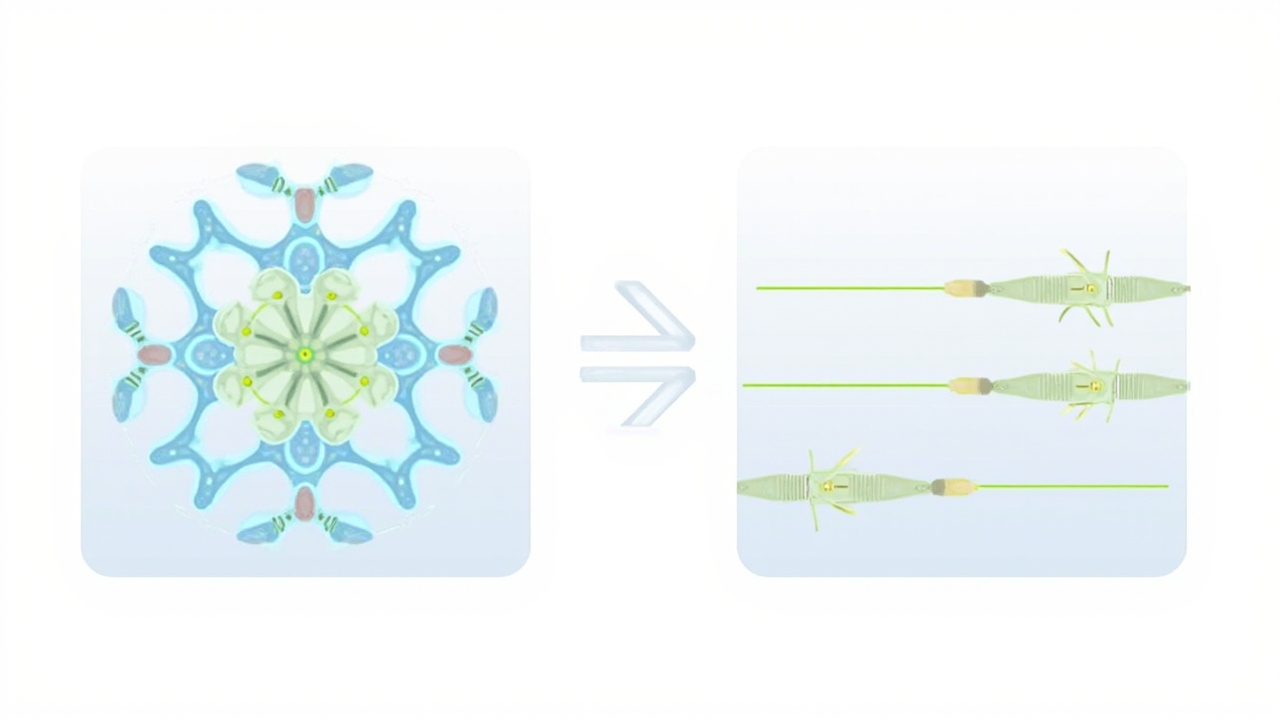
I. Film Formation Mechanism of Thermoset Powder
The main resin of thermoset powder carries reactive functional groups (such as epoxy groups in epoxy resin, —OH in hydroxyl polyester, —COOH in carboxyl polyester), and is pre-mixed with a curing agent (such as amines, acid anhydrides, Primid, blocked isocyanates). When the workpiece enters the curing oven, after the powder melts, the resin and curing agent undergo addition or condensation reactions driven by heat:
- Epoxy + amine/acid anhydride → crosslinked network
- Hydroxyl polyester + blocked IPDI (after deblocking —NCO) → polyurethane network
- Carboxyl polyester + TGIC / Primid → crosslinked network
After the reaction proceeds to the "gel time" (measured at a given temperature according to ISO 8130-6 / GB/T 16995), the system loses fluidity and cures into an insoluble and infusible network. The higher the crosslink density, the denser the coating film, showing high hardness, solvent resistance, and chemical resistance, but excessive crosslinking becomes brittle and generates high internal stress. The typical curing window is 180–200℃ × 10–15 min (effective time after the workpiece reaches temperature), specifically determined by the formulation and must be strictly locked in the process card.
Once cured, thermoset powder cannot be remelted—this is both an advantage (good heat resistance, solvent resistance, dimensional stability) and a limitation (stress concentration at edges and thick films, recycled powder performance degrades, cannot be thermally repaired). Therefore, thermoset powder has high one-time application requirements, and pre-treatment and curing curve must be precise.
II. Film Formation Mechanism of Thermoplastic Powder
The resin of thermoplastic powder (PE, PP, PA, PVC, EVA, etc.) itself is a macromolecular linear or branched polymer. When heated above the melting point, it melts and flows, levels, and then solidifies upon cooling. There is only physical entanglement between molecular chains, no chemical bond crosslinking. Therefore:
- The coating film can be reheated to soften or even remelt (repairable, weldable cladding);
- Toughness, impact resistance, and tear resistance are usually better than thermoset;
- No dependence on curing agent, simple formulation, more stable storage, no pot-life limitation;
- But adhesion and hardness are often weaker than thermoset, and require a thicker film (usually 150–1000 µm) to compensate; boundary coverage by "hot dipping" or "fluidized bed" is more common.
Thermoplastic powder is commonly applied by "fluidized bed dip coating" or "electrostatic spraying + hot melt coating": the workpiece is preheated and then immersed in a boiling powder bed, where the powder melts and adheres; or first electrostatically sprayed with powder and then melted in an oven. The film thickness is much greater than that of conventionally electrostatically sprayed thermoset powder. Because it does not crosslink, the remelting characteristic of thermoplastic powder makes it highly useful in fields such as external pipeline protection, wire mesh, and cables.
III. Performance Boundary Comparison Table
| Dimension | Thermoset Powder | Thermoplastic Powder |
|---|---|---|
| Film Formation Essence | Crosslink curing (non-remeltable) | Melt cooling (remeltable) |
| Typical Resin | Epoxy/Polyester/Polyurethane/Acrylic | PE/PP/PA/PVC/EVA |
| Adhesion | Excellent (especially epoxy) | Medium (often requires primer/preheat) |
| Hardness/Wear Resistance | High | Medium (mainly flexible) |
| Solvent/Chemical Resistance | Excellent | Medium (depends on resin type) |
| Flexibility/Impact Resistance | Medium | Excellent |
| Typical Film Thickness (µm) | 50–150 (FBE can reach 300+) | 150–1000+ |
| Application Method | Mainly electrostatic spraying | Fluidized bed dip coating / electrostatic + hot melt |
| Recycled Powder Usability | Limited (performance degradation) | Good (can be repeatedly melted) |
| Main Standards | ISO 8130, GB/T 21782 | Relevant product standards (e.g., PE pipe coating) |
As can be seen from the table: thermoset wins in "hard, strong, thin, chemical-resistant," while thermoplastic wins in "tough, thick, remeltable, impact-resistant." The two are not a substitution relationship, but a division of working conditions. Thermoset is superior in heavy anti-corrosion and decorative topcoats, while thermoplastic is superior in thick-film cladding and impact-resistant linings.
IV. Common Systems of Thermoset Powder
4.1 Pure Epoxy (EP): Best adhesion and chemical resistance, poor outdoor weather resistance, mostly used for internal pipe anti-corrosion, rebar, and home appliance primer. Fusion bonded epoxy (FBE) is a classic solution for oil and gas pipelines, with film thickness reaching 300–600 µm.
4.2 Epoxy-Polyester Hybrid: Epoxy provides adhesion and anti-corrosion, polyester improves appearance and weather resistance, high cost-performance, widely used in home appliances and office furniture. But outdoor durability is still weaker than pure polyester.
4.3 Pure Polyester (PE): Cured with TGIC or Primid (β-hydroxyalkylamide), good outdoor weather resistance, mainstream for aluminum profiles, curtain walls, agricultural machinery. Primid system is more favored due to no TGIC health controversy.
4.4 Polyurethane (PU): Hydroxyl polyester + blocked isocyanate, balanced weather and chemical resistance, fine appearance, commonly used in high-end building materials and automotive parts, but curing releases deblocking products requiring ventilation.
4.5 Acrylic (AC): High transparency and high decoration, used for wheel hub clear coat and transparent powder, relatively brittle, often paired with polyester base layer.
V. Typical Systems of Thermoplastic Powder
5.1 Polyethylene (PE): Low cost, good toughness and water resistance, used for wire mesh, baskets, external pipe protection, refrigerator shelves. Requires antioxidants and light stabilizers to improve weather resistance.
5.2 Polypropylene (PP): Slightly better chemical and heat resistance than PE, used for chemical equipment linings, but adhesion to metal requires more primer.
5.3 Nylon (PA, polyamide): Wear-resistant, self-lubricating, solvent-resistant, used for mechanical parts, pulleys, food-grade conveying parts (must comply with food contact regulations), a high-end performance variety among thermoplastics.
5.4 PVC: Soft, insulating, weather-resistant, used for cables, guardrails, building accessories, but low heat resistance.
5.5 EVA / Others: Special flexibility and bonding needs, commonly used for foam coatings or composite adhesive layers.
Key performance evaluations of thermoplastic powder include melt flow index (MI, according to GB/T 3682 / ISO 1133), Vicat softening point (GB/T 1633), adhesion (often requires primer to improve), and falling weight impact (GB/T 1732 approach). Unlike thermoset, thermoplastic pays more attention to "melting behavior + toughness indicators" rather than crosslink density.
VI. Selection Decision Points
- Look at weather resistance: For outdoor exposure, choose pure polyester/polyurethane (thermoset) or PE with stabilizers (thermoplastic); for indoor heavy anti-corrosion, choose epoxy (thermoset).
- Look at film thickness and toughness: If thick film, impact resistance, remeltable repair needed (e.g., external pipe protection, wire mesh), choose thermoplastic; if thin and hard, good decoration needed, choose thermoset.
- Look at recycling and cost: For large-volume thin coating, high utilization, choose thermoset electrostatic spraying; for thick film, complex shapes, choose thermoplastic fluidized bed.
- Look at chemical resistance: In strong solvent/strong corrosion environments, epoxy thermoset or PA thermoplastic is more stable.
- Look at adhesion basis: On metal substrates, thermoset epoxy adhesion is naturally better; thermoplastic often requires primer or workpiece preheat to ensure adhesion.
- Look at thermal repair needs: For field-remeltable repair (e.g., underground pipe external protection), choose thermoplastic; for one-time high-precision decoration, choose thermoset.
Kexin New Materials (kexinMaterials) often recommends in matching: for outdoor steel structure decorative surfaces use pure polyester thermoset powder (weather resistance + decoration), while for underground pipe fitting external protection use thermoplastic PE or epoxy FBE (thickness + anti-corrosion), to cover different service environments with the combination of "thermoset for surface, thermoplastic for body", and write the curing/melting curves of the two types of processes into the process card respectively.
VII. Relationship with Adjacent Technologies
The weather resistance evaluation of thermoset powder can refer to the resin system comparison in the Principles and Classification of Powder Coating; its heavy-duty anti-corrosion application extends to Heavy-duty Powder Coating; and the process of thermoplastic coating on pipes and steel bars connects with the fluidized bed method in Powder Coating Electrostatic Spraying Process. Only by connecting these links during selection can the mistake of "right coating, wrong process" be avoided. As a system supplier, Kexin New Materials (kexinMaterials) emphasizes: thermoset and thermoplastic are not about "which is more advanced", but "which is more suitable"; we will provide comparison samples and process cards for both routes at the sample stage.
VIII. Common Defects and Troubleshooting
| Defect | Common Causes for Thermoset | Common Causes for Thermoplastic | Countermeasure |
|---|---|---|---|
| Poor adhesion | Insufficient pretreatment, undercuring | No preheating, no primer | Sandblasting Sa2.5, control curing/preheating |
| Orange peel | Poor leveling, too fast gelation | Insufficient melting, uneven film | Adjust flowability, raise temperature |
| Cracking | Over-crosslinking, excessive film thickness | Too fast cooling, CTE mismatch | Control crosslinking, slow cooling |
| Pinholes | Incomplete degassing | Moisture, sudden preheating | Preheat degassing, control humidity |
| Discoloration | Overcuring, pigment not resistant | Thermal degradation | Control window, select heat-resistant pigment |
IX. Technology Trends
- Thermoset develops toward low-temperature curing, TGIC-free (Primid), and thin-film application;
- Thermoplastic develops toward high-adhesion primer and functionalization (conductive/wear-resistant);
- The combination of both (such as FBE+PE 3LPE) becomes the mainstream for pipelines, blurring the boundary of "thermoset vs thermoplastic" and moving toward systematization.
X. Engineering Selection Cases and Decision Logic
Applying the aforementioned mechanisms to real working conditions helps to better understand the trade-off of "thermoset vs thermoplastic". The following uses three typical engineering examples to illustrate the decision path.
Case 1: Coastal Curtain Wall Aluminum Profiles. The workpiece is thin-wall aluminum profile, exposed outdoors, requiring over 10 years of gloss and color retention. Decision: select thermoset pure polyester (Primid curing), UV resistant, good decoration; film thickness 60–80 µm; pretreatment chromating or chrome-free conversion. Do not select epoxy (poor weather resistance), do not select thermoplastic (large film thickness, difficult to achieve fine appearance). Verification by xenon arc weathering (GB/T 1865 / ISO 11341) to observe gloss loss and chalking.
Case 2: External Protection of Buried Gas Transmission Steel Pipe. The workpiece is steel pipe, buried in soil, requiring resistance to mechanical damage and compatibility with cathodic protection. Decision: select the 3LPE multi-layer structure of "FBE base + adhesive + PE topcoat" — FBE is thermoset (anti-corrosion adhesion), PE is thermoplastic (mechanical protection), the two are combined. Single-layer FBE is also possible but weak against stone backfill damage. Verification by peel strength (GB/T 23257) and cathodic disbondment.
Case 3: Food Factory Conveyor Mesh Chain. The workpiece is steel wire mesh, frequently bent, requiring food contact safety and cleaning resistance. Decision: select thermoplastic nylon (PA) powder fluidized bed dip coating, tough against bending, remeltable for repair, food grade achievable; film thickness 300–600 µm. Do not select thermoset (brittle, easy to crack when bent). Verification by adhesion (primer pretreatment) and food contact regulation compliance.
From these three types, it can be seen that the decision tree is simple: outdoor decoration → thermoset polyester; underground thick-film protection → thermoset + thermoplastic composite (3LPE); frequent bending/remeltable → thermoplastic. Keep the four words "weather resistance, film thickness, toughness, repairability" in mind, and selection will not go wrong.
The cost level must also be calculated clearly: thermoset electrostatic spraying equipment investment is moderate, utilization rate is high, suitable for batch; thermoplastic fluidized bed requires preheating furnace and dip tank, thick film consumes more material, but recycling is stable. For large-volume thin-wall parts, thermoset comprehensive cost is lower; for thick-wall/irregular/remeltable parts, thermoplastic is more economical. When quoting, "material unit price" and "comprehensive cost per piece" should be given simultaneously, including recovery rate and scrap rate, to avoid customers being misled by low-price materials.
Finally, emphasize a procurement misconception: only comparing "price per kg" while ignoring "cost per sqm". Powder density and hiding power differ; low-price powder may need to be sprayed thicker to meet standard, thus actually more expensive. The correct approach is to compare by "material cost per sqm at standard film thickness + application cost + scrap loss", which is fair.
XI. Frontier Progress and Compounding Trends
The boundary between thermoset and thermoplastic is being blurred by technology and demand, and several directions are worth attention.
First, low-temperature curing thermoset powder. Traditional thermoset requires 180–200℃ curing, high energy consumption and limits substrates (such as MDF, plastic parts cannot withstand). Through new curing agents and catalytic systems, the curing temperature can be reduced to 140–160℃ or even lower, making powder coating of medium density fiberboard and engineering plastics possible, expanding the application boundary of thermoset and echoing the energy-saving trend.
Second, TGIC-free. TGIC (triglycidyl isocyanurate) is restricted in some regions due to reproductive toxicity controversy; the Primid (β-hydroxyalkylamide) system has become the mainstream alternative with no health controversy and low baking yellowing, and most new domestic projects have switched. This is the formula upgrade direction of thermoset polyester powder.
Third, functionalization of thermoplastic. Traditional PE/PP thermoplastic has weak adhesion; in recent years, through maleic anhydride grafting modification and primer technology, the adhesion of thermoplastic powder to metal has been significantly improved; at the same time, conductive carbon black, wear-resistant alumina, and anti-UV additives are introduced, enabling thermoplastic to have both "flexibility + function", making it more competitive in anti-static floor coating and wear-resistant lining.
Fourth, thermoset + thermoplastic composite structure. 3LPE/3LPP pipelines are typical: thermoset FBE is responsible for anti-corrosion adhesion, thermoplastic PE/PP is responsible for mechanical protection, the two are compounded through adhesive layer, blurring the binary opposition of "choose one", and moving toward system design of "division by layer". More scenarios in the future will adopt "thermoset base + thermoplastic topcoat" or "thermoplastic buffer + thermoset topcoat" multi-layer composite, rather than a single system dominating all.
Fifth, recycling and circulation. Thermoplastic powder is more recycling-friendly due to remelting; thermoset recycled powder has performance decay, and the industry is studying the use of recycled thermoset powder for non-appearance parts or mortar additives to improve overall recycling rate. This is consistent with ESG and carbon footprint accounting trends.
Kexin New Materials (kexinMaterials) has technical reserves in all the above directions: low-temperature curing epoxy, Primid polyester, modified thermoplastic PA, and 3LPE supporting powder have all entered application verification. Our judgment is: future competition is not in the slogan of "thermoset vs thermoplastic", but in "who can make multi-layer composite and process window more stable, more economical, and more traceable".
FAQ
XII. Procurement Q&A and Production Line Boundaries
In the actual procurement and production line planning of thermoset and thermoplastic powder, engineers often struggle with several specific boundaries. The first is whether the curing oven can be shared: thermoset requires precise temperature-time curing window, thermoplastic only needs melting then cooling; if the two are on the same line, the oven temperature should be designed according to the thermoset window, and the thermoplastic part is only heated and melted in the oven, which is technically compatible, but thermoplastic dip-coated parts usually require independent preheating furnace and dip tank, so the production line layout should be planned separately.
The second is whether recycled powder can mix systems: absolutely not. Thermoset and thermoplastic resins are chemically incompatible; mixed recovery will cause severe defects such as craters, unmelted particles, and loss of adhesion. They must be recovered by separate line, separate color, and separate system. Many small factories mix for convenience, resulting in whole batch rework.
The third is film thickness design difference: thermoset takes 60–150 microns for anti-corrosion or decoration, thermoplastic takes 300–1000 microns for mechanical protection, the two are not in the same order of magnitude, design manuals should be written separately, and QC cards should be set separately.
The fourth is appearance standard: thermoset can achieve high gloss, fine metallic effect, thermoplastic is mostly semi-gloss or textured surface, cannot use thermoset appearance standard to demand thermoplastic parts, otherwise qualified products will be misjudged.
The fifth is changeover flexibility: thermoset line color change requires line cleaning, thermoplastic dip tank changeover is slower. When planning capacity, color change loss must be included to avoid delivery delay.
Writing these procurement and production line boundaries into the technical agreement, neither supply nor demand side will dispute. When doing production line planning for customers, we will first ask "thermoset part proportion, thermoplastic part proportion, color change frequency", then suggest co-line or separate line, rather than just selling powder. This front-end planning saves much more than post-hoc firefighting.
XIII. Crosslinking Degree and Glass Transition: Understanding Curing State with Thermal Analysis
The most essential difference between thermoset and thermoplastic is the presence or absence of chemical crosslinking, and the degree of crosslinking can be quantified, which is the scientific basis for judging "whether curing is in place". The most commonly used tool is differential scanning calorimetry (DSC), refer to GB/T 19466.2 "Plastics - Differential scanning calorimetry (DSC) - Part 2: Determination of glass transition temperature" (equivalent to ISO 11357-2).
For thermoset powder, DSC has two key readings. The first is residual reaction exotherm. Take the cured coating film and do another heating scan; if an obvious exothermic peak is still observed, it indicates incomplete crosslinking, i.e., undercuring; comparing this residual exotherm with the total exotherm of uncured powder, the degree of cure can be estimated. The second is glass transition temperature (Tg). As crosslinking density increases, molecular chain segment movement is restricted, and Tg rises accordingly; when curing is sufficient, Tg tends to a stable upper limit, and further extending baking time no longer changes significantly. Therefore, engineering commonly uses "whether Tg reaches and stabilizes at the design value" as the criterion for curing in place, which is more reliable than simply using "oven temperature × time" — because the actual heating time of the workpiece is affected by load, thickness, and hanging method, the same oven temperature parameters may not give the same curing result on different batches.
The manifestations of under-curing and over-curing also differ. Typical signs of under-curing are: low Tg, poor solvent resistance (wiping back and forth with a cotton ball soaked in methyl ethyl ketone or xylene, following the rationale of ASTM D5402, an under-cured coating softens and exposes the substrate quickly), reduced adhesion and corrosion resistance, and possible slow continued reaction later causing dimensional and color changes. Signs of over-curing are: yellowing or darkening of color, embrittlement of the film, reduced impact resistance (GB/T 1732) and flexibility, and abnormal gloss. Both can be masked by "looks okay on the surface" and must be identified through testing.
For thermoplastic powder, the focus of evaluation is completely different. Since there is no crosslinking, there is no issue of degree of cure; instead, melting and crystallization behavior are what matter. On DSC, look at the melting point and crystallization enthalpy to judge whether the resin has reached full melting and whether the cooling rate is appropriate; melt mass-flow rate per GB/T 3682 (equivalent to ISO 1133) characterizes processing fluidity—too low a value means insufficient leveling and easy orange-peel, too high means easy sagging and difficulty controlling film thickness; Vicat softening temperature per GB/T 1633 (equivalent to ISO 306) characterizes the upper service temperature limit. The common defect of thermoplastic parts—"internal stress and cracking due to too-rapid cooling"—is essentially a mismatch of crystallization and shrinkage rates; the countermeasure is to control the cooling rate rather than extend heating.
In one sentence: thermosets are judged by "is the reaction complete," thermoplastics by "is it melted through, leveled, and cooled correctly." This divergence in inspection thinking deserves to be written into the QC card more than differences in resin grades.
14. Standard System Comparison for the Two Types of Powder
Thermoset and thermoplastic inspections fall under different standard families; mixing them causes misjudgment. The table below groups common standards by evaluation dimension for easy item-by-item reference when drafting technical agreements.
| Evaluation Dimension | Thermoset Powder | Thermoplastic Powder | Remarks |
|---|---|---|---|
| Powder Particle Size | ISO 8130-1 / -13 | ISO 8130-1 / -13 | Sieving and laser diffraction methods |
| Gel Time | ISO 8130-6 / GB/T 16995 | Not applicable (no crosslinking) | Process window indicator unique to thermosets |
| Flowability | ISO 8130-11 inclined-plate flow | Melt flow rate GB/T 3682 | Characterize melt leveling ability respectively |
| Bake Loss | ISO 8130-7 | — | Reflects volatiles and formulation stability |
| Storage Stability | ISO 8130-8 | Relatively more stable | Thermosets contain curing agent and need temperature-controlled storage |
| Cure / Thermal Behavior | DSC residual exotherm and Tg, GB/T 19466.2 | Melting point, Vicat softening point GB/T 1633 | Judgment logic completely different |
| Adhesion | GB/T 9286 cross-cut | GB/T 9286, often needs primer | Thermoplastics mostly rely on preheating and primer |
| Hardness | GB/T 6739 pencil hardness | Reference value lower | Pencil hardness result depends on substrate and film thickness |
| Impact Resistance | GB/T 1732 | GB/T 1732, usually better | Direct reflection of thermoplastic toughness advantage |
| Film Thickness | GB/T 13452.2 (equivalent to ISO 2808) | Same as left, range must cover thick films | Film thickness magnitudes differ by several times |
| Weathering | GB/T 1865 xenon lamp (equivalent to ISO 11341) | Evaluate after adding light stabilizer | Epoxy thermoset not suitable for outdoor exposed surfaces |
| Pipe Coating | Fusion-bonded epoxy per SY/T 0315, GB/T 18593 | Polyethylene layer per GB/T 23257 | 3LPE is composite structure, cite by layer |
Two reminders when using this table. First, the result of pencil hardness (GB/T 6739) is affected by substrate hardness and film thickness; a thin coating on a soft substrate reads low, so the report must state substrate and film thickness and not compare a hardness grade in isolation between products. Second, thermoplastic parts should not be judged by thermoset appearance standards. Thermoplastics are mostly semi-gloss or textured surfaces, and fluidized-bed dip coating cannot easily achieve high-gloss smoothness; judging by thermoset gloss and orange-peel grades will misclassify many good parts as defective. Technical agreements should set separate appearance limit samples by system.
Q: What is the most essential difference between thermoset and thermoplastic powder?
A: Thermosets undergo chemical crosslinking with curing agent during baking, forming an insoluble, non-meltable network that cannot be remelted after curing; thermoplastics merely melt and cool to set, with no chemical crosslinking of molecular chains, and can be reheated and softened. This determines that the former is hard and chemically resistant, while the latter is tough and remeltable.
Q: Why is thermoplastic powder usually thicker in film?
A: Thermoplastic powder has relatively weaker adhesion and hardness, and is mostly applied by fluidized-bed dip coating, requiring a thicker film (150–1000 µm) to provide protection and mechanical strength; thermoset electrostatic spray is mostly 50–150 µm in one pass.
Q: Can thermoset powder be recycled and reused?
A: Partial recovery is possible, but because the curing agent and resin may slightly pre-react and the particle-size distribution may drift during storage and recovery, the performance (flowability, appearance) of recovered powder degrades; it must be blended with new powder at a reasonable ratio and cannot be recycled indefinitely; thermoplastic recovery is more stable.
Q: For outdoor powder, choose thermoset or thermoplastic?
A: For outdoor decoration and weather resistance, prioritize thermoset pure polyester or polyurethane (UV resistant); if thick-film encapsulation (e.g., outdoor railings, wire mesh) with high toughness is needed, choose stabilized PE thermoplastic. Epoxy thermoset has poor weather resistance and should not be used alone on outdoor exposed surfaces.
Q: Why does thermoset powder "gel"?
A: Gelation is the critical point where crosslinking proceeds to loss of fluidity (gel time measured at a given temperature per ISO 8130-6 / GB/T 16995). Heating beyond this window only makes the network denser and even brittle; in practice the oven temperature–time must be strictly matched to gel time.
Q: Does the substance released during curing of polyurethane thermoset powder need treatment?
A: Yes, blocked isocyanate releases blocking agent (such as ε-caprolactam or ketones) upon deblocking, which must be collected and treated at the oven exhaust; although overall VOC is far lower than solvent-based, it is still a process by-product to be controlled.
Q: How to solve poor adhesion of thermoplastic powder?
A: Common measures: preheat the workpiece to improve melt adhesion, apply primer before coating (e.g., epoxy primer powder), roughen the surface to increase mechanical interlocking, and select more easily wetting resin. For metal substrates, priming with thermoset epoxy then covering with thermoplastic layer is also common.
Q: What are the special uses of nylon (PA) powder?
A: Nylon powder is wear-resistant, self-lubricating, solvent-resistant and can meet food-grade requirements; it is often used for machine parts, pulleys, conveyor chains, food-contact parts (must comply with relevant food-contact regulations), and is a high-end variety among thermoplastics.
Q: Which powder is more suitable for external protection of thick-walled pipes?
A: Buried or underwater pipe external protection mostly uses thermoplastic PE or epoxy FBE (thermoset) multilayer structure: FBE provides adhesion and anti-corrosion, PE provides mechanical protection and toughness, the two composited via adhesive layer, a typical "3LPE/3LPP" anti-corrosion structure.
Q: Can the two types of powder be mixed on the same workpiece?
A: Layered combination is possible: e.g., steel pipe "FBE base + adhesive + PE top" is thermoset + thermoplastic composite; but they cannot be mixed in the same spray pass, otherwise the crosslinked and non-crosslinked systems are incompatible and cause craters and delamination.
Q: How to judge whether thermoset powder is cured properly?
A: Rely on thermal analysis rather than appearance alone. Scan the cured film by DSC (GB/T 19466.2, equivalent to ISO 11357-2); if an obvious residual exotherm peak remains, it is under-cured; also check whether Tg has reached and stabilized at the design value. Supplement with solvent wipe (following ASTM D5402 rationale); under-cured coating softens and exposes substrate quickly.
Q: What are the signs of over-curing?
A: Yellowing or darkening of color, embrittlement of the film, reduced impact resistance (GB/T 1732) and flexibility, and abnormal gloss. Both under-curing and over-curing may be masked by "looks okay on the surface"; they must be identified by Tg, solvent resistance and impact tests, and the oven temperature–time window locked into the process card.
Q: Is the QC focus of thermoplastic powder the same as thermoset?
A: No. Thermosets are judged by "is the reaction complete" (cure degree, Tg, solvent resistance); thermoplastics have no crosslinking and are judged by "is it melted through, leveled, and cooled correctly"—melt mass-flow rate per GB/T 3682 (equivalent to ISO 1133), Vicat softening temperature per GB/T 1633 (equivalent to ISO 306), and control cooling rate to avoid shrinkage internal stress causing cracking.
Further Reading
- Principles and Classification of Powder Coating: From Film-Forming Mechanism to Resin System Selection: Build overall understanding of powder coating; this article deepens its "thermal behavior classification" dimension.
- Engineering Application of Heavy-Duty Anti-Corrosion Powder Coating:Apply thermosetting epoxy FBE and multi-layer composite structures to specific service scenarios such as pipelines and steel rebars.
- Powder Coating Electrostatic Spraying Process: Understand how the two application routes of electrostatic spraying and fluidized bed respectively serve thermosetting and thermoplastic powders.
- Insulating Powder Coating: Volume Resistivity, Dielectric Strength and Electrical Applications
- Wear-Resistant Powder Coating: Hard Fillers, Wear Mechanisms and Duty Condition Selection
- Industrial Paint Application: Airless Spray Parameters, Film Thickness Control and Coating Intervals