Steel structures serving long-term in atmosphere, humidity, and industrial media—the safety hazards and maintenance costs brought by corrosion have always been the core challenge in the field of industrial protective coatings. To scientifically select and design protective coatings, one must first understand how anti-rust paint actually "works". As a manufacturer deeply engaged in industrial protective coatings for the long term, Kexin New Materials (kexinMaterials) has always taken a clear classification of mechanisms as the premise in primer formulations and配套 system design, rather than merely stacking pigments by experience. Starting from the electrochemical nature of corrosion, this article systematically reviews the four major types of anti-rust paint mechanisms—physical barrier, chemical passivation, cathodic protection, and conversion/stabilization types—and provides quantitative references for the applicable boundaries of different mechanisms.

I. The Electrochemical Nature of Steel Corrosion
The reason why the "mechanism" of anti-rust paint needs to be classified is that corrosion of steel in the natural environment is essentially an electrochemical process. When an electrolyte liquid film (rainwater, condensation, sea fog) exists on the steel surface and both anodic and cathodic zones are present, countless tiny corrosion galvanic cells are formed: in the anodic zone iron loses electrons to generate Fe²⁺ and dissolves, while in the cathodic zone oxygen reduction or hydrogen evolution occurs. The dissolved Fe²⁺ further reacts with oxygen and water to form ferrous hydroxide, which is then oxidized to ferric hydroxide and finally dehydrated to become the rust we see (mainly FeO(OH), Fe₂O₃·xH₂O).
Thus, blocking corrosion requires at least cutting off one link in the following chain: isolating water and oxygen (medium), inhibiting anodic or cathodic reactions (chemical action), or letting a more active metal sacrifice preferentially (electrochemical reaction). The four major mechanisms of anti-rust paint are designed precisely targeting these links respectively. Understanding this is more important than memorizing any product model, because it determines "in what environment the coating is effective, and in what environment it will inevitably fail".
II. Physical Barrier Mechanism: Dense Paint Film Blocks Corrosive Media
Physical barrier is the most intuitive and also the most widely used anti-rust approach. It does not change the electrochemical state of the metal surface, but physically separates water, oxygen, chloride ions, and other corrosive media from the steel substrate by forming a continuous, dense, low-permeability paint film, extending the path for media to diffuse to the metal surface.
2.1 Key Indicators of Barrier Coatings
The barrier effect depends on three things: continuity of the paint film (no pinholes, no microcracks), density (high crosslink density, reasonable pigment volume concentration), and adhesion to the substrate and interlayer bonding. According to research archives, the volume solids of general epoxy protective paints can reach 72% or even higher, with DFT (dry film thickness) controlled in the range of 75–300 µm; such high-solid thick films themselves can provide good barrier. A more typical barrier enhancement method is to add flake-shaped pigments in the intermediate coat.
2.2 Flake Barrier: Micaceous Iron Oxide as an Example
Research archives clearly record: "Barrier effect: the micaceous iron oxide flakes in epoxy micaceous iron oxide intermediate coat extend the diffusion path of corrosive media". Micaceous iron oxide (MIO) is a scale-like pigment that arranges parallel and overlaps layer by layer in the paint film, bending the straight diffusion path into a "maze" like roof tiles, significantly reducing the permeability of water, oxygen, and ions. This is also why in the ISO 12944配套 system, the intermediate coat often assumes the core role of "thickening + barrier".
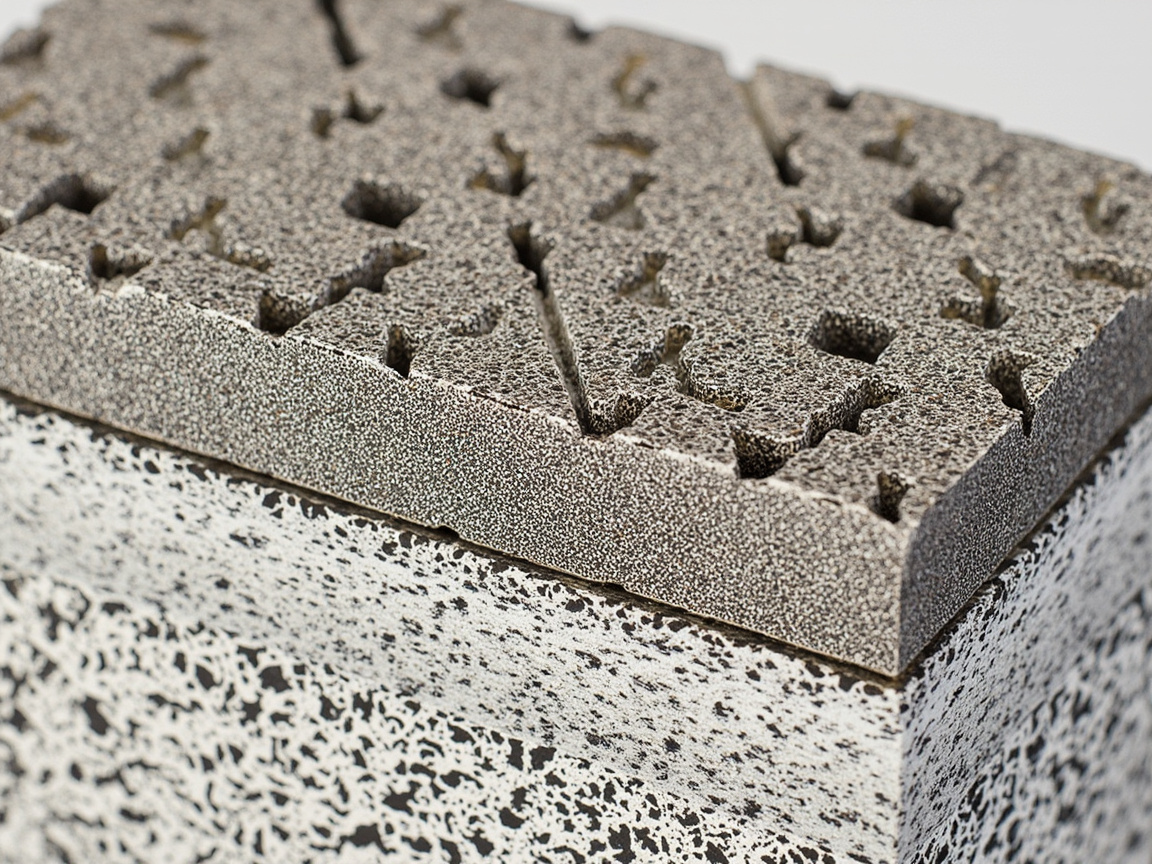
The advantage of the physical barrier mechanism is wide applicability, low cost, and compatibility with most resin systems; its limitation is that once the paint film is scratched or microcracks appear due to aging, media will locally enrich at the defect, and corrosion will spread around from the defect, i.e., "acceleration at defect". Therefore, barrier coatings emphasize overall integrity and配套 repair.
III. Chemical Passivation Mechanism: Let the Metal Surface "Become Stable by Itself"
The chemical passivation mechanism takes another path: through chemical action between pigments or active components and the metal surface, a stable, dense passivation film (or conversion film) is generated, inhibiting the anodic dissolution reaction.
3.1 Zinc Phosphate Passivation
Zinc phosphate (Zn₃(PO₄)₂) is one of the most mainstream non-toxic anti-rust pigments today. It slowly dissolves in the presence of water and reacts with the iron surface to form an insoluble iron phosphate/zinc phosphate complex deposition layer, plugging the active points of the anodic zone, thereby inhibiting iron dissolution. Research archives list it under "Chemical passivation: zinc phosphate, chromate (restricted) passivate the metal surface", indicating that zinc phosphate is a representative material of the passivation route and is widely used to replace traditional toxic pigments due to its eco-friendly nature.
3.2 Passivation and Restriction of Chromate
Chromate (such as zinc yellow, basic zinc chromate) has extremely strong passivation ability and can form a stable chromium oxide-chromate composite film on the metal surface. However, hexavalent chromium has clear toxicity and carcinogenicity and has been strictly restricted or banned in most countries and standards. According to research archives, chromate belongs to the "restricted" use category—this is exactly the red line of formulation compliance: if passivation effect is needed in modern anti-rust paint, one should preferentially choose environmentally acceptable alternatives such as zinc phosphate, modified phosphates, molybdates, and corrosion-inhibitive calcium-exchanged silicates.
The chemical passivation mechanism is suitable for moderate corrosion environments and scenarios where the requirement for paint film integrity is less stringent than cathodic protection; its weakness is that the passivation film relies on the continuous micro-dissolution of pigments, and the effect decays after the slow-release substance is consumed in strongly acidic or long-term immersion environments.
IV. Cathodic Protection Mechanism: Sacrificial Anode of Zinc-Rich Primer
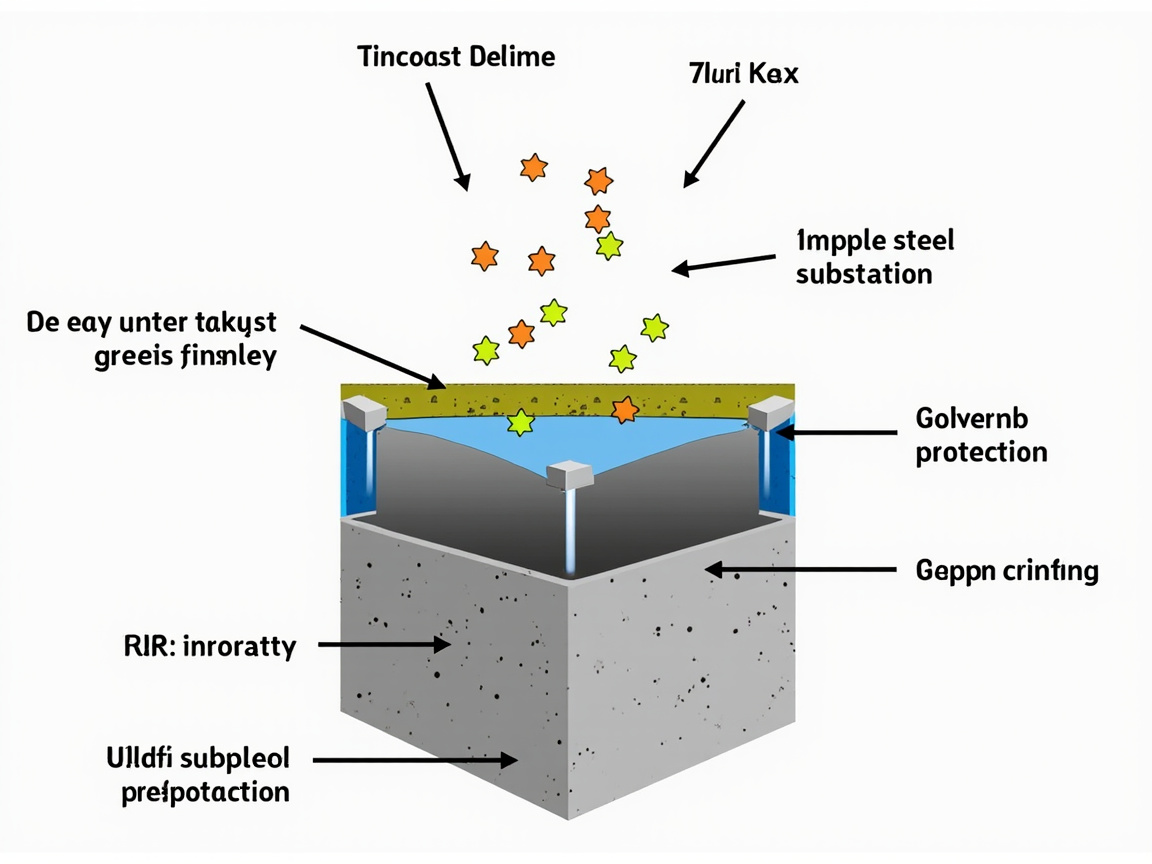
Cathodic protection is the "hardcore" mechanism in the heavy anti-corrosion field, with the typical carrier being epoxy zinc-rich primer. Its core logic is: fill a large amount of highly active zinc powder in the paint film; when the coating has micropores or media permeates, zinc is more active than iron and preferentially acts as a sacrificial anode to be corroded, while the steel substrate is protected as the cathode and does not dissolve.
4.1 Zinc Powder Content Is the Threshold
Whether cathodic protection can be established depends on whether the zinc powder in the dry film forms a continuous conductive network. Research archives give a key quantitative basis: "Zinc powder (≥80% dry film) in zinc-rich primer acts as sacrificial anode". Taking TEKNOZINC 3480 SE (Teknos high-solid epoxy zinc-rich primer) as an example, according to its TDS, zinc content (dry film) ≥ 80% (mass), volume solids about 66%, VOC about 300 g/L, can be used as primer for polyurethane/epoxy systems, and is weather-resistant even without topcoat. Another representative, Jotun Barrier 80 UHS (ultra-high-solid epoxy zinc-rich primer), according to its TDS has weight solids 95 ± 2%, volume solids 85 ± 2%, VOC (GB 30981 / GB/T 34682) 134 g/L, zinc powder complies with ASTM D520 Type II, and achieved "Very High (VH)" durability grade under ISO 12944-6 test C5.
4.2 Applicability and Boundaries of Cathodic Protection
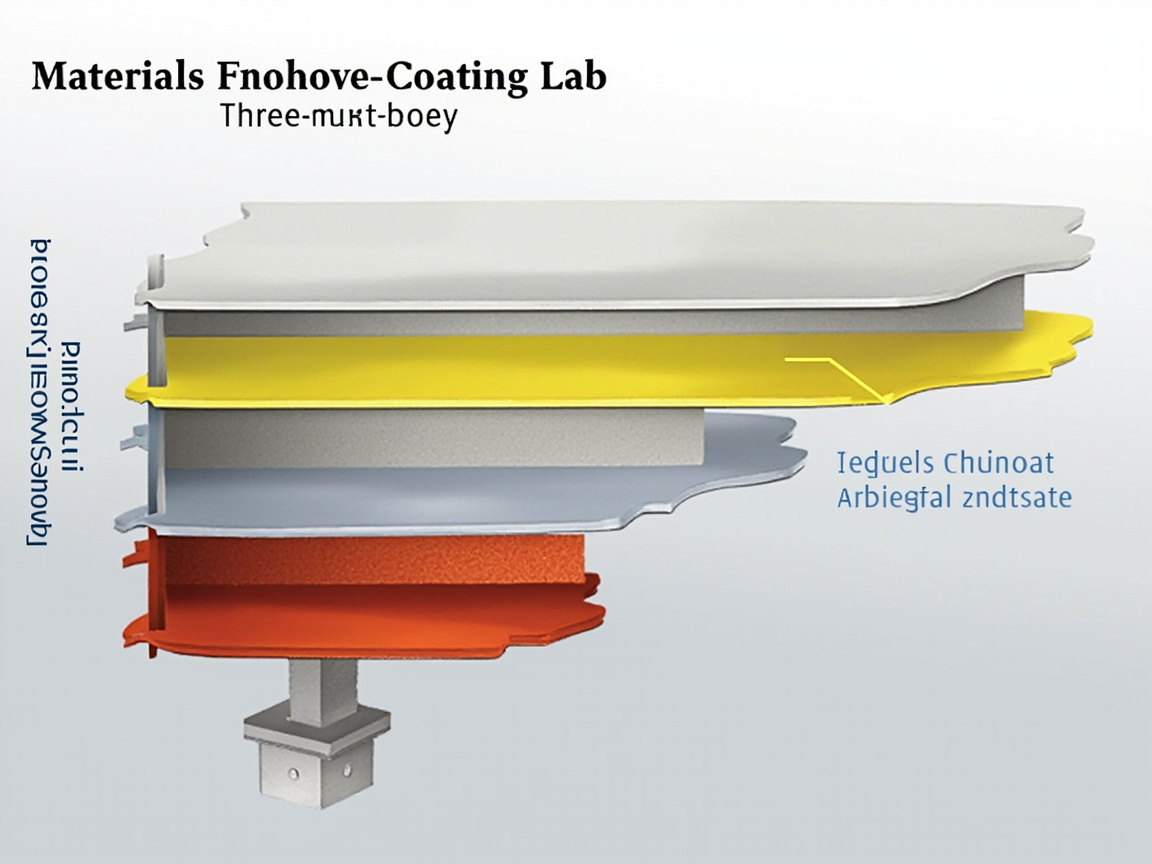
The sacrificial anode effect of zinc-rich primer enables it to still provide "active" protection at defects such as welds, edges, and scratches, which neither barrier nor passivation types can do. But it also has boundaries: the zinc conductive network relies on high zinc content, and if the topcoat is covered with strong-solvent two-component paint, compatibility must be confirmed; and zinc consumption accelerates in acidic or high-pH media. The配套 principle of research archives points out that "primer (anti-corrosion/adhesion) + intermediate coat (thickening/barrier) + topcoat (weathering/decorative)", zinc-rich primer is usually used as the bottom layer, with epoxy micaceous iron oxide intermediate coat on top for thickening and barrier, then covered with epoxy polyurethane or acrylic polyurethane topcoat. Typical配套 film thickness according to archives: primer 70–80 µm (1 coat), intermediate coat 100–150 µm (1–2 coats), topcoat 100–120 µm (2 coats).
V. Conversion Type and Stabilization Type: Special Routes for Painting Over Rust
At engineering sites, many steel structures cannot be thoroughly blasted for rust removal and can only be constructed with light rust. Conversion-type and stabilization-type anti-rust paints are born to solve this pain point.
5.1 Conversion Type (Rust Converter)
Conversion-type coatings contain active components such as tannic acid and phosphoric acid, which can in-situ convert loose rust (FeO(OH), etc.) into stable black complexes or phosphate films, equivalent to "turning rust into part of the primer". Research archives record: "Conversion/stabilization type: rust converter (tannic acid/phosphoric acid) converts rust into stable substances; suitable for sites where thorough rust removal is impossible."
5.2 Stabilization Type
The stabilization type stabilizes active rust by adding rust-stabilizing pigments (such as certain organic chelating agents, phosphates), preventing it from continuing to expand. It needs special emphasis on the boundary of painting over rust: research archives give a clear restriction—"Boundary of painting over rust: only applicable to light floating rust, St2/St3; heavy corrosion requires blasting". That is to say, conversion/stabilization type is only a "second-best" on-site solution and cannot replace thorough blast cleaning.
VI. Comparison Table of Four Major Mechanisms
For easy selection, the following table juxtaposes the action mode, typical materials, applicable scenarios, and limitations of the four types of mechanisms (mechanism conclusions and zinc-rich ≥80% data are all based on research archives).
| Mechanism Type | Action Mode | Typical Pigment/Material | Applicable Corrosion Environment | Main Limitation |
|---|---|---|---|---|
| Physical Barrier | Dense paint film blocks water/oxygen/ions; flakes extend diffusion path | Epoxy, alkyd, micaceous iron oxide (MIO) | C2–C4 general, as intermediate layer | Media enrichment at defects, local accelerated corrosion |
| Chemical Passivation | Form stable passivation/conversion film, inhibit anodic dissolution | Zinc phosphate (mainstream), restricted chromate | C2–C3 moderate environment | Decays after slow-release substance consumed; weak in strong acid/immersion environment |
| Cathodic Protection | Zinc powder as sacrificial anode, steel protected as cathode | Zinc-rich primer, dry film zinc ≥80% (mass) | C4–C5, CX heavy anti-corrosion | Relies on high zinc and conductive network; strong-solvent topcoat needs compatibility verification |
| Conversion/Stabilization Type | Rust conversion or stabilization, on-site painting over rust | Tannic acid, phosphoric acid, rust-stabilizing pigment | Light floating rust St2/St3 site | Only for light rust; heavy corrosion must be blasted |
VII. Compatible Systems and Corrosion Grades
It is a misconception to discuss "a certain mechanism is the best" in isolation. ISO 12944-2018 classifies atmospheric corrosion categories from C2 (low) to C5 (very high), as well as CX (extreme, offshore) and immersion environments Im1–Im3. The supporting principles in the research archive emphasize the division of labor among primer, intermediate coat, and topcoat: the primer is responsible for anti-corrosion and adhesion (zinc-rich or zinc phosphate types), the intermediate coat for thickness build and barrier (epoxy micaceous iron oxide), and the topcoat for weather resistance and decoration (epoxy polyurethane / acrylic polyurethane). Neutral salt spray is generally evaluated according to GB/T 1771-2007 and ASTM B117; for general industrial protection, no blistering and single-edge rust ≤1–2mm at 500h, while heavy-duty anti-corrosion can reach 1000–3000h.
VIII. Mechanism Selection Recommendations
Returning to the engineering itself, selection can follow this approach: for ordinary plant steel structures and general atmosphere (C2–C3), zinc phosphate passivating primer + alkyd/epoxy topcoat is sufficient; for moderate corrosion (C3–C4), upgrade to epoxy micaceous iron oxide intermediate coat to enhance barrier; for heavy-duty anti-corrosion, marine, bridges, energy facilities (C4–C5, CX), zinc-rich primer must be used to provide cathodic protection, and designed as a "primer + intermediate + topcoat" system. In the design and implementation of these compatible schemes, Kexin New Materials (kexinMaterials) emphasizes deriving the mechanism combination from corrosion grade and data-based indicators rather than applying a single product, which is also the key to extending maintenance cycles and reducing life-cycle costs.
For further reference on water-based vs. solvent-based, and how to choose between alkyd and epoxy, see https://www.psste.com/water-based-vs-oil-paint-selection/ and https://www.psste.com/waterborne-industrial-coatings-selection/. Regarding construction safety, solvent-based anti-rust paint is mostly flammable organic volatile matter (e.g., alkyd types belong to UN 1263); related protection requirements are at https://www.psste.com/water-based-paint-safety-myth/.
VIII. Verifiability of Mechanisms and Testing Methods
To determine which mechanism a certain anti-rust paint mainly relies on, one cannot just look at the formula table or promotional claims, but must use standard tests to reproduce its failure behavior. The following methods are commonly used in engineering to distinguish mechanisms:
- Physical Barrier Verification: Conduct neutral salt spray according to GB/T 1771-2007 (equivalent to ASTM B117, DIN EN ISO 9227), and make a cross-cut or X incision on the film surface to observe the penetration width of the medium along the incision. Barrier-type coatings usually show single-edge rust ≤1–2mm at the incision, mainly extending linearly along the defect; if there is almost no spread at the incision, it often indicates the superposition of passivation or cathodic protection.
- Cathodic Protection Verification: Electrochemical impedance spectroscopy (EIS) can observe the charge transfer resistance change of the zinc powder network; after salt spray, if the coating is scraped off and gray-white sacrificial products of the zinc layer are seen with the steel substrate rust-free, it confirms the sacrificial anode is established. Zinc-rich primer with dry film zinc ≥80% (mass) is the threshold for the conductive network to be established; below this value, EIS will clearly show barrier rather than cathodic protection.
- Passivation Verification: Electrochemical polarization curve (Tafel) can observe the appearance of the anodic passivation region; zinc phosphate pigments will reduce the passivation current and widen the passivation interval; while restricted chromate has a wider passivation region but its toxicity has removed it from the mainstream.
- Adhesion and Interlayer: GB/T 9286-1998 cross-cut method (grades 0–5, 0/1 as excellent) verifies the mechanical adhesion of barrier/passivation coatings; ISO 2409 and ASTM D3359 are also common criteria.
IX. Example Calculation of Compatible Film Thickness and Coating Passes
The mechanism ultimately comes down to "how thick to coat". Taking ISO 12944 C4 environment as an example, the typical compatible film thickness given in the research archive is: zinc-rich primer 70–80 µm (1 coat), epoxy micaceous iron oxide intermediate coat 100–150 µm (1–2 coats), epoxy polyurethane topcoat 100–120 µm (2 coats), total dry film about 270–350 µm. The relationship between wet film thickness (WFT) and dry film (DFT) is WFT = DFT ÷ volume solids (VS, decimal). For example, if the primer has 50% volume solids and a DFT of 75 µm is required, a single wet film of 150 µm is needed; if it cannot be sprayed in one coat, apply two coats of 75 µm wet film each. Theoretical spreading rate (m²/L) = VS × 10 ÷ DFT(µm), e.g., VS=0.5, DFT=75µm, then one liter can cover about 6.7 m². Mastering this conversion turns "mechanism design" into executable "how much to spray per coat".
X. From Mechanism to Life-Cycle Cost
Selecting a mechanism is essentially a trade-off between "initial cost" and "maintenance cycle". Alkyd/epoxy systems with barrier + passivation have low cost but may require repair in 3–5 years in C4 and above environments; whereas heavy-duty anti-corrosion systems with zinc-rich cathodic protection have higher initial cost but can extend the maintenance cycle to 10–15 years or even longer. The research archive points out that heavy-duty anti-corrosion salt spray can reach 1000–3000h, which is the confidence for long cycles. Kexin New Materials (kexinMaterials), when working with clients, usually derives the mechanism combination and total film thickness from corrosion grade and service life rather than comparing unit prices in isolation—this is the key step to turn "mechanism knowledge" into "saving money".
For further reference on water-based vs. solvent-based, and how to choose between alkyd and epoxy, see https://www.psste.com/water-based-vs-oil-paint-selection/ and https://www.psste.com/waterborne-industrial-coatings-selection/. Regarding construction safety, solvent-based anti-rust paint is mostly flammable organic volatile matter (e.g., alkyd types belong to UN 1263); related protection requirements are at https://www.psste.com/water-based-paint-safety-myth/.
XI. Examples of Mechanism Combinations in Different Corrosion Environments
Applying the aforementioned mechanisms to specific environments yields the following recommendations (corrosion grades per ISO 12944-2018):
| Corrosion Grade | Typical Environment | Recommended Mechanism Combination | Approx. Total DFT |
|---|---|---|---|
| C2 Low | Dry indoor, rural atmosphere | Zinc phosphate passivation primer + alkyd/epoxy topcoat | 120–160 µm |
| C3 Medium | Urban, light industrial, high humidity | Zinc phosphate passivation + epoxy micaceous iron oxide barrier + topcoat | 180–240 µm |
| C4 High | Coastal, chemical zone, bridges | Zinc-rich cathodic protection + epoxy micaceous iron oxide + topcoat | 270–320 µm |
| C5 Very High | Offshore platforms, harsh industry | High-zinc primer + thick micaceous iron oxide + high-weathering topcoat | 320–400 µm |
| CX Extreme | Offshore splash zone | Zinc-rich + epoxy glass flake + special topcoat | ≥400 µm |
The core insight of this table is: the harsher the environment, the more one must upgrade from "single barrier" to multi-mechanism synergy of "cathodic protection + barrier + passivation". Using any single mechanism in isolation cannot cover all grades.
XII. Chemical Details of Rust Converters
The core reaction of conversion-type anti-rust occurs between tannic acid or phosphoric acid and rust. The main component of rust, FeO(OH), dissolves into Fe³⁺ under acidic conditions; tannic acid (polyhydric phenolic carboxylic acid) complexes with it to form black ferric tannate precipitate that tightly adheres to the substrate; phosphoric acid reacts with iron ions to form insoluble iron phosphate salts, "in-situ solidifying" the loose rust layer. It must be emphasized that such reactions only target already-formed active rust and are ineffective on incompletely removed scale and oil stains, which is why the research archive limits it to "applicable only to light floating rust, St2/St3". During on-site construction, the converter should be applied thinly to allow full penetration and reaction; too thick a layer becomes a weak layer instead.
XIII. Impact of Environmental Protection and VOC Trends on Mechanism Selection
In recent years, GB 30981-2020 "Limits of Harmful Substances in Industrial Protective Coatings" and GB 24409-2020 "Limits of Harmful Substances in Vehicle Coatings" have raised the thresholds for VOC and heavy metals; traditional lead- and chrome-containing pigments have been eliminated, and eco-friendly passivating pigments such as zinc phosphate are rapidly popularized; solvent-based systems are also evolving toward high solids and low VOC (in the research archive, Jotun Barrier 80 UHS with VOC only 134 g/L represents the direction). The mechanisms themselves are not negated by environmental regulations—barrier, passivation, and cathodic protection can all be achieved via water-based or high-solids carriers; selecting the mechanism and selecting the carrier (solvent/water-based/high-solids) are two independent dimensions and should be decided separately in engineering.
XIV. Detailed Corrosion Electrochemical Equations
To truly understand the mechanisms, the electrochemical processes in Section 1 must be written as reaction equations. Anode region: Fe → Fe²⁺ + 2e⁻ (iron dissolution); the generated Fe²⁺ under oxygen presence: Fe²⁺ + 2H₂O + ½O₂ → 2FeO(OH) + H⁺ (forming iron oxyhydroxide, i.e., red rust). Cathode region in neutral to near-neutral environment mainly undergoes oxygen reduction: O₂ + 2H₂O + 4e⁻ → 4OH⁻. It can be seen that "oxygen" and "water" are the fuel of corrosion, and the "electron circuit" is connected by the steel itself. Physical barrier cuts off water and oxygen supply; passivation raises the anodic dissolution threshold (making Fe→Fe²⁺ harder); cathodic protection actively moves the anode to zinc (Zn → Zn²⁺ + 2e⁻, zinc has a more negative potential). The three sets of equations correspond to three mechanisms, logically self-consistent.
XV. Comparison of Passivating Pigment Families
In addition to zinc phosphate, other eco-friendly passivation pigments available for engineering include: molybdates (such as zinc molybdate), which rely on MoO₄²⁻ to form a passivation film at the anode and are often used synergistically with phosphates; calcium-exchanged silicates (ion-exchange type), which release Ca²⁺ and capture Cl⁻ when encountering aggressive ions, generating protective basic salts at the interface; borates and modified aluminum phosphates are also applied. Restricted chromates (zinc yellow, zinc tetroxychromate) have the strongest passivation but their hexavalent chromium toxicity has led to their withdrawal from the mainstream. The research archive lists them alongside "zinc phosphate, chromates (restricted)", suggesting that formulations should adopt eco-friendly alternatives between "performance" and "regulations". For medium-grade selection, a zinc phosphate/molybdate composite is sufficient, and there is no need to pursue chromates.
16. Zinc Powder Grade Standards for Zinc-Rich Primer
Whether the cathodic protection route is compliant also depends on the zinc powder grade. The research archive points out that Jotun Barrier 80 UHS zinc powder complies with ASTM D520 Type II, and meets SSPC Paint 20 Level 2 and ISO 12944-5 composition requirements. ASTM D520 classifies Type I, II, III by zinc powder purity/particle size; SSPC Paint 20 classifies Level 1 (≥85% by mass) and Level 2 (≥77% by mass, some systems ≥65% depending on resin) by dry film zinc content. Dry film zinc ≥80% (by mass) falls exactly at the high end of Level 2 and close to Level 1, sufficient to support the sacrificial anode network. When purchasing zinc-rich primer, proof of zinc powder grade and dry film zinc content should be requested, rather than just looking at the word "zinc-rich".
17. Impact of Construction Environment on Mechanism Implementation
No matter how good the mechanism, it must be realized through correct construction. Temperature, humidity, and dew point are the three major variables: too low temperature slows epoxy curing and delays alkyd oxidative crosslinking, so both cathodic protection and barrier "fail to activate"; relative humidity >85% or substrate temperature within 3℃ below dew point, surface easily condenses, barrier-type coatings easily blister and adhesion drops sharply. The research archive requires "temperature 5–35℃, relative humidity ≤80%, substrate temperature above dew point by more than 3℃" for epoxy-polyurethane systems, and this principle also applies to systems containing barrier/passivation. In addition, the "flash rust time" after blasting is critical: Sa2.5 steel surface begins to flash rust within a few hours in humid environments, and primer coating should be completed within the limited time, otherwise barrier and passivation lose their adhesion foundation.
18. Common Engineering Selection Misconceptions
Misconception 1: Using alkyd anti-rust paint as heavy-duty anti-corrosion — it has no cathodic protection and will certainly fail above C4. Misconception 2: Zinc-rich primer is "universal if it contains zinc" — sacrificial anode does not hold when dry film zinc <80% or no conductive network is formed. Misconception 3: Emphasizing number of coats over film thickness — the mechanism relies on sufficient DFT to bear load, thin coating equals no protection. Misconception 4: Ignoring compatibility, applying strong-solvent topcoat directly over alkyd causing lifting. Misconception 5: Using unit price instead of whole-life-cycle cost, saving initially but more expensive due to frequent later repairs. By clearly correlating mechanism with corrosion grade, medium, and environment, most of these misconceptions can be avoided.
19. Supplement on Flake Fillers and Shop Primer
In addition to micaceous iron oxide, glass flakes, stainless steel flakes, and zinc-aluminum flakes are also commonly used as barrier-enhancing fillers: glass flakes have large aspect ratio and strong chemical inertness, can bend the permeation path longer, commonly used in heavy-duty anti-corrosion linings; stainless steel flakes combine barrier with a certain cathodic protection tendency. Another easily confused category is "shop primer" — after blasting in the plant, steel structures are first coated with a temporary anti-rust primer (such as epoxy zinc-rich shop primer or welding primer containing zinc phosphate), used for short-term protection during transport and pre-processing, and partially withstand high temperature during welding without damage. The research archive mentions "shop primer" in ISO 12944 systems, indicating it is a link in the full-chain protection from production to installation, and should be collaboratively designed with the final heavy-duty anti-corrosion system rather than selected in isolation.
FAQ
Q: Is higher zinc content in anti-rust paint always better?
A: Not exactly. The cathodic protection mechanism requires dry film zinc content of about ≥80% (by mass) to form a continuous conductive network; below this value, the sacrificial anode effect is hard to establish; but excessively high zinc content reduces film strength, increases cracking risk, and worsens compatibility with topcoat. The corresponding grade should be selected according to standards (such as SSPC Paint 20, ISO 12944-5), rather than blindly pursuing high content.
Q: Which has better anti-rust performance, zinc phosphate or chromates?
A: Chromates have stronger passivation ability, but hexavalent chromium is toxic and strictly regulated, belonging to "restricted" use; zinc phosphate is eco-friendly and is the mainstream alternative, with good comprehensive performance and compliance in moderate corrosion environments, making it the engineering first choice.
Q: Can zinc-rich primer be used directly as topcoat?
A: Some high-solid epoxy zinc-rich primers (such as TEKNOZINC 3480 SE described in the research archive) are weather-resistant without topcoat and can be used in certain conditions; but most zinc-rich primers' zinc layer will gradually white-rust and chalk in the atmosphere, and for long-term decoration and weather resistance a compatible topcoat is still recommended.
Q: Why does a physically barrier-type coating fail faster after being scratched?
A: The barrier type itself does not actively protect; at the scratch, medium accumulates, forming a concentration cell of small anode/large cathode, and corrosion accelerates spreading around the defect, so barrier coatings emphasize overall integrity and timely repair.
Q: Can rust-inhibitive coating replace blasting?
A: No. The research archive clearly states that rust-inhibitive coating is only suitable for light floating rust, St2/St3; heavy corrosion, blistered layered rust must be blasted to Sa 2½ or other standard grades, otherwise conversion/stabilization types cannot form stable film.
Q: How to understand C2 to CX in ISO 12944?
A: This is atmospheric corrosivity classification: C2 low, C3 medium, C4 high, C5 very high, CX extreme (such as offshore marine). The higher the grade, the stricter the required system film thickness and mechanism combination; heavy-duty anti-corrosion must include a cathodic protection base coat.
Q: What is the use of the "flake" in epoxy micaceous iron oxide intermediate coat?
A: Micaceous iron oxide flakes overlap parallel to form a labyrinth, bending and extending the straight diffusion path of corrosive medium, significantly reducing water and oxygen permeability, and is a typical enhancement means of the barrier mechanism.
Q: Can cathodic protection and passivation coexist?
A: Yes. In many heavy-duty anti-corrosion systems, zinc-rich primer provides cathodic protection, while intermediate coat containing zinc phosphate or passivation-type primer adds passivation, with multi-layer mechanisms synergistically improving durability.