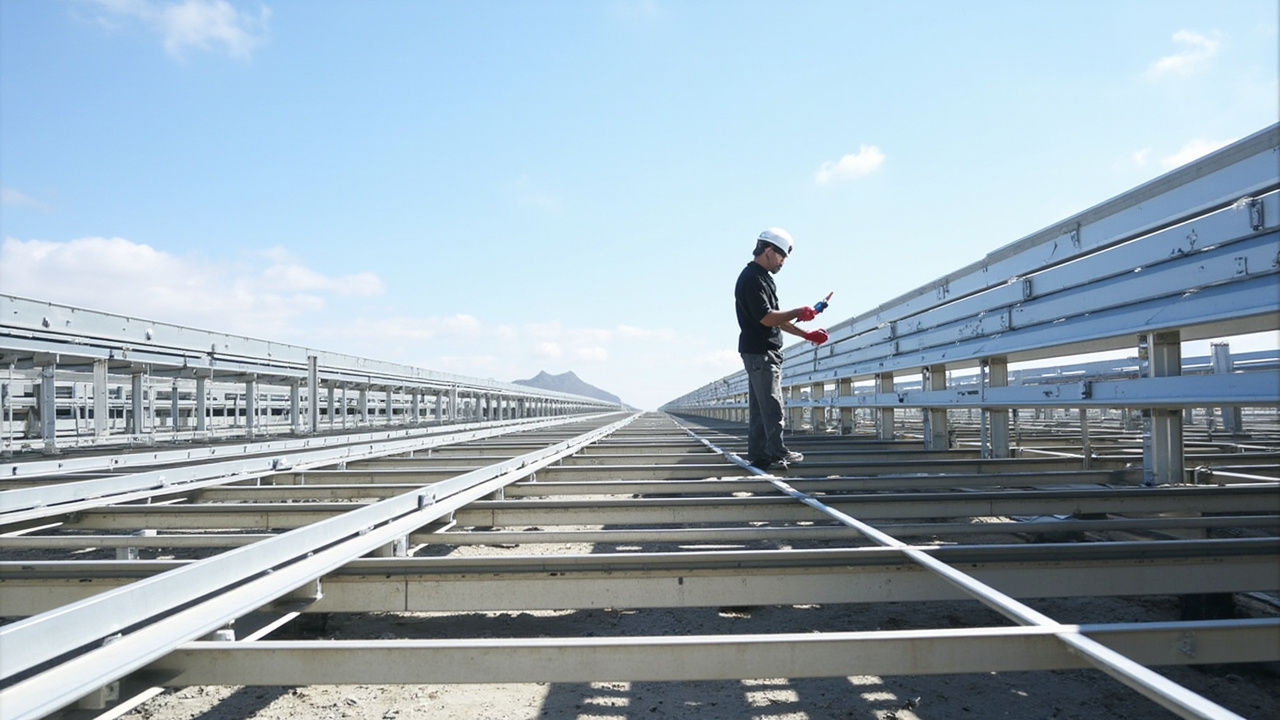
Photovoltaics must be accounted on a life-cycle basis: module warranties often promise 25 or even 30 years of power output, but if the supporting mounts corrode and lose strength prematurely, the array tilt and generation efficiency suffer at best, and structural safety is endangered at worst. PV mounts sit outdoors long-term under UV, temperature swing, rain, salt spray (coastal and mud-flat plants) and industrial atmosphere — a compound attack. As a technical supplier of industrial protective coatings, kexinMaterials has accumulated extensive data on new-energy outdoor steel structures across hot-dip galvanized steel, aluminum and Zn-Al-Mg substrates.
1. Service Environment: Why Harder Than Plant Steel
PV plants are mostly in three environments: arid strong-UV northwest; high-salt-spray southeast coast; humid corrosive mud-flat / fishery-solar sites. Per ISO 12944-2:
- C3 (medium): urban and light industrial atmosphere.
- C4 (high): industrial and coastal (moderate salt).
- C5 (very high): high-salinity coast, offshore, strong industrial pollution.
- CX (extreme): offshore platforms.
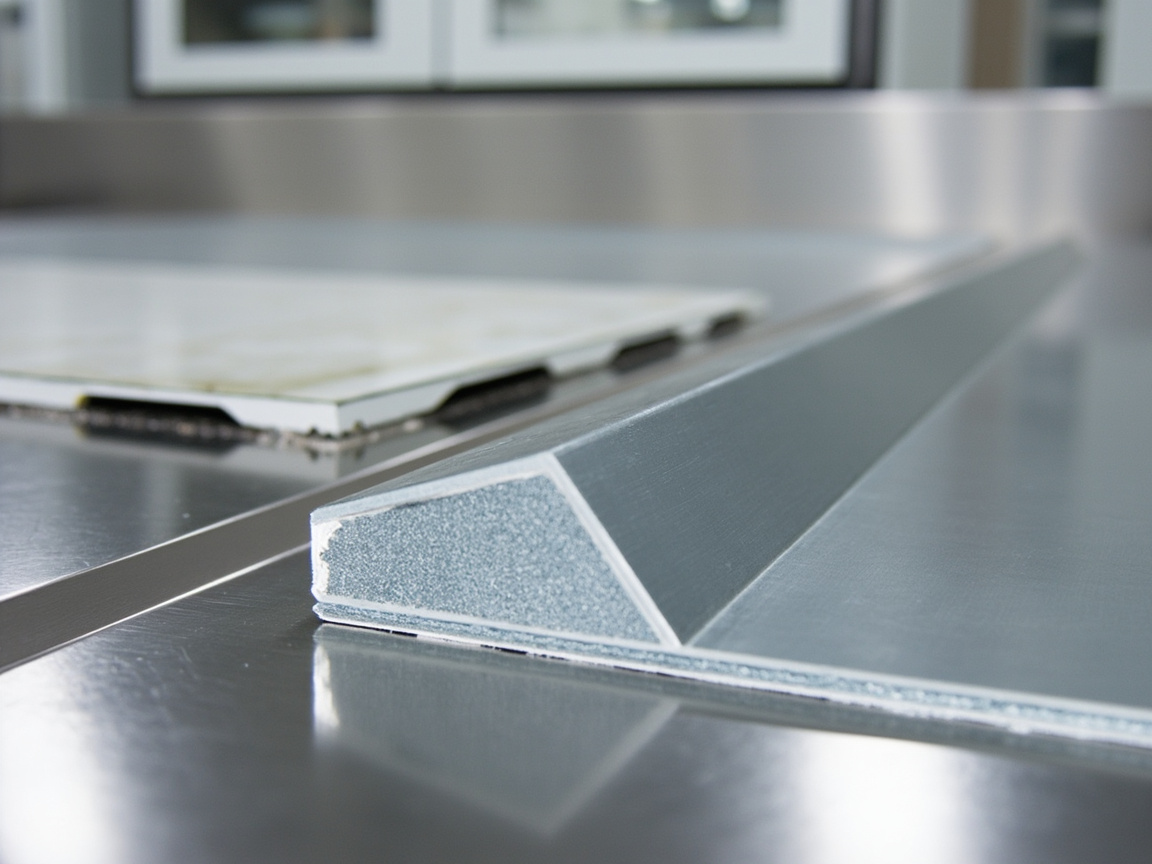
Coastal and mud-flat plants often fall in C4–C5, with corrosion rates far above ordinary plants. Worse, PV mounts are thin-wall open sections (C/U channels, aluminum extrusions); once inner walls corrode, section loss is large relative to load — a special risk of “thin-wall + long life”.
2. Substrate Routes: HDG Steel vs Aluminum vs Zn-Al-Mg
2.1 Hot-dip galvanized (HDG) steel
HDG (GB/T 13912 / ASTM A123) forms a Zn-Fe alloy layer providing sacrificial cathodic protection — the most cost-effective anti-corrosion. But the zinc layer has a life limit in C5, and cuts, welds and bolt holes leave discontinuous zinc needing coating reinforcement. “Painting on galvanized” needs dedicated primer.
2.2 Aluminum extrusion
Light, corrosion-resistant, suited to roofs and weight-sensitive sites, but costlier and still prone to pitting in Cl⁻ environments; galvanic corrosion with steel clamps needs attention. Anodized film helps but as a coating base still needs conversion coating for adhesion.
2.3 Zn-Al-Mg coated steel
New coating, more corrosion-resistant than ordinary galvanize, with good cut-edge self-healing (Zn-Al-Mg eutectic forms a dense protective film at damage) — increasingly used for PV mounts. Still needs proper pre-treatment for interfacial adhesion.
3. Coating System Design: Duplex and Organic Topcoat
3.1 Galvanized + organic coating (Duplex)
ISO 12944-1 defines the “Duplex System”: hot-dip galvanize plus organic coating, life roughly the sum or more (synergy). Typical: “zinc layer + epoxy primer (or zinc-rich) + aliphatic PU / fluorocarbon topcoat”. The zinc layer gives cathodic protection and base; the organic topcoat gives weathering.
3.2 Direct high-weather coating (no/thin zinc)
For aluminum or Zn-Al-Mg, use “conversion coating + weather-resistant topcoat / powder” directly, skipping thick galvanize. Powder coating (polyester/TGIC or PU powder) — solvent-free, uniform, weatherable — is widely used on mounts. For roof mounts where on-site pre-treatment is impossible, factory powder beats field liquid spray.
Duplex synergy: when the zinc layer fails it thins uniformly, not catastrophic perforation; if the organic topcoat is breached, the exposed zinc keeps sacrificing to protect steel — a maintenance window. Use “galvanized-specific primer” (etch or low-surface-tolerance epoxy) and fully remove zinc salt (white rust), or adhesion fails and large-area peeling follows within years.
4. Key Performance Metrics and Standards
- Neutral salt spray (NSS): GB/T 10125 / ISO 9227; galvanized + coating systems need small scribe creep, no blistering; high-durability C5 coastal often ≥ 1000 h.
- Weathering (QUV / xenon): ISO 16474 (QUV), ISO 11341 (xenon); aliphatic PU keeps high gloss retention at 1000–2000 h; fluorocarbon better. Set a gloss-retention floor, not just “pass”.
- Adhesion: GB/T 9286 cross-cut 0/1 on galvanized; pull-off (ISO 4624) ≥ 5 MPa common.
- Zinc thickness: GB/T 13912 minimum by steel thickness (e.g., average ≥ 85 µm) — coating alone cannot save thin zinc.
- Cyclic corrosion & humidity: ISO 14993 / GB/T 24195, GB/T 1740 — real environment is dry-wet-salt-UV alternating.
- Color consistency: GB/T 11186 (ΔE) controls batch color difference.
5. Construction Key Points
- Galvanized pre-treatment: degrease → rinse → remove white rust/zinc salt → conversion/phosphating or direct galvanized primer; never coat over white rust.
- Blasting (if no zinc): steel to Sa2.5 (GB/T 8923.1 / ISO 8501-1), roughness Ry5 40–70 µm.
- DFT control: magnetic gauge (GB/T 4956); edges and cuts are thin — reinforce.
- Environment: 5–40 °C, RH ≤ 85%, steel temp ≥ 3 °C above dew point (ISO 12944-7).
- Powder cure: polyester per TDS (typical 180–200 °C, 10–15 min); verify oven uniformity with a tracker.
- Edge/inner-corner reinforcement: punch cuts and bend inner corners are thinnest, most rust-prone — set “pre-coat + touch-up before line” gates with inner-corner gauge checks.
kexinMaterials emphasizes “pre-treatment + coating + DFT” as one integrated package for mounts, offering thickened topcoat and fluorocarbon upgrade for coastal projects to minimize 25-year maintenance. For thin-wall open sections we additionally recommend inner-wall “pre-coat + edge seal”.
6. Common Failures and FAQ
Most mount-coating failures trace to “poor pre-treatment” or “sub-standard DFT”, not coating quality. Two often-overlooked failures: (1) yellowing raises heat absorption — aromatic PU or poor topcoat yellows under strong UV, raising backplane temperature and indirectly lowering yield; (2) bimetallic corrosion at bolted steel-aluminum joints.
FAQ
Q: Why is hot-dip galvanize preferred over paint alone for PV mounts?
A: HDG protects steel sacrificially even at cuts/damage, with long life and low cost; paint alone rusts locally once scratched. Galvanized + coating Duplex lasts even longer — the industry mainstream.
Q: Why does paint directly on galvanize peel easily?
A: Zinc surface is smooth and forms zinc salt (white rust) and oxide; ordinary paint adheres poorly. Use galvanized-specific primer (etch or low-surface-tolerance epoxy) and remove zinc salt first.
Q: What grade must coastal PV coating meet?
A: Mostly C4–C5 (ISO 12944-2). Recommend salt spray ≥ 1000 h, aliphatic PU or fluorocarbon topcoat, appropriately thickened DFT, and prefer Duplex galvanized system for longer life.
Q: PU vs fluorocarbon topcoat?
A: PU is cost-effective with 10–15 year gloss retention for most projects; fluorocarbon 15–20 year, excellent weathering but costlier, for strong-UV and high-durability coastal. Choose by design life and budget.
Q: Does 1000 h salt spray mean 25 years of use?
A: No direct conversion. Salt spray is relative acceleration, not outdoor years. Judge by ISO 12944 expected durability grade, QUV weathering and real environment together; salt spray is necessary not sufficient.