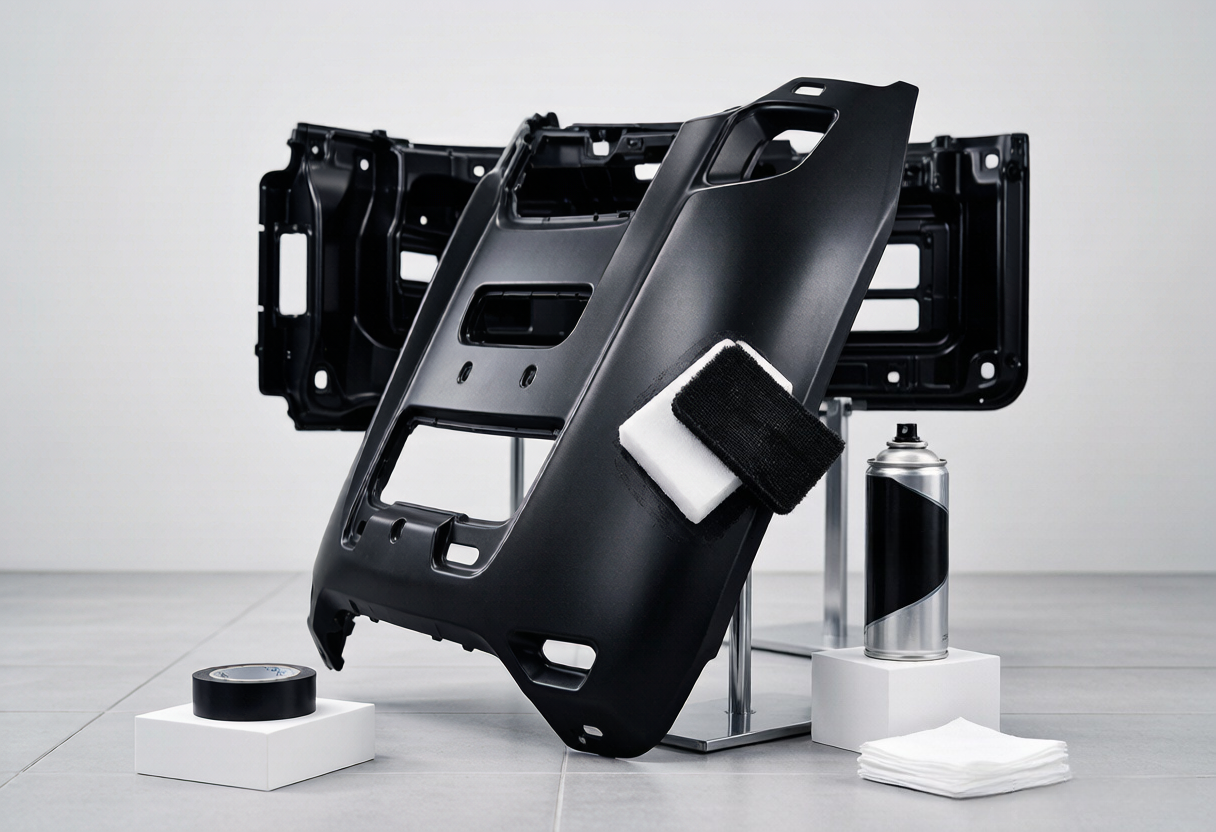
Bumper, mirror cover, side skirt and other plastic parts are the most frequently painted areas in accident repair. But plastic is completely different from metal—its surface has release agent, low polarity, and is prone to deformation when heated. Painting directly on it will very likely cause paint peeling and cracking. To make the paint adhere firmly to the plastic, the pre-treatment is more complex than for metal. This article explains the key steps for painting plastic parts.
I. First identify the plastic material
The polarity and treatment requirements of different plastics vary greatly. Common automotive plastics include PP/EPDM (mainstream for bumpers), ABS, PC, PA, etc. Identification methods include material markings on the back of parts, burning odor, or swelling tests. If the material is misjudged and the wrong primer is selected, the entire sheet will peel off.
II. Removing the release agent is the first step.
During injection molding, plastics retain release agents (wax/silicone-based), which are the biggest obstacle to paint film adhesion. They must be thoroughly wiped with a dedicated degreaser, and if necessary, cleaned a second time with a mild cleaning agent to ensure no oily residue remains on the surface.
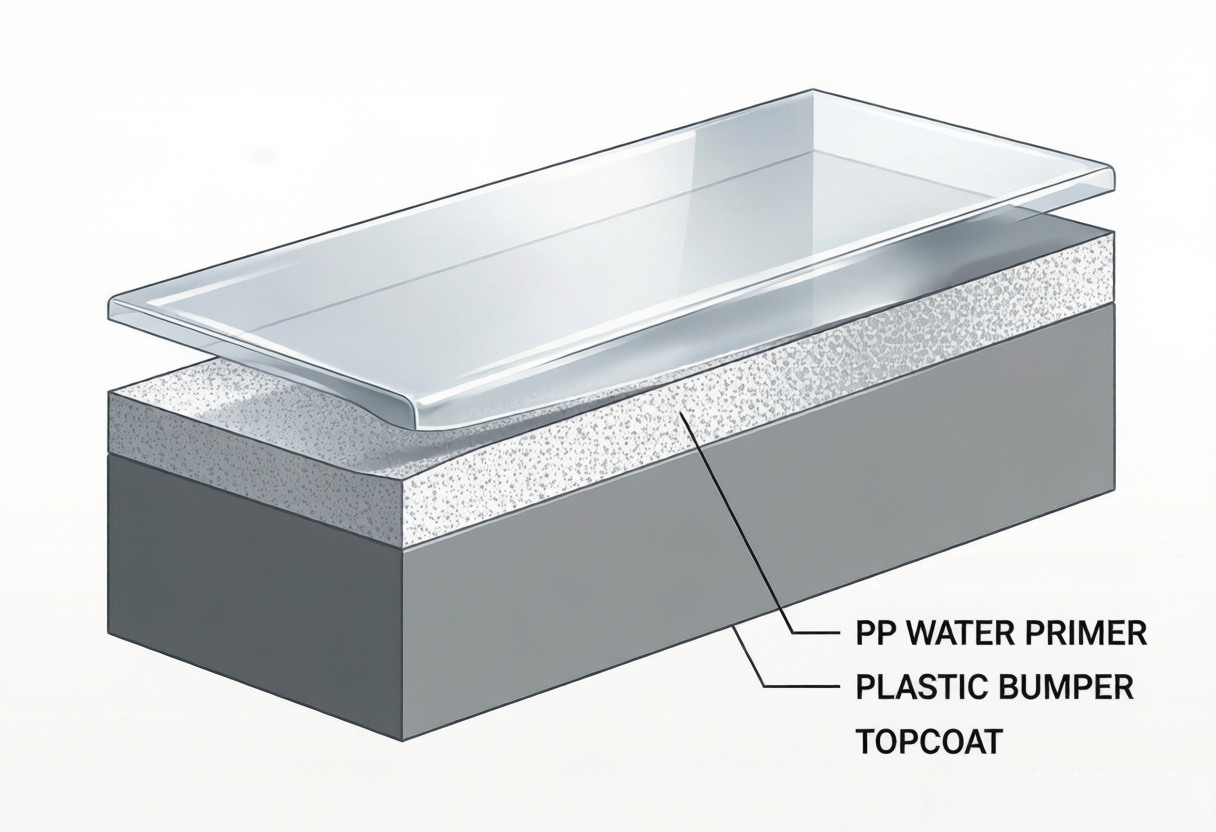
III. Three Methods for Improving Adhesion
| Method | Principle | Application |
|---|---|---|
| PP water / plastic primer | Chlorinated polyolefin type, miscible with PP surface and acts as a "bridge" | PP/EPDM bumpers (most common) |
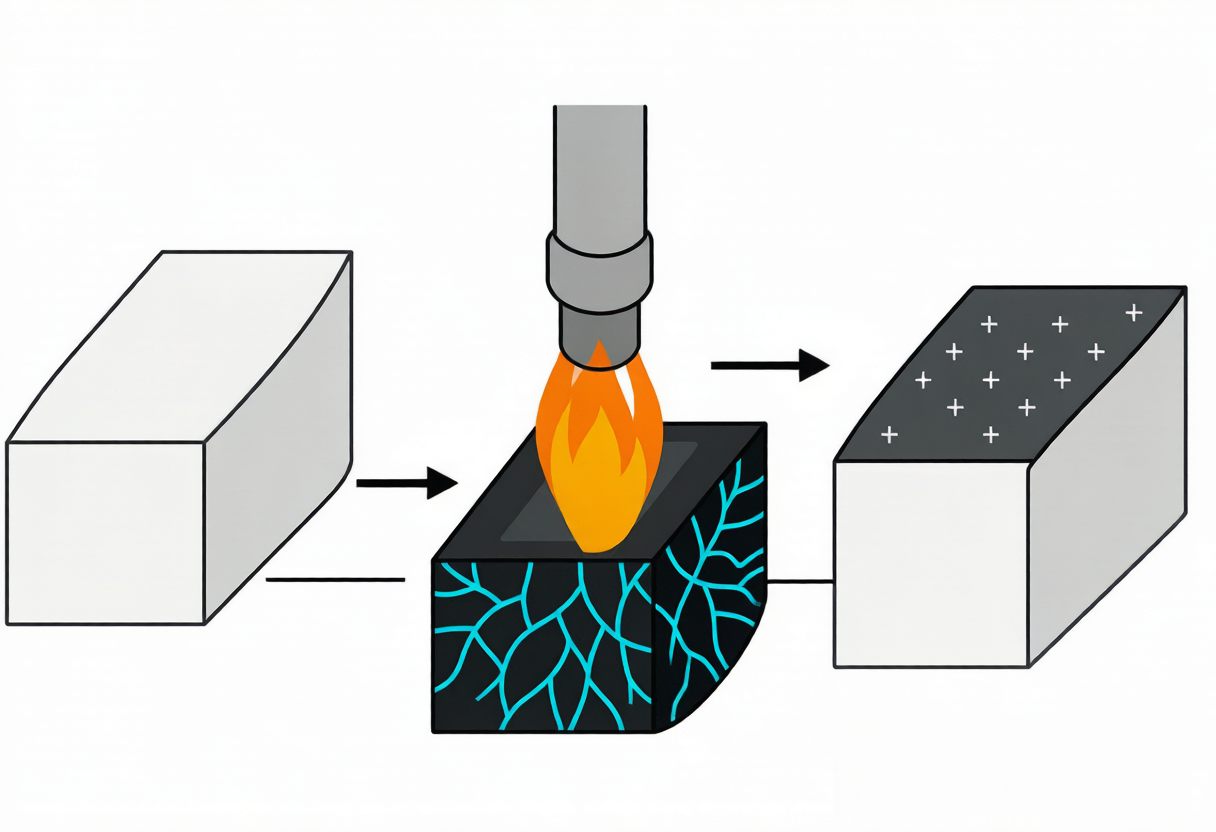
| Flame treatment | Instantaneously oxidizes the surface, increasing polarity | Production line / large-area plastic parts |
| Plasma treatment | Plasma activates the surface, clean with no residue | High-requirement, precision parts |
Summary
The core of painting plastic parts is solving adhesion: first accurately identify the material, then use a degreaser to remove mold release agent, and finally establish a bridge between the plastic and the coating through PP water, flame or plasma treatment. By controlling the baking temperature and avoiding sanding through, the plastic paint surface can be durable without cracking or peeling.
Frequently Asked Questions (FAQ)
{ "@context": "https://schema.org", "@type": "FAQPage", "mainEntity": [ {"@type":"Question","name":"Why does paint peel off when plastic bumpers are sprayed directly?","acceptedAnswer":{"@type":"Answer","text":"Plastic surfaces have mold release agent residue and low polarity, making it difficult for the paint film to adhere; this is especially noticeable with PP-type materials. You must first remove the mold release agent and use PP water/plastic primer as a bridge, otherwise it will very easily peel off in whole sheets."}}, {"@type":"Question","name":"What is PP water? Is it necessary?","acceptedAnswer":{"@type":"Answer","text":"PP water is a chlorinated polyolefin-based plastic primer/adhesion promoter that creates a bridge between PP plastic and the topcoat. It is almost essential for PP/EPDM bumpers, otherwise adhesion cannot be guaranteed."}}, {"@type":"Question","name":"Can plastic parts be painted with high-temperature baking paint?","acceptedAnswer":{"@type":"Answer","text":"No. Plastic easily deforms when heated; the baking temperature should be significantly lower than that for metal parts, usually not exceeding 80°C, and must follow the temperature limits specified by the coating and plastic manufacturers."}}, {"@type":"Question","name":"Which is better, flame treatment or plasma treatment?","acceptedAnswer":{"@type":"Answer","text":"Plasma treatment is cleaner, more controllable, and leaves no residue, suitable for high-requirement parts; flame treatment has low cost and high efficiency, suitable for large-area production lines. Both enhance adhesion by increasing surface polarity."}}, {"@type":"Question","name":"How to determine which primer to use for plastic parts?","acceptedAnswer":{"@type":"Answer","text":"First confirm the material (markings/testing): use PP water for PP/EPDM, and general-purpose plastic primer for ABS/PC, etc.; when uncertain, choose according to the manufacturer's matching system to avoid incompatibility from mixing."}} ] }