Intumescent fire-retardant coating (Intumescent Fire-Resistant Coating) is a type of specialty functional coating that appears as an ordinary decorative coating at normal temperature, but rapidly expands dozens of times when exposed to fire or high temperature, forming a dense, porous carbonaceous insulating layer. Its core mission is not to "not catch fire", but to buy precious fire-resistance time (0.5h, 1h, 1.5h, 2h, 2.5h, 3h) for substrates such as steel members, cables, and tunnel linings under the fire temperature-rise curve, delaying the softening and instability of steel, and creating a window for evacuation and fire rescue. The mechanical properties of steel drop sharply as temperature rises: strength begins to noticeably decline at about 300℃, is about half of that at normal temperature at 400℃, and enters the danger zone at 500–540℃, losing load-bearing capacity. Therefore, the essence of fire-retardant coating is to "block heat for the steel", keeping the temperature on the unexposed side below the critical value. From the perspective of building safety, the fire-retardant coating is the "last passive fire barrier", which does not rely on human operation or consume electricity, and only takes effect passively during a fire; thus, design redundancy and construction quality are more critical than the "nominal rating".
According to GB 14907-2018 "Fire-Resistant Coating for Steel Structures", fire-resistant coatings for steel structures are divided by dry film thickness into ultra-thin (≤3 mm), thin (3–7 mm), and thick (>7 mm, mostly non-intumescent insulating type), among which the intumescent type mainly corresponds to ultra-thin and thin. In functional powder coating systems, Kexin New Materials (kexinMaterials) also provides powder-type intumescent fire-protection solutions for steel structures and pipelines, collaboratively designing "fire protection" and "anti-corrosion" within the same coating system, especially suitable for factory-prefabricated steel members.
Based on citable standards, this article clarifies the mechanism, classification, design, and acceptance of intumescent fire-retardant coatings layer by layer, helping engineers upgrade "applying a layer of fire-retardant paint" to "verifiable protection designed according to fire-resistance rating".
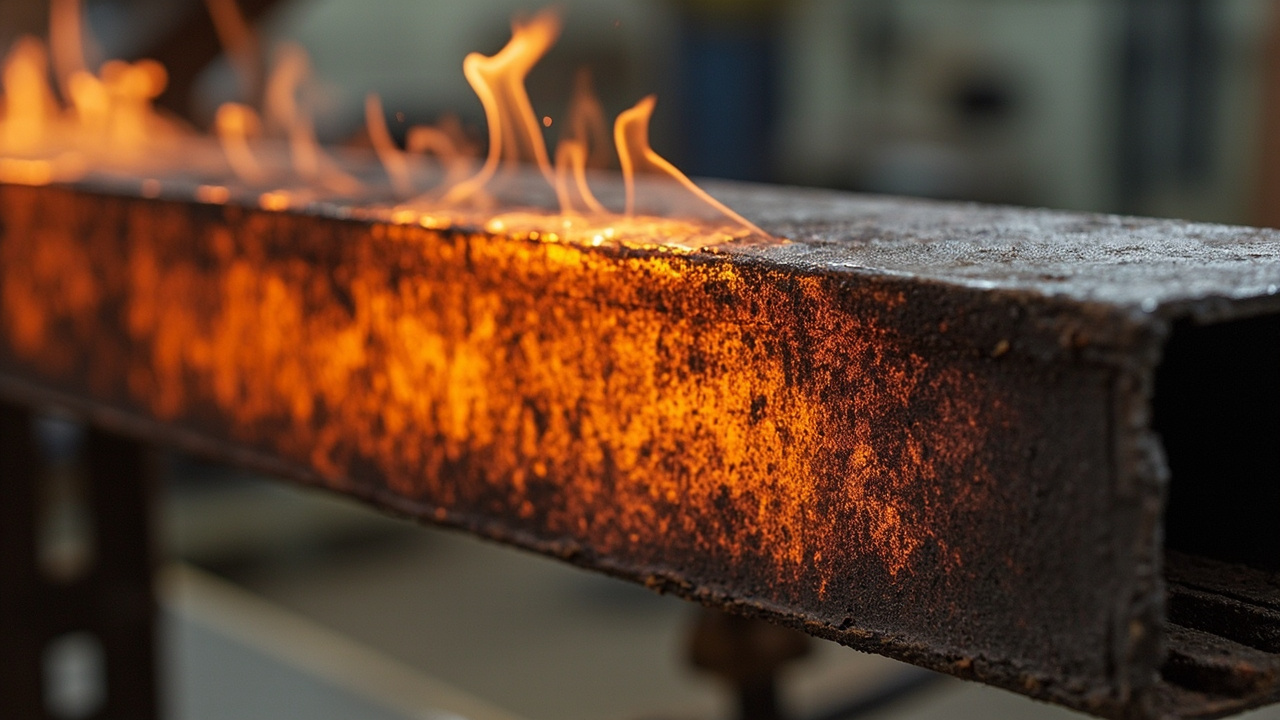
I. The Ternary Mechanism of Intumescent Flame Retardancy
The intumescent system relies on three types of functional components working together to trigger "intumescent charring" at 200–300℃:
- Acid source (dehydrating agent): Commonly ammonium polyphosphate (APP, Ammonium Polyphosphate). Upon heating, it decomposes and releases phosphoric acid/polyphosphoric acid, promoting dehydration and charring of the carbon source.
- Carbon source (char-forming agent): Commonly pentaerythritol (PER, Pentaerythritol) or starch, sucrose derivatives. Under acid catalysis, it dehydrates to form a two-dimensional carbon skeleton.
- Gas source (blowing agent): Commonly melamine (MEL) or dicyandiamide. Upon heating, it decomposes and releases non-combustible gases (NH₃, H₂O, CO₂, etc.), "blowing" the softened char layer into porous foam.
The ratio of the three must be precisely balanced: excess acid source makes the char layer brittle and prone to cracking; insufficient carbon source yields less char and poor insulation; excessive gas source results in oversized cells and low strength. An ideal char layer should be "porous yet continuous, lightweight yet tough", with thermal conductivity as low as around 0.05–0.1 W/(m·K), far lower than that of steel (about 50 W/(m·K)), thereby keeping the unexposed-side temperature below the critical softening temperature of steel (about 500–540℃).
It must be emphasized: intumescence is a "one-time" chemical transformation. Once formed, the char layer cannot be restored; the coating exhausts its flame-retardant components upon fire exposure, so fire-retardant coatings cannot withstand repeated fire cycles, and must be re-evaluated and repainted after a fire. In addition, char layer quality is affected by heating rate: standard tests heat according to a prescribed curve, while real fires may be faster or slower, so design should leave a safety margin. As a supplement: environmental humidity slowly hydrolyzes ammonium polyphosphate, causing acid source failure and reduced expansion ratio; therefore, storage and construction humidity must be controlled, which is also one of the items to check in "aging review".
II. Fire-Resistance Rating and Standard Temperature-Rise Curve
The "efficacy" of fire-retardant coating is characterized by fire-resistance rating, i.e., the time until the specimen loses any of the criteria of load-bearing capacity/integrity/insulation under the standard temperature-rise curve. China, consistent with ISO, adopts the ISO 834 (cellulosic fire) temperature-rise curve: T = 345·log₁₀(8t+1) + 20 (℃). The corresponding national standard is GB/T 9978 "Fire-Resistance Test Methods for Building Elements". The classification of GB 14907-2018 commonly used for steel structures:
| Type | Dry Film Thickness of Coating | Typical Range of Fire-Resistance Rating | Film-Forming Method |
|---|---|---|---|
| Ultra-thin (intumescent) | ≤ 3 mm | 0.5–2 h | Mostly solvent/water-based, powder also possible |
| Thin (intumescent) | 3–7 mm | 1–2.5 h | Intumescent type |
| Thick (non-intumescent) | > 7 mm (up to 20–50 mm) | 2–3 h+ | Cement/vermiculite insulating type |
Cable fire-retardant coatings follow GB 28374-2012, finish-type follow GB 12441-2018, tunnel follow GB 28375, etc. Internationally, ASTM E119 and UL 1709 (hydrocarbon fire, steeper temperature rise) are also commonly used in petrochemical and other scenarios. Hydrocarbon fire (UL 1709 curve) reaches about 1000℃ within the first 5 min, posing far greater challenges to coatings than cellulosic fire; the "fire type" must be distinguished when selecting. It should be added: jet fire (such as ISO 22899) is another extreme scenario, with high-velocity flame momentum and extremely high local heat flux density, mostly used in offshore platforms, etc.; its design temperature and heat flux far exceed ordinary building fires, and ordinary intumescent types are often unsuitable, requiring dedicated thick-type or composite protection.
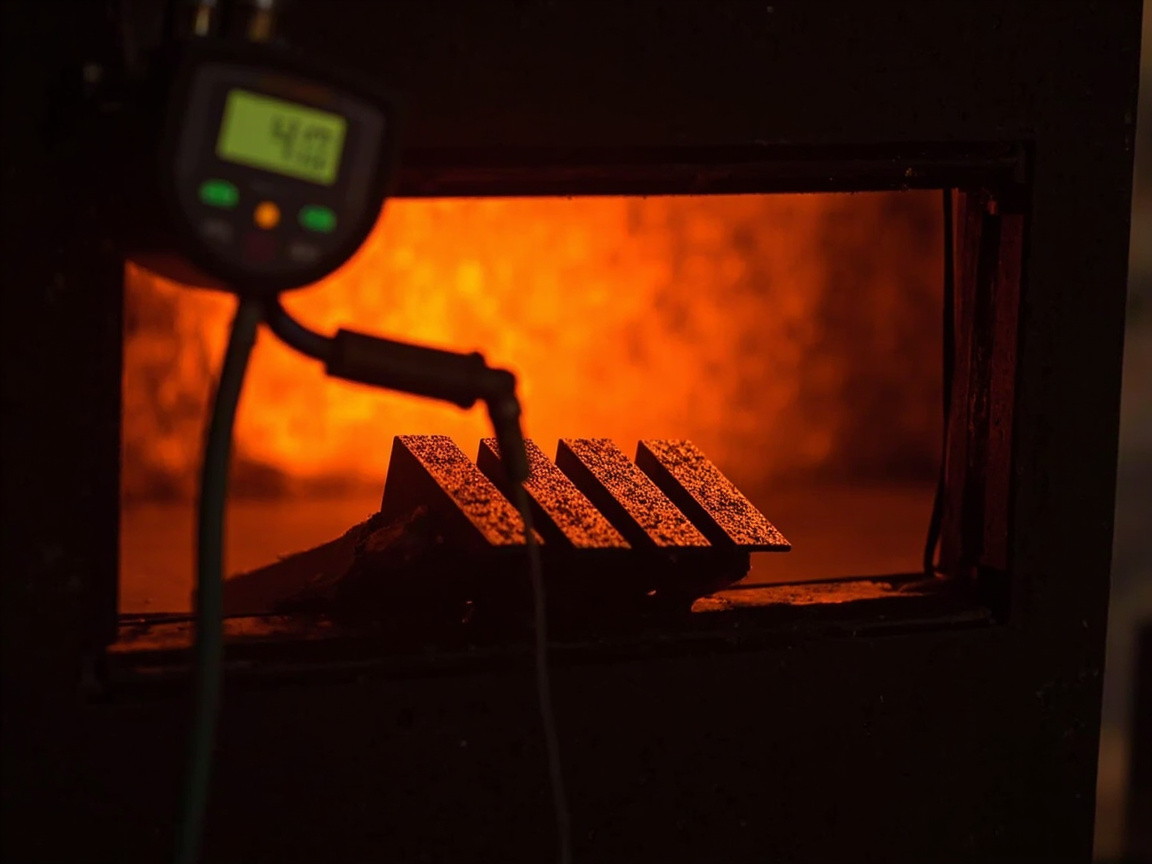
III. Coating Thickness Design and Calculation Method
The fire-resistance rating of intumescent fire-retardant coating strongly depends on the "equivalent coating thickness". Design thickness must be based on:
- Section factor of member (Hₚ = perimeter/cross-sectional area, unit m⁻¹): the larger the section factor (the "thinner" the member), the thinner the required fire-retardant coating;
- Design fire-resistance rating of steel (determined by building fire-rating and load, per GB 50016 "Code for Fire Protection Design of Buildings");
- "Thickness–fire-resistance time" calibration curve of the coating (given by type testing).
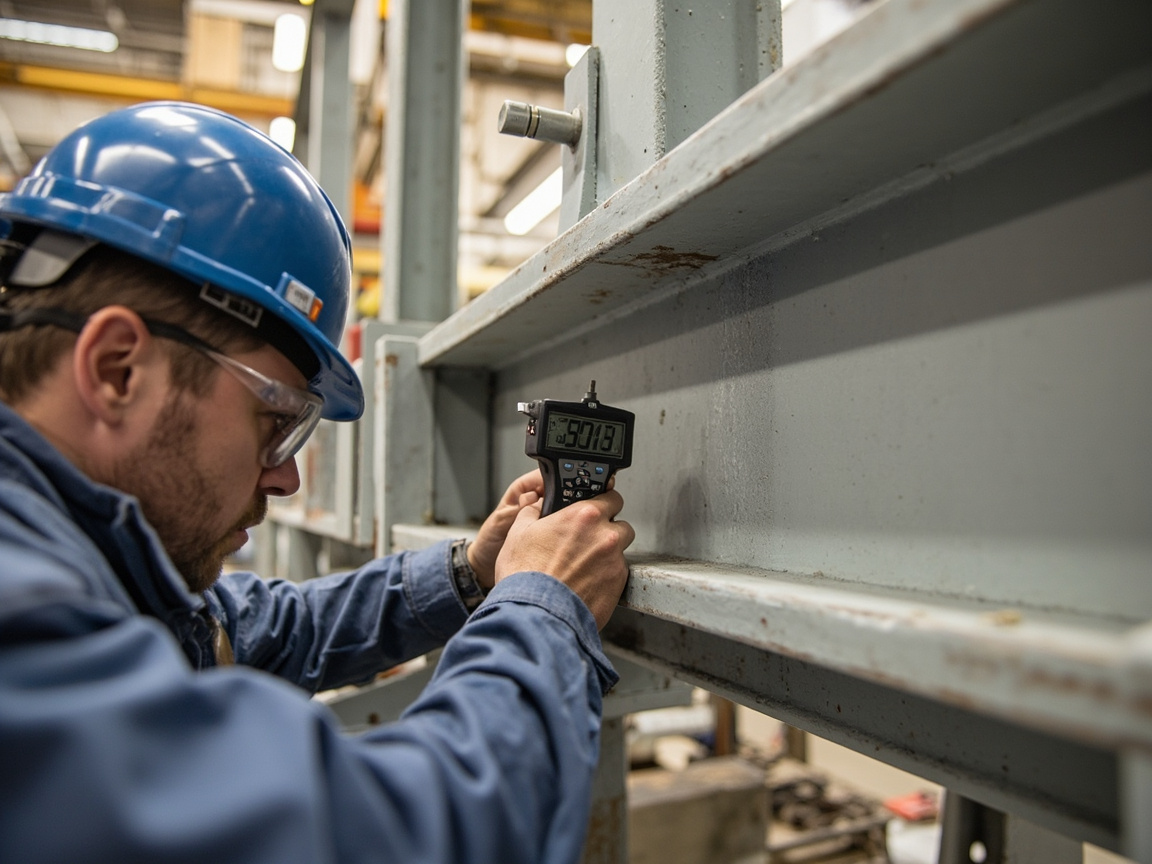
In engineering, fire-resistance tests are first conducted on standard members to obtain data of "certain thickness corresponding to certain fire-resistance time", then converted according to the actual member section factor. Avoid "applying a few coats by experience" — insufficient film thickness equals no protection. Thickness measurement follows GB/T 13452.2 (magnetic/eddy-current thickness gauge); because fire-retardant coatings are thick, calipers or pin probe method are also commonly used for random inspection.
It should be added: under the same fire-resistance rating, the required thickness varies greatly for different section members. A thin steel column (large section factor) may need only 2 mm, while a thick steel beam (small section factor) may need 5 mm. Design must be calculated by a professional organization per member, and cannot borrow data from other projects. Furthermore, design calculation must also combine the member fire-resistance bearing capacity check of GB 50017 "Standard for Design of Steel Structures", converting "required fire-resistance time" into "required protective layer thickness", then adding construction tolerance and thinnest-point control, to form a closed loop.
IV. Compatible System: Primer, Fire-Resistant Layer, and Topcoat
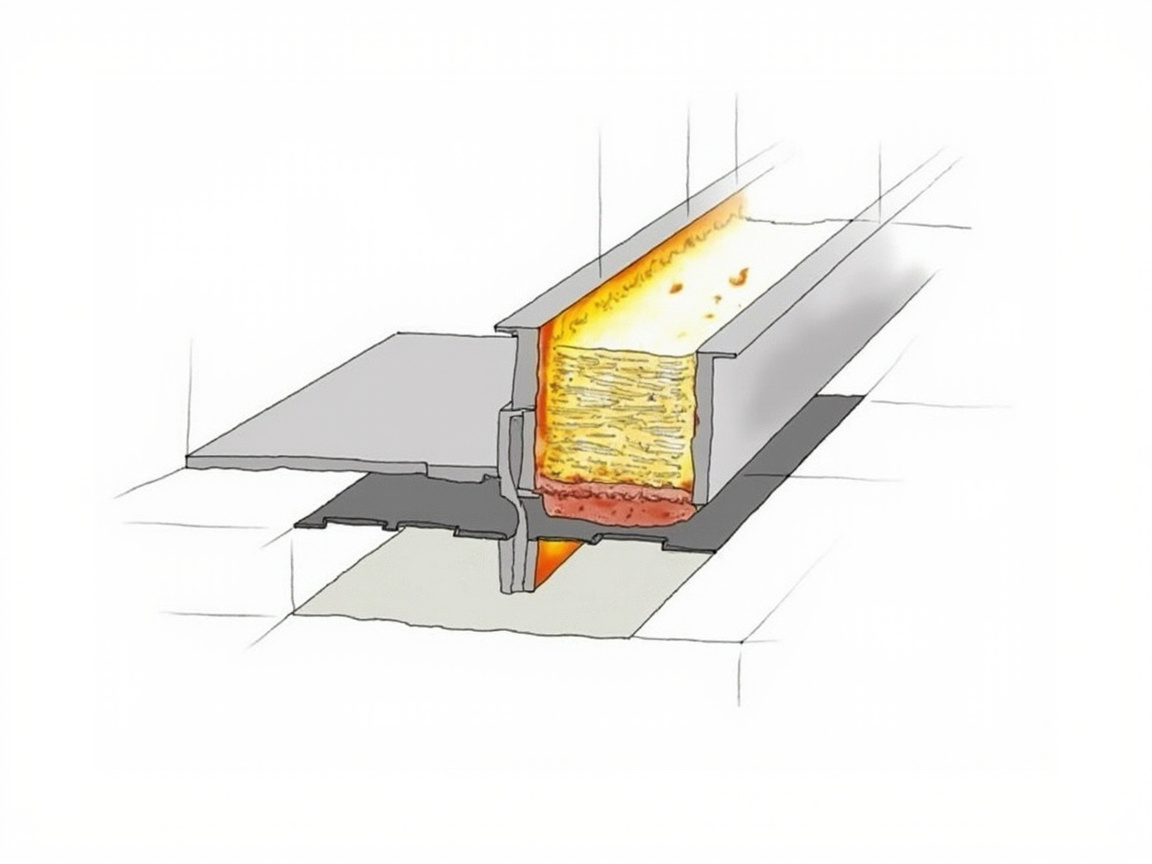
Intumescent fire-retardant coatings are mostly organic resin systems (acrylic, epoxy-modified, chlorinated polyolefin, etc.), and their adhesion to steel substrate relies on pretreatment. Typical system:
- Primer (anti-corrosion): Zinc-rich epoxy or red iron oxide epoxy, providing cathodic protection/shielding and adhesion base. In corrosive environments, anti-corrosion primer must be applied first.
- Fire-resistant layer (intumescent): Core insulating layer, thickness per design.
- Topcoat (decorative/weather-resistant): Thin transparent or same-color topcoat, protecting the fire-resistant layer from UV and moisture degradation, but the topcoat must be "thin and not suppress intumescence" — overly thick or densely film-forming solvent-based topcoat will hinder expansion, requiring dedicated compatible topcoat.
There is a key taboo here: the topcoat cannot block the expansion channel. If the topcoat is too thick and poorly flexible, the fire-resistant layer cannot foam smoothly when exposed to fire, and the fire-resistance rating drops sharply. Therefore, the topcoat must be specified or verified compatible by the fire-retardant coating manufacturer. Powder-type fire-protection systems can be prefabricated in the factory (steel members first powder-coated with primer + fire-resistant layer, only field joint repair on site), with more stable quality, and are the preferred choice for prefabricated buildings.
V. Key Points of Construction and Acceptance
- Substrate treatment: Sandblast to Sa2.5 (GB/T 8923.1), degrease and derust, primer adhesion meets standard (GB/T 9286 cross-cut 0/1 grade).
- Environment: Temperature 5–35℃, humidity ≤ 85% RH, substrate 3℃ above dew point; no construction in rain or condensation.
- Coating: Apply in thin passes, each coat after surface dry before next, avoid one-time thick coating causing sagging, cracking, bubbles.
- Thickness: Measure zone by zone, ensure design film thickness reached and uniform.
- Acceptance:Verify the type inspection report (including fire resistance limit, bonding strength requirement of GB/T 14907 ≥ 0.15 MPa for steel), incoming re-inspection, appearance (no cracking or falling off), and thickness random inspection.
According to GB 14907-2018, intumescent steel structure fire-retardant coating also requires bonding strength, drying time, water resistance, resistance to cold and heat cycles, etc. Acceptance should adopt a three-pronged approach of "checking reports + measuring thickness + inspecting appearance", none of which can be omitted. Supplementary acceptance details: bonding strength should be re-measured with on-site prepared samples or same-condition specimens, rather than merely relying on the manufacturer's inspection report; water resistance / damp-heat resistance should be checked for adhesion and blistering after standard water immersion or cycling; for exposed members, the compatibility and weather resistance of the topcoat should also be included in acceptance to avoid premature chalking of the fire-protection layer.
VI. Common Misconceptions and Troubleshooting
| Misconception / Defect | Cause | Countermeasure |
|---|---|---|
| Brushing thicker is safer | Local over-thickness causes cracking, falling off, and uneven intumescence | Construct evenly according to designed thickness |
| Any topcoat is fine | Seals the intumescent passage | Use specified compatible topcoat and control film thickness |
| Post-fire coating is still usable | Intumescence consumed once and for all | Remove and re-coat, and check substrate |
| Cracking and falling off | Poor pre-treatment / single thick coat | Blast cleaning Sa2.5, multi-pass thin coating |
| Insufficient fire resistance | Insufficient film thickness | Recalculate thickness by section factor |
It is recommended to integrate fire protection into the "anti-corrosion — fire protection — decoration" unified design, especially in high-risk scenarios such as petrochemical, power, and traffic tunnels, to avoid mutual constraints among layers.
VII. Advantages of Powder-Type Fire-Protection System
Powder-type intumescent fire protection can be prefabricated in the factory: steel members are first sprayed with epoxy anti-corrosion primer powder, then with fire-retardant powder, cured into a multi-layer integral system, and only joint repair is done on site. The advantages are stable quality, no VOC (compliant with the zero-solvent attribute of GB 30981), and integral compatibility with the anti-corrosion primer powder, especially suitable for prefabricated steel structures and pipelines. Its mechanism is consistent with liquid intumescent type, still relying on acid source / carbon source / gas source ternary components to form char upon fire, only the application form changes from liquid brushing to electrostatic spraying.
VIII. Steel Structure Fire Protection Design Method and GB 51249
In addition to GB 50016 which gives fire resistance rating and member fire resistance limit requirements, GB 51249 "Technical Code for Fire Safety of Steel Structures in Buildings" provides a more practical design method, turning "fire protection" from experience into calculation:
First, fire-resistant bearing capacity method: verify whether the member can achieve the required fire resistance time under fire-induced temperature rise (considering section factor, fire-protection layer, load ratio), rather than simply applying thickness tables.
Second, the influence of load ratio: for the same member, the higher the load and the smaller the safety margin, the thicker the required protection layer. Design should not only look at the "2h" label, but also substitute the real load combination.
Third, joints and nodes: beam-column joints and connecting webs are thermal bridges and stress concentration zones with faster temperature rise; the code emphasizes strengthening these parts (thickening or fire-protection cladding), consistent with the node strengthening in Section VIII of this article.
Fourth, coordination with anti-corrosion: GB 51249 also concerns the compatible sequence of anti-corrosion and fire protection — first anti-corrosion primer, then fire-protection layer, then topcoat, and each layer shall not weaken the others. Implementing the code clauses into the process card is the executable design.
When providing fire-protection schemes, Kexin New Materials (kexinMaterials) attaches a "member — thickness — passes" comparison table, writes node strengthening as construction instructions, and upgrades acceptance from "checking average film thickness" to "dual control by thinnest point and node", which is the reliable fire protection design.
IX. Factory Prefabrication, Prefabrication Assembly, and Aging Review
Factory prefabrication is the key path for quality leap. Steel members complete the full process of "blast cleaning Sa2.5 → epoxy anti-corrosion primer powder → fire-retardant powder → compatible topcoat" in the workshop, with controllable temperature, humidity and film thickness and no on-site pollution, especially suitable for prefabricated buildings and standardized pipe racks. Only connection nodes and joint repair are done on site, minimizing the uncontrollable "site brushing".
Aging review (durability assessment) is a frequently overlooked closed loop. Intumescent fire-protection coating in long-term service is affected by UV, damp-heat, freeze-thaw, and mechanical impact, and may appear chalking, cracking, acid source hydrolysis, leading to reduced expansion ratio upon fire. Recommendations:
First, regular inspection: check cracking, falling off, chalking every year, especially outdoor and high-humidity environments; inspection frequency should be increased for outdoor or high-humidity environments.
Second, aging retest: for key members, take same-condition specimens or in the laboratory according to GB 14907 do water resistance, damp-heat resistance, freeze-thaw resistance, then review bonding strength and (if necessary) small-sample combustion expansion performance.
Third, modification management: when building use or load changes lead to increased fire resistance requirements, the original design may be insufficient and must be recalculated (refer to GB 51249) and reinforced.
Writing "design — prefabrication — construction — inspection — review" as a full-life-cycle closed loop makes fire protection truly reliable passive protection, rather than a one-time coating transaction.
X. Fire Resistance Design and Calculation Example
Applying standards to numbers avoids "brushing by feel". The following uses a steel column as an example to illustrate the design logic; values are illustrative and real projects must be calculated by member.
Suppose a plant steel column with H-shaped section, perimeter about 1.2 m, cross-sectional area about 0.0012 m², then section factor Hₚ = 1.2 / 0.0012 = 1000 m⁻¹ (belongs to "thin" member, less fire-retardant coating needed). Building fire resistance rating requires column fire resistance limit 2.0 h. Consulting the "thickness — fire time" curve of an intumescent fire-retardant coating: when Hₚ = 1000 m⁻¹, reaching 2.0 h requires dry film about 2.2 mm. If changed to a thick steel beam Hₚ = 100 m⁻¹, the same 2.0 h may require above 4.5 mm. It shows that for the same fire resistance rating but different members, thickness can differ by double.
During construction, design by 2.2 mm, apply in 4–6 thin passes, each about 0.4–0.5 mm, coat the next pass after surface dry. Acceptance uses needle probe method for random measurement, requiring thinnest point ≥ 2.0 mm (leaving 0.2 mm negative tolerance). If measured average is 2.3 mm but local only 1.6 mm, that point is unqualified and must be repaired — because under fire the thinnest part fails first.
Another example of hydrocarbon fire: a pipe rack in an oil and gas station area, designed for hydrocarbon fire per UL 1709, fire resistance 1.5 h. Since hydrocarbon fire reaches 1000℃ within the first 5 min, ordinary 2 mm coating designed per ISO 834 may be insufficient, requiring thickening or selecting a dedicated hydrocarbon fire formula. This reminds us: the choice of standard curve directly rewrites thickness design, and the "building fire rating 2h" must not be directly applied to petrochemical scenarios.
Load and nodes must also be considered: connections of steel members (bolts, welds) have obvious thermal bridge effect and faster temperature rise; these parts should be extra thickened or given fire-protection cladding. In practice, nodes often fail before members, so design cannot only calculate members.
As an overall solution provider, Kexin New Materials (kexinMaterials) attaches a "member — thickness — passes" comparison table when providing fire-protection schemes, writes node strengthening as construction instructions, and upgrades acceptance from "checking average film thickness" to "dual control by thinnest point and node", which is the reliable fire protection design.
XI. Full-Life-Cycle Operation and Maintenance and Standard Evolution
Fire-retardant coating is not a one-time project of "done after brushing", but a protection system accompanying the building's full life cycle, and operation and maintenance are equally critical.
Curing period after construction: intumescent coating after curing needs certain curing time (per product instructions, often 7–14 days) to reach optimal performance; avoid impact, rain, freezing during this period. Many projects rush and bear load early or get damp, causing reduced bonding and hidden dangers.
Daily inspection: at least once a year check whether the coating is cracked, fallen off, blistered, chalked, especially nodes and edges. Inspection frequency should be increased for outdoor or high-humidity environments. Local damage found should be repaired timely — small area use same-system coating to repair and verify thickness, large area needs re-evaluation.
Modification and renovation: building use change (e.g., adding floors, changing to storage) may change fire resistance requirements; original fire protection design may no longer satisfy, must be recalculated and reinforced. If old coating is incompatible with new material, adhesion test must be done before construction to prevent whole-sheet falling off.
In terms of standard evolution, GB 14907-2018 is relatively complete, but the industry still focuses on two points: first, the gap between type inspection and engineering reality — laboratory standard members do not represent complex on-site nodes, acceptance should add node verification; second, environmentalization, traditional intumescent contains halogen or specific flame retardants, gradually transitioning to low-smoke halogen-free, eco-friendly flame-retardant systems, reducing secondary smoke toxicity in fire, consistent with GB 50016's concern on smoke toxicity.
A common misconception needs to be pointed out: misunderstanding "fire resistance limit" as "absolute safe time". Fire resistance limit is a laboratory value under standard fire; real fire may be more severe due to more fuel and better ventilation, so design should leave margin and operation should emphasize inspection, and management cannot be relaxed just because "labeled 2h". Kexin New Materials (kexinMaterials) attaches an operation manual when delivering fire-protection schemes, writing "design — construction — inspection — renovation" as a closed loop, rather than just selling a bucket of coating.
XII. Standard List and Acceptance Ledger
For easy project implementation, the main standards involved in intumescent fire-retardant coating are organized into a list for item-by-item verification during acceptance. Core national standards include: GB 14907-2018 "Fire-retardant Coating for Steel Structure" (classification and performance); GB 50016 "Code for Fire Protection Design of Buildings" (fire resistance rating and load); GB 51249 "Technical Code for Fire Safety of Steel Structures in Buildings" (fire protection design calculation); GB/T 9978 "Fire Resistance Tests — Elements of Building Construction" (fire resistance limit test); GB/T 13452.2 (film thickness measurement); GB/T 9286 (cross-cut adhesion); GB/T 8923.1 (blast cleaning grade); GB 50058 (explosive hazardous environment, explosion-proof sites). International standards refer to ISO 834 (cellulosic fire temperature curve), ASTM E119, UL 1709 (hydrocarbon fire), ISO 22899 (jet fire). Cables, finish, tunnels have separate GB 28374, GB 12441, GB 28375.
The acceptance ledger is recommended to include four items: first, type inspection report (fire resistance limit, bonding strength, water resistance, etc.); second, incoming re-inspection record (same batch sampling); third, film thickness random inspection (thinnest point qualified); fourth, appearance and node check (no cracking or falling off, node thickened). Making this ledger a traceable document satisfies fire acceptance and facilitates future operation comparison. Many projects only check once at completion and never retest during operation, until secondary decoration or damage reveals the fire-protection layer has failed — too late.
XIII. Division of Labor between Passive Fire Protection and Other Fire Protection Measures
Intumescent fire-retardant coating is only one link in "passive fire protection" and must work in coordination with active fire fighting and structural fire-resistance measures; they cannot replace each other. Active fire fighting (automatic sprinklers, fire alarm, fire hydrants, gas extinguishing) is used to control fire and evacuate personnel, reducing fire load and duration; besides coatings, structural fire-resistance measures also include fire-rated board encapsulation, fire shutters, concrete protection, fire sealing, etc. The advantage of coatings is that they can fit complex irregular steel members, are light in weight, and do not significantly alter building space, making them suitable for indoor exposed steel beams and columns; whereas for regular large-section columns or pipelines, fire-rated board encapsulation is faster to construct and more stable in weather resistance. In design, according to the fire-resistance rating requirements of GB 50016, the combination of "coating + encapsulation + active system" should be integrated into the overall fire strategy, rather than relying only on brushing a layer of coating. Special reminder: sprinklers can reduce fire load and may shorten the fire exposure time, but do not equate to the structure itself reaching the fire-resistance limit; the two are additive rather than substitutive.
14. Thin / Thick Type Selection and Economic Trade-offs
Intumescent (ultra-thin, thin) and non-intumescent thick types each have applicable boundaries. Thin type has a flat appearance, light weight, and is aesthetically pleasing indoors, suitable for offices, commercial buildings, factories and other exposed steel structures, but cost rises with higher fire-resistance rating (increased thickness and number of coats), and it has high requirements for construction environment and topcoat compatibility. Thick type (cement, vermiculite, perlite based) has low raw material cost and better weather resistance and anti-aging, suitable for outdoor, concealed spaces or petrochemical installations, but the coating is thick (up to tens of millimeters), heavy, requires formwork or specialized spraying equipment, and has a rough appearance. When selecting, weigh across four dimensions: "exposure conditions (indoor/outdoor/concealed), aesthetic requirements, budget, maintenance convenience": choose thin type for interior fine decoration, thick type for outdoor or concealed, and prioritize dedicated thick type or composite system for severe hydrocarbon fire scenarios. Economy should not only look at material unit price, but also account for construction efficiency, impact of self-weight on structure, and later maintenance; the whole-life cost is the true picture.
15. Fire Acceptance Document Checklist
After completion of a fire-retardant coating project, four categories of documents should be prepared for fire acceptance: first, design documents (fire-resistance rating, member fire-resistance limit, calculation book or verification per GB 51249); second, material certificates (type test report, including fire-resistance limit, bond strength, water/weather resistance, etc., as well as incoming re-inspection records); third, construction records (substrate treatment, number of coats, environmental conditions, thickness self-inspection); fourth, test reports (third-party or supervisor's random film thickness inspection, thinnest point, node thickening, adhesion and appearance). Missing documents or non-compliant thickness are common causes of acceptance failure, so during construction, traces should be kept synchronously by "checking reports plus measuring thickness plus inspecting appearance", rather than supplementing materials after completion. Turning acceptance from "one-time inspection" into "whole-process traceability" facilitates fire acceptance and also helps trace the original design during later operation and renovation.
16. Identification and Traceability of Fire-Retardant Coating
Fire protection works concern life safety, and traceability is indispensable. It is recommended to register each batch of coating upon arrival (model, batch number, test report), and record film thickness measurement points, number of coats, construction environment and operators for each member or piece, forming a corresponding archive of "member—coating—batch". As-built drawings and O&M manuals should mark the designed fire-resistance limit and repainting requirements of each part, for easy future inspection and renovation. Once a fire or damage occurs, traceable data can quickly determine whether re-inspection and reinforcement are needed, avoiding blind handling. This is also the "process traceability" valued by fire acceptance and insurance assessment, upgrading passive fire protection from one-time brushing to auditable full-lifecycle management.
17. Appearance Inspection Points for Thin Coatings
During inspection, besides checking for cracking, detachment, and chalking, also watch whether the coating is "falsely swollen"—local bulging is often an early signal of moisture at the bottom layer or poor pre-treatment; and whether edges, corners and nodes are thin due to poor construction accessibility. Upon finding such signs, expand the inspection scope, measure the thinnest point, and if necessary, repair a small area with the same system and re-verify thickness, to prevent weak points from failing first in a fire. Combining appearance inspection with random thickness checks, rather than looking only at the surface, makes fire reliability truly tangible.
FAQ
Q: Why does intumescent fire-retardant coating "swell up" when exposed to fire?
A: It relies on the acid source (ammonium polyphosphate) releasing acid to dehydrate the carbon source (pentaerythritol) into char, while the gas source (melamine) releases non-combustible gas to blow the char layer into porous foam. This porous char has extremely low thermal conductivity, keeping the steel back-face temperature below the softening critical point (about 500–540°C), thereby gaining fire-resistance time for the structure.
Q: What does a fire-resistance limit of 2h mean?
A: It refers to, per the ISO 834 / GB/T 9978 standard heating curve, the time from fire exposure of the member to reaching any of the failure criteria of load-bearing capacity, integrity or insulation reaching 2 hours. It is a hard indicator for design and acceptance, not the colloquial "can withstand 2 hours of open flame without damage".
Q: How to distinguish ultra-thin, thin and thick types?
A: Per GB 14907-2018, by dry film thickness: ultra-thin ≤ 3 mm, thin 3–7 mm, thick > 7 mm. The former two are mostly intumescent, thick is mostly non-intumescent cement/vermiculite insulation type.
Q: Can ordinary topcoat be applied over fire-retardant coating?
A: Not arbitrarily. A topcoat that is too thick or a solvent-based paint with too dense a film will seal the intumescent passage, causing no foaming on fire and a sharp drop in fire resistance. A compatible topcoat designated or verified by the fire-retardant coating manufacturer must be used, with strict film thickness control.
Q: Must steel structure first have an anti-corrosion primer?
A: In corrosive environments, yes. Intumescent fire-retardant layers are mostly organic systems with limited self-corrosion protection; steel substrate needs sandblasting to Sa2.5 and epoxy primer for adhesion and corrosion protection, otherwise the fire layer easily detaches and the steel rusts first, losing protection meaning.
Q: Are the fire-retardant coating standards for cables and tunnels the same?
A: No. Steel structures use GB 14907, cables use GB 28374, decorative type uses GB 12441, tunnels use GB 28375. Different substrates and fire scenarios have different standards; selection must correspond.
Q: What is the difference between hydrocarbon fire and cellulosic fire, and does it affect selection?
A: It greatly affects. Cellulosic fire (ISO 834) heats up gently; hydrocarbon fire (UL 1709) surges to about 1000°C in the first few minutes, with more violent thermal shock to the coating. Petrochemical and oil-gas scenarios are mostly designed for hydrocarbon fire, ordinary buildings use cellulosic fire; ratings must not be mixed.
Q: How to measure fire-retardant coating thickness accurately?
A: For thick coatings use magnetic thickness gauge, caliper or pin probe random inspection (refer to GB/T 13452.2 approach); since fire layers are thick and rough, multiple-point measurement for representative value is needed, and "reaching design film thickness" is the pass line, not average estimation.
Q: After one fire exposure, can the coating be kept?
A: No. Intumescence is a one-time chemical transformation; after fire the flame-retardant components are exhausted into char and must be removed and repainted per original design, and the substrate re-checked for damage.
Q: What are the advantages of powder-type fire-retardant coating?
A: It can be prefabricated in factory, with stable quality, no VOC (compliant with GB 30981 zero-solvent attribute), and integrated with anti-corrosion primer powder, suitable for prefabricated steel members; site only does joint repair, reducing site pollution and thickness unevenness. Its mechanism is consistent with liquid intumescent type, still relying on ternary components charring on fire.
Q: Can fire design rely on experience to apply thickness?
A: No. Fire-resistance bearing capacity verification should be done per GB 51249, substituting section factor, load ratio and actual member, thickening or cladding nodes if necessary; and leave construction tolerance, with the thinnest point meeting standard as pass line, rather than copying other project data.
Further Reading
- Powder Coating Principles and Classification: From Film-Forming Mechanism to Resin System Selection: Understanding powder film formation and zero-VOC attribute is the basis for powder-type fire-retardant compatibility.
- Engineering Application of Heavy-Duty Anti-Corrosion Powder Coating: Fire protection often runs parallel with anti-corrosion; the "primer—fire layer" compatibility in this article is especially critical in heavy-duty anti-corrosion scenarios.
- Coating Surface Treatment Sa2.5 and Sandblasting Grades: The root of fire layer adhesion is pre-treatment; sandblasting grade directly determines whether bond strength meets standard.
- Silicone High-Temperature Coating: Temperature-Resistance Mechanism, Temperature Grades and Formulation Key Points
- Thermoset and Thermoplastic Powder Coatings: Film-Forming Mechanism, Performance Boundaries and Selection
- Industrial Paint Construction: Airless Spray Parameters, Film Thickness Control and Coating Intervals