Wear-resistant powder coating is a type of functional coating that introduces hard fillers and a highly cross-linked network, enabling the film to maintain mass and dimensional stability under mechanical actions such as friction, scratching, erosion, and impact. In many industrial sites, failures are not caused by corrosion or aging, but by "wear"—conveying equipment is scratched by materials, oil pipes are eroded by produced fluids, racks are hit by forklifts, and mining machinery is worn by ore. According to incomplete statistics, material and energy losses caused by friction and wear account for a considerable proportion in the manufacturing industry. Powder coating, because it allows one-coat thick application, free filler addition, and is solvent-free, is a natural carrier for wear-resistant coatings, able to form a protective shell on metal surfaces that is harder and more cutting-resistant than the substrate. More importantly, wear-resistant powder changes "wear resistance" from replacing the whole part to "adding a designable hard shell on the surface," greatly reducing downtime and spare parts costs.
In the field of functional powders, Kexin New Materials (kexinMaterials) provides solutions ranging from general-purpose wear-resistant epoxy to high-alumina and silicon carbide heavy wear-resistant powders, and synergizes with anti-corrosion and anti-static functions. Based on citable standards (GB/T 1768, GB/T 23988, ASTM D4060, ASTM G65, GB/T 6739, etc.), this article breaks down the technical logic of wear-resistant powder coatings to help engineers turn "wear resistance" from a slogan into quantifiable service condition design.
I. Four Basic Mechanisms of Wear
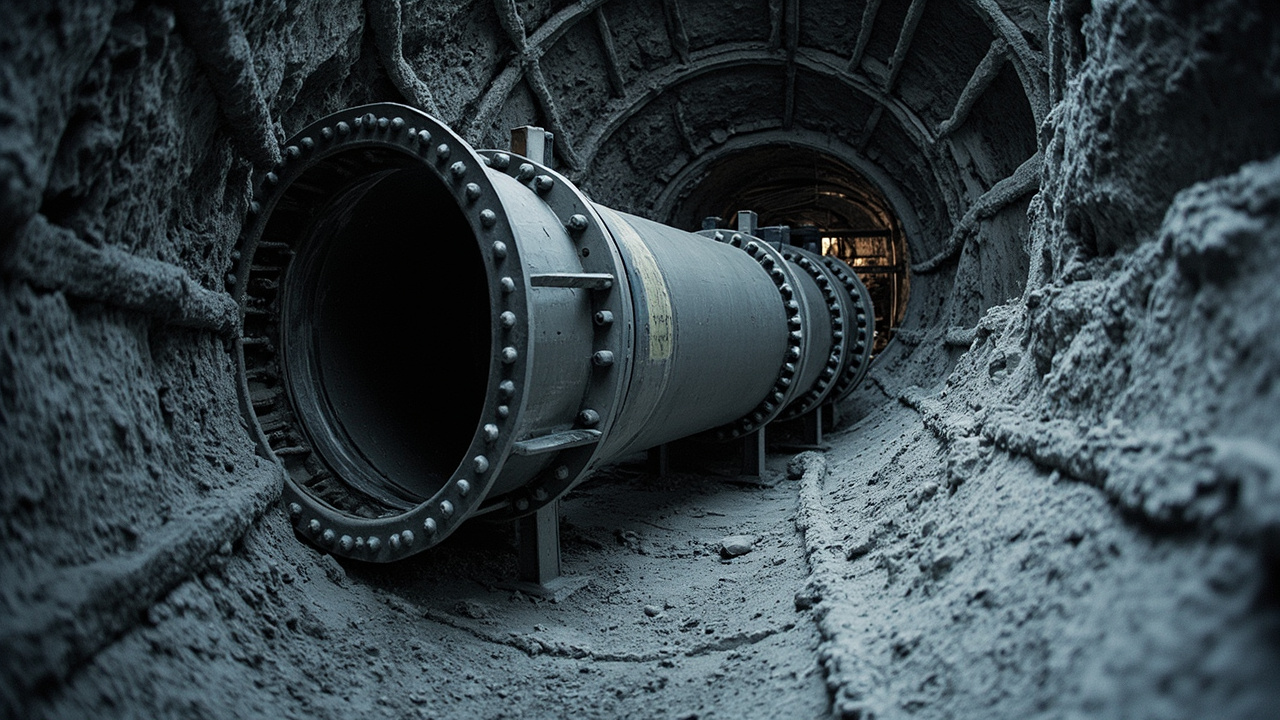
To resist wear, first understand "what wears it." Wear is divided into four types by mechanism. The first is abrasive wear: hard particles (sand, ore, dust) plow between two surfaces, which is the most common. Resistance relies on high-hardness fillers (alumina, silicon carbide, corundum). The second is adhesive wear: two metal surfaces directly contact and cold weld—tear (such as oil-starved seizing). Resistance relies on low-friction fillers (molybdenum disulfide, polytetrafluoroethylene, graphite) and isolation coatings. The third is erosive wear: high-speed fluid carrying particles impacts the surface (such as pipe elbows, slurry pumps). Resistance relies on a balance of toughness and hardness; pure brittleness easily cracks. The fourth is fatigue or fretting wear: surface fatigue spalling under cyclic loading. Resistance relies on high adhesion and fatigue-resistant network.
The same coating often needs to cope with multiple superimposed mechanisms, so "only pursuing hardness" is a misconception—too hard becomes brittle and spalls under impact instead; it needs to be "hard yet tough." Two more service conditions should be added: one is erosion-corrosion, such as produced fluid containing sand and chloride ions, which both wears and corrodes, and neither single wear-resistant nor single anti-corrosion can withstand it; the other is fretting, which occurs at bolted connections and interference fits with tiny relative sliding, easily triggering fatigue sources. Identifying the dominant mechanism is the first step in selection; if the method is wrong, even the hardest coating is in vain.
II. Wear-Resistant Fillers and Hardness System
The "hardness" of wear-resistant powder comes from fillers and cross-linking. Alumina (corundum) has Mohs hardness 9 and microhardness about 2000, and is the main wear-resistant aggregate, general-purpose; silicon carbide Mohs 9.5, extremely high, suitable for extreme abrasive wear, but slightly conductive and hard-brittle; tungsten carbide extremely high (microhardness above 2000), used for oil drilling tools, but expensive and high density; silica or quartz Mohs 7, medium wear-resistant, cheap; molybdenum disulfide and polytetrafluoroethylene are soft, used for friction reduction and anti-adhesion; nylon or polyethylene (thermoplastic) tough and wear-resistant, suitable for particle erosion. The pencil hardness (GB/T 6739) of the resin matrix also affects wear resistance: epoxy and polyurethane cross-linked networks have high hardness and scratch resistance; but the "macroscopic wear resistance" contributed by fillers is far greater than the hardness of the resin itself. The formulation is a combination of "hard aggregate + toughened matrix + high adhesion."
Supplementary filler engineering points: the particle size and gradation of fillers affect density and wear resistance—single particle size easily leaves voids, gradation (coarse-fine mix) can improve packing density and reduce pinholes; filler content has an upper limit, too high causes incomplete resin coverage and reduced adhesion and toughness; filler surface treatment (coupling agent) can improve the interface with resin and reduce spalling. Although tungsten carbide is extremely hard, its high density easily causes settling during spraying and high cost, so it is only used in extreme conditions such as oil drilling tools and slurry pumps; alumina has the best cost-performance and is the main force of most wear-resistant powders. Molybdenum disulfide and PTFE do not increase hardness but reduce friction coefficient, suitable for "friction reduction and anti-adhesion" rather than "cutting resistance."
| Filler/System | Hardness (Mohs/micro) | Function | Note |
|---|---|---|---|
| Alumina Al₂O₃ (corundum) | Mohs 9 / HV ~2000 | Main wear-resistant aggregate, general-purpose | Excess reduces toughness |
| Silicon carbide SiC | Mohs 9.5 / extremely high | Extreme abrasive wear | Slightly conductive, hard-brittle |
| Tungsten carbide WC | Extremely high (HV ~2000+) | Heavy wear, oil drilling tools | Expensive, high density |
| Silica/quartz | Mohs 7 | Medium wear-resistant, cheap | General |
| Molybdenum disulfide MoS₂ | Soft | Friction reduction, anti-adhesion | Does not increase hardness |
| Polytetrafluoroethylene PTFE | Soft | Self-lubricating, friction reduction | Does not increase hardness |
| Nylon/polyethylene (thermoplastic) | Medium | Tough wear-resistant (particles) | SeeThermoplastic Powder |
III. Wear Resistance Evaluation Methods
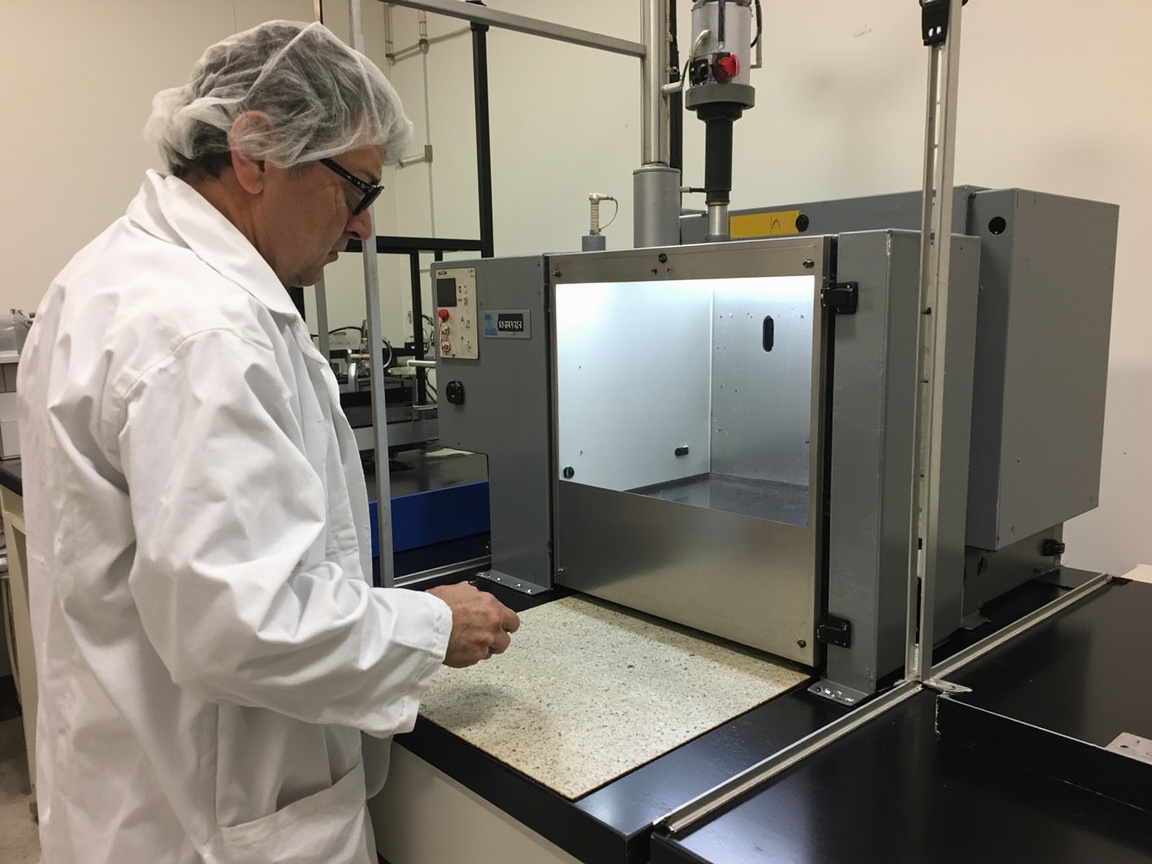
There is no single universal test for wear resistance; the method must be selected according to the service condition. Taber abrasion per GB/T 1768 or ASTM D4060, rotating rubber wheel abrasion, measuring mass loss or revolutions; suitable for decorative or general wear resistance, results greatly affected by load, wheel type, and revolutions. Sand falling method per GB/T 23988 concept, sand flow erodes specimen, measuring sand amount or film thickness loss to reach specified wear; simulates erosion, suitable for pipes or pneumatic conveying equipment. Dry sand rubber wheel per ASTM G65, quantitative sand abrades specimen under wheel, quantifying volume loss; classic industrial wear resistance. Falling ball or erosion measures high-speed particle impact, evaluating erosion rate. Pencil hardness (GB/T 6739) indirectly reflects scratch resistance, not equal to macroscopic wear resistance.
Key reminder: Laboratory wear data must be "close to the service condition" to be meaningful. Good Taber does not mean good resistance to ore erosion—the test method must match the real wear mechanism, otherwise misjudgment occurs. Further on test parameter interpretation: Taber's CS-10 / H-22 wheel, load 250 g–1000 g, different revolution settings, results vary greatly; the report must write all parameters for comparability; ASTM G65 has procedures A–E (different dry sand flow, load, revolutions), industrial heavy wear commonly uses procedure A; sand falling method's sand flow and drop height determine erosion angle and speed, different angles (normal impact vs tangential scouring) have different mechanisms. The mass loss of the same coating at 30° attack angle and 90° attack angle may be completely different, which is the key variable in erosion selection.
IV. Balance of Hardness and Toughness
The biggest design contradiction of wear-resistant coatings is "hard vs tough." Too hard (high alumina or silicon carbide, high cross-linking): strong against abrasive particles, but easily cracks and chips under impact or bending; too tough (thermoplastic, low cross-linking): good impact resistance, but easily plowed by abrasive particles; optimal: matrix has certain toughness to absorb impact, hard aggregate bears abrasive cutting, and aggregate bonds firmly to matrix without spalling.
Engineering adjusts formulation by "impact proportion": pure abrasive wear (bins, chutes) can be harder; with impact (elbows, dumpers) needs toughening (add elastic modification, reduce filler amount, use tough resin). Kexin New Materials (kexinMaterials) often makes a balance of "epoxy tough matrix plus medium-high alumina" in wear-resistant powder for oil pipe rods, resisting both produced fluid erosion and downhole collision. A qualitative rule can assist judgment: when wear is dominated by "low-angle high-speed particle scouring" (such as fan blades, slurry pump impellers), toughness is more important than absolute hardness, because brittle coating will be repeatedly impacted and spalled; when wear is dominated by "high-angle abrasive plowing" (such as bin bottom plates, scrapers), high-hardness aggregate is more critical. Only by clarifying the "angle—speed—particle hardness" three-dimensional estimate of the service condition can the hard-tough ratio be determined.
V. Thermoplastic Wear-Resistant Systems and Hardfacing Process Comparison
In addition to thermosetting epoxy with ceramic fillers, there are two other important paths for wear resistance:
Thermoplastic powder: nylon (PA), polyethylene (PE), ultra-high molecular weight polyethylene (UHMW-PE), polyetheretherketone (PEEK), etc., rely on toughness to resist particle erosion and friction, commonly used for bin liners, lead screws, food and pharmaceutical equipment (non-polluting). Its advantage is good toughness, no brittle cracking, can be thick-coated; disadvantage is hardness and temperature resistance inferior to thermoset with ceramic. For selection seeThermoset and Thermoplastic Powder.
Hardfacing process comparison: wear-resistant powder spraying is only one type of "hardfacing." Parallel to it are surfacing (high-alloy weld layer, extremely thick and hard but large thermal deformation), thermal spraying flame/arc (metal or ceramic layer, bonding by mechanical interlocking), laser cladding (low dilution, metallurgical bonding, high precision but expensive equipment). The advantages of powder electrostatic spraying are low temperature, solvent-free, factory prefabrication of complex parts, one-time medium thickness, suitable for batch standard parts; disadvantage is thickness and extreme hardness inferior to surfacing/cladding. Selection is a trade-off of "performance—deformation—cost—batch," not blindly pursuing highest hardness.
VI. Typical Applications
Conveying and storage bins: Belt conveyors, chutes, hopper linings, resisting abrasive wear from ore or grain. Oilfield pipes and rods: Wear- and corrosion-resistant powder for sucker pumps, tubing, and drill pipe joints (often also anti-corrosion, see heavy-duty anti-corrosion powder coating). Wind power and construction machinery: Blade leading edges, buckets, wear-resistant liners. Shelves and floors: Forklift aisle floor coatings, shelf uprights, resisting collision and scratching (see anti-static coating, floors often require wear resistance). Automotive and general: Chassis parts, damping components wear-resistant covers. Supplement: Mining crusher liners, mineral processing hydrocyclones, cement vertical mill roller surface protection, dredger piping systems are all high-value scenarios for wear-resistant powder—downtime of these devices for one hour costs tens of thousands of yuan, so the input-output ratio of adding a wear-resistant shell on the surface is extremely high.
VII. Application and Compatibility
Wear-resistant powder is sensitive to pre-treatment and film thickness. Pre-treatment: Sandblasting Sa2.5 (refer to coating surface treatment Sa2.5), roughen the surface to improve mechanical interlocking, remove scale (otherwise wear exposes the substrate first). Film thickness: Wear resistance relies on thickness, typically 150–500 microns, up to 1 mm for heavy wear; too thin is not wear-resistant, too thick easily cracks. Curing: Full cross-linking ensures matrix hardness and adhesion; stepwise heating to vent. Edges and corners: Easily worn, require wrapping and thickening. Kexin New Materials (kexinMaterials) selects wear-resistant systems by the four-dimensional method of "wear type (abrasion/erosion/adhesion) × particle hardness × impact strength × medium corrosion" and specifies film thickness and filler system.
Application also requires attention: Powders with heavy fillers (tungsten carbide, silicon carbide) easily settle; before spraying, fully fluidize and stir, supply powder steadily, otherwise film thickness and filler distribution are uneven; high-filler systems have high melt viscosity and poor leveling, requiring moderately higher curing temperature or extended holding, but avoid over-curing and brittleness; edges, corners, and holes are often thinner due to Faraday shielding and "edge effect", being the first wear zones, requiring pre-thickening or touch-up. These details determine whether the wear-resistant layer provides "uniform protection" or has "local weak points".
VIII. Common Misconceptions
Misconception 1: High pencil hardness equals good wear resistance. Wrong. Pencil hardness resists scratching; macroscopic wear resistance is dominated by fillers and thickness; soft PTFE coatings can also be low-friction and wear-resistant. Misconception 2: Harder is more wear-resistant. Wrong. Too hard cracks under impact; hard-tough balance is needed. Misconception 3: Good Taber means all-round. Wrong. Taber simulates light abrasion, not ore erosion; tests must match working conditions. Misconception 4: Only coat without treating substrate. Wrong. Insufficient pre-treatment, wear layer falls off with rust first. Misconception 5: Wear resistance unrelated to anti-corrosion. Wrong. Oilfield pipes and rods are both worn and corroded, requiring composite (see heavy-duty anti-corrosion powder coating). Misconception 6: Thick is enough. Wrong. Too thick has high internal stress, edge cracking, and thick heavy-filler layers have poor leveling and easy porosity. Misconception 7: Coat to the top at once. Wrong. Match thickness to wear rate; too thick wastes, too thin fails early.
IX. Technology Trends
First, nano reinforcement: nano alumina or silicon carbide improve density and hardness while retaining toughness; second, gradient coating: hard surface, tough bottom, balancing wear and impact resistance; third, self-lubricating composite: hard aggregate plus molybdenum disulfide or PTFE, wear-resistant and friction-reducing; fourth, online wear monitoring: embedded sensor network warns of replacement; fifth, remanufacturing: worn failed old parts re-coated with wear-resistant powder to restore size and life, an important means of circular economy.
X. Selection Decision Tree
Selecting wear-resistant powder first looks at wear type (abrasion, erosion, adhesion, fatigue); then particle hardness (determines aggregate grade); then whether impact is present (determines tough-hard ratio); then whether medium is corrosive (determines if anti-corrosion is needed); finally substrate temperature (determines resin heat resistance, see silicone high-temperature coating). Write this path into a specification, and selection is not by guesswork. Supplement: If thick extreme hard surface is needed and thermal influence is acceptable, compare surfacing/cladding; if batch standard parts and solvent-free eco-friendly are needed, thermoset wear-resistant powder is better; if toughness and erosion resistance are priority, consider thermoplastic nylon/polyethylene.
XI. Case Review and Life Management
Case 1: A mineral processing chute originally used bare steel plate, worn through in three months. After coating with 500 micron high-alumina wear-resistant epoxy, life extended to over two years; converting downtime and plate replacement cost, payback under two months. Lesson: Cost-performance of adding hard shell to worn parts far exceeds frequent replacement.
Case 2: An oil tubing coupling was both worn and corroded, single-layer anti-corrosion FBE failed quickly. Changed to "epoxy anti-corrosion matrix plus medium-high alumina" composite wear-resistant powder, resisting produced fluid erosion and corrosion, pump inspection interval significantly extended. Lesson: Oil well environment must have wear-corrosion joint design.
Case 3: An elbow used pure high-alumina coating, edge chipping occurred in operation. Root cause: elbow had high-speed particle impact, pure brittle system spalled under repeated impact. Changed to "tough epoxy matrix plus medium-high alumina" and reduced filler amount, then stable. Lesson: Impact conditions require hard-tough balance.
Life management suggestion: Establish "test panel—measurement—replacement" closed loop. Before new equipment commissioning, hang same-system test panels, periodically take out to weigh and measure thickness, estimate remaining life; set minimum thickness alarm line for easy-wear parts, touch-up on reaching line, change "repair after failure" to "planned repair by wear rate", minimizing unplanned downtime.
XII. Common Defects and Troubleshooting
| Defect | Cause | Countermeasure |
|---|---|---|
| Early wear-through | Insufficient film thickness | Thicken to design |
| Edge chipping/cracking | Too hard, with impact | Toughen, reduce filler |
| Fall off with rust | Poor pre-treatment | Sandblast Sa2.5 |
| Spalling | Weak aggregate bonding | Optimize matrix adhesion |
| Corrosion perforation | No anti-corrosion | Add anti-corrosion primer |
| Uneven filler settling | Insufficient fluidization/stirring | Full fluidization, steady powder supply |
XIII. Standards and Inspection Checklist
Acceptance covers: GB/T 1768 or ASTM G65 (wear, select by condition); GB/T 6739 (hardness); GB/T 1732 (impact); GB/T 9286 (adhesion); GB/T 13452.2 (film thickness); if necessary, sand falling per GB/T 23988 or dry sand rubber wheel per ASTM G65. Suggest "lab wear plus field test panel" dual verification, because lab method must match real wear mechanism to be meaningful.
XIV. Wear Test Parameter Interpretation and Data Comparability
Earlier mentioned wear tests must "match condition"; here further explain reading and comparability details. Taber (GB/T 1768 / ASTM D4060) results strongly depend on wheel type (CS-10, H-22 etc.), load (250 g, 500 g, 1000 g) and revolutions; if report omits these, data from different labs are incomparable. ASTM G65 has procedures A–E, core variables are dry sand flow, load and revolutions; industrial heavy wear commonly uses procedure A; changing any item, volume loss reading differs significantly. Sand falling method (GB/T 23988 concept) erosion angle is key: sand flow at 30° attack (tangential scouring) vs 90° (normal impact) damage mechanisms are completely different, same coating weight loss may differ several times at two angles.
Therefore, value of wear data is not "how big the number", but "whether conditions are clear and consistent with real wear mechanism". In engineering selection, require supplier to give complete test conditions, and use same abrasive as site (e.g., site ore use similar ore for erosion), not standard quartz sand—different mineral hardness and angularity distort results. Treat "test condition" as part of data to avoid misleading by pretty numbers.
XV. Remanufacturing and Dimensional Repair
Another high-value use of wear-resistant powder is "remanufacturing": many devices are not wholly scrapped, but locally worn beyond limit (e.g., shaft neck, plunger, pump casing, roller surface). Traditional repair uses surfacing or sleeve, high thermal influence or poor fit; powder spraying can rebuild a wear-resistant shell on worn surface at lower temperature, restoring size and function, cost often fraction of new part, and fits circular economy. Remanufacturing points: one, thoroughly remove old worn surface and fatigue layer (sandblast or machine to dense matrix), otherwise new coating spalls with old fatigue layer; two, control repair thickness and shape, if necessary machine after spraying to tolerance; three, select filler system by original failure mechanism, avoid "repaired then broken". For batch wear parts, establish "wear to limit—recoat—reuse" loop, a pragmatic cost-reduction path.
XVI. Microscopic Diagnosis of Wear Coating Failure
When wear layer fails early, naked eye cannot see root cause, need microscopic diagnosis to translate "phenomenon" to "countermeasure". Common failure morphologies and indications:
One, plowing grooves dominant: indicates insufficient macro hardness or aggregate, countermeasure is increase alumina/silicon carbide content or particle size, or switch to harder aggregate.
Two, edge chipping, chunk spalling: indicates system too brittle or with impact, countermeasure is toughen (reduce filler, add elastic modification, use tough resin), not keep hardening.
Three, interface whole-sheet spalling: root cause at interface—insufficient pre-treatment (anchor insufficient, oil rust), primer incompatible, or powder-substrate thermal mismatch, countermeasure is re-focus pre-treatment and primer match.
Four, aggregate exposed but matrix worn away: indicates resin wear contribution insufficient or curing incomplete, countermeasure is adjust cross-link density and curing window.
Include SEM cross-section or metallographic observation of failure surface in review, so formula and process improvement have direction, otherwise each time "adjust by feel". Kexin New Materials (kexinMaterials) in wear matching suggests customers keep failed parts for cross-section analysis, using evidence not guess to guide iteration.
XVII. Formulation Design Variables of Wear-Resistant Powder
Wear-resistant powder formulation is essentially balance of "aggregate—matrix—interface" three variables. Aggregate determines anti-cutting upper limit (type, size, grading, content); matrix (epoxy, polyester, polyurethane or other) determines toughness and adhesion (cross-link density, glass transition temp, wetting to aggregate); interface (coupling agent, primer) determines aggregate not spalling. Increasing wear resistance often adds hard aggregate, but excess sacrifices toughness and leveling, so engineering uses grading (coarse-fine mix) and coupling treatment to "be hard yet not crack". When service temperature high (see silicone high-temperature coating), also switch resin to heat-resistant matrix. No "best" formula, only "closest to condition"—why wear powder is usually customized by application, not single universal formula for all.
18. Project Acceptance and Test Panel Management Examples
Wear-resistant engineering acceptance recommends the "three-piece set": first, film thickness (multi-point measurement per GB/T 13452.2, including edges/corners and high-wear zones); second, adhesion (cross-cut per GB/T 9286, especially for aggregate-containing systems to ensure no wholesale flaking); third, wear verification (select Taber / ASTM G65 / sand fall per working condition, and record complete parameters). For critical equipment, hang same-system test panels to run with operation, periodically weigh and measure thickness to estimate remaining life, and set alarm lines for proactive recoating. Writing "test panel—actual measurement—replacement" into the O&M procedure turns the wear-resistant layer from a "one-time coating" into a "manageable consumable", minimizing unplanned downtime and emergency repair costs.
19. Storage, Transportation and Opening Management of Wear-Resistant Powder
Wear-resistant powder often contains heavy fillers (tungsten carbide, silicon carbide), which easily absorb moisture and cake, and settle over long storage; storage and transportation management directly affect powder delivery and appearance. The warehouse should be cool, dry, moisture-proof and away from high temperature; use up quickly after opening and seal tightly; recycle powder per the process card ratio and screen periodically to remove lumps; strictly separate different systems and colors by line, preventing mixed collection. If on-site powder output is unstable, film thickness fluctuates, or surface particles appear, first check whether the powder is damp or fluidization is uneven, then check equipment—most "spraying anomalies" root in powder condition, not gun parameters. Incorporating storage/transport into the process card stabilizes wear-resistant layer quality.
In addition, watch the particle-size stability of heavy-filler powder: coarse aggregate may slightly settle and stratify after long storage; before use, fluidize and stir per specified time to ensure the ejected powder composition matches factory specification; otherwise even with unchanged parameters, film thickness and wear resistance will drift. For high-value tungsten carbide systems, incoming particle size and composition sampling should be done to avoid inferior substitution causing early failure. Treating "powder condition" as a process variable rather than a constant is a sign of wear-resistant engineering maturity.
20. Quick Wear-Resistant Selection Reference
A one-line reference for quick on-site locating: pure abrasive particles (bins, chutes) → high alumina, harder, thick film; with impact (elbows, dumpers) → toughened, reduced filler, flexible resin; with corrosion (oil pipes, marine) → epoxy anti-corrosion base plus wear-resistant aggregate composite; high-temperature conditions → heat-resistant base (see silicone high-temperature coating); flexible anti-erosion → thermoplastic nylon or polyethylene (see thermoset and thermoplastic powder). Locate first by four dimensions—wear type, particle hardness, impact, corrosion—then set film thickness and aggregate content, and selection won't go wrong. Paste this reference table on the process card front page so even newcomers take fewer detours.
FAQ
Q: What mainly makes a wear-resistant powder coating resist wear?
A: It relies on hard fillers (alumina, silicon carbide, tungsten carbide, etc.) forming an anti-cutting skeleton in the film, plus a highly cross-linked resin network providing hardness and adhesion. Macroscopic wear resistance is mainly determined by filler type, content and film thickness; the resin's own hardness is only auxiliary.
Q: Does high pencil hardness mean definitely wear-resistant?
A: Not necessarily. Pencil hardness (GB/T 6739) reflects scratch resistance; macroscopic wear resistance is dominated by filler and thickness. Soft coatings containing PTFE or molybdenum disulfide have low friction and are wear-resistant in some conditions, but pencil hardness is not high. The two are not equivalent metrics.
Q: Why does an overly hard wear-resistant layer fail?
A: An excessively hard coating easily cracks and chips under impact or bending (especially impact-containing conditions like elbows, dumpers). Wear-resistant design needs a balance of hard aggregate and tough base; a purely brittle system fails earlier under impact.
Q: How to select a wear test with reference value?
A: Select by real wear mechanism: light wear or decorative use Taber (GB/T 1768 / ASTM D4060); erosion or piping use sand fall or ASTM G65 dry sand rubber wheel; with impact add impact test. Lab method must approximate working condition, otherwise misjudgment. Report must write full load, wheel type, revolutions, attack angle and other parameters.
Q: How thick is wear-resistant powder generally applied?
A: By wear intensity, routinely 150–500 microns; heavy wear (bins, oil pipes) can reach 1 mm. Too thin is not wear-resistant, too thick easily cracks; thicken and wrap edges/corners.
Q: Can wear resistance and anti-corrosion be done together?
A: Yes, and often needed. Oil pipe rods and marine equipment are both worn and corroded; use wear-resistant aggregate plus epoxy anti-corrosion base composite (see heavy-duty powder coating), one coating covers both.
Q: How important is pre-treatment to wear resistance?
A: Extremely important. Sandblasting Sa2.5 roughening improves mechanical interlocking and removes scale; if substrate has rust, wear will first take off rust scale and the wear-resistant layer is virtually useless. Pre-treatment determines adhesion life.
Q: Is thermoplastic powder suitable for wear resistance?
A: Suitable for some conditions. Nylon, polyethylene, UHMWPE thermoplastic powders have good toughness and resist particle erosion and friction, often used for bin liners, lead screws (see thermoset and thermoplastic powder); but hardness and heat resistance are inferior to thermoset epoxy with ceramic filler.
Q: Are coatings with molybdenum disulfide or PTFE wear-resistant or friction-reducing?
A: They are friction-reducing (anti-adhesive wear), relying on low friction coefficient to prevent two metals from seizing, without increasing hardness themselves. Often compounded with hard aggregate: hard particles resist abrasive wear, soft phase lowers friction, each doing its job.
Q: How to judge which wear-resistant powder to use on site?
A: Select by four dimensions: wear type (abrasive/erosive/adhesive/fatigue), particle hardness, whether impact is present, whether medium is corrosive. Pure abrasive leans hard (high alumina), with impact toughen, corrosive environment adds anti-corrosion, medium temperature decides resin heat resistance (see silicone high-temperature coating). For extreme hard surfaces, compare overlay welding / laser cladding.
Q: How to manage life when wear-resistant coating fails?
A: Build a "test panel—actual measurement—replacement" closed loop: hang same-system test panels before commissioning, periodically weigh and measure thickness to estimate remaining life, set minimum thickness alarm line and recoat when reached, turning passive emergency repair into active planned maintenance, reducing unplanned downtime.
Further Reading
- Engineering Application of Heavy-Duty Powder Coating: "wear-resistant plus anti-corrosion" composite for oil pipe rods etc. is industrial norm; the two articles complement each other.
- Core Differences Between Thermoset and Thermoplastic Powder: bin liners often choose thermoplastic nylon or polyethylene for wear resistance; this article provides the other pole of selection.
- Coating Surface Treatment Sa2.5 and Sandblasting Grades: the root of wear-resistant layer life is pre-treatment; sandblasting roughening directly determines mechanical interlocking.
- Powder Coating Principles and Classification: From Film-Forming Mechanism to Resin System Selection
- Insulating Powder Coating: Volume Resistivity, Dielectric Strength and Electrical Applications
- Industrial Paint Application: Airless Spray Parameters, Film Thickness Control and Coating Interval