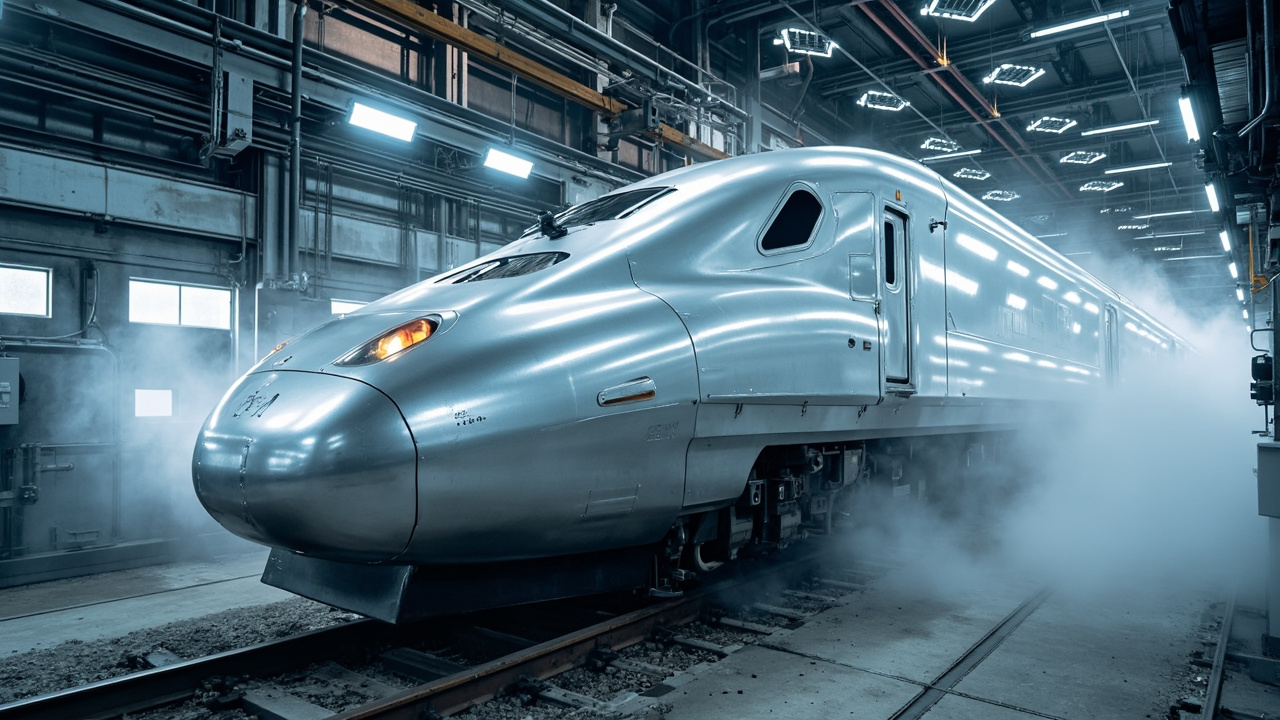
Rail vehicles are large moving steel structures. They must serve year-round in wind, rain, salt spray, ultraviolet radiation and temperature variations, withstand stone impact, vibration and frequent washing under high-speed operation, and simultaneously meet increasingly stringent fire safety and environmental requirements. The corresponding coating systems have long surpassed the simplistic notion of "applying a layer of paint for rust prevention and aesthetics," evolving into a systematic engineering project integrating anti-corrosion, decoration, fire resistance, weather resistance and color management. This article starts from steel structure anti-corrosion, progressively展开 car body coating, bogie fire protection, weather resistance and gloss retention, color consistency and green construction equipment, providing a panoramic reference for the design, selection and construction of rail vehicle coatings. The standard clauses and supporting parameters mentioned herein are a summary of common industry practices; specific projects should be based on the current version of standards and vehicle technical conditions to avoid compliance deviations caused by direct application.
Why rail vehicle coating differs from ordinary industrial coating
To understand the complexity of rail vehicle coating systems, first look at the several unique challenges they face. The first is ultra-long service life. The design life of a metro or EMU is usually thirty years or even longer; the coating system must continuously provide corrosion protection and appearance retention during this period, rather than chalking and failing in just a few years. The second is high weather resistance. Vehicles are exposed year-round to outdoor UV, acid rain, industrial atmosphere and coastal salt spray; the coating must resist photo-aging and chemical attack. The third is stone-impact and abrasion resistance. Flying stones, sand particles and metal debris in the bogie area during high-speed operation cause mechanical impact to the coating, especially on the underframe and skirt panels. The fourth is resistance to cleaning agents. To maintain cleanliness, urban rail vehicles frequently use alkaline or surfactant-containing cleaners; the coating must possess chemical stability, otherwise gloss loss, discoloration or even detachment will occur. The fifth is fire compliance. Interior trim and some structural coatings must meet fire reaction requirements such as EN 45545, unifying decoration and safety within the same system. It is precisely these superimposed requirements that determine rail vehicle coating cannot follow the logic of ordinary machinery or architectural coatings.
Railway steel bridge anti-corrosion system: the core logic of TB/T 1527
In the coating landscape of rail transit, railway steel bridges were among the earliest fields to establish systematic standards. TB/T 1527 "Protection Coating for Railway Steel Bridges" has long served as the authoritative basis for steel bridge anti-corrosion. Its core logic is to build a long-term anti-corrosion barrier through "surface treatment + multi-layer system + reasonable film thickness."
Surface treatment: the starting point of all protection
The first and most critical process of steel bridge coating is surface treatment. The standard requires sandblasting (shot blasting) rust removal on steel, usually reaching Sa 2.5 grade (near-white) and controlling surface roughness, to remove scale, rust layer and oil stains, providing a firm adhesion foundation for subsequent coatings. Surface treatment quality directly determines the life of the coating system—even the best coating applied to steel with residual scale will completely peel off due to substrate failure. For maintenance projects, the condition of the old coating must also be evaluated to decide between local repair or overall repainting.
System: the division of labor among primer, intermediate coat and topcoat
A typical steel bridge anti-corrosion system consists of three or more layers:
– Primer: represented by epoxy zinc-rich primer, utilizing the cathodic protection of zinc powder and the strong adhesion of epoxy to provide the first anti-corrosion barrier, especially suitable for atmospheric corrosion environments. – Intermediate coat: commonly epoxy micaceous iron oxide intermediate coat, relying on the lamellar structure of micaceous iron oxide to extend the penetration path of corrosive media, while increasing film thickness and improving overall shielding. – Topcoat: mostly aliphatic polyurethane topcoat, providing weather resistance, gloss retention, color retention and anti-aging capabilities, keeping the steel bridge with long-term appearance and protection outdoors.
Film thickness control: the rigid constraint of data
TB/T 1527 has clear lower limit requirements for each coating and total dry film thickness (DFT), which must be monitored throughout the construction process using wet film gauges and dry film thickness meters. Insufficient film thickness sacrifices shielding life, while excessive thickness may cause cracking or poor adhesion. Reasonable film thickness design should combine environmental corrosion grade (refer to C1–C5, CX, Im classification of GB/T 30790 equivalent to ISO 12944) with expected durability goals.
The table below shows a typical anti-corrosion coating system for railway steel bridges (subject to the current version of TB/T 1527):
| Coating position | Coating type | Main function | Typical dry film thickness (μm) | Remarks |
|---|---|---|---|---|
| Surface treatment | Sandblasting/shot blasting | Rust removal, roughening | — | Usually Sa 2.5 grade |
| Primer | Epoxy zinc-rich primer | Cathodic protection, adhesion | 60–80 | Zinc content depends on working condition |
| Intermediate coat | Epoxy micaceous iron oxide intermediate coat | Shielding, thickening | 80–120 | Lamellar filler |
| Topcoat | Aliphatic polyurethane topcoat | Weather resistance, decoration | 60–80 | Gloss and color retention |
| Total film thickness | Multi-layer composite | Long-term anti-corrosion | 200–300+ | Adjust according to corrosion grade |
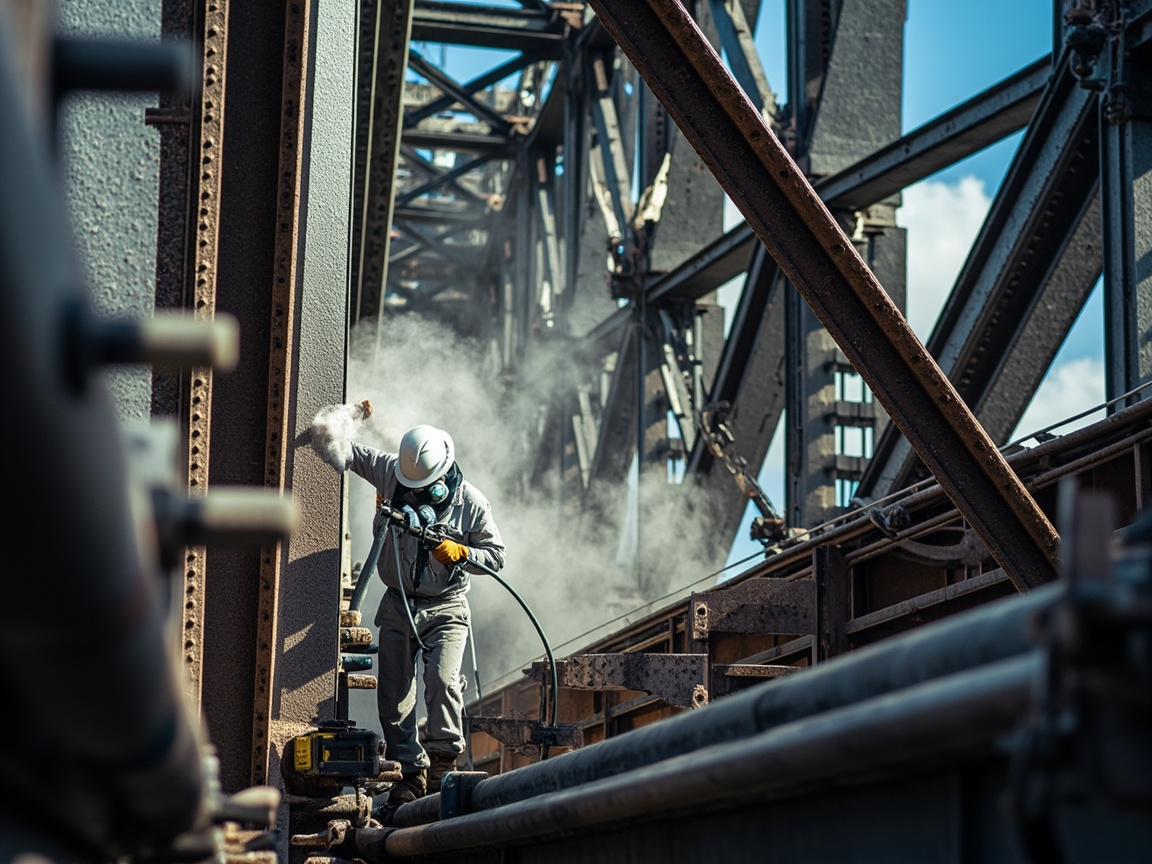
Vehicle Body Coating System: The Complete Chain from Epoxy Primer to Clear Coat
Unlike steel bridges which focus mainly on anti-corrosion, the coating of rail vehicle bodies is a highly integrated system of "anti-corrosion as the base, decoration as the finish". The coating of a high-speed train or metro vehicle body often includes the following steps:
Substrate Treatment and Primer
Before coating, aluminum alloy or stainless steel car bodies need chemical conversion treatment (such as chromating or chrome-free passivation) or sandblasting to improve adhesion and corrosion resistance. Then an epoxy primer is applied to provide strong bonding with the metal substrate and basic anti-corrosion. For aluminum alloy car bodies, the primer also needs to address the risk of galvanic corrosion between different metals.
Putty and Intermediate Coat
Welding and grinding during car body manufacturing inevitably leave unevenness, requiring the application of epoxy or polyurethane putty to fill and level, followed by sanding to achieve uniform smoothness. The intermediate coat further provides thickness, stone-chip resistance and interlayer adhesion on this basis, creating a smooth base for the topcoat. The flexibility and impact resistance of the intermediate coat are especially important for areas prone to stone impact such as above the bogies and skirt panels.
Topcoat and Clear Coat
The topcoat is the core layer determining the vehicle appearance, mostly using polyurethane or acrylic polyurethane systems, providing color, gloss and weather resistance. Some high-end vehicles also apply a layer of clear coat (varnish layer) to further enhance gloss, weather resistance and resistance to cleaning agents, while protecting the base color paint from UV and chemical erosion. The introduction of clear coat makes "brighter color, longer life", but also increases the number of application passes and process complexity.
Urban rail metro vehicles and high-speed EMUs share commonalities and differences in coating systems: metro vehicles, due to short station spacing, frequent start-stop and high interior cleaning requirements, pay more attention to the antibacterial, scrub-resistant and fire-retardant properties of interior coatings; high-speed vehicles, due to high running speed, strong outdoor exposure and strict aerodynamic appearance requirements, emphasize more the leveling, gloss retention and stone-chip resistance of the topcoat. Both are consistent in primer anti-corrosion logic, and the differences mainly lie in decoration standards and adaptation to operating environments.
The table below summarizes a typical vehicle body coating system layering (schematic):
| Layer | Coating Type | Main Function | Key Performance Requirement |
|---|---|---|---|
| Substrate treatment | Chemical conversion / sandblasting | Adhesion enhancement, corrosion resistance | Chrome-free trend |
| Primer | Epoxy primer | Adhesion, anti-corrosion | Strong bonding, corrosion resistant |
| Putty | Epoxy / polyurethane putty | Fill, leveling | Easy sanding, no cracking |
| Intermediate coat | Polyurethane intermediate coat | Thickening, stone-chip resistance | Flexible, interlayer adhesion |
| Topcoat | Polyurethane / acrylic polyurethane | Color, weather resistance | Gloss retention, cleaning agent resistance |
| Clear coat | Clear coat varnish | Protection, brightening | High gloss, weather resistance |
Fire-retardant Coating for Bogies and Underframes
Bogies, underframes, and equipment compartments are among the areas with the highest fire risk in rail vehicles: they house high-heat, high-energy components such as braking, traction, and power supply. Once a fire breaks out, the heat can rapidly threaten the load-bearing integrity of the car body steel structure. Therefore, the coating in these areas must not only provide anti-corrosion and stone-chip resistance, but also undertake fire-retardant and even structural fire protection functions.
From a standards perspective, material-level fire reaction can refer to the corresponding categories of EN 45545-2, while the structural fire protection approach falls under EN 45545-3: by applying fire-retardant and thermal-insulating coatings, the heating rate of steel under high fire temperatures is reduced and the duration of strength retention is extended, providing passive protection redundancy for the overall structural safety of the vehicle. Domestic universities have carried out forward-looking explorations on this, such as the research by Tongji University on fire-retardant coatings for bogies and underframes, which starts from the structural fire protection concept of EN 45545-3 to study the feasibility of constructing flame-retardant and thermal-insulating layers on the surface of steel components such as bogies and underframes, and verifies the coating's suppression effect on the heating curve of steel under fire. This type of "structural fire protection coating" follows a different technical route from the car body decorative topcoat: the former focuses on the mechanical integrity of steel at high temperatures, while the latter focuses on the burning, smoke, and toxicity performance of the coating itself; the two complement each other to form the complete technical puzzle of vehicle fire protection.
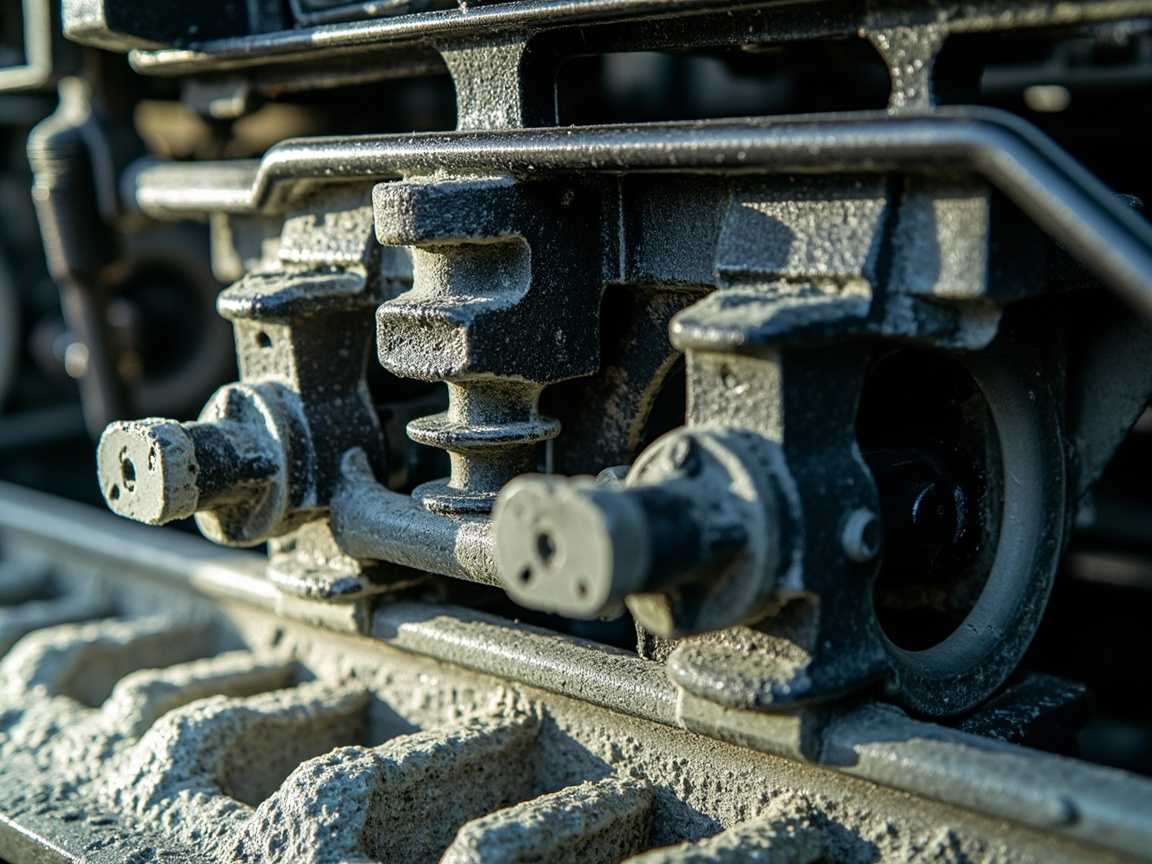
Weather Resistance and Gloss Retention: Dual Tests of Years Outdoors and Frequent Washing
The weather resistance of rail vehicle coating directly determines the appearance and protection degradation rate of the vehicle after years of outdoor service. Ultraviolet light is the primary driver of coating aging: it breaks the chemical bonds in the paint film, causing fading, chalking, and loss of gloss. Therefore, the topcoat system mostly uses UV-resistant aliphatic isocyanate-cured polyurethane, whose yellowing and gloss loss rates are far lower than those of aromatic systems. Gloss retention relates to the visual quality of the vehicle—a high-speed train that has lost its gloss and turned white will significantly reduce the perception of the "China High-Speed Rail" brand.
More demanding than outdoor aging is frequent washing. To maintain cleanliness, urban rail vehicles are often washed with cleaning agents weekly or even more frequently; alkaline or solvent-containing cleaning agents will slowly erode the paint film. This requires the topcoat and varnish to have excellent chemical stability, and to introduce hydrolytic-resistant and alkali-resistant resin structures in the formulation. Resistance to cleaning agents has become a hard indicator in the technical conditions of urban rail coating, and is also an invisible battlefield where domestic coatings differ from foreign products.
Whole-Vehicle Color Consistency Management and Batch Control
Rail vehicles, especially subways and EMUs, often present a unified image across the entire train, line, or even the entire network, so color consistency has become a high-frequency focus of coating quality. Color management faces three difficulties: first, fluctuations in pigments and resins across different batches of coating cause color differences; second, differences in film thickness, leveling, and curing in large-area spraying cause uneven brightness; third, different parts age at different rates after long-term outdoor exposure, further amplifying color differences.
The countermeasure is a batch control system that runs through "formulation—production—construction—operation and maintenance": on the formulation side, fix pigment suppliers and color paste systems, establish standard color panels and color difference tolerances (such as ΔE control range); on the production side, conduct factory color difference and performance inspections for each batch of coating; on the construction side, adopt automatic color matching and uniform film thickness control, and conduct whole-vehicle color review at the prototype stage; on the operation and maintenance side, establish a color traceability mechanism for refurbishment to ensure visual uniformity between repainted areas and the existing car body. Color consistency management may seem like a "face project," but it actually tests the batch stability and production control capability of coating enterprises, and is one of the core competitiveness of high-end rail vehicle coating suppliers.
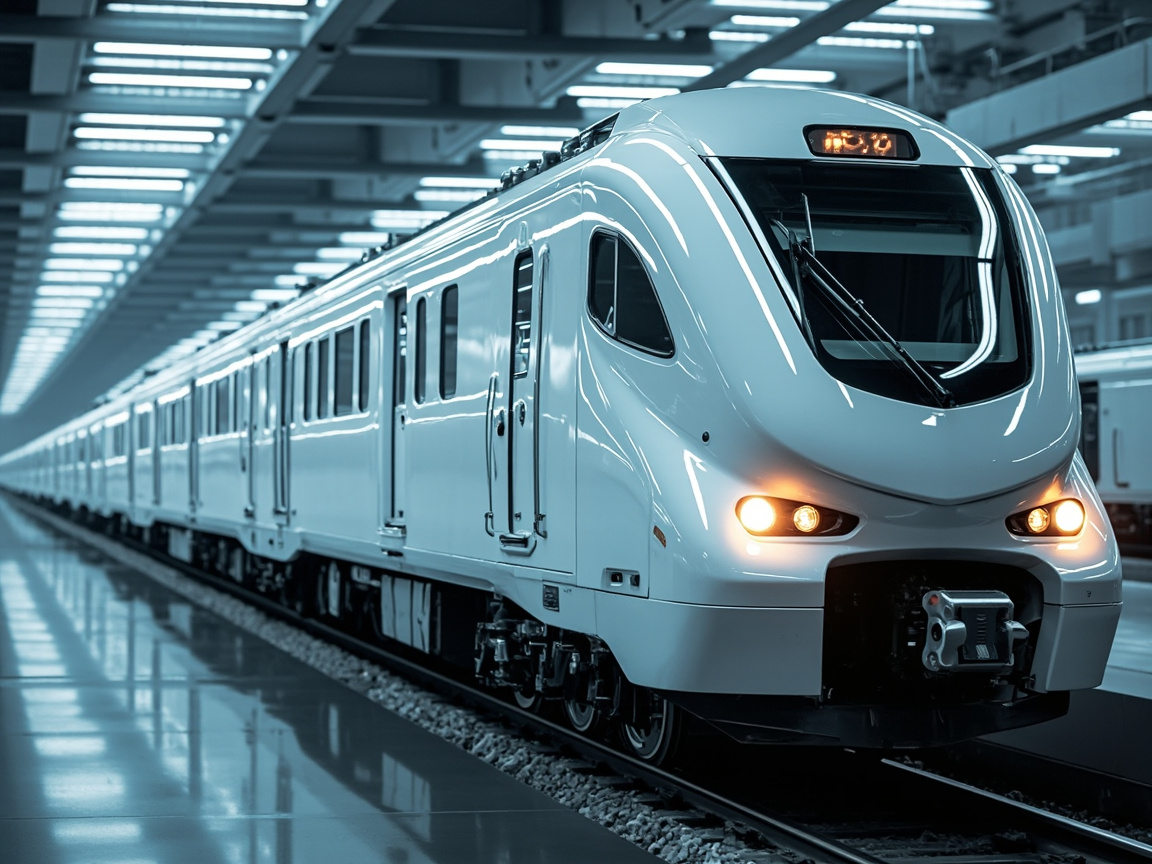
Promotion of Water-Based and High-Solid Coatings in Rail Vehicles
Driven by both environmental regulations and occupational health, rail vehicle coating is accelerating its evolution toward water-based and high-solid formulations. Solvent-based coating has a wide application window and mature performance, but high VOC emissions are unfavorable to construction personnel health and workshop environment. Water-based coating uses water as the dispersion medium, significantly reducing VOC, but faces challenges such as slow drying, sensitivity to temperature and humidity, and flash rust on metal; high-solid coating compresses VOC while retaining the application convenience of solvent-based, making it a smoother transition route.
In 2026, this transformation gained new compliance impetus: the EU REACH regulation has restricted the use of zinc chromate yellow in railway coatings since January 2026, forcing the anti-rust pigment system of traditional epoxy primer to shift to chromium-free solutions such as zinc aluminum phosphate, which together with water-based and high-solid forms the triple constraint of "green coating." For domestic enterprises, the maturation of water-based epoxy primer and water-based polyurethane topcoat is a necessary capability to enter the high-end rail vehicle supply chain. Industrial protective coating participants such as Kexin New Materials (Guangdong) Co., Ltd. are laying out around the direction of water-based and high-solid, in line with the general trend of green transformation in the industry.
Construction Equipment: Sandblasting, Airless Spraying, and Baking
No matter how good the coating is, it relies on equipment for implementation. Key equipment for rail vehicle coating includes:
– Sandblasting/shot blasting equipment: Used for surface treatment of steel structures and car bodies, determining the foundation of adhesion. Large components mostly use pass-through shot blasting, small parts use manual sandblasting. – Airless spraying equipment: Uses high pressure to atomize the coating and spray it onto the surface at high speed, with high efficiency and uniform film thickness, and is the main force for large-area coating of car bodies. Two-component airless spraying (air-mix spraying) is used for two-component systems such as epoxy and polyurethane, precisely controlling the mixing ratio. – Baking curing equipment: Many rail vehicle topcoats and varnishes rely on baking rooms or infrared curing to achieve optimal crosslink density and weather resistance. Precise control of baking temperature and time is directly related to the final performance of the paint film. – Robotic spraying and automatic color matching systems: In high-end production lines, robotic spraying improves film thickness uniformity and color consistency, and automatic color matching systems reduce human-induced color differences. – Pre-treatment lines and environmental equipment: Including pre-treatment spray lines, paint mist capture, and VOC treatment devices, enabling the coating workshop to meet environmental and safety requirements.
The automation and environmentalization level of construction equipment has become an important dimension for vehicle manufacturers to evaluate the supporting capability of coating suppliers: the coating must not only be "good," but also "easy to spray, easy to bake, and easy to treat."
In-Depth: Technical Details and Thresholds of Surface Treatment
Surface treatment is the "foundation" of coating life, and its importance cannot be overstated. In engineering practice, sandblasting rust removal grades are classified according to ISO 8501-1 as Sa 1 (light), Sa 2 (thorough), Sa 2.5 (near-white), Sa 3 (white metal), and rail vehicles and key parts of steel bridges usually require Sa 2.5 or even higher. In addition to grade, surface roughness (usually measured with a profilometer or replica tape, with a target range mostly 40–75 μm) is also critical: too smooth is unfavorable for mechanical interlocking, too rough means insufficient film thickness at wave peaks and easily becomes a corrosion starting point. For aluminum alloy car bodies, chemical conversion treatment (traditional chromating or eco-friendly chromium-free passivation) is more often used to form a thin and dense chemical conversion film, which both improves adhesion and isolates electrochemical corrosion between the substrate and the coating. It is worth noting that chromium-free conversion treatment is an important component of green coating, echoing the aforementioned REACH restriction on hexavalent chromium pigments, reflecting the full-process chromium-free trend of "from pigment to pre-treatment."
In-Depth: Comparison of Primer Types and Selection Logic
Primers for rail vehicles and steel bridges are not only epoxy zinc-rich; three common types in engineering are: epoxy zinc-rich primer, epoxy iron oxide/mica iron oxide primer, and inorganic zinc-rich primer. Epoxy zinc-rich relies on the cathodic protection of zinc powder, and can still sacrifice the anode to protect steel at scratches, suitable for atmospheric and immersion environments, but zinc content and resin compatibility need careful design; inorganic zinc-rich (such as ethyl silicate system) has better heat and solvent resistance and high volume solids, but has stringent requirements for surface treatment and construction environment; epoxy iron oxide/mica iron oxide primer mainly provides shielding, often used as an intermediate transition layer. The selection logic should be comprehensively determined based on substrate (steel/aluminum), corrosion environment (C4/C5 or Im), whether fire protection requirements are superimposed, and the compatibility of subsequent coatings. Blindly pursuing high zinc content may bring reduced coverage rate and interlayer adhesion risks, reflecting the balancing art of formulation and process.
In-Depth: Process Details of Putty and Intermediate Coat
If the unevenness in car body manufacturing is directly covered with topcoat, it will amplify light and shadow defects and affect the overall texture of the vehicle. The task of putty is to fill welds, pits, and sanding marks, and its key technical points are easy sandability, low shrinkage, and no cracking. Epoxy putty has high strength and good adhesion but is harder and difficult to sand; polyester putty is easy to sand but its shrinkage and temperature resistance need control. The intermediate coat is between putty and topcoat, providing uniform interlayer transition, stone-chip impact buffering, and thickening shielding. The intermediate coat of urban rail and high-speed rail often needs a certain elasticity to absorb vibration stress and avoid cracking after long-term operation. In terms of process, the number of sanding passes for putty and intermediate coat and dust spot control directly determine the final flatness of the topcoat, which is "invisible effort."
In-Depth: Evolution of Topcoat Resin Systems
The topcoat is the "face" of the vehicle appearance, and its resin system has evolved from alkyd and acrylic to polyurethane and fluorocarbon. Alkyd topcoat has low cost but poor weather resistance, and has basically withdrawn from high-end rail vehicles; acrylic polyurethane balances weather resistance and applicability, and is the mainstream choice; aliphatic polyurethane, due to its excellent gloss and color retention and yellowing resistance, has become a regular for high-speed rail and subway topcoats; fluorocarbon topcoat is used in extreme scenarios of ultra-long weather resistance and ultra-low pollution, but has higher cost and construction threshold. In recent years, water-based polyurethane topcoat and high-solid polyurethane topcoat have matured rapidly, significantly reducing VOC while maintaining weather resistance, and become the main force of green transformation. The essence of topcoat selection is the four-dimensional trade-off of "weather resistance, aesthetics, environmental protection, cost."
In-Depth: Mechanism and Testing of Stone-Chip Resistant Coating
Above the bogie, skirts, and the front edge of the car head are severe stone-chip impact zones. The stone-chip resistant coating improves the toughness, elasticity, and interlayer bonding of the paint film, replacing "brittle cracking and peeling" with "deformation to absorb energy" under flying stone impact. Mechanistically, the flexibility of the intermediate coat and primer, total coating thickness, and substrate adhesion jointly determine the stone-chip resistance performance. The industry commonly uses gravel impact tests (such as sand drop or compressed air jet gravel simulation) for evaluation, and judges pass or fail by the peeling area and grade of the coating. The streamlined parts of high-speed rail car heads have particularly stringent requirements for stone-chip resistance due to high speed and strong impact, often requiring specially designed elastic intermediate coats or multi-layer buffer structures. Stone-chip resistance is often constrained by weather resistance and anti-corrosion requirements, and the formulation needs to finely balance hardness and toughness.
In-Depth: Common Coating Defects and Prevention
Although track vehicle painting is carried out on automated production lines, defects are still inevitable. Typical ones include: sagging (caused by excessive spray thickness or over-thinning, requiring control of film thickness and atomization), pinholes (caused by too rapid solvent evaporation or substrate porosity, requiring adjustment of drying and substrate treatment), orange peel (caused by poor atomization or improper viscosity, requiring optimization of spraying parameters), craters (caused by surface contamination or incompatible additives, requiring enhanced cleaning and compatibility), peeling (caused by insufficient adhesion, requiring a return to surface treatment and intercoat compatibility), and color difference (caused by batch and film thickness fluctuations, relying on color management). The core of prevention and control is "process control" — eliminating defects before spraying rather than relying on rework. This requires deep collaboration between coating suppliers and vehicle manufacturers on the process window.
In-depth: Overhaul and Refurbishment Coating Systems
After track vehicles enter the major overhaul period, refurbishment coating becomes a key link in extending asset life. Unlike new construction coating, refurbishment faces decisions on old coating assessment, adhesion testing, local derusting, and overall repainting. If the old coating is intact and compatible, it can be cleaned — sanded — locally repaired — topcoated; if it has severely chalking or peeling, it must be stripped or blasted to a qualified substrate before rebuilding the system. The new coating during refurbishment must meet the same fire-retardant and anti-corrosion grades as the original vehicle, and requirements cannot be lowered on the grounds of "refurbishment". With the growth of vehicle fleet, the refurbishment coating market continues to expand, placing higher demands on rapid construction, low-temperature curing, and old paint compatibility of coatings, and also becoming a pragmatic entry point for domestic coating enterprises.
In-depth: Technical Details of Color Management
Color consistency is not estimated by naked eye, but is an instrumented process. Standard light boxes (such as D65 simulating daylight) are used for visual color comparison, while color difference meters/spectrophotometers objectively quantify L*a*b* values and ΔE. In engineering, a standard color panel is usually established as a reference, specifying the ΔE tolerance (e.g., ΔE between different parts of the vehicle body less than a certain threshold), and multi-angle review is conducted at the prototype stage. The difficulty lies in the flop effect of metallic paint and pearlescent paint, where single-angle measurement is insufficient to represent visual appearance, requiring multi-geometry angle spectrophotometric measurement. In addition, different resin systems have different aging rates, causing "same color but different fading", so color management must extend to formulation design, selecting pigment and resin combinations with consistent weather resistance, rather than relying solely on remediation at the construction end.
In-depth: Construction Environment Control and Dew Point Management
Coating quality is highly dependent on the environment. Temperature, relative humidity, and dew point determine the drying, leveling, and curing behavior of coatings. When the substrate surface temperature is below 3℃ above the dew point, water vapor will condense on the surface, causing the coating to blush and lose adhesion. Therefore, before blasting and spraying, the dew point must be measured and the substrate temperature confirmed to meet the standard. Excessive humidity slows the drying of water-based coating and induces flash rust; excessively high temperature shortens the pot life and causes orange peel. High-end track vehicle coating workshops are generally equipped with temperature, humidity, and dew point monitoring, infrared drying, and clean air supply, turning "relying on the weather" into "controlled environment operations", which is why construction equipment and environment control are listed as core competitiveness.
In-depth: Digitalization and Intelligent Coating Trends
For the future, track vehicle coating is accelerating digitalization. Robotic spraying ensures uniform film thickness and consistent trajectories through programming, reducing human fluctuations; automatic color matching systems accurately dispense based on color panel data, reducing batch color differences; online film thickness and defect detection (machine vision) achieve real-time process quality feedback; coating full-lifecycle management systems track each batch's formulation, construction, and performance, supporting quality traceability. Furthermore, digital twins can simulate spraying and curing in a virtual environment, optimizing process parameters before implementation on the production line. For coating suppliers, whether they can provide coatings compatible with digital production lines (stable application windows, quantifiable drying curves) is becoming a new dimension of competition.
In-depth: Alignment of Anti-corrosion Systems with Environmental Corrosion Grades
The anti-corrosion design of track vehicles and bridges cannot be separated from the quantitative classification of service environments. GB/T 30790 equivalently adopts ISO 12944, classifying corrosion environments into atmospheric environments from C1 (very low) to C5 (very high), as well as Im1 (freshwater immersion), Im2 (seawater immersion), Im3 (soil burial), etc. Different grades correspond to different coating systems and expected durability years (e.g., low durability, medium durability, high durability, very high durability). High-speed rail bridge sections, coastal urban rail vehicle bases, and cross-sea line vehicles are often in C4/C5 or even higher corrosion grades, and must adopt reinforced systems of zinc-rich primer plus thick-film epoxy intermediate coat plus weather-resistant topcoat. Combining the steel bridge experience of TB/T 1527 with the corrosion classification of GB/T 30790 can shift anti-corrosion design from "relying on experience" to "quantitative by environment", significantly improving the reliability and economy of the coating system.
In-depth: New Requirements of Lightweight Substrates for Coating
Lightweighting in rail transit is a key direction for reducing energy consumption and improving transport capacity. The application of aluminum alloy, stainless steel, and composite materials in vehicle bodies is increasingly widespread, bringing new challenges to coating. The oxide film on aluminum alloy surfaces is dense but requires conversion treatment for stable adhesion, and different aluminum alloy grades have different galvanic corrosion sensitivities; although stainless steel is corrosion-resistant, its inert surface makes coating adhesion difficult, often requiring roughening or specialized primer; carbon fiber/glass fiber composites face issues such as mismatched thermal expansion coefficients, low surface energy, and possibly requiring low-temperature curing coatings. Coating of lightweight substrates is no longer "uniform formulation for general use", but requires substrate-specific primers and pre-treatments, which is also a touchstone for the depth of coating enterprises' technical reserves.
In-depth: Intercoat Compatibility of Fire-retardant and Decorative Coatings
When decorative topcoat and fire-retardant requirements are superimposed on the same system, intercoat compatibility becomes a hidden risk. Some intumescent fire-retardant coatings, if covered by ordinary topcoat, may interfere with their thermal expansion and charring; while some halogen-containing or high-filler fire-retardant layers may affect the gloss and adhesion of the topcoat. In engineering, compatibility tests must verify the overall performance of the "fire-retardant primer/intermediate + decorative topcoat" combination after heating, aging, and cleaning, rather than viewing each layer in isolation. The coating system-level submission concept of EN 45545-2 is particularly important here: vehicle manufacturers should require suppliers to provide "complete system including topcoat" reports rather than single-layer data, to avoid compliance gaps caused by intercoat conflicts.
In-depth: Cleaner Types and Coating Tolerance
Urban rail vehicles use a wide variety of cleaners, ranging from neutral eco-friendly types to alkaline degreasing types, and even strong types containing small amounts of solvent. The coating's tolerance to cleaners depends on the resin chemical structure and crosslink density: polyurethane topcoat is generally superior to alkyd, but prolonged soaking in strong alkali may still cause saponification and gloss loss; varnish clear coat can significantly isolate the erosion of cleaners on the base pigmented paint. The industry usually conducts cleaner resistance tests (evaluating gloss loss, discoloration, blistering after immersion or cyclic wiping) based on technical conditions, and accordingly specifies operation and maintenance cleaning procedures. In reality, "over-cleaning" and "abuse of strong agents" are common human factors for premature coating aging, so coating suppliers and operators also need to jointly develop scientific cleaning specifications, allowing good coatings to achieve maximum life under reasonable maintenance.
In-depth: Coating Life Assessment and Accelerated Aging Tests
Track vehicle coatings often have a life of twenty to thirty years, which cannot be verified by natural exposure, and requires accelerated aging tests for evaluation. Common methods include: UV aging (QUV, simulating sunlight UV degradation), xenon arc aging (simulating full-spectrum outdoors), salt spray test (evaluating anti-corrosion), cyclic corrosion test (alternating salt spray — drying — humidity heat, closer to reality), as well as specialized tests such as gravel impact and cleaner immersion. The value of accelerated tests lies in horizontally comparing the pros and cons of different systems, but the correspondence between their results and real life needs to be calibrated by "acceleration factor" experience, and cannot be simply linearly extrapolated. When qualifying suppliers, vehicle manufacturers often require several years of natural exposure and accelerated aging comparison data to judge whether the coating can truly achieve the "very high durability" goal.
In-depth: Lifecycle Cost Perspective from New Construction to Full Lifecycle Coating
Evaluating track vehicle coating should not only look at the initial material and construction price, but should establish a lifecycle cost (LCC) perspective. A high-weather-resistant, long-life quality system, although with higher initial investment, can extend the overhaul interval, reduce outage losses and refurbishment frequency, and the comprehensive cost is actually lower. Conversely, a low-price low-quality system may lose gloss and chalk within three to five years, forcing premature refurbishment, compounded by vehicle outage and labor costs, which is not worth the candle. For owners and vehicle manufacturers, promoting coating procurement from "lowest price wins" to "optimal full-lifecycle" is an important management topic for improving rail transit asset operation efficiency, and also provides value competition space for domestic coating enterprises with long-effect performance.
In-depth: Supply Chain Security and Localization Depth
Track vehicle coatings have long been dominated by foreign capital, on the one hand due to their deep formulation and testing accumulation, and on the other hand due to vehicle manufacturers' supply chain lock-in. But under the macro background of supply chain security and domestic substitution, more and more domestic enterprises are making in-depth breakthroughs: from single anti-corrosion primer, to the full system of intermediate coat, topcoat, and varnish, to fire-retardant coatings and water-based products. The difficulty of in-depth breakthrough lies in "system capability" — not only must individual products meet standards, but also multi-layer compatibility, batch stability, verifiable testing, and responsive service. Industrial protective coating enterprises such as Kexin New Materials (Guangdong) Co., Ltd. are accumulating along the path of "anti-corrosion — fire-retardant — water-based — full system", gradually establishing a presence in the domestic substitution window of track vehicle coatings. Localization is not just price substitution, but a comprehensive embodiment of supply chain resilience, localized service, and rapid iteration capability.
In-depth: Environmental Protection and VOC Treatment in Coating Workshops
The environmental pressure in track vehicle coating workshops comes from three ends: paint mist, organic solvents, and hazardous waste. Overspray paint mist generated during painting needs to be collected by water curtain, dry filtration, or electrostatic capture; volatile VOC needs to be treated by end-of-pipe methods such as activated carbon adsorption, zeolite rotor concentration with regenerative thermal oxidation (RTO) to meet emission standards. Water-based and high-solid formulations reduce VOC at the source, which is a more fundamental pollution reduction path than end-of-pipe treatment. In addition, wastewater and waste residue from pre-treatment and stripping processes also need compliant disposal. Under the normalization of "dual carbon" and environmental supervision, the greening level of coating workshops is not only a compliance issue, but also related to the production capacity and reputation of vehicle manufacturers, which in turn requires coatings to have low-VOC and easy-to-treat product attributes.
In-depth: Panorama of Track Vehicle Coating Standards and Specifications
The standards involved in track vehicle coating are not single, but multi-layered: TB/T 1527 governs steel bridge anti-corrosion; Q/CR 749.1/2/3-2020 governs the technical conditions, quality, and inspection of railway passenger/freight car coating; GB/T 30790 (equivalent to ISO 12944) governs environmental classification and system design for steel structure corrosion protection; EN 45545-2/3 governs fire safety for export vehicles; building materials and electrical related standards govern specific components. These standards perform their respective duties in the four dimensions of "anti-corrosion — decoration — fire-retardant — environmental protection", and engineers need to establish a standards map to avoid taking a partial view as the whole. For example, a coating system meeting Q/CR 749 solves domestic passenger car decoration and anti-corrosion, but if used for export to Europe, it also needs to add EN 45545 fire reaction evidence; the two are an "addition" rather than a "replacement" relationship.
In-depth: Comparison of International Track Vehicle Coating Characteristics
Track vehicle coatings in different countries and regions show differentiated characteristics. Europe is known for the dual constraints of EN 45545 fire safety and REACH environmental protection, leading in water-based and halogen-free; Japan's Shinkansen emphasizes ultimate weather resistance and appearance consistency, with mature topcoat systems and baking processes, and deep experience in coating lightweight aluminum alloy bodies; North America is influenced by NFPA 130 and other system fire safety concepts, and has unique accumulation in heavy anti-corrosion freight cars and locomotives. The characteristics of China's track vehicle coating lie in large scale, fast iteration, and cost sensitivity, and it is shifting from "introduction and digestion" to "autonomous system". Understanding international differences helps domestic coating enterprises quickly adapt to the standards and aesthetics of target markets when going overseas, avoiding applying domestic experience rigidly to overseas working conditions.
In-depth: Rethinking the Differences between Urban Rail and High-speed Rail Coating
The preceding text mentioned the differences in painting between urban rail and high-speed rail; here we expand further. High-speed rail operates at high speeds with complex aerodynamic shapes, imposing extremely high requirements on topcoat leveling and gloss uniformity, and outdoor high-speed exposure makes weather resistance the top priority; urban rail has short station spacing, frequent start-stop, and high passenger density, with high interior finishing and cleaning frequency, placing more emphasis on scrub resistance, antibacterial properties, and fire resistance of interior coatings, while exterior painting focuses on weather resistance and low-cost maintenance. The two share the same logic in primer anti-corrosion, but differ in their emphasis on topcoat and interior strategies. For coating suppliers, whether they can simultaneously provide "high-speed-rail-grade weather-resistant appearance" and "urban-rail-grade easy-maintenance interior" capabilities determines the breadth of their market coverage. This also explains why enterprises with full-system layout have more advantages.
Deep Dive: Root Cause Analysis Approach for Coating Failures
When early failure occurs in rail vehicle coatings, root cause analysis should be conducted systematically: first check whether surface treatment is adequate (scale, oil stains, roughness), then check whether the coating system design is reasonable (film thickness, interlayer compatibility), then inspect construction parameters (film thickness, temperature and humidity, dew point, curing), and finally review environment and maintenance (misjudgment of corrosion level, abuse of cleaning agents). Many failures are not due to substandard coatings themselves, but to "system mismatch"—wrong system pairing, construction in wrong environment, or maintenance exceeding design boundaries. Establishing a failure root cause database is a valuable asset for both vehicle manufacturers and coating suppliers, which can feed back into formulation and process improvements, forming a positive cycle. This engineering culture of "learning from failures" is an implicit marker of high-end coating capability.
Deep Dive: Systematic Summary of Future Trends
Integrating the preceding text, the evolution of rail vehicle painting systems can be summarized into five main threads. First, greenization: water-based, high-solid, powder, and chromium-free approaches proceed in parallel, with VOC and hazardous substances continuously reduced. Second, long-life: higher weather resistance, longer refurbishment cycles, aiming for optimal whole-life cost. Third, multifunctionality: anti-corrosion, decoration, fire resistance, stone-chip resistance, and cleaning-agent resistance integrated in fewer coats. Fourth, digitalization: robotic spraying, automatic color matching, online inspection, and digital twin improve consistency and efficiency. Fifth, localization: deep breakthroughs from single products to full systems, from price to value. These five main threads intertwine, jointly defining the technical boundaries and competitive landscape of the next stage of rail vehicle painting.
Deep Dive: Construction Safety and Occupational Health
Rail vehicle painting operations involve organic solvents, dust, and confined spaces, making safety and occupational health unavoidable topics. Sandblasting requires protection against silica dust and metal dust, with respiratory and eye protection equipment; solvent-based coating construction requires explosion-proof ventilation to avoid accumulation of combustible gases; although water-based systems reduce flammable risks, attention is still needed to the health effects of cleaning agents and additives. Occupational health systems such as ISO 45001 are widely implemented in vehicle manufacturer painting workshops, promoting "intrinsic safety"—replacing high-risk materials with low-toxicity and low-flammability materials to reduce risks at the source. This is another value of water-based systems beyond environmental protection: improving frontline working environments, echoing the "people-oriented" manufacturing philosophy.
Deep Dive: Quality Acceptance and Inspection Method System
Whether a painting system is qualified relies on quantifiable inspection rather than subjective judgment. Common inspections include: adhesion (cross-cut, pull-off), film thickness (magnetic/eddy-current thickness gauge, selected by substrate), hardness (pencil/pendulum), gloss (gloss meter), color difference (colorimeter), weather resistance (weathering chamber), salt spray resistance, stone-chip resistance, cleaning-agent resistance, etc. Vehicle manufacturers usually set hold points by process during acceptance: check roughness and cleanliness after surface treatment, check film thickness after each layer, check appearance and performance after assembly, and retain batch records. The strictness of inspection is tied to vehicle grade; export or high-speed vehicles often require denser sampling and third-party witness. The maturity of the quality acceptance system is the watershed distinguishing "can paint" from "paints well".
Deep Dive: How Network Expansion Amplifies Painting Demand
The continuous expansion of rail transit networks is amplifying painting demand from both total volume and structure. In total volume, by the end of 2025, the national railway operating mileage reached 165,000 km, with high-speed rail exceeding 50,000 km, and the "eight vertical and eight horizontal" main corridors were about 80% built; in 2026, planned new line commissioning exceeds 2,000 km, with infrastructure investment of about 520 billion yuan. For urban rail, as of December 31, 2025, 54 cities with 343 lines, operating mileage of 11,710.3 km, with 764.7 km added in the year. This means massive new car bodies and steel structures need painting every year, while existing lines entering major overhaul periods bring refurbishment volume. Structurally, high-speed rail pursues high-weather-resistant appearance, urban rail pursues easy-maintenance interior, coastal and cross-sea lines pursue high anti-corrosion, and the layered demand forces coating enterprises to possess multi-category capabilities. Network expansion and painting upgrade thus form a positive feedback, constituting the fundamental basis for the industry's long-term improvement.
Deep Dive: Painting Selection Decision from Owner's Perspective
From the perspective of metro or railway owners, painting selection is a cross-departmental systematic engineering decision: the vehicle department focuses on appearance and lifespan, the maintenance department on easy maintenance and refurbishment cost, the safety department on fire compliance, the environmental department on VOC and hazardous waste, and the procurement department on price and supply stability. During decision-making, technical specifications must clearly define indicators and acceptance methods for each dimension, and set reasonable whole-life cost weights in bidding to avoid later risks from low-price winning. More owners are beginning to write "early supplier involvement (ESI) of coating system suppliers" into processes, allowing coating enterprises to intervene at the vehicle design stage, optimizing anti-corrosion, fire, and color schemes from the source. This improvement in owner maturity forces the coating industry to shift from selling products to selling "painting solutions".
Deep Dive: Impact of Painting Process on New Vehicle Capacity
Painting is a critical path process in rail vehicle manufacturing, and its cycle directly constrains overall vehicle capacity. For a metro or EMU production line, the car body often stays in the painting workshop for several days from welding to delivery, covering pre-treatment, multi-layer spraying, leveling, and baking. Any bottleneck in a step (such as insufficient baking oven capacity, film thickness failure rework) slows overall delivery. Therefore, when expanding capacity, vehicle manufacturers often prioritize investment in painting workshop automation and cycle optimization: robotic spraying speeds up, baking room expansion, online inspection reduces rework, all are levers to release capacity. For coating suppliers, providing products with "fast drying, wide application window, low rework rate" equals indirectly helping vehicle manufacturers increase capacity, a value particularly prominent during peak order periods.
Deep Dive: Application Prospects of Powder Coating in Rail Vehicles
In the green coating landscape, powder coating has attracted attention for zero VOC, high utilization, and no solvent hazardous waste. Although on large exterior body panels, low-temperature curing and thin-film smoothness of thermosetting powder remain challenges, in scenarios such as bogies, components, and interior panels, powder systems have begun to penetrate. Its advantages lie in combining environmental friendliness and durability, with high coating density and good anti-corrosion. With the development of low-temperature curing powder and thin-coat technology, the application boundary of powder in rail vehicles is expected to further broaden. For readers interested in this direction, they can extend to understand the industry's latest assessment of the powder coating market, which has more specialized analysis on penetration trends in rail and industrial fields.
Deep Dive: Conclusion—A Systematic View of Painting Systems
Looking back at the full text, the rail vehicle painting system is far from being summarized by the two words "painting". It is a systematic engineering from steel structure anti-corrosion (TB/T 1527, GB/T 30790) to multi-layer body decoration (primer—putty—intermediate coat—topcoat—varnish), from bogie fire retardancy (EN 45545-3 approach) to weather-resistant gloss retention, cleaning-agent resistance, from whole-vehicle color management to water-based green construction. Each layer and each process are interrelated, and weakness in any link is amplified to the whole-vehicle lifespan and image. For coating enterprises and vehicle manufacturers, true competitiveness lies not in a certain "magic formula", but in the ability to coordinate anti-corrosion, decoration, fire resistance, environmental protection, and cost with a systematic view, and maintain consistency across the full chain from R&D, certification, construction to operation and maintenance. This is the deep connotation of the rail vehicle painting system, this "mobile steel art". Looking forward, as high-speed rail and urban rail networks continue to expand, vehicle overhaul cycles arrive successively, and green regulations tighten year by year, this system will continue to evolve; and enterprises that can twist anti-corrosion, decoration, fire resistance, and environmental protection into one rope will ultimately go further in the long-slope-thick-snow track of rail transit.
Deep Dive: Intersection of Coating with Lightweighting and Aerodynamics
Rail vehicle painting is not isolated from overall vehicle design. Lightweighting requires coatings to be as thin and strong as possible, avoiding unnecessary weight gain; aerodynamics requires extremely flat and smooth body surfaces to reduce running resistance and noise, which imposes extremely high requirements on topcoat leveling and orange peel control. For the streamlined head of high-speed EMUs, coating unevenness will amplify aerodynamic noise and energy consumption at high speeds, so this area often uses multiple fine intermediate coats and high-gloss clear coat, with robots ensuring uniformity. It can be seen that painting quality is directly linked to overall indicators such as vehicle energy consumption, noise, and speed, and is a typical embodiment of "overall design—detail process" linkage, further elevating the engineering status of the painting system.
Deep Dive: Collaboration Suggestions for All Parties in the Industry Chain
Based on the preceding text, several collaboration suggestions are proposed for all parties in the rail vehicle painting industry chain. For vehicle manufacturers: at the standard initiation stage, pre-position anti-corrosion grade, fire grade, and color targets to coating suppliers, and promote early supplier involvement; establish procurement evaluation oriented to whole-life cost. For coating enterprises: do not just sell single products, but provide full-system "primer—intermediate—topcoat—varnish" and inspection evidence capabilities, and value batch stability; proactively layout water-based and chromium-free to adapt to 2026 new regulations. For owners and maintenance parties: develop scientific cleaning and refurbishment procedures to avoid artificial premature aging; establish coating health archives to support predictive maintenance. For testing institutions: improve the coverage breadth and response efficiency of qualifications such as EN 45545 to serve domestic substitution. Only with multi-party collaboration can rail vehicle painting be transformed from a cost center to a value creation center. It is worth emphasizing that such collaboration is not achieved overnight, but is a slow effort built on long-term project磨合, data sharing, and trust accumulation. Those coating enterprises willing to invest technical resources early in vehicle design and continuously track coating performance during operation and maintenance often win more stable cooperation in the next round of nomination, which is the true portrayal of the "high threshold, long cycle, strong binding" characteristics of the rail vehicle painting market.
Data Sources and Caliber Notes
Standards and data involved in this article come from public authoritative sources: TB/T 1527 "Protective Painting for Railway Steel Bridges", Q/CR 749.1/2/3-2020 "Painting for Railway Passenger/Freight Cars", GB/T 30790 (equivalent to ISO 12944) are core standards for domestic rail painting and corrosion protection; EN 45545-2/3 are EU rail vehicle fire standards, with related architecture and HL/R classification referencing public materials from European Fire Research Center and testing institutions; China railway and urban rail operation data come from China State Railway Group, Economic Daily January 2026 report, and Ministry of Transport, as of end of 2025 national railway operating mileage 165,000 km, high-speed rail over 50,000 km, urban rail 54 cities 343 lines, 11,710.3 km, 2025 added 764.7 km; EU REACH restriction on zinc chromate yellow effective from January 2026, from European Chemicals Agency public information. The accompanying tables in the text are illustrative summaries; specific limits are subject to current standard versions and vehicle technical conditions. The technical writing strives for objectivity; for conclusions involving specific limits and grades, readers are advised to return to the original standards and authoritative test reports for verification; this article does not replace formal standard texts.
FAQ
1. Why is TB/T 1527 particularly emphasized for railway steel bridge anti-corrosion? Because steel bridges are long-term exposed to outdoor corrosive environments, once rusted it affects structural safety and lifespan. TB/T 1527 takes surface treatment, primer—intermediate paint—topcoat system, and film thickness control as the core, establishing a long-term validated long-effect anti-corrosion framework, and is the basis standard for railway steel bridge painting.
2. What are the main differences between car body painting and steel bridge painting? Steel bridge painting focuses on anti-corrosion, while car body painting must both anti-corrosion prime and decorative finish, and also consider stone-chip resistance, weather resistance, cleaning-agent resistance, and fire resistance. The car body adds layers of putty, intermediate coat, topcoat, and even varnish, with higher requirements for color consistency and appearance quality.
3. Why does the bogie coating need fire-retardant functionality? The bogie and underframe gather high-heat components such as braking and traction, making them high-risk fire zones. In addition to anti-corrosion and stone-impact resistance, it is also necessary to control fire reaction following the EN 45545 approach and introduce structural fire-retardant coating to delay steel heating, ensuring structural integrity under fire.
4. Why do urban rail vehicles particularly emphasize resistance to cleaning agents? Urban rail vehicles are cleaned frequently to maintain tidiness; alkaline or solvent-containing cleaning agents slowly erode the paint film, causing gloss loss, discoloration, or even peeling. Therefore, resistance to cleaning agents has become a mandatory indicator in the technical specifications for urban rail coating.
5. What are the main difficulties of water-based coating for rail vehicles? Water-based systems face challenges such as slow drying, sensitivity to temperature and humidity, flash rust on metal substrates, and two-component mixing stability, while needing to reduce VOC without sacrificing weather resistance and anti-corrosion. Their maturity is a threshold for entering the high-end supply chain.
6. What ensures the color consistency of the whole vehicle? It relies on batch control throughout formulation, production, application, and operation & maintenance: fixed pigments and color pastes, factory color difference inspection, automatic color matching and uniform film thickness control, prototype color review, and color traceability during refurbishment, keeping ΔE within tolerance.
7. What role does varnish play in vehicle body coating? As a clear coat, varnish further enhances gloss, weather resistance, and resistance to cleaning agents, protecting the base pigmented paint from UV and chemical erosion, making the vehicle brighter and more durable, but increasing the number of application passes and process complexity.
8. Why should the bogie coating separately emphasize stone-impact resistance and fire retardancy? The bogie is located at the bottom of the vehicle body and is subjected to long-term impact from flying stones, sand, and metal debris during operation, and it gathers high-heat components such as braking and traction, making it a superimposed zone of mechanical damage and fire risk. Therefore, the coating at this location must both rely on flexible intermediate coat and thick film to absorb stone-impact energy, and control fire reaction following the EN 45545 approach and introduce structural fire protection, with requirements far higher than ordinary exterior surfaces.
9. Can refurbishment coating of old vehicles lower the original fire-retardant grade? It should not be lowered. Although refurbishment coating falls within the maintenance scope, the vehicle still operates in its originally designated scenario, and the fire risk has not changed; the new coating must achieve the same fire-retardant and anti-corrosion grades as the original vehicle. Lowering requirements on the grounds of "refurbishment" leaves compliance and safety hazards, and both the OEM and the owner should insist on demonstrating the original grade.