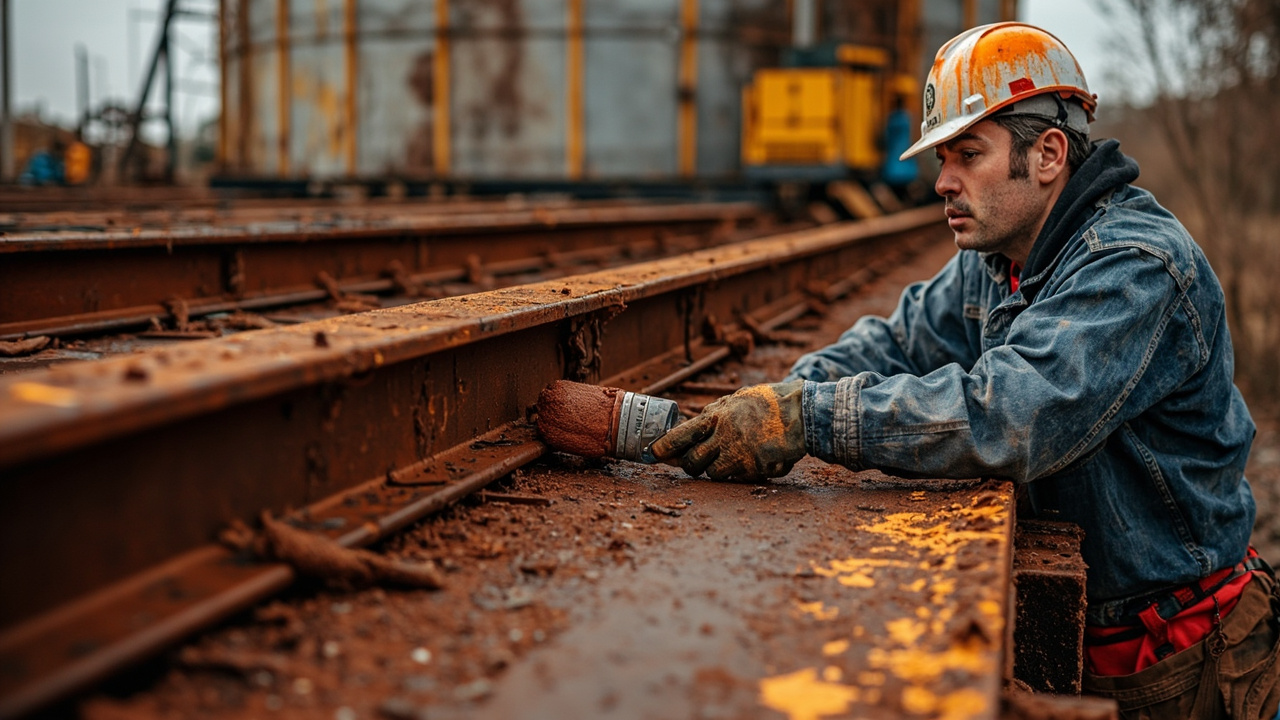
In a large number of maintenance scenarios for in-service steel structures, pipelines, tanks, and equipment, what troubles contractors the most is often not "what paint to apply", but "the rust simply cannot be thoroughly removed". The blasting room cannot be moved over, disassembly costs are too high, and the loss from one day of shutdown far exceeds the coating itself, while manual rust removal hardly achieves the Sa 2½ cleanliness. Rust converters and stabilizing anti-rust paints are designed exactly for such on-site conditions of "unable to completely remove rust": in single-component, ready-to-use form, they locally convert the residual surface rust into stable substances or encapsulate and passivate it, allowing maintenance painting to be implemented under realistic conditions. This article explains the entire process of single-component painting-over-rust from principles, applicable boundaries, construction procedures to quality acceptance, provides a directly usable construction procedure table, and clarifies its correct relationship with the complete anti-corrosion system.
As a supplier of industrial protective coatings, Kexin New Materials (kexinMaterials) has mature solutions for rust converters, stabilizing anti-rust primers, and the "primer–intermediate–topcoat" supporting system. This article will also provide actionable suggestions based on real working conditions in the section on systems and selection. If you are selecting a solution for painting-over-rust maintenance of in-service equipment, you can also refer to our water-based industrial coating selection approach to first match the working condition with the system.
I. Principles First: What Exactly Do Rust Converters and Stabilizing Types Do
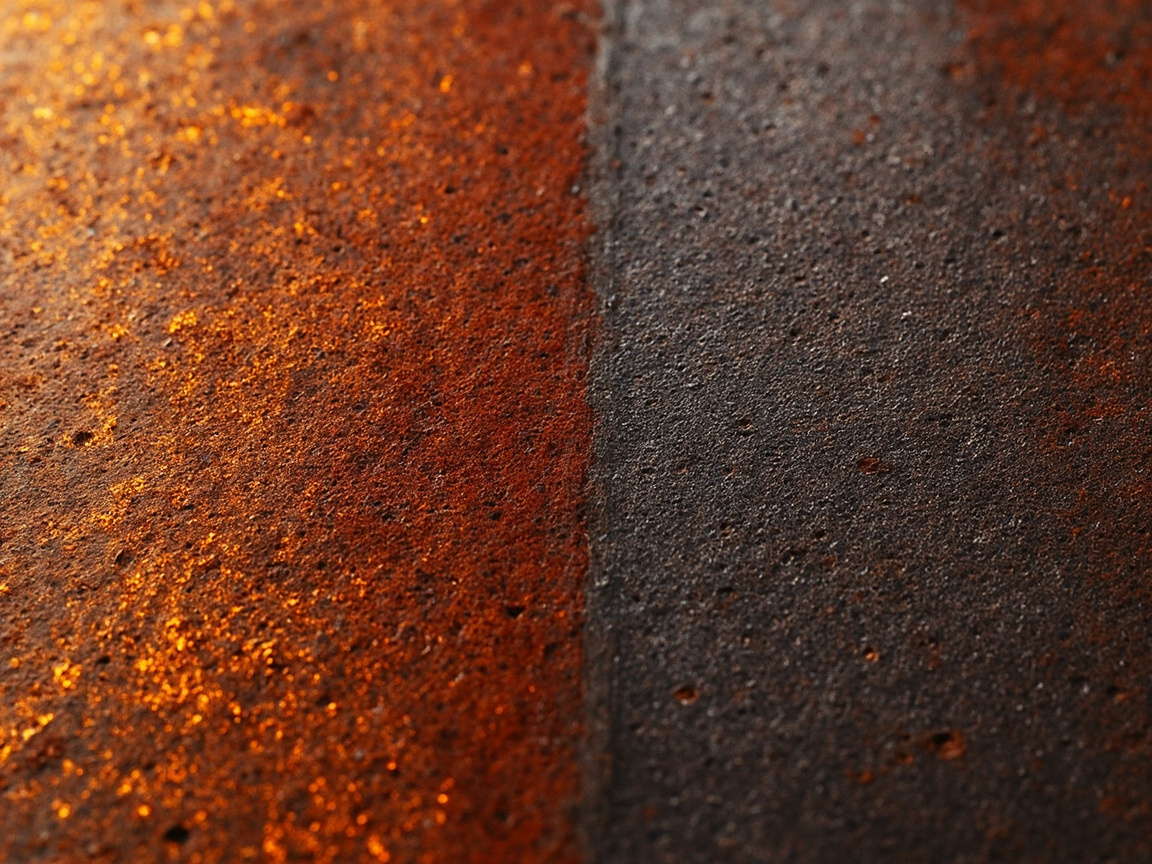
To use these two types of products correctly, one must first understand the mechanistic difference in how they "deal with rust". According to the research archive's summary of anti-rust mechanisms, painting-over-rust mainly relies on the "conversion type/stabilizing type" path: rust converters (tannic acid/phosphoric acid) convert rust into stable substances, suitable for sites where rust cannot be completely removed (per the research archive section "Anti-rust Mechanisms and Classification"). Specifically, the two are not the same thing:
1.1 Rust Converter: "Transform" Rust into Stable Substances
The core of a rust converter is a class of active substances that can chemically react with rust, the most common being tannic acid and phosphoric acid. The main component of rust is hydrated iron oxide (Fe₂O₃·xH₂O, etc.). Under the action of tannic acid or phosphoric acid, it generates dark, inert stable complexes or phosphate films that firmly adhere to the steel surface. This process is equivalent to "local treatment", fixing the originally loose, continuing-to-develop corrosion products so that they no longer act as a corrosion cell to continue reacting.
- Tannic acid path: forms dark ferric tannate complexes with iron ions, dense film, dark color (often blue-black or dark brown);
- Phosphoric acid path: generates iron phosphate/phosphate passivation film with rust, also having a certain phosphating effect, improving subsequent adhesion.
1.2 Stabilizing Anti-rust Paint: "Encapsulate" and Passivate the Rust
The stabilizing type (also called stabilization or penetrating stabilization type) anti-rust paint does not directly "eat" the rust, but through resin penetration and synergy with anti-rust pigments, encapsulates and seals the residual loose rust, and uses passivating pigments (such as zinc phosphate) to passivate the metal surface, preventing corrosive media from further intrusion. It is often used together with rust converters: the converter first treats active rust, and the stabilizing paint film then provides long-term shielding and passivation protection.
In short, the converter tends toward "chemical local treatment of active rust", while the stabilizing type tends toward "physical encapsulation + chemical passivation". Both serve the same goal—under the premise of unable to completely blast, let the rust-bearing surface obtain a paintable and long-term protective foundation.
II. Why Painting-over-Rust Is Needed: Those Real Sites Where "Rust Cannot Be Cleaned Off"
The existence significance of rust converters and stabilizing anti-rust paints is fully anchored in the type of working condition of "on-site unable to completely remove rust". Typical scenarios include:
- In-service equipment maintenance without shutdown: local corrosion of petrochemical, power, municipal pipelines, cannot be disassembled entirely into blasting room;
- Large fixed structures: bridges, towers, tank exteriors, blasting equipment hard to fully cover, and environmental regulations strictly limit dust;
- Complex geometry and dead corners: flanges, bolts, behind fillet welds, where manual and power tools can reach is limited;
- Thick historical rust layer, uncertain substrate: repainted many times, old paint and rust layers interlaced, extremely costly to completely remove to bare metal;
- Emergency repair with limited budget and time: requires rust removal and film formation on the same day, single-component ready-to-use is most convenient.
The common point of these scenarios is: complete rust removal (Sa 2½) is economically or technically infeasible, but corrosion must be controlled. Rust converters and stabilizing anti-rust paints enter in single-component form, eliminating the most troublesome on-site steps such as two-component mixing and pot-life management, making them a cost-effective choice for maintenance painting.
III. Boundaries of Painting-over-Rust: Not All Rust Can Be "Carried"
It must be emphasized that painting-over-rust has strict applicable boundaries; crossing them creates hidden dangers. As clearly defined in the research archive: the boundary of painting-over-rust is—only applicable to light loose rust, St2/St3; heavy corrosion requires blasting (per research archive section "Anti-rust Mechanisms and Classification"). This means:
| Rust Condition | Surface Preparation Grade | Suitable for Rust Conversion/Stabilizing Type | Description |
|---|---|---|---|
| Light loose rust, thin loose rust layer | St2 / St3 (manual/power tool) | Suitable | Remove loose parts before painting |
| Moderate rust, local pitting | Close to St3, needs reinforced cleaning | Caution | Must thoroughly remove peeling, layered rust |
| Severe rust, large-area pitting, substrate thinning | Needs blasting Sa 2½ | Not suitable | Must blast to bare metal and assess wall thickness |
| Old paint intact with only surface chalking | Abrade to break gloss | Suitable as renovation primer | Assess compatibility of old paint system |
Remember one iron rule: rust converter treats "active rust", not "structural failure". If the steel substrate has visibly thinned due to pitting, no matter how good the coating is, it cannot restore strength; in this case, one must return to blasting, repair, or replacement.
IV. Pre-construction Preparation: Cleaning Loose Rust and Oil Is the Premise of Success
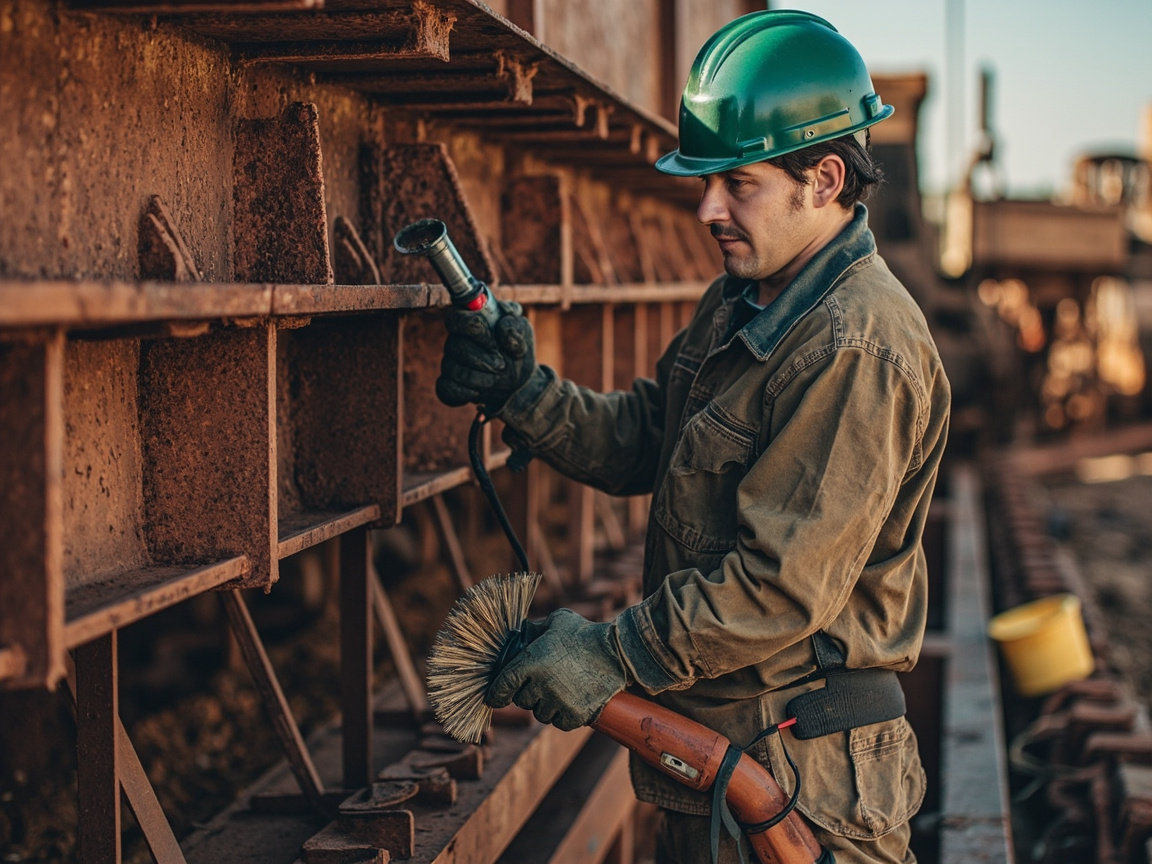
Many people mistakenly think "rust converter is just brushed directly on rust", which is the biggest misconception. Even if the product claims painting-over-rust, pre-construction cleaning is still 70% of the work determining success or failure. Standard practice has three steps:
4.1 Remove Loose Rust and Failed Old Paint
Use wire brush, scraper, sandpaper, or angle grinder (with wire wheel/sanding disc) to thoroughly remove:
- All peeling, layered, loose rust layers that fall off at a touch;
- Chalked, cracked, failed old paint films;
- Weld slag, burrs, sharp edges (should be ground smooth to avoid thin paint film).
The goal is to reach St2 or St3: no visible loose rust and failed coating on surface, showing a state of interlaced metal substrate and firm old paint. St3 is more thorough than St2, requiring metallic luster to show.
4.2 Degreasing and Oil Removal
Oil will severely block the contact between converter and rust layer, causing no reaction and no adhesion. Must use industrial cleaner, solvent, or alkaline degreaser to remove from surface:
- Engine oil, grease, hydraulic oil;
- Hand sweat, dust clumps;
- Anti-spatter paste at welding spatter;
Thoroughly clean and wipe dry with clean cloth. For equipment with heavy oil, this step cannot be omitted.
4.3 Environment Judgment and Safety Protection
- Recommended construction temperature 15–25℃, avoid extreme ranges below 5℃ or above 35℃;
- When relative humidity is too high (e.g., near dew point), postpone to avoid surface condensation affecting film formation;
- Single-component alkyd-based products contain flammable solvents, no open flame, no smoking, keep ventilation on site;
- Wear nitrile gloves, goggles, and protective mask to avoid direct skin contact and inhalation of solvent vapor.
V. Construction Procedure Table: On-site Process You Can Directly Follow
The table below breaks down "painting-over-rust maintenance" from preparation to curing into standard procedures, usable as on-site briefing and self-check list. Note: the "reference time limits" in the table are taken from typical drying data of alkyd-based anti-rust/conversion products in the research archive (e.g., alkyd anti-rust paint surface dry ≤5h, hard dry ≤24h, per GB/T 25251-2010 series; Würth Rust Stop type alkyd-based product drying about 16h, per research archive), actual shall follow product manual.
| Procedure | Operation Content | Key Control Points | Reference Time Limit/Indicator |
|---|---|---|---|
| 1. Assessment | Determine rust grade, wall thickness, old paint status | Confirm belongs to St2/St3 light painting-over-rust, not heavy corrosion | Heavy corrosion reverted to sandblasting |
| 2. Remove loose rust | Wire brush/scraper/power tools to remove loose rust and failed paint | No peeling or delamination, exposing metal substrate and sound paint | To St2–St3 |
| 3. Degreasing | Cleaner to remove oil stains and dust | No oil film or hand sweat marks on surface | Wipe until clean cloth does not discolor |
| 4. Dry substrate | Natural drying or wipe off surface water | No water film or condensation on substrate | 3℃ above dew point as general requirement |
| 5. Apply converter | Single-component, ready to use after opening, apply evenly by brush/roller | Fully wet rust surface, avoid missed coating | Minimum application rate approx. 90 ml/m² (refer to Würth data) |
| 6. Reaction standing | Tannic acid/phosphoric acid reacts with rust to form film | Surface turns to dark stable film, non-tacky | Several hours as required by product |
| 7. Apply stabilizing primer | Single-component anti-rust primer overcoat | Compatible with conversion layer, full coverage | Recoat interval per product (e.g. from approx. 2h) |
| 8. Drying and curing | Cure at room temperature, avoid water and impact | No water contact or load before hard dry | Hard dry approx. 16–24h |
| 9. Quality inspection | Cross-cut adhesion, appearance, film thickness | Grade 0/1 excellent, no missing base | Accept per GB/T 9286 |
| 10. Matching topcoat | Enter "intermediate—topcoat" matching as needed | Connect with overall anti-corrosion system | See Section 7 |
The value of this table is to turn "brush by experience" into "inspect by process". Each process has stoppable and judgeable nodes, so problems can be found at the current step rather than traced back after blistering half a year later.
VI. Coating and Drying: The Convenience and Pace of Single-Component
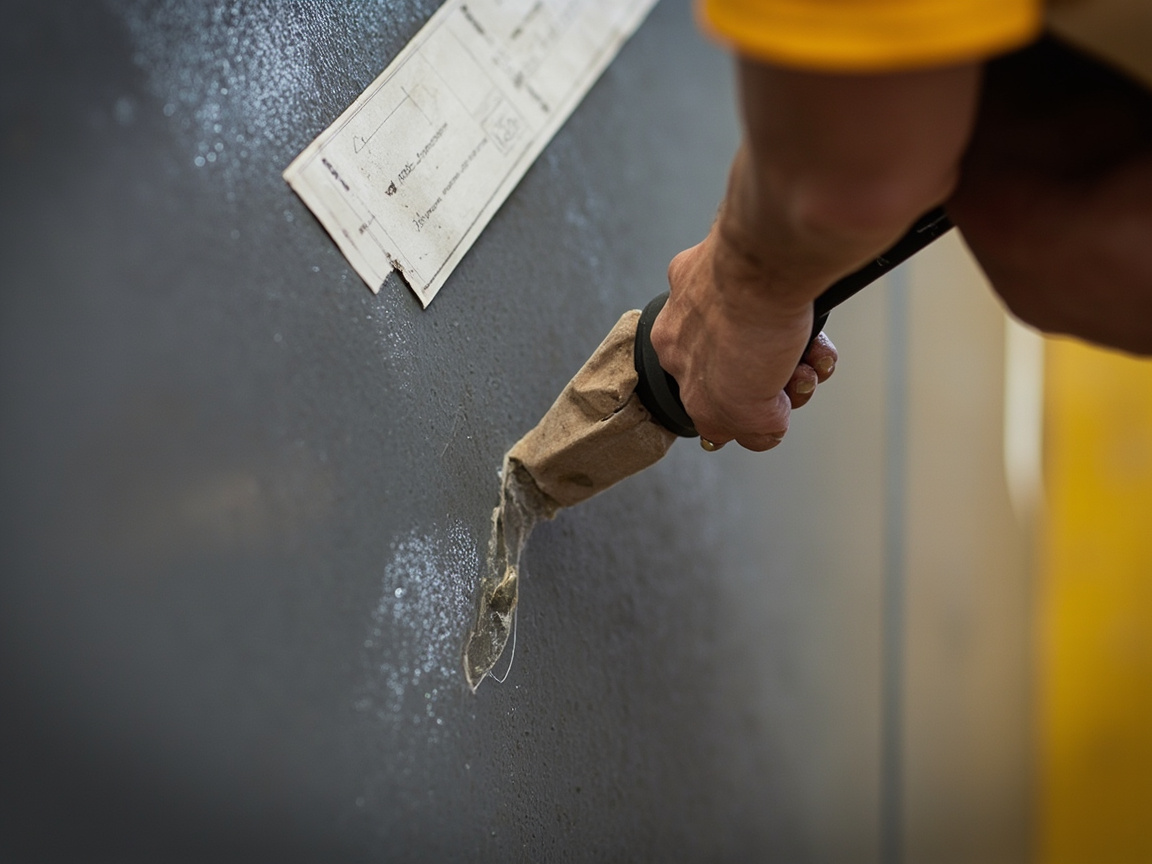
Rust converters and stabilizing anti-rust paints are mostly single-component; the biggest application convenience is ready to use after opening, no pot-life pressure—unlike two-component epoxy/polyurethane which requires strict ratio and mix-on-site use. But convenience does not mean casual; coating and drying still need to hold several lines:
6.1 Coating Method
- Brush/roller preferred for small areas and complex parts: For flanges, bolts, dead corners, brush coating better wets the rust layer and is the main method for rust-in-place construction;
- Large flat surfaces can use airless or air spray, but pay attention to converter viscosity and spray uniformity;
- Coating should be "wet and even", neither missing base (rust spots exposed) nor too thick at once causing sagging and poor drying.
6.2 Drying Pace
Refer to alkyd-based anti-rust products in the research archive (per GB/T 25251-2010 and Würth Rust Stop data):
- Alkyd anti-rust paint surface dry usually ≤5h (some ≤2h), hard dry ≤24h;
- Alkyd-based rust stop products dry approx. 16h;
- Full cross-linking cure often needs over 24h, avoid water and mechanical impact during curing.
Drying is significantly affected by temperature, humidity, ventilation and film thickness. Low temperature and high humidity markedly slow drying; site should ensure pace via ventilation and timed construction.
6.3 Recoat Window
Above the stabilizing primer, the matching system is usually entered. Referring to alkyd-based products, recoat interval from approx. 2h, full dry approx. 24h (per ROSTIO-type alkyd-based product data, research archive); specifically must be after previous coat is "hard dry, non-tacky" to avoid solvent mutual dissolution causing lifting and wrinkling.
VII. Relationship with Complete Matching System: Rust-in-place Primer ≠ Complete Anti-corrosion
This is the point the article most wants to remind engineering parties: Rust converter and stabilizing anti-rust paint solve the "paintability of rust-in-place substrate"; they cannot replace the complete "primer—intermediate—topcoat" anti-corrosion matching. According to the research archive's summary of industrial protective systems, the correct logic for steel structure anti-corrosion is—primer (anti-corrosion/adhesion) + intermediate coat (thickening/barrier) + topcoat (weathering/decorative), and design matching per ISO 12944-2018 corrosion grades (C2–CX), carbon steel sandblast Sa 2½, shop primer, primer+intermediate+topcoat matching (per research archive "general test standards" and "industrial coating mechanisms").
7.1 Typical Complete Matching Film Thickness (High-demand Conditions)
The research archive gives the standard matching of epoxy polyurethane topcoat system (per "epoxy polyurethane topcoat (domestic product parameter summary)"):
- Epoxy zinc-rich primer: 70–80 µm (1 coat), cathodic protection via zinc powder sacrificial anode;
- Epoxy micaceous iron oxide intermediate coat: 100–150 µm (1–2 coats), mica iron oxide flake extends diffusion path of corrosive media (barrier effect);
- Epoxy polyurethane topcoat: 100–120 µm (2 coats), provides weathering resistance and decoration.
7.2 Position of Rust-in-place Solution in Matching
Viewing rust-in-place construction in the overall system, it has two typical positions:
- As "maintenance transition primer": On in-service equipment where sandblasting is impossible, first use rust converter + stabilizing primer to stop active rust and establish paintable substrate, then overcoat intermediate and topcoat by feasible process on it, moving maintenance system toward complete matching;
- As "independent low-demand protection": For C2–C3 level, short maintenance cycle, acceptable periodic repainting facilities, single-component stabilizing anti-rust can be directly used as economical protection, not necessarily demanding full zinc-rich + micaceous iron + polyurethane set.
What needs warning is another error: treating rust-in-place primer as a "one-coat-to-the-end" heavy anti-corrosion solution, used in C4/C5 marine or chemical heavy corrosion environments. The research archive points out that alkyd-based rust stop products (e.g. Würth Rust Stop) meet ISO 12944 corrosion grade C3 "high" (per research archive), higher corrosion grades must return to sandblast + zinc-rich + intermediate + topcoat complete matching, even epoxy zinc-rich primer must reach "very high (VH)" durability under C5 (per Jotun Barrier 80 type data, research archive).
Thus, choosing rust-in-place construction or complete sandblast matching is essentially a decision by corrosion grade and maintenance cycle, not by "which is easier".
VIII. Quality Control and Acceptance: Let Adhesion Speak
Whether rust-in-place construction is good cannot be judged by "looks quite black and even"; it must have quantifiable acceptance. The two most practical and site-executable are cross-cut adhesion and appearance/film thickness check.
8.1 Adhesion: GB/T 9286 Cross-cut Method
Per research archive "general test standards", adhesion (cross-cut) per GB/T 9286-1998, ISO 2409, ASTM D3359, graded 0–5, grade 0/1 excellent (fall-off ≤5%). Site operation:
- Score grid on paint film with knife (common 1mm or 2mm spacing, by film thickness);
- Apply tape, peel quickly;
- Observe lattice edge peeling, rate per standard.
Rust-in-place construction, because substrate itself has residual rust and roughness, adhesion is naturally slightly lower than sandblasted Sa 2½ substrate, but as long as grade 0/1 is reached, it shows conversion layer and stabilizing primer bond reliably with substrate, can enter next process.
8.2 Appearance and Film Thickness
- Appearance: No missing base (rust spots exposed), no sagging, no blistering, no obvious crater and orange peel; conversion layer evenly turns to dark stable film;
- Film thickness: Use wet film comb or dry film thickness gauge for spot check, ensure design DFT reached; alkyd-based rust stop products have "minimum application rate" constraint (e.g. approx. 90 ml/m², per Würth data), insufficient film thickness equals missing protection.
8.3 One-pass Acceptance Checklist
| Acceptance item | Method/standard | Pass criterion |
|---|---|---|
| Substrate cleaning | Visual + compare St2/St3 | No loose rust, no failed paint, no oil film |
| Conversion effect | Visual color | Rust surface turns to dark stable film |
| Adhesion | GB/T 9286 cross-cut | Grade 0/1 excellent |
| Film thickness | Thickness gauge/application rate calc | Reach design DFT, no missing base |
| Drying | Touch + time control | Enter next process after hard dry |
Kexin New Materials (kexinMaterials) when delivering rust conversion and stabilizing solutions, usually provides the above acceptance checklist and matching suggestions together, helping site turn "rust-in-place maintenance" from experience work into controllable process—especially in existing equipment retrofit, tight shutdown window projects, this "paint + process card + acceptance standard" package is more reliable than buying a pail of converter alone.
IX. Common Selection and Construction Misunderstandings
Misunderstanding 1: Rust converter can treat any rust. Wrong. It only targets active rust, and its applicable boundary is light flash rust (St2/St3); heavily corroded, pitted and thinned substrates must be blasted and have their structural safety assessed.
Misconception 2: It's fine to brush directly onto thick rust. Wrong. Loose rust and oil must be removed first, otherwise the converter cannot contact the active rust and adhesion drops to zero.
Misconception 3: One coat of rust-inhibitive primer is enough for heavy corrosion protection. Wrong. Rust-inhibitive solutions are mostly used for C2–C3 maintenance or as a transition; C4/C5 severe corrosion must return to a complete primer—intermediate—topcoat system.
Misconception 4: Single-component products don't need the manual. Wrong. Application rate, recoat interval, and drying temperature still determine success or failure; insufficient minimum application rate equals missed protection.
Misconception 5: Stabilizing type can replace blasting. Wrong. The two solve different problems: blasting solves substrate cleanliness, while the rust-inhibitive solution solves "paintability when cleanliness is insufficient"; they cannot replace each other.
10. Recommendations for Interface with Solvent-based / Water-based Systems
After rust-inhibitive maintenance, whether the upper coating system should be solvent-based floor/anti-rust system or water-based industrial coating depends on environmental thresholds and working conditions. The research archive has data supporting both solvent-based alkyd anti-rust and water-based industrial systems: alkyd anti-rust paint is easy to apply, single-component, and low-cost, but has poor solvent/acid-alkali resistance, slow drying, and is incompatible with two-component strong-solvent paints (per the alkyd anti-rust paint section of the research archive); whereas water-based industrial coating is superior in VOC compliance. Engineering parties can combine guidance on when to choose solvent-based paint scenarios and water-based industrial coating selection to make decisions within the overall framework of "rust-inhibitive primer + upper system". Regarding intercoat adhesion and compatibility, also refer to the mechanism analysis in water-based paint vs. solvent-based paint adhesion comparison to avoid biting-through and wrinkling caused by system incompatibility during renovation.
FAQ
1. What is the difference between rust converter and stabilizing anti-rust paint?
Rust converter (tannic acid/phosphoric acid) chemically converts rust into a dark stable substance; stabilizing anti-rust paint uses resin penetration and passivating pigments (e.g., zinc phosphate) to encapsulate and passivate residual flash rust. The former leans toward "chemical in-situ treatment of active rust", the latter toward "physical encapsulation + chemical passivation"; the two are often used together.
2. Can rust converter be brushed directly onto very thick rust?
No. It is only suitable for light flash rust (St2/St3), and before application all loose rust and failed old paint must be removed with tools, and degreased. Severe corrosion and pitted thinning must be blasted and structural safety assessed.
3. Why must loose rust and oil be cleaned even for rust-inhibitive application?
Because the converter must contact active rust to react; loose rust falls off at a touch, and oil blocks contact, both leading to no reaction and no adhesion. Cleaning is 70% of the work for rust-inhibitive application success.
4. Do single-component rust converter/stabilizing products need mixing?
No, ready to use out of the can, with no pot-life pressure like two-component products. But still control application rate, recoat interval, and drying temperature; insufficient minimum application rate equals missed protection.
5. How long after rust-inhibitive application can the topcoat be applied?
Taking alkyd-based products as reference, recoat interval starts at about 2h, full dry about 24h (per ROSTIO-type data); it must be done after the previous coat is dry-hard and non-tacky, to avoid solvent mutual dissolution causing biting-through and wrinkling. Actual per product manual.
6. What adhesion grade is acceptable at acceptance?
Per GB/T 9286 cross-cut method, among grades 0–5, grades 0/1 are excellent (falloff ≤5%). Rust-inhibitive substrate adhesion is naturally slightly lower than blasted substrate, but reaching 0/1 grade allows proceeding to the next process.
7. Can rust converter replace blasting for heavy corrosion protection?
No. Rust-inhibitive solutions are mostly used for C2–C3 maintenance or transition; C4/C5 severe corrosion must return to complete system of blasting Sa 2½ + zinc-rich primer + intermediate coat + topcoat. Alkyd-based rust-arrest products typically meet ISO 12944 C3 "high" grade.
8. How to control on-site construction temperature?
Recommended 15–25℃, avoid extreme ranges below 5℃ or above 35℃; suspend when relative humidity is too high and near dew point to prevent surface condensation affecting film formation. Single-component alkyd-based contains flammable solvent; no open flame, ventilate, and wear protection on site.
9. What topcoat can be applied over rust-inhibitive primer?
Depends on the overall system: low-requirement C2–C3 can stand alone as economical protection with periodic repainting; high-requirement can go up to intermediate coat and topcoat (e.g., epoxy micaceous iron oxide intermediate coat + epoxy polyurethane topcoat), moving the maintenance system toward a complete system, provided the system is compatible.
10. How to judge whether a site should use a rust-inhibitive solution?
Look at three things: is the rust only light flash rust (St2/St3), is the substrate without obvious thinning, and does the maintenance cycle and corrosion grade allow economical protection. If all three are met, rust-inhibitive solution can be used; if any one is not met, return to blasting and complete system.
Further Reading
- Water-based Industrial Coating Selection: Resin Systems and Applicable Conditions: Frameworks the decision of "what upper system to choose after rust-inhibitive maintenance", supplementing the system and environmental threshold parts of this article.
- When to Choose Solvent-based Paint: Scenarios and Boundary Judgment: Starting from solvent-based vs. water-based boundaries, helps determine the direction of the topcoat system over rust-inhibitive primer.
- Science of Water-based Wood Coating Formulation and Application: Cross-scenario understanding of "primer—intermediate—topcoat" system thinking and surface treatment logic, also inspiring for industrial rust-inhibitive maintenance.