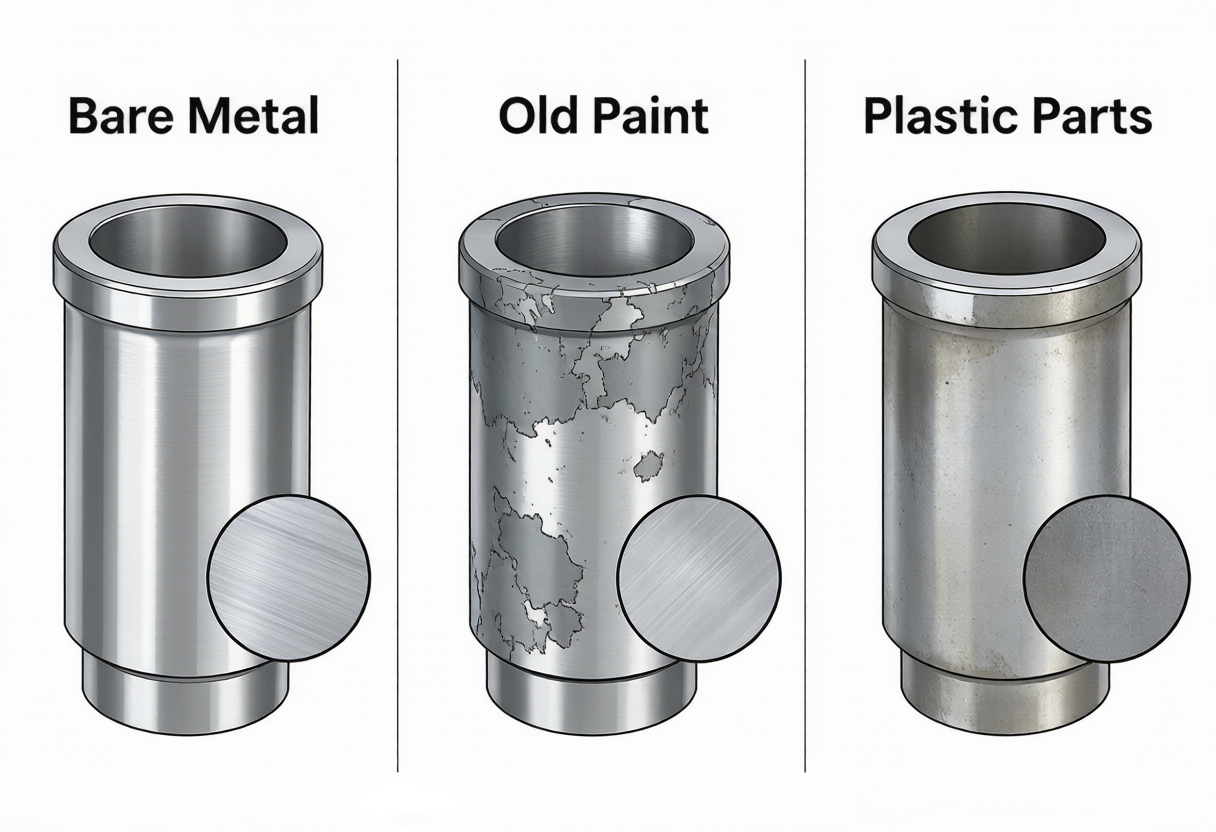
In the same repair workshop, you may simultaneously face three types of substrates: bare metal, old paint surface, plastic parts. Their "temperaments" are completely different: bare metal fears rust, old paint surface fears instability, plastic parts fear poor adhesion. Using the same process to treat them will inevitably cause problems. This article provides a "treatment—primer—surfacer" combination plan based on substrate to help you scientifically select the process.
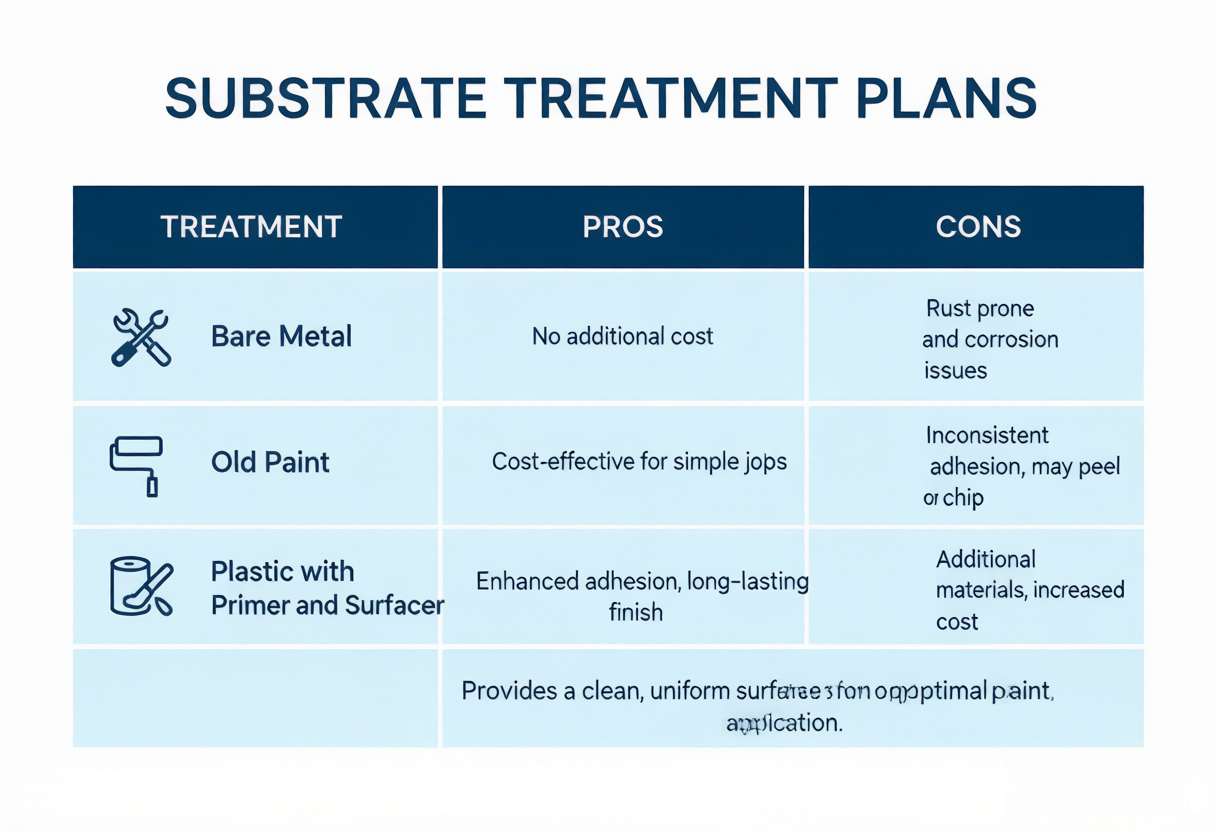
I. Bare Metal
Bare metal begins to oxidize within hours of exposure to air and is the most "urgent" substrate.
- Treatment: Degrease → Polish to bright metal (80–180 grit) → Apply immediately.
- Primer: Epoxy primer (preferred for rust prevention) or etch primer.
- Middle coat: Depending on the situation, apply the middle coat directly or apply putty followed by the middle coat.
II. Old paint film (intact / loose)
The old paint surface should first be assessed for stability: use cross-cutting or sanding to test; if it is firm, keep it, but if it is loose/blistered, it must be removed.
- Treatment (firm): Degreasing → Sanding and feathering (to provide roughness).
- Treatment (soft/loose): Sand to a sound substrate; if necessary, expose the metal and then follow the bare metal procedure.
- Primer / Surfacer: Usually applied directly with surfacer without primer, then topcoat.
III. Plastic Parts
See the dedicated section on plastic parts; the core is release agent removal + PP water.
- Treatment: Identify material → Remove release agent → (PP water / flame / plasma).
- Primer: PP water/plastic primer, not metal epoxy primer.
- Mid-coat: Flexible mid-coat, matching the elasticity of plastic.
Summary
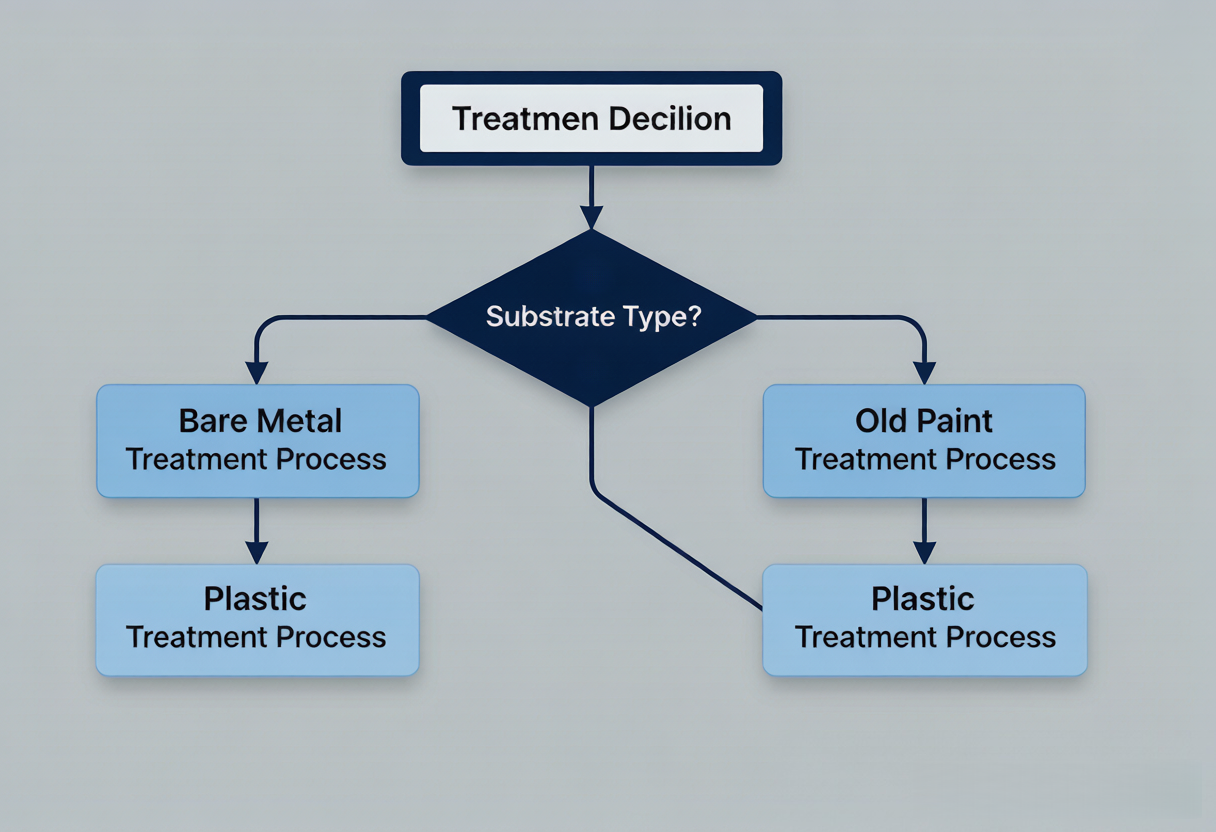
Substrate determines the process route: Bare metal focuses on rust prevention (epoxy primer, the faster the better), Old paint surface focuses on assessing stability (if firm, feather and retain; if loose, remove), Plastic parts focus on adhesion (PP water as a bridge + flexible surfacer). Pairing "preparation—primer—surfacer" according to the substrate can avoid rework such as paint peeling and bubbling.
Frequently Asked Questions (FAQ)
{ "@context": "https://schema.org", "@type": "FAQPage", "mainEntity": [ {"@type":"Question","name":"Why should bare metal be primed as soon as possible?","acceptedAnswer":{"@type":"Answer","text":"Bare metal will oxidize and rust rapidly once exposed, potentially affecting adhesion within a few hours. After sanding to bright metal, epoxy or etch primer should be applied as soon as possible to form an anti-rust barrier."}}, {"@type":"Question","name":"Does old paint have to be completely sanded off?","acceptedAnswer":{"@type":"Answer","text":"Not necessarily. First assess its soundness: firmly adhered old paint can be sanded and feathered, then kept and directly coated with primer surfacer; only blistered, cracked, or soft areas need to be removed down to a sound layer or bare metal."}}, {"@type":"Question","name":"Can plastic parts use epoxy primer?","acceptedAnswer":{"@type":"Answer","text":"Generally not recommended to use metal epoxy primer directly. PP-type plastics should use PP adhesion promoter/plastic primer to build an adhesion bridge; flexible primer surfacer also better matches the elasticity of plastic and reduces cracking risk."}}, {"@type":"Question","name":"How to determine if old paint is sound?","acceptedAnswer":{"@type":"Answer","text":"You can use cross-cut test, sanding probe, or observe for blistering/brittle cracking. If a powdery loose layer or whole-sheet peeling appears during sanding, it is unsound and must be removed; if sanding yields uniform smoothness with good adhesion, it can be kept."}}, {"@type":"Question","name":"Can the three substrates share one primer surfacer system?","acceptedAnswer":{"@type":"Answer","text":"Not entirely. Metal parts use conventional primer surfacer; plastic parts are recommended to use flexible primer surfacer to match their elasticity; if bare metal has been sealed with epoxy primer, primer surfacer choice is relatively free. The key is that primer-substrate compatibility takes priority."}} ] }