In anti-corrosion coating engineering there is an old saying that has been repeatedly verified: "Three parts coating, seven parts application, and the first priority of application is surface preparation." No matter whether you choose zinc-rich epoxy primer, solvent-free epoxy, or aliphatic polyurethane topcoat, if the mill scale, rust, oil, and soluble salts on the steel surface are not thoroughly removed, even the most expensive coating will fail early. A large number of engineering statistics show that about 70% of early coating rusting is directly related to substandard surface preparation. This article focuses on the most frequently mentioned and most easily misread "Sa2.5" as well as the entire blast cleaning grade system, clarifying the standards, judgment, roughness, cleanliness, and site control, to help engineers on both the design and supervision ends act with evidence to rely on.
As a protective coating supplier serving bridges, storage tanks, and marine structures for a long time, Kexin New Materials (kexinMaterials) states the surface preparation grade and acceptance method on the first page of the配套 design, taking "Sa2.5 + roughness + dust and salt removal" as the prerequisite for the配套 to take effect, rather than an optional item. The judgment criteria in this article also come directly from these frontline practices.
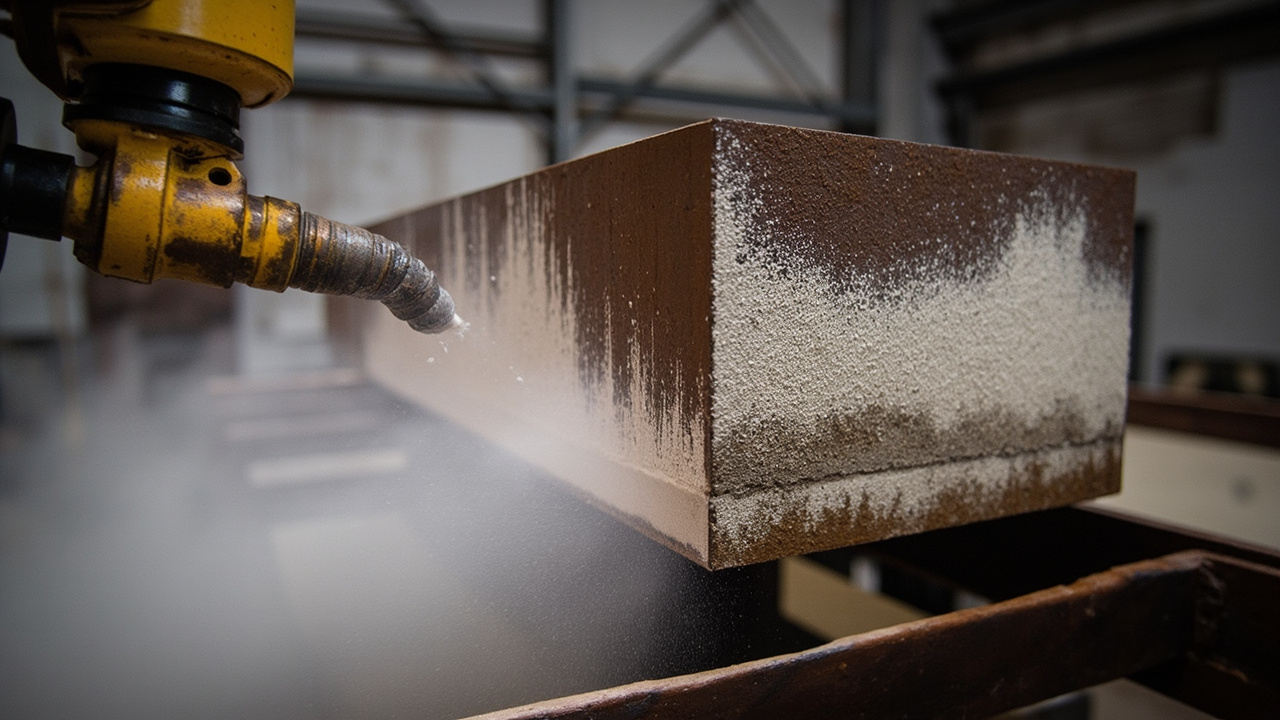
I. Where do blast grades come from: ISO 8501-1 and GB/T 8923
The international benchmark for blast (blast cleaning) grades is ISO 8501-1 "Preparation of steel substrates before application of paints and related products - Part 1: Rust grades and preparation grades for uncoated steel substrates and of steel substrates after overall removal of previous coatings", and the corresponding Chinese standard is GB/T 8923.1-2011 (technically equivalent). It divides the pre-treatment rust degree of steel into four grades: A (fully covered with mill scale), B (mill scale has started to rust), C (all lightly rusted), D (all obviously rusted), and divides the post-treatment cleanliness into four blast cleaning grades:
- Sa 1 (light blast cleaning): removes loose mill scale, rust, and coating, only allowing slight spot or streak traces to remain;
- Sa 2 (thorough blast cleaning): most mill scale, rust, and coating have been removed, residues are only firmly adhered spots or bands;
- Sa 2.5 (very thorough blast cleaning / near-white grade): residues are only slight discoloration or streaks, barely visible to the naked eye;
- Sa 3 (white / clean blast cleaning): surface has uniform metallic color, no visible residue of any kind.
Note that Sa2.5 does not mean "2.5 tenths clean", but a "very thorough" grade between Sa2 and Sa3; "2.5" is a grade number, not a percentage of degree. In engineering, C4 and above high-corrosion environments generally require Sa2.5 or higher.
II. To what extent is Sa2.5 actually "clean"
The key point of Sa2.5 judgment is: the surface shall be free of visible oil, mill scale, rust, coating, and foreign impurities, only allowing slight, scattered discoloration, slight shadows, slight spot rust, or streak traces. In plain terms it is "near-white metal" — from a distance it is close to Sa3, but up close you can still find very small amounts of firmly adhered residue.
On-site judgment commonly uses comparison sample blocks (photo standards provided by ISO 8501-1 / GB/T 8923 standard sample blocks) for comparison, confirmed jointly by the supervisor and the constructor. Two deviations need to be guarded against: one is "fake Sa2.5" — residue rust and mill scale in recessed corners, welds, and holes not treated; the other is "over-cleaning" — repeatedly blasting to pursue Sa3 causes the surface to be too rough with too many edges, which instead damages the substrate. For most heavy-duty anti-corrosion配套, Sa2.5 is already the best balance point of cost-performance and reliability.
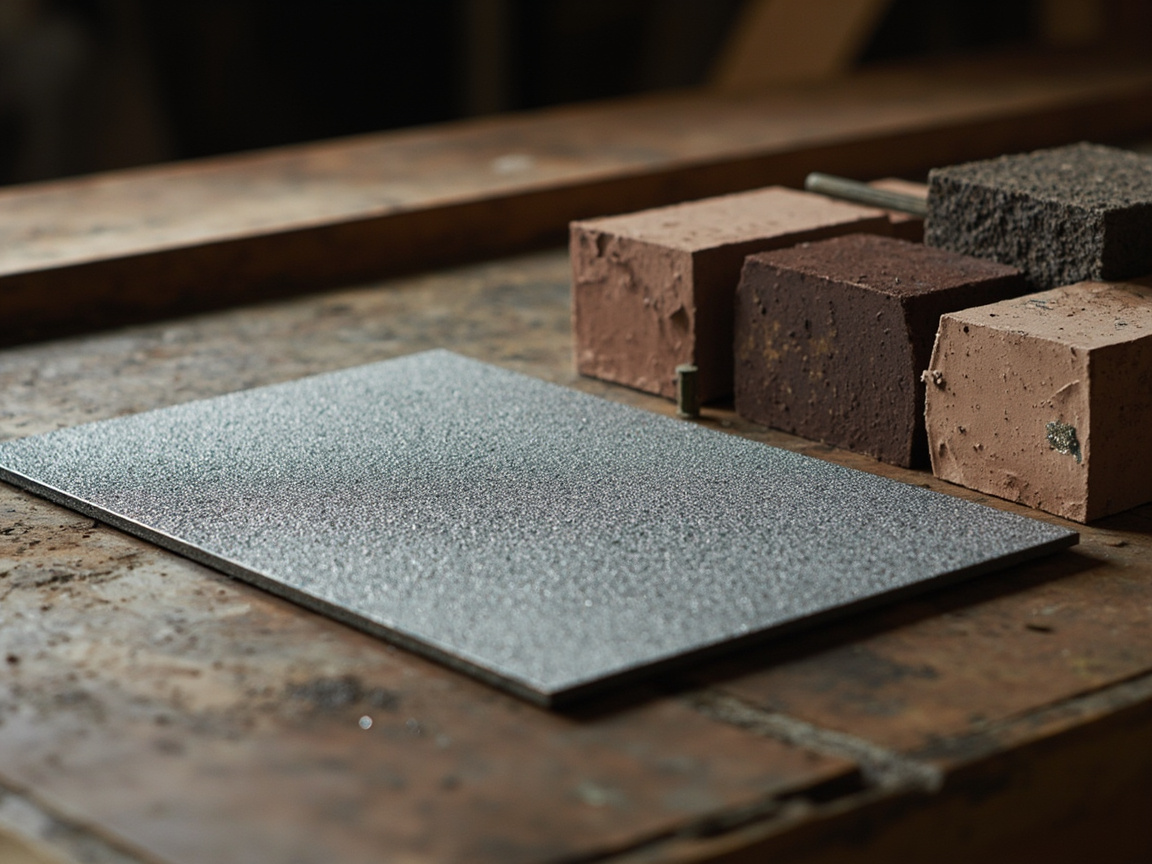
III. Roughness profile: why Sa2.5 still needs roughness
Meeting cleanliness alone is not enough. Blasting simultaneously gives the surface a certain "anchor pattern depth" (roughness profile), which directly determines the mechanical interlocking adhesion of the coating. The relevant standard is ISO 8503 series (surface roughness characteristics), corresponding national standard GB/T 13288**. Roughness is divided into three grades by comparison sample blocks: fine (F), medium (G), coarse (R), with common anchor pattern depth (Rz) magnitudes approximately:
| Roughness grade | Anchor pattern depth Rz magnitude (µm) | Typical application |
|---|---|---|
| Fine (F) | approx. 25–40 | Thin coat, topcoat |
| Medium (G) | approx. 40–70 | General heavy-duty anti-corrosion primer |
| Coarse (R) | approx. 70–100+ | High-build / solvent-free thick film |
For zinc-rich epoxy primer, solvent-free epoxy, and other thick-film or filler-containing systems, commonly medium (G) to coarse (R) grade is used to match their DFT; too fine means insufficient anchoring and easy detachment, too coarse means air easily retained at wave crests forming early rust spots. Roughness is judged by replica tape (press-o-film) with depth gauge or comparison sample blocks. For the special requirements of zinc-rich epoxy primer on the surface, refer to this batch's cathodic protection mechanism of zinc-rich epoxy primer.
IV. The invisible "dirt": soluble salts and dust
More hidden than visible rust are soluble salts (chlorides, sulfates, etc.) and blasting dust. They absorb moisture and form osmotic pressure blisters under the paint film, and are the culprits of early failure of marine and chemical plant配套. Control requirements:
- Dust removal: judge surface dust grade by the pressure-sensitive tape method of ISO 8502-3 (corresponding GB/T 18570.3), usually required ≤ grade 2 (low grade);
- Salt removal: measure soluble salts by Bresle patch method of ISO 8502-6 / 8502-9 (corresponding GB/T 18570.6/.9), chloride content commonly required ≤ 20–50 mg/m² (as NaCl), stricter for severe marine environments;
- Method: if salt exceeds the limit, secondary water spray / vacuum cleaning or specialized salt removal treatment is required, not merely increasing blasting.
Kexin New Materials (kexinMaterials) in cross-sea and coastal projects treats "salt removal + roughness + dew point" as mandatory inspection items for blast handover, to avoid under-film corrosion caused by salt residue breaking out within one or two years of commissioning.
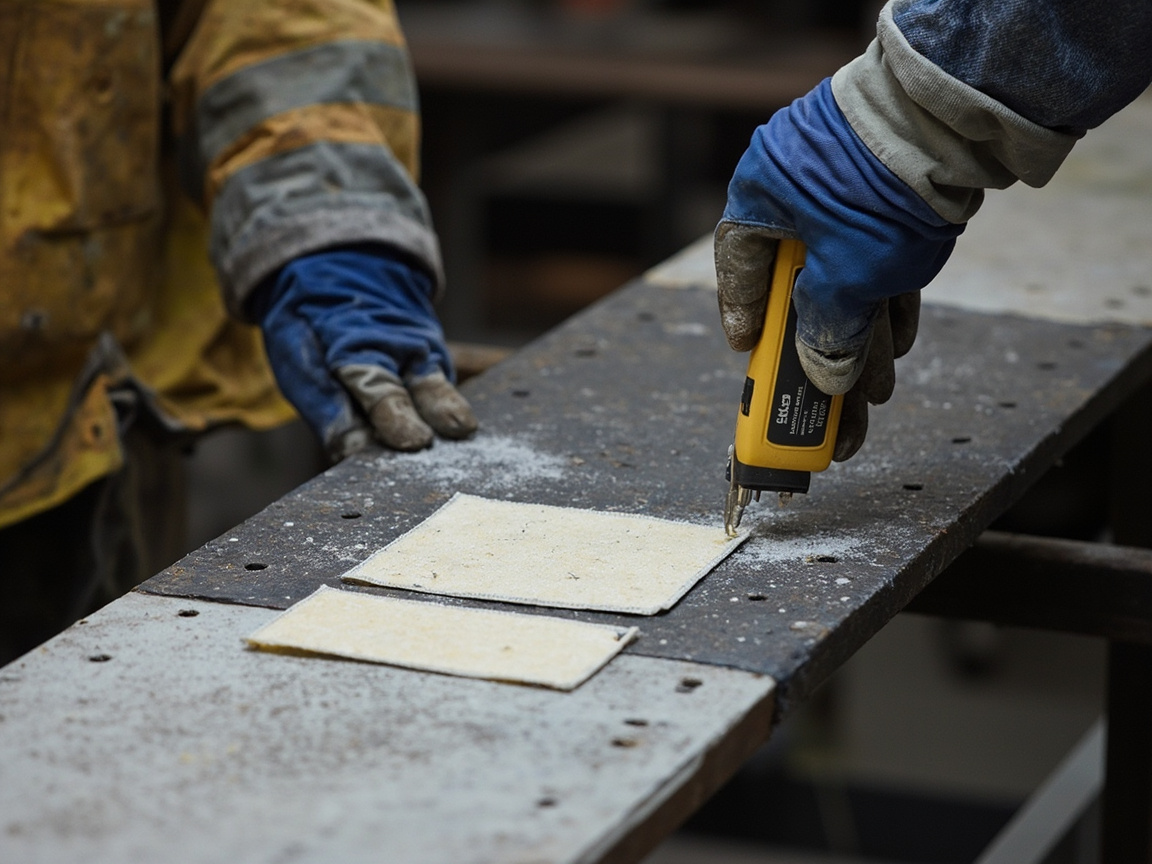
V. Blasting media and process selection
Blasting media determine efficiency, roughness, and environmental friendliness:
- Steel shot / steel grit: recyclable, controllable roughness, suitable for workshop shot blasting;
- Copper slag / garnet / quartz sand: low cost, quartz sand has silicosis risk and requires wet or alternative method;
- Alumina / glass beads: special surfaces or decorative treatment.
In terms of process, it is divided into dry blasting, wet blasting (dust suppression, but must prevent re-rusting) and vacuum recovery blasting (confined spaces). The selection balances cleanliness, roughness target, environmental protection, and worker health (respiratory protection, silica dust control).
VI. Environmental window for surface preparation and painting
The "active metal" after blasting is highly prone to re-rusting and must be primed within the limited "painting window":
- Dew point control: substrate temperature must be at least 3℃ above dew point (per ISO 12944-7 / GB/T 30790.7);
- Humidity: relative humidity generally ≤ 85%, zinc-rich primer often requires ≤ 80%;
- Re-rust time limit: Sa2.5 surface in humid environment can show visible re-rusting within a few hours, first coat should be completed before re-rusting; if overtime, must re-treat or locally re-blast.
Environmental control is the key to whether the surface preparation quality can be "preserved". Many projects are well blasted but re-rust due to waiting, wasting all previous efforts.
VII. Positioning of hand and power tool cleaning
In addition to blast cleaning, St (hand / power tool, per ISO 8501-1 St2, St3) is used for on-site repair and in-service maintenance where blasting is impossible. St3 is the most thorough grade achievable by power tools, but still less reliable than Sa2.5, usually used for C3 and below or local repair. For main structures in high-corrosion environments, St grade should not replace Sa2.5.
VIII. Relationship between surface preparation and配套 service life
Looking at surface preparation within the ISO 12944 system: the stricter the environment (C4, C5, CX), the more non-negotiable the requirements for Sa2.5 and salt removal; the coating system design (see this batch's ISO 12944 anti-corrosion coating system selection guide) must specify the surface preparation grade, roughness, and salt limit, and the supervisor accepts based on this, so the service life is "verifiable".
IX. Environmental window for surface preparation and painting
The "active metal" after blasting is highly prone to re-rusting and must be primed within the limited "painting window":
- Dew point control: Substrate temperature must be at least 3°C above the dew point (per ISO 12944-7 / GB/T 30790.7);
- Humidity: Relative humidity generally ≤ 85%; for zinc-rich primer often required ≤ 80%;
- Re-rusting time limit: Sa2.5 surfaces can show visible re-rusting within a few hours in humid environments, and the first coat should be applied before re-rusting occurs; if exceeded, reprocessing or local re-blasting is required.
Environmental control is the key to whether the quality of surface preparation can be "preserved". Many projects are blasted well but re-rust due to waiting, wasting all previous efforts.
X. Positioning of Hand and Power Tool Cleaning
In addition to blast cleaning, St (hand/power tools, per St2, St3 of ISO 8501-1) is used for on-site repair and in-service maintenance where blasting is not possible. St3 is the most thorough grade achievable by power tools, but still less reliable than Sa2.5, and is typically used below C3 or for local repairs. For main structures in highly corrosive environments, St grade should not be used to replace Sa2.5.
XI. Impact of Blasting Media on Roughness and Environmental Protection
Blasting media determine efficiency, roughness, and environmental impact: steel shot/steel grit can be recycled and reused with controllable roughness, suitable for workshop shot blasting; copper slag and garnet are low-cost but generate heavy dust; quartz sand poses silicosis risk and should be used with wet methods or alternative media. Environmental and worker health requirements mandate dust removal and respiratory protection, and control of silica dust concentration. Media selection should also match the target roughness: for deep anchor profile choose steel grit or coarse slag, for thin-film systems choose fine media. Excessive media hardness may embed into the substrate forming "iron contamination", which must be removed in post-treatment to avoid becoming a corrosion initiation point.

XII. Re-rusting Judgment and Re-treatment
If visible re-rusting occurs after blasting before coating within the window, the severity should be judged by degree and extent of re-rusting: slight spot rust can be locally re-blasted to standard; sheet-like re-rusting requires overall re-blasting. If a flash rust layer exists on the re-rusted surface, applying primer directly will block adhesion and must be removed. In engineering, "blast completion — apply primer" should be managed as a continuous process to avoid cross-shift or cross-day waiting; especially in coastal high-humidity environments, blast and coat immediately.
XIII. Relationship Between Surface Preparation and Coating Adhesion
Adhesion comes from both mechanical interlocking (roughness) and chemical bonding (clean interface). Sa2.5 removes loose layers, exposes active metal, and with suitable roughness forms numerous anchor points; if surface retains oil, salt, or mill scale, coating bonding weakens and blisters/peels from the interface under water and oxygen. Therefore the root cause of adhesion lies in surface preparation, not merely the primer formulation. During acceptance, pull-off adhesion reflects not only the coating but also pretreatment quality; low adhesion should trace back to blasting and desalination steps.
XIV. Common Surface Preparation Oversights in Engineering
Summary of frequent on-site problems: first, missed blasting in dead corners such as weld grooves, bolt holes, edge fillets; second, focusing only on cleanliness while ignoring desalination, where salt residue in marine projects causes early blistering; third, roughness mismatched with target coating; fourth, environmental loss of control after blasting causing re-rust; fifth, arbitrary sample plate judgment lacking joint confirmation by supervision. Writing these into the specification with a checklist can significantly reduce failure probability.
XV. Blasting Quality Records and Traceability
Surface preparation quality must be recordable and traceable to allow backtracking upon the aforementioned failures. It is recommended to record: blasting date, crew, media type and particle size, compressed air oil-water separation status, ambient temperature/humidity and dew point, cleanliness grade (reference sample plate number), roughness (replica tape reading or sample plate grade), dust and salt test results, supervisor signature. Records are kept with project archives, together with coating DFT, adhesion, and holiday detection forming the "combined quality evidence chain". For critical facilities such as bridges and tanks, these records are the basis for later liability definition and life assessment, and should not be omitted as a burden.
XVI. Treatment of Different Substrates and Edges
Beyond carbon steel, cast iron, stainless steel, hot-dip galvanizing, and non-ferrous metals differ in treatment: cast iron is porous and easily harbors dirt, requiring more thorough cleaning and pore sealing; stainless steel obtains roughness by pickling or sweep blasting, and carbon steel blasting media are prohibited to avoid iron contamination causing rust; hot-dip galvanized surfaces are smooth and suit light sweep blasting rather than heavy blasting; soft metals like aluminum use dedicated media. Edges, bolt holes, and internal corners are the most easily missed areas and should be fillet ground (R radius) and focused on for re-blasting. These "non-standard" areas are precisely high-failure zones, and the specification should list requirements separately.
XVII. Workshop Pretreatment and Secondary Treatment
Large components are often shot-blast pretreated in the workshop (e.g., Sa2.5 plus workshop primer), then secondary treated and painted on site. The workshop primer (storage primer) is only for transport protection, very thin, and before the formal on-site system its compatibility must be confirmed — if compatible it can be retained and cleaned, if incompatible it must be removed. Secondary treatment need not be full blasting; local treatment of damaged and contaminated areas is acceptable, but reliable overlap with existing coating must be ensured. This "two-stage treatment" model is common in bridges and pipe racks, with interface management as the key.
XVIII. Relationship Between Surface Preparation and Coating Cost
Surface preparation accounts for about 20%–40% of total anti-corrosion engineering cost, yet determines most of the service life. Many projects cut blasting grade or skip desalination to save money, resulting in rust within two or three years, with total repair cost far exceeding initial savings. The rational approach is to match treatment grade by corrosion grade: below C3 can be moderately simplified, above C4 must be Sa2.5 plus desalination. Treating preparation cost as "life investment" rather than "process cost" avoids the cycle of low-price award and high-price repair.
XIX. Quick Reference for Treatment Grades by Industry
Different industries have conventions for surface preparation: bridge steel structures (JT/T 722) main bodies often Sa2.5 or Sa3; tank internals Sa2.5 near-white; ship ballast tanks (PSPC) require strict cleanliness and roughness with verification; wind turbine towers Sa2.5 plus roughness; chemical plant areas often Sa2.5 plus desalination. Quick reference cannot replace specific specifications, but helps quickly locate a starting point, then refine salt limits and roughness grade by medium and life.
XX. Summary of Commonly Used Standards
Core standards related to surface preparation: ISO 8501-1 (cleanliness, corresponds to GB/T 8923.1), ISO 8503 (roughness, corresponds to GB/T 13288), ISO 8502 (surface cleanliness assessment, corresponds to GB/T 18570), ISO 12944-4 (treatment requirements in systems, corresponds to GB/T 30790.4), ISO 12944-7 (application environment, corresponds to GB/T 30790.7). Mastering this set of standards turns "blasting" from empirical operation into an engineering language that is acceptable, disputable, and improvable.
XXI. Adaptation of Surface Preparation to Water-based and Low Surface Energy Coatings
Although water-based industrial coating and solvent-free epoxy are eco-friendly, they are equally sensitive to surface preparation, even more demanding on substrate: water-based systems are more sensitive to residual oil and salt, because water as carrier more easily brings contaminants into the interface; low surface energy galvanized and stainless steel without treatment have very poor coating adhesion. Therefore "low VOC does not mean low preparation". For water-based systems, blasting grade can be moderate but degreasing and desalination cannot be skipped; for galvanized parts use light sweep blasting or dedicated conversion treatment. Designers often mistakenly think switching to eco-friendly coating allows relaxing pretreatment, resulting in eco-compliance but early failure, which must be corrected.
XXII. Blasting Noise and Community Coordination
Open blasting is noisy and generates dust escape, easily causing complaints and environmental penalties in plants and nearby residential areas. Mitigation: use workshop shot blasting instead of on-site dry blasting; use wet blasting or vacuum recovery blasting on site to suppress dust; set noise barriers and work-time management; recover dust and abrasive to avoid external environmental fallout. Incorporating noise and dust into construction planning is both a compliance requirement and community relations management. Large bridge and tank projects should communicate with surroundings in advance to avoid construction-period disputes delaying schedule.
XXIII. Trend of Automation and Robotic Blasting
To improve consistency and reduce manual risk, automatic shot blasting lines, wall-climbing blasting robots, and vacuum recovery robots are gradually becoming common. Automation advantages: stable treatment grade, controllable roughness, reduced high-altitude and manhole operation risk, recordable data. For batch steel structures and tanks, automation can significantly reduce dependence on skilled workers. But complex nodes and dead corners still need manual touch-up; automation and manual should complement rather than fully replace. Future surface preparation will rely more on equipment data (pressure, angle, travel speed) to judge grade, reducing subjective deviation.
XXIV. Common Acceptance Disputes and Arbitration
Surface preparation acceptance often disputes on "whether standard is met": contractor thinks Sa2.5 reached, supervisor thinks not. The solution is to agree on judgment method in advance — use standard sample plate comparison, joint confirmation by both parties, retain photos; use instruments for quantitative salt and roughness with thresholds written into specification; in dispute entrust third party for retest per standard. Turning "subjective visual" into "sample plate plus data" greatly reduces wrangling. Specification should clarify: which standard edition, which sample plate, what salt and roughness pass lines, to avoid vague wording leaving dispute space.
XXV. Practical Advice for Designers
For designers writing systems for the first time, advice: first determine environment and durability grade per ISO 12944, then select surface preparation by grade (above C4 Sa2.5 plus desalination); write roughness grade, dust grade, salt limit as numbers not adjectives; clarify coating window and dew point threshold; specify acceptance method and dispute handling; express consistently in drawings and specification. Surface preparation dominates life and deserves more space upfront, more effective than two extra coats later. Condensing this article's points into a checklist greatly improves system implementation quality.
XXVI. Impact of Treatment Quality on Later Maintenance Cost
Large engineering practice shows that whether surface preparation is in place directly determines coating maintenance frequency and cost after commissioning. Structures with qualified preparation can serve intact to design life with only sporadic inspection; structures with cut preparation often show large-area re-rust in three to five years, requiring shutdown, scaffolding, re-blasting and painting, costing several times the saved preparation cost. Many owners lower preparation grade in bidding to control cost, then pay higher price in operation. Therefore treating preparation quality as long-term investment rather than one-time process expense is the key understanding to reduce life-cycle cost.
XXVII. Treatment Timing Selection by Climate Zone
China has vast territory with great north-south humidity difference, so surface preparation timing should adjust by location and season. Southeast coast and plum rain season have high humidity; blasted metal easily re-rusts within hours, so construction should be arranged in rain-free, low-humidity periods, or use blast-and-coat continuous operation; northwest arid areas have low re-rust risk and wider treatment window, but still must meet dew point threshold. Project managers should incorporate local meteorological patterns into construction plan rather than mechanically apply uniform schedule, to ensure both quality and progress.
XXVIII. Reminder of Common Surface Preparation Misunderstandings
Several most common on-site misunderstandings deserve repeated reminder: first, thinking whiter blasting is better, resulting in over-rough surface with many edges harming substrate; second, judging cleanliness by naked eye only, lacking standard sample plate comparison, causing inevitable disputes; third, valuing cleanliness over desalination, salt residue causing under-film blistering; fourth, delaying coating after blasting, repairing only after re-rust; fifth, missing blasting at dead corners and internal corners, becoming failure initiation. Writing these misunderstandings into work instructions with illustrations can significantly reduce human error and improve first-pass yield.
XXIX. On-site Inspection Points for Supervisors
The supervisor on site should focus on several key checks: before blasting, confirm the substrate condition and old coating status; during blasting, spot-check the media and equipment pressure; immediately after treatment, compare with standard reference plates to determine the grade, and actually measure roughness and surface salt content; before coating, recheck dew point and humidity to confirm no flash rusting; keep photographic and data records. The supervisor's early intervention is more valuable than post-acceptance inspection, as it allows on-the-spot correction of problems and avoids rework. Listing the inspection points as a checklist can standardize and make the supervision work traceable.
30. Relationship Between Surface Preparation and Coating Safety
Surface preparation operations themselves also involve safety risks; blasting dust, noise, and abrasive rebound all require protection. Operators should wear dust masks, goggles, and earplugs; confined space work must have ventilation and monitoring; during abrasive recovery, prevent mechanical injury; for wet blasting, pay attention to electrical safety. Safety and quality are two ends of the same management chain; neglecting safety often accompanies loss of quality control. Writing protective requirements into the briefing and checking on site protects personnel and ensures process continuity, which is the basic requirement of responsible construction.
31. Operational Rhymes for Construction Crews
To facilitate crew memory, key points can be compiled into a simple rhyme: first check weather and dew point, second inspect substrate free of oil and salt, third compare reference plate to determine grade, fourth measure roughness and remove dust, fifth control mixing and film thickness, sixth seize the window to coat quickly, seventh keep records for traceability. The rhyme is not a substitute for standards, but helps the frontline quickly review key actions and reduce omissions. Used together with written process cards, it can transform complex standard requirements into steps executable by everyone, improving overall first-pass yield.
32. Writing Standard Language into Contract Documents
Finally, a reminder: if surface preparation requirements only remain as vague statements in design specifications, they are often diluted at the contract and site stages. The correct approach is to directly cite standard numbers and grade figures in the contract and technical specification, for example, stating that according to relevant national standards near-white grade is achieved, roughness is selected at medium grade, surface dust does not exceed grade 2, soluble chlorides do not exceed the limit value, and acceptance methods and dispute handling are specified. Writing standard language verbatim into binding documents makes the preparation grade shift from recommendation to obligation, truly reinforcing quality responsibility and avoiding disputes during settlement and acceptance due to ambiguous expressions.
FAQ
FAQ
Q: Does Sa2.5 mean 2.5 tenths were cleaned?
A: No. It is a blast cleaning grade code, meaning "very thorough blast cleaning / near-white grade", between Sa2 and Sa3, with only very slight discoloration or streaks remaining on the surface, not "2.5 tenths cleaned".
Q: Is achieving Sa2.5 by blasting enough?
A: For most heavy-duty anti-corrosion systems, cleanliness compliance is only the first step; roughness (e.g., medium/coarse grade), dust removal (≤ grade 2), and soluble salt (chlorides often ≤20–50 mg/m²) must also be controlled; none of the three can be omitted.
Q: Is greater roughness always better for adhesion?
A: Not necessarily. Excessively rough anchor profile peaks easily trap air to form early rust spots and are incompatible with thin-film systems; the F/G/R grade should be selected based on coating DFT, commonly G grade about 40–70 µm for heavy-duty anti-corrosion.
Q: How soon after blasting must primer be applied?
A: It should be completed before surface flash rusting, usually within a few hours, and substrate temperature must be at least 3℃ above dew point with humidity compliant. If exceeded and flash rust occurs, reprocessing or local re-blasting is required.
Q: Can workshop shot blasting and on-site sand blasting grades be equivalent?
A: Grades are judged per ISO 8501-1 / GB/T 8923; if workshop shot blasting reaches Sa2.5 it is equivalent; but on site, due to environmental and accessibility differences, dead corners and salt removal require more attention.
Q: Why measure soluble salt separately?
A: Salt is invisible but absorbs moisture causing blistering, and is the main cause of under-film corrosion in marine and chemical plant areas; visual cleanliness cannot reflect it, so Bresle patch method must be used for quantification.
Q: Are stainless steel or galvanized parts also treated to Sa2.5?
A: Not applicable. Stainless steel, galvanized, and non-ferrous metals have their own surface preparation standards (e.g., ISO 12944-4 non-ferrous metal / hot-dip galvanized treatment), and carbon steel Sa grades should not be directly applied.
Q: Does wet blasting cause flash rust?
A: Wet blasting carries flash rust risk if not dried and protected promptly; often used with corrosion inhibitor and dried as soon as possible; critical structures still prioritize dry blasting with dust removal.
Q: Can power tools replace blasting?
A: St3 is the most thorough grade for power tools, but reliability is still lower than Sa2.5, only suitable for local repair in low-corrosion environments; high-corrosion main structures should not use it to replace blasting.
Q: How to write surface preparation into the specification?
A: Clearly state: standard (ISO 8501-1 / GB/T 8923), grade (e.g., Sa2.5), roughness grade (e.g., G grade), dust grade (≤2), salt limit (e.g., chloride ≤ 50 mg/m²), dew point / humidity threshold, and coating window.
Further Reading
- Cathodic Protection Mechanism of Zinc-Rich Epoxy Primer
- ISO 12944 Anti-Corrosion Coating System Selection Guide
- Solvent-Free Epoxy Heavy-Duty Anti-Corrosion Coating
- Anti-Corrosion Coating Specification for Bridge Steel Structures
- Salt Spray / Cyclic Corrosion Test Methods
- Alkyd Anti-Rust Paint: Iron Red / Gray Anti-Rust, Application Characteristics and Limitations