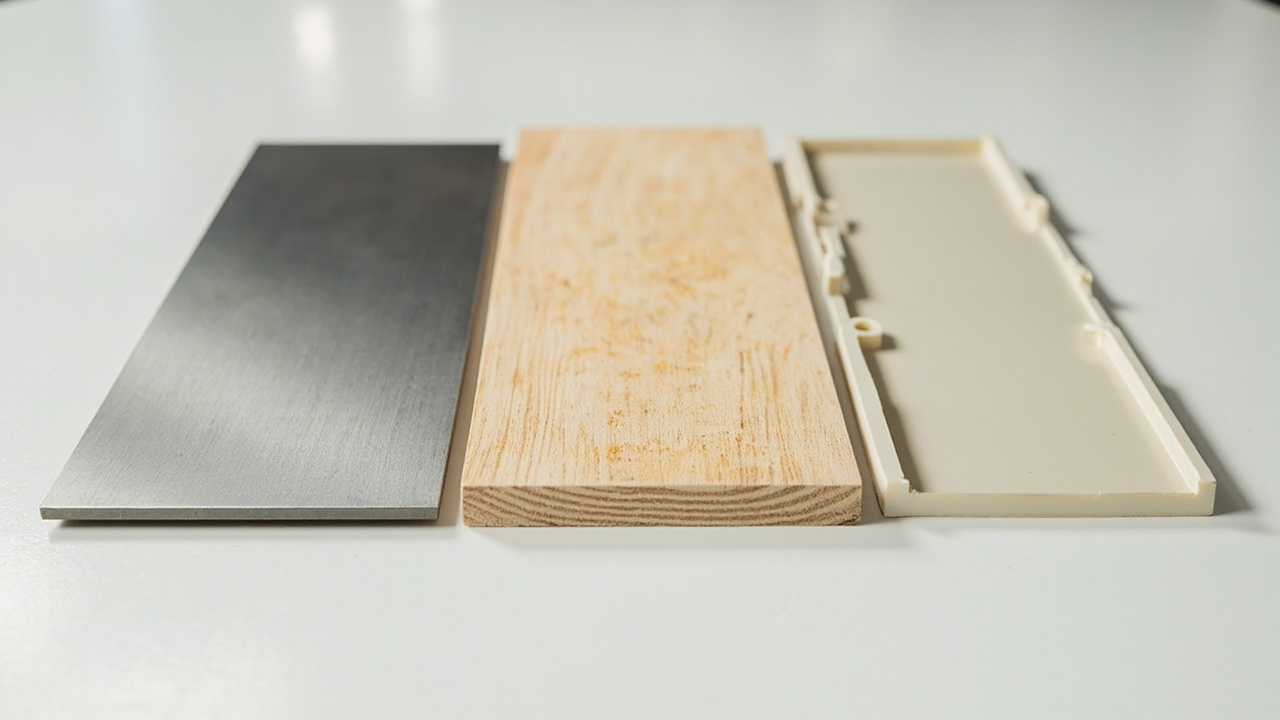
"Water-based paint has poor adhesion" "It peels off with a scratch once applied" "Only oil-based paint grips firmly" — this is one of the most widespread and most easily overgeneralized prejudices in the coating industry. Many factories and painting workers did encounter problems of paint film peeling and chipping when switching from oil-based to water-based systems, and thus blamed it all on "water-based". But the truth is: the adhesion of water-based paint is not inherently weaker than that of oil-based paint; rather, its film-forming and wetting mechanism is more sensitive to substrate condition and pretreatment. On the same substrate, oil-based paint can "barely stick" by relying on strong solvents to swell and bite into the substrate, while water-based paint depends more on standardized surface treatment and compatible primer. By doing the pretreatment right and choosing the right primer, the adhesion of water-based paint on metal, wood and even plastic can be comparable to or even exceed that of oil-based systems.
As a supplier of water-based wood and industrial coating systems, Kexin New Materials (kexinMaterials) has verified in multiple OEM and furniture projects that: the success or failure of water-based paint adhesion is 70% substrate treatment, 20% primer compatibility, and 10% the topcoat itself. This article starts from the essence of adhesion, breaks down the adaptation truth of three types of substrates — metal, wood and plastic — one by one, and provides actionable improvement measures to help you get out of the cognitive misunderstanding of "poor water-based adhesion". If you are selecting a water-based system for a specific workpiece, you can also first learn about our wood coating product system to lock in a suitable solution by substrate.
I. Conclusion First: Adhesion Is Not a Binary Issue of "Water-Based vs. Oil-Based"
To get straight to the point, here are three key judgments:
- The upper limit of water-based paint adhesion is no worse than oil-based. Under the premise of sufficient wetting, clean substrate, and proper primer compatibility, the bonding strength of high-quality water-based resins (such as water-based polyurethane, water-based epoxy, water-based acrylic) with the substrate can fully meet the adhesion standards of industrial and furniture applications (e.g., cross-cut method grade 0–1).
- Water-based paint has a lower fault tolerance for "pretreatment". Oil-based paint relies on strong organic solvents to swell, penetrate and chemically bite into the substrate surface, and can "gnaw" in even if there is some oil stain on the surface; water-based paint uses water as the dispersion medium, with high surface tension and obvious repulsion to oil stains and low-surface-energy substrates, so problems are exposed if treatment is not in place.
- In the vast majority of "water-based paint chipping" cases, the root cause is the substrate and compatibility, not the resin itself. Skipping sanding, omitting the primer, and spraying directly on oily metal — anyone would peel.
In one sentence: The adhesion of water-based paint is "made", not "born"; while part of the adhesion of oil-based paint is "gnawed out by solvent". The gap between the two can be closed by standardized construction.
II. The Essence of Adhesion: Wetting, Mechanical Interlocking and Chemical Bonding
To understand why water-based paint is "sensitive", we must first understand what the paint film relies on to "stick" to the substrate. Adhesion usually comes from the combined action of three mechanisms:
2.1 Wetting
The paint liquid must first spread and infiltrate the substrate surface, filling microscopic pits, to establish contact. The degree of wetting is determined by surface tension: the lower the surface tension of the paint liquid and the higher the surface energy of the substrate, the easier it is to wet. As a dispersion medium, water has a surface tension (about 72 mN/m) much higher than organic solvents (about 25–30 mN/m), which is the physical root of the "inherently difficult wetting" of water-based paint.
2.2 Mechanical Interlocking
The paint liquid penetrates into the microscopic pores, scratches and rough surfaces of the substrate, and forms "anchor" physical locking after curing. This is also why sanding can significantly improve adhesion — it both increases surface energy and increases the area of mechanical interlocking.
2.3 Chemical Bonding
Active groups in the paint film (such as hydroxyl, carboxyl, epoxy groups) form hydrogen bonds, ionic bonds or even covalent bonds with active sites on the substrate surface (such as metal oxides, wood cellulose hydroxyl). The excellent adhesion of water-based epoxy and water-based polyurethane on metal and wood largely comes from such chemical bonding.
Key understanding: The "strength" of oil-based paint mainly comes from the deep wetting and swelling bite brought by solvents; to compensate for this, water-based paint must rely on lower-surface-tension water-based resin design + more sufficient mechanical roughening + chemical bridging of functional primer. When all three are in place, water-based paint is not only not weak, but also more eco-friendly and more durable.
III. Water-Based Resin Types and Adhesion Characteristics: Choosing the Right Resin Is the Premise
Although both are "water-based paint", different resins have very different adhesion mechanisms and substrate preferences, which is also why many people "use the wrong water-based paint" but blame water-based. First, establish a resin—adhesion characteristic table:
| Water-based resin | Adhesion strength | Typical weakness | Most suitable substrate | Remarks |
|---|---|---|---|---|
| Water-based acrylic | General-purpose, low cost, weather-resistant | Poor on low surface energy, hard and brittle | Wood, general metal (with primer) | Commonly used for furniture topcoat |
| Water-based polyurethane (PU) | Balanced adhesion + flexibility + wear resistance | Higher cost | Wood, plastic (after modification), metal | One of the best overall |
| Water-based epoxy | Extremely strong metal adhesion, water-resistant | Poor weather resistance, easy chalking | Metal, concrete | Main force for transition primer |
| Water-based alkyd | Good wood wetting, easy application | Average water resistance, slow drying | Outdoor wood/metal | Water-based version of oil-based alkyd |
3.1 Why Water-Based Epoxy Is the "Anchor" of Metal Adhesion
Water-based epoxy contains epoxy groups, which form strong chemical bonds with iron oxide and hydroxyl on the surface of sandblasted steel, and the cured film is dense and water-resistant, not easily damaged by moisture at the interface. Therefore, industrial metal renovation and protection almost always use water-based epoxy primer as the adhesion foundation, followed by water-based polyurethane topcoat. This also echoes the compatibility logic of the metal section later.
3.2 Why Water-Based Polyurethane Is More Suitable for Wood and Plastic
Water-based PU can balance flexibility and adhesion through molecular design, has good tolerance for wood grain raising, and reliable adhesion to plastic (after primer). Modified cationic or special functional group PU can even directly improve wetting of low-surface-energy substrates. Choosing resin is not "the more expensive the better", but "matched to the substrate".
IV. Surface Tension: The "Inherent Problem" of Water-Based Paint and Its Solution
The high surface tension of water causes water-based paint to easily show shrinkage, fish eyes, and poor adhesion on smooth metal, plastic, and oily surfaces. There are several mature countermeasures in the industry:
- Substrate wetting agent: Add silicone or fluorine-based surfactants to suppress the surface tension of water-based paint below 30 mN/m and improve spreading (but excess will stabilize foam and affect interlayer adhesion, requiring balance).
- Substrate roughening: Sandblasting, sanding, phosphating, brushing to physically increase contact area and mechanical interlocking.
- Functional primer: Use "high-adhesion + high-sealing" transition layers such as water-based epoxy primer and water-based polyurethane primer to bridge low-surface-energy substrates and topcoat.
- Pretreatment agent: Ceramic conversion, phosphating, passivation for metal; flame treatment, corona, primer (PP water) for plastic; sealing primer for wood to control grain raising and paint absorption.
Each of these means is not complicated on its own; the difficulty lies in selecting according to substrate combination, which is broken down by category below.
V. Metal Substrate: The Scenario Where Water-Based Adhesion Should Be Most Rehabilitated
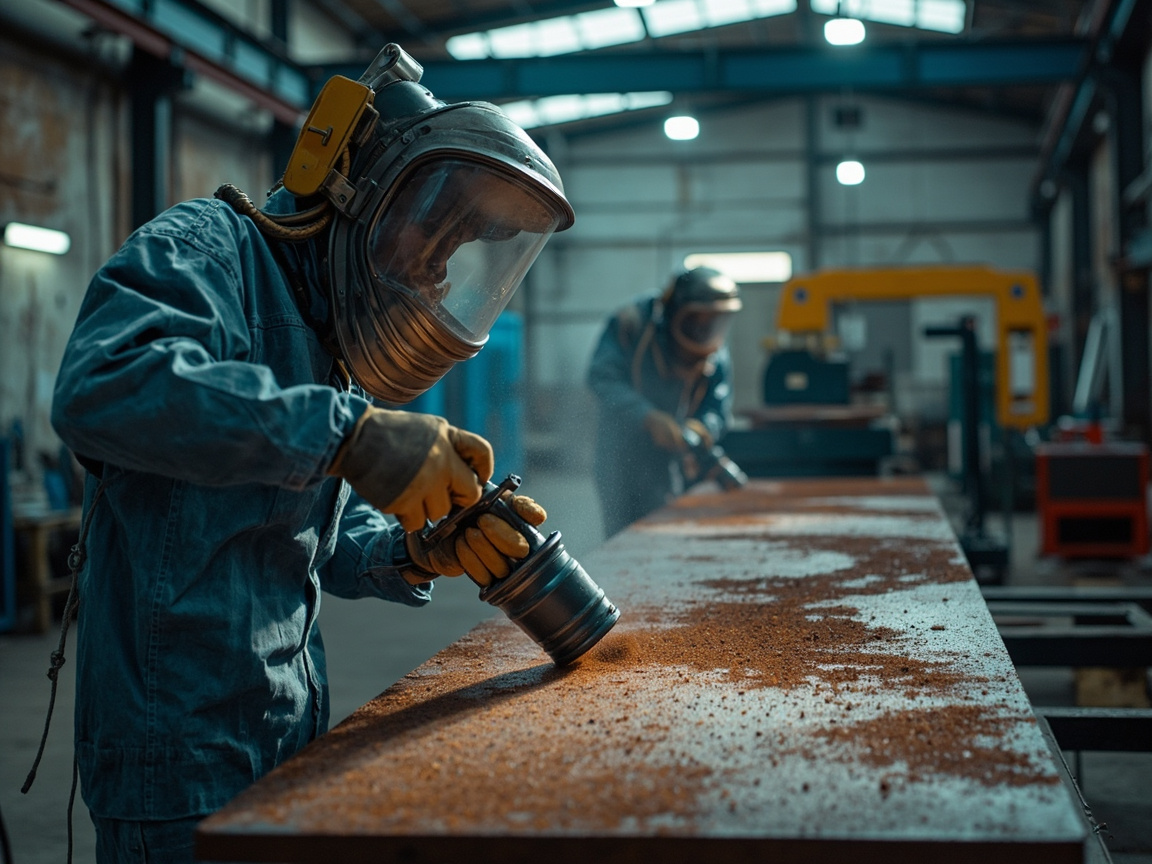
Metal (steel, aluminum alloy, galvanized sheet, stainless steel) is the main battlefield of water-based industrial coating, and also a high-incidence area of "water-based paint chipping" complaints. But as long as the process is correct, the adhesion of water-based epoxy and water-based polyurethane on metal is as reliable as that of oil-based systems.
5.1 Three Obstacles to Metal Adhesion
- Oil stains and oxide layer: Stamping oil, cutting fluid, and rust-preventive oil remain on the surface, and water-based paint directly repels, shrinks, and fails to adhere.
- Surface energy difference: The surface energy of aluminum alloy and galvanized sheet is relatively low, especially the smooth and dense galvanized layer, which is easy to peel off when sprayed bare.
- Flash rust: The water-based system contains water. If it dries slowly after construction on steel and the environment is highly humid, water retention will induce flash rust and destroy the adhesion interface.
5.2 Metal Adaptation Countermeasure Table
| Metal substrate | Typical difficulty | Recommended pretreatment | Recommended water-based compatibility | Adhesion key points |
|---|---|---|---|---|
| Carbon steel/cast iron | Rust, oil, flash rust | Sandblasting Sa2.5 or sanding rust removal + degreasing | Water-based epoxy primer + water-based polyurethane topcoat | Rust removal up to standard, flash rust control |
| Aluminum alloy | Loose oxide film, low surface energy | Degreasing + chromating/chromium-free passivation (ceramic conversion) | Water-based epoxy primer + water-based topcoat | Passivation film is the key |
| Galvanized sheet | Smooth, low surface energy | Degreasing + light sanding for roughening | Water-based epoxy primer (specialized) | Avoid strong acid etching, prevent zinc loss |
| Stainless steel | Inert, extremely difficult to adhere | Brushing/sandblasting roughening + primer | Water-based epoxy / dedicated primer | Mainly mechanical roughening |
5.3 Where "water-based is actually better" on metal
The adhesion and salt spray resistance of water-based epoxy primer on blasted steel, combined with water-based polyurethane topcoat, have been extensively validated in the fields of construction machinery, axle housings, and steel structures. Its advantages lie in: no weak interlayer interface caused by solvent residue, low VOC for easy compliance, and less tendency to pinhole in thick coatings. It can be seen that metal is precisely the scenario where water-based paint's adhesion is underestimated and should actually be vindicated.
If your workpiece is an industrial protective part, it is recommended to first check our industrial coating product system, and select the water-based epoxy + polyurethane combination according to the corrosion grade, rather than spraying a single layer of topcoat directly.
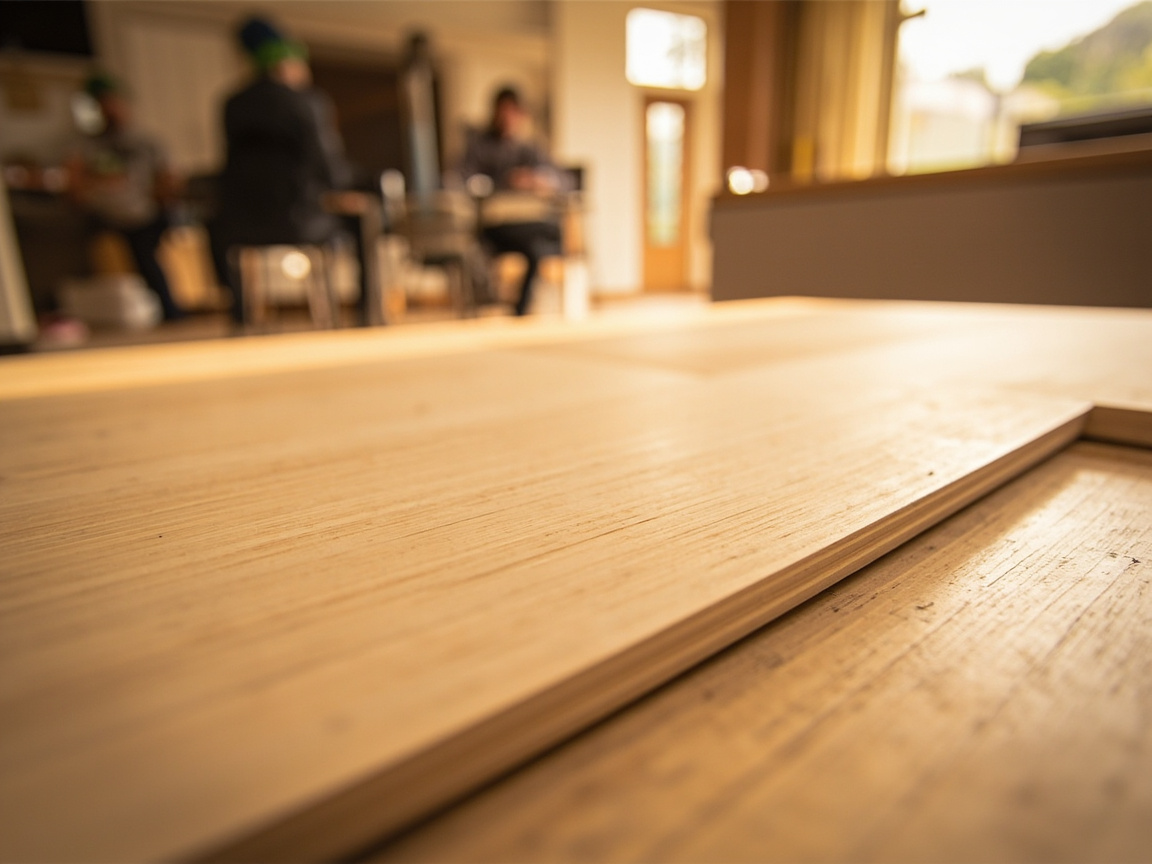
VI. Wood substrates: grain raising, paint absorption, and sealing are the core
Wood is another main battlefield for water-based paint, but the "porous, extractive-containing, anisotropic" nature of wood brings unique challenges, and the adhesion performance differs significantly from that of oil-based paint.
6.1 Three characteristics of wood adhesion
- Grain raising (fuzzing): Water in water-based paint causes wood vessels and wood fibers to absorb water, swell, and stand up, forming rough burrs after surface drying, which affects both feel and interlayer adhesion.
- Uneven paint absorption: Loose wood (pine, fir) absorbs paint too quickly, resulting in local paint shortage and weak adhesion; dense hardwood (walnut, oak) suffers from insufficient wetting.
- Extractives/oils: Pine resin and tannins migrate to the paint film interface, affecting adhesion and coloring.
6.2 Wood adaptation countermeasure table
| Wood type | Typical difficulty | Recommended pretreatment | Recommended water-based system | Adhesion key points |
|---|---|---|---|---|
| Pine/fir (soft, resinous) | Resin exudation, uneven paint absorption | Degreasing + 1–2 coats of sealer primer | Water-based acrylic/polyurethane primer + topcoat | Plug pores, control oil |
| Oak/walnut (hard, obvious vessels) | Grain raising, needs wetting | Sanding + water-based sealer primer | Water-based PU sealer primer + topcoat | Prevent grain raising, enhance wetting |
| MDF/plywood | Uneven water absorption, easy edge swelling | Edge sealing + primer sealing | Water-based primer + topcoat | Control edges, prevent water absorption |
| Old oil-painted wood surface | Unknown system | Sanding to break gloss + compatibility test | Transitional primer determined by test | See renovation topic |
6.3 "Wetting primer" on wood is the key
Water-based wood coating generally adopts the "sealer primer + topcoat" system: the primer first fills the wood pores, suppresses grain raising, and seals the oils, providing a uniform, high-adhesion middle layer for the topcoat. Skipping the primer and applying topcoat directly almost inevitably leads to poor adhesion, blotching, and grain raising. This is also the "system thinking" repeatedly emphasized in the formulation science of water-based wood coatings.
VII. Plastic substrates: the hard bone of low surface energy
Plastics (PP, PE, ABS, PC, PVC) have extremely low surface energy and strong inertness, making them the most difficult family for adhesion. Oil-based paint relies on strong solvent etching to barely adhere, while water-based paint will almost certainly peel off if untreated.
7.1 Plastic adhesion difficulties
- Low surface energy: PP surface energy is only about 29 mN/m, difficult for both water-based and ordinary paints to wet.
- No polar groups: Plastic surface lacks active sites for chemical bonding.
- Thermal expansion and contraction: Large difference in thermal expansion coefficient between plastic and paint film, easy to delaminate under thermal cycling.
7.2 Plastic adaptation countermeasure table
| Plastic type | Typical difficulty | Recommended pretreatment | Recommended water-based system | Adhesion key points |
|---|---|---|---|---|
| PP/PE (polyolefin) | Extremely difficult to adhere | Flame/corona treatment + PP primer water | Dedicated water-based PP paint | Primer water is the core |
| ABS/PC | Medium adhesion | Sanding + cleaning + plastic primer | Water-based plastic coating | Avoid strong solvent etching |
| PVC | Plasticizer migration | Degreasing + sealer primer | Flexible water-based paint | Prevent plasticizer precipitation |
| Glass fiber reinforced plastic | Easy floating fiber, poor adhesion | Sanding + primer sealing | Water-based epoxy/polyurethane | Leveling, adhesion promotion |
7.3 Realistic path for water-based on plastic
For "hell-level" substrates like PP, relying solely on water-based topcoat is unrealistic; a PP water (chlorinated polyolefin primer) must be used as a bridge, followed by water-based topcoat. For ABS, PC, etc., sanding + dedicated plastic primer is sufficient. Conclusion: Plastic is not impossible for water-based, but must have "primer first", which is essentially consistent with the need to treat substrates in oil-based systems, except water-based relies more on primer.
VIII. General methodology for improving water-based adhesion
Abstract the experience from the above three substrate types into a reusable "five-step adhesion improvement method":
- Degreasing priority: The first step for any substrate is oil removal; oil stains are the number one killer of adhesion.
- Mechanical roughening in place: Sanding, blasting, scuffing to increase surface energy and bite area.
- Select the right functional primer: Metal uses water-based epoxy primer, wood uses water-based sealer primer, plastic uses dedicated primer; primer is the core bridging layer for adhesion.
- Control construction environment: Temperature 10–35℃, humidity < 85%, prevent flash rust on metal, prevent grain raising on wood.
- Interlayer light sanding + curing: Lightly sand after each coat surface dry to remove particles, avoid water and heavy pressure before full cure.
These five steps essentially transform "oil-based relies on solvent biting" into "water-based wins by process". After standardization, the adhesion stability of water-based paint can even surpass oil-based—because it has no weak interface layer caused by solvent residue.
IX. Water-based vs oil-based adhesion: overall comparison table
Summarize the understanding of the three substrate types into a general table for quick decision-making:
| Dimension | Water-based paint (standard construction) | Oil-based paint (standard construction) |
|---|---|---|
| Metal adhesion | Can reach 0–1 grade (epoxy primer + PU topcoat) | Can reach 0–1 grade |
| Wood adhesion | Excellent (sealer primer + topcoat system) | Excellent |
| Plastic adhesion | Needs dedicated primer, otherwise poor | Needs treatment, strong solvent slightly better |
| Sensitivity to pretreatment | High (low fault tolerance) | Medium (solvent can remedy) |
| Wetting mechanism | Relies on wetting agent + roughening + primer | Relies on strong solvent swelling and biting |
| Weak interface risk | Low (no solvent residue) | Medium (solvent residue interlayer weak interface) |
| VOC/environment | Low | High |
| Overall conclusion | Not weaker than oil-based under standard | Slightly higher fault tolerance but poor environment |
The core message in the table is: Under standard construction, water-based paint adhesion is at the same level as oil-based paint; the difference is only that "water-based is more demanding on process". With the process completed, water-based paint not only does not peel, but is also more environmentally friendly and durable.
X. Common adhesion failures and troubleshooting
| Failure phenomenon | Most likely root cause | Countermeasure |
|---|---|---|
| Large area peeling on metal | Oil/rust not removed, no primer | Redo degreasing and rust removal + epoxy primer |
| Local peeling on wood | Grain raising, uneven paint absorption | Add sealer primer, sanding |
| Cratering/fish eye | High surface tension, oil present | Add wetting agent, strengthen degreasing |
| Plastic peels off | No primer, low surface energy | Flame/corona + PP primer water |
| Interlayer peeling | Surface dry not sanded, wrong compatibility | Lightly sand between coats, verify compatibility |
| Flash rust then paint loss | Water stays on steel | Control humidity, add flash-rust inhibitor |
XI. Adhesion Acceptance: Control with Standards
Whether self-coating or OEM, it is recommended to use executable standards for inspection to avoid disputes of "looks fine, but falls off after half a year":
- Cross-cut adhesion (GB/T 9286): Grade 0 is best (cut edges smooth, no flaking), Grade 1 acceptable, Grade 2 and above require rework. When operating, cut vertically through the coating film to the substrate with a blade, spacing 1mm/2mm, apply tape and peel off quickly, grade by flaking ratio.
- Pull-off method (GB/T 5210): Quantitatively measure adhesion in MPa, suitable for metal heavy duty and heavy anti-corrosion scenarios, more objective than cross-cut, can compare different systems.
- Cross-cut + tape method: Quick on-site screening, not precise but can stop loss in time.
- Cold-hot cycle/boiling water retention rate: Adhesion retention after accelerated aging for plastic and outdoor parts, verify long-term reliability.
- Record archiving: Write test data into the acceptance sheet for traceability and claim definition.
XII. Cooperation with Kexin New Materials
Kexin New Materials (kexinMaterials) emphasizes "primer—intermediate—topcoat" system delivery in water-based wood and water-based industrial systems, rather than selling a single can of topcoat. For adhesion-sensitive conditions, our implementation path is usually:
- Metal protective parts: Provide water-based epoxy primer + water-based polyurethane topcoat system, with pre-treatment and flash-rust prevention process card, stabilizing adhesion at cross-cut Grade 0–1;
- Solid wood furniture/panels: Provide water-based sealing primer + water-based polyurethane topcoat solution, with construction parameters for pressing grain raise and controlling oil;
- Plastic parts: Provide plastic primer solution for ABS/PC, PP water bridging solution for PP, avoiding "bare spray must fall off".
When selecting, it is recommended to inform the technical team of the four items: "substrate type, surface condition (new/old, with or without oil/rust), use environment (indoor/outdoor, wet/dry), environmental threshold (VOC limit)", so we can give targeted formula and process instead of blindly selecting by experience. This is also a stable route verified by multiple OEM projects.
XIII. Key Understandings to Break Biases
Understanding 1: "Water-based paint has inherently poor adhesion" is wrong. What is poor is "water-based paint without pre-treatment", not the water-based resin itself. With correct substrate treatment and primer, water-based paint adhesion is at the same level as oil-based.
Understanding 2: "Oil-based paint is more durable" often comes from strong solvent illusion. Oil-based relies on solvent swelling and biting, looks "firmly gripped", but solvent residue may form a weak interface in the medium to long term; water-based relies on chemical bonding and mechanical biting, with cleaner interface.
Understanding 3: "Thickening the coating can compensate adhesion" is a misconception. Adhesion depends on interface not thickness; film thickness only solves hiding and protection, cannot compensate adhesion. Substrate and primer are the foundation.
Understanding 4: "One water-based paint fits all substrates" is unrealistic. Adhesion mechanisms differ for metal, wood, and plastic; corresponding functional primers and systems should be selected, not one parameter for all.
Understanding 5: "Water-based paint cannot be used on plastic" is too absolute. Difficult-to-adhere plastics like PP need special primer, but ABS, PC, PVC can fully use water-based systems with sanding + primer.
XIV. Construction Implementation Checklist: Build Adhesion into Process
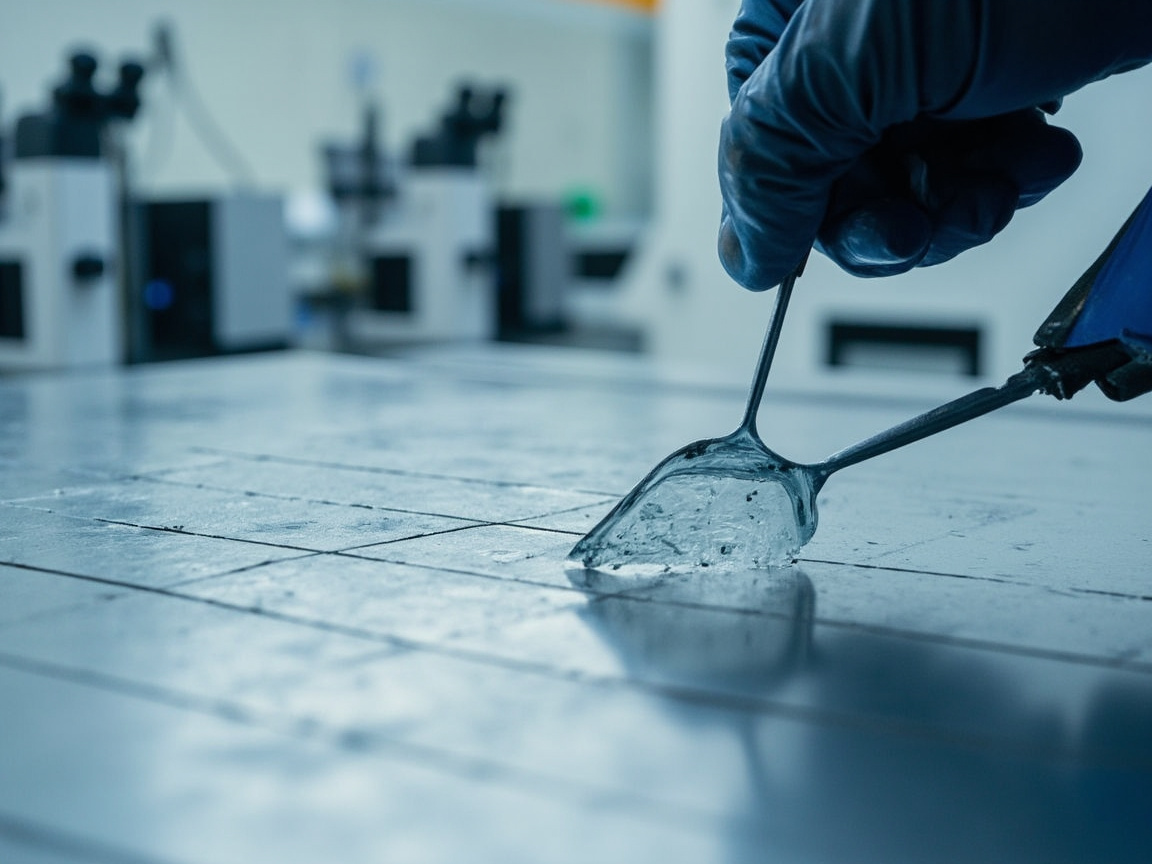
Turn the above methods into an on-site checkable list to avoid adhesion failure caused by "relying on feel":
| Check item | Standard | Consequence if not met |
|---|---|---|
| Degreasing | Water film continuously spreads on surface for 30 seconds without breaking | Cratering, local poor adhesion |
| Roughing | 240–320 grit uniform sand marks, no gloss | Insufficient mechanical biting |
| Primer | Select correct functional primer by substrate (epoxy/sealing/primer) | Weak interface, easy delamination |
| Environment | 10–35℃, humidity < 85%, metal flash-rust prevention | Flash rust, grain raise, slow dry |
| Interlayer | Lightly sand to remove particles after each coat surface dry | Interlayer peeling, orange peel |
| Curing | Avoid water and heavy pressure before full cure | Early damage, adhesion drop |
It is recommended to stick this table directly on the construction disclosure sheet, sign and confirm each process, turning "water-based is more demanding on process" into executable discipline rather than relying on personal experience. For OEM and batch parts, combined with first-piece adhesion test (cross-cut Grade 0–1) release, can systematically eliminate the dispute of "looks good, falls off when used", and make water-based paint adhesion stability truly superior to oil-based practices relying on solvent remedy.
XV. Common Quantitative Benchmarks for Water-based Adhesion (Industry Typical Reference)
Given a set of typical adhesion benchmarks to help set acceptance thresholds (values are common ranges, subject to formula and testing):
| Substrate + system | Cross-cut grade (GB/T 9286) | Pull-off MPa (typical) |
|---|---|---|
| Shot blasted steel + water-based epoxy primer + PU topcoat | Grade 0 | 4–8 |
| Aluminum alloy passivated + water-based epoxy primer | Grade 0–1 | 3–6 |
| Solid wood + sealing primer + water-based PU topcoat | Grade 0–1 | 2–5 |
| ABS + plastic primer + water-based plastic paint | Grade 1 | 2–4 |
| PP + PP water + water-based plastic paint | Grade 1–2 | 1.5–3 |
In the table, PP is slightly lower even after treatment, indicating "hell-level" substrates need lowered expectations and strengthened primer. Writing benchmarks into contract and acceptance sheet protects both owner and contractor, and turns "water-based adhesion is not poor" from slogan into verifiable data.
FAQ
1. Is water-based paint adhesion really worse than oil-based paint?
Under standardized construction (substrate treatment + functional primer + environment control), water-based paint adhesion is at the same level as oil-based paint, both can reach cross-cut Grade 0–1. The so-called "water-based is poor" mostly comes from omitting pre-treatment and primer, not from weak resin itself.
2. Why does water-based paint easily fall off on smooth metal?
Water has high surface tension, poor wetting on smooth, low surface energy metal (such as galvanized sheet, aluminum alloy), and if there is oil it will directly repel. Solution is degreasing + passivation/roughing + water-based epoxy primer, not blaming water-based for "not gripping".
3. Does wood grain raise affect water-based paint adhesion?
Yes. Water makes wood fibers swell and stand up, destroying interlayer bonding and affecting feel. Countermeasure is to use water-based sealing primer to press grain raise and fill pores first, then apply topcoat, never bare spray.
4. Can water-based paint be directly brushed on plastic?
Most plastics (especially PP/PE) have extremely low surface energy, direct brushing will fall off. Need flame/corona treatment or PP primer water bridging first, then special water-based plastic paint; ABS, PC with sanding + plastic primer is fine.
5. Does water-based paint need primer?
Strongly recommended. Primer undertakes core roles of sealing, adhesion promotion, flash-rust prevention, grain raise suppression, and is the bridging layer for adhesion. Omitting primer almost certainly causes poor adhesion and early failure.
6. What to do if flash rust appears after metal water-based paint construction?
Flash rust comes from water staying on steel surface. Countermeasures: control environment humidity, increase drying speed, add flash-rust inhibitor in water-based primer, ensure continuous and complete coating film.
7. Does more wetting agent mean better water-based paint adhesion?
No. Excess wetting agent stabilizes foam, weakens interlayer adhesion and even affects water resistance. Use minimum effective amount without cratering, combined with mechanical roughing and primer.
8. Can old oil-based painted woodware be directly changed to water-based?
Not recommended directly. Need sanding to break gloss, compatibility test, then transition primer bridging, otherwise may bite bottom or peel. See special guide for old paint renovation for specific process.
9. What standards can be used for water-based paint adhesion acceptance?
Commonly cross-cut method (GB/T 9286) for grade, pull-off method (GB/T 5210) for MPa; plastic and outdoor parts can add cold-hot cycle/boiling water adhesion retention.
10. What support can Kexin New Materials provide on water-based adhesion?
Kexin New Materials (kexinMaterials) provides "primer—intermediate coat—topcoat"配套 schemes and process cards: water-based epoxy primer + PU topcoat for metal, sealer primer + PU topcoat for wood, primer bridge coating for plastic, and provides targeted pre-treatment parameters based on substrate and environment.
Further Reading
- Formulation Science and Application of Water-based Wood Coatings: A full explanation of wood water-based solutions from resin systems to sealer primers and grain raising, supplementing the technical details of wood adaptation in this article.
- How to Select Water-based Industrial Coatings under the Oil-to-Water Transition: Resin Systems and Applicable Conditions: Extends the "adhesion + substrate" approach to industrial protection, establishing a cross-scenario water-based selection framework.
- Comparison of Water-based Epoxy and Solvent-based Coatings: Performance, Application and Applicable Boundaries: Understands the positioning and boundaries of water-based epoxy in metal adhesion and protection from a comparative perspective.
- Surface Preparation for Industrial Coatings: Sandblasting Sa2.5, Roughness and Dew Point Control
- Surface Treatment for Anti-rust Coatings: Sa2.5, St3 and Power Tool Rust Removal