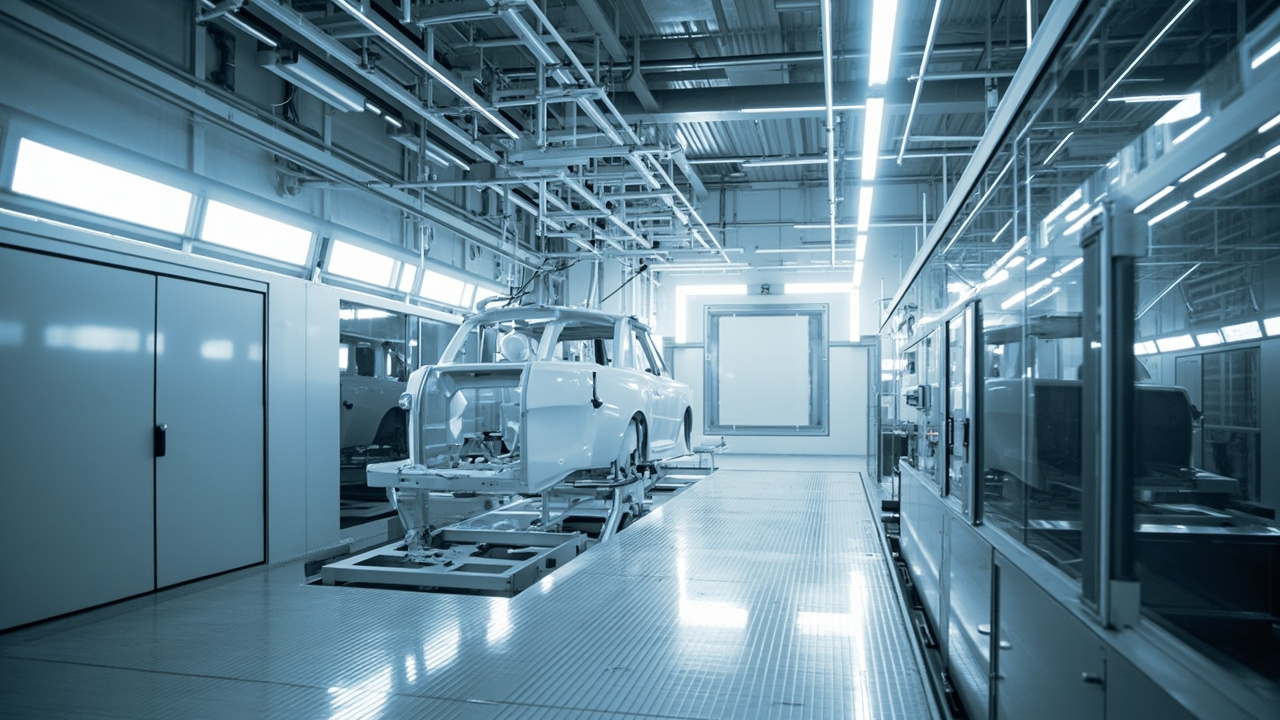
Automotive OEM paint (OEM, Original Equipment Manufacturer) refers to the complete set of factory-applied coating processes carried out inside the vehicle assembly plant after the car body is welded and formed. Its biggest difference from aftermarket "refinish paint" is that: OEM coating is completed on a fully automated production line with fixed takt time and controlled environment, where film thickness, color, gloss, and durability are strictly defined by engineering standards. Understanding this process is not only about "how the car is painted", but also helps us see through the material logic behind automotive anti-corrosion, weather resistance, and appearance. As a material supplier for the automotive and industrial protective fields, Kexin New Materials (kexinMaterials) has technical accumulation in electrophoretic supporting systems, intermediate layer and topcoat resin systems, and this article will also provide implementable supporting ideas in the system comparison section.
I. What is Automotive OEM Coating: A "Layered Stacking" Production Line
Whole-vehicle coating is not as simple as "spraying one layer of paint", but rather stacking several coatings with completely different functions onto the car body steel plate (or aluminum plate) in a fixed order. Each layer solves only one type of problem: some are responsible for rust prevention, some for leveling, some for color, and some for gloss and aging resistance. The following process chain is the common skeleton of most passenger car OEM lines:
- Pre-treatment: degreasing, surface conditioning, phosphating/zirconium conversion, establishing a clean and adherent substrate;
- Cathodic Electrodeposition (CED): the whole vehicle is immersed in the electrophoretic tank, and a uniform primer is deposited by electrification;
- Primer / Surfacer: spray the intermediate coat, leveling, stone-chip resistance, enhanced interlayer adhesion;
- Basecoat: provides color and metallic/pearl effects;
- Clearcoat: clear coat, provides gloss, weather resistance and scratch resistance;
- Bake: each coating is crosslinked and cured within a specific temperature window.
The fundamental reason for "four to five layers of overlay coating" is that a single coating cannot simultaneously meet the three hard indicators of anti-corrosion, appearance, and durability. This "primer—intermediate—topcoat" layered thinking is completely consistent with the supporting logic of industrial protective coating's "primer + intermediate coat + topcoat"—this point will be specifically compared later.
II. Pre-treatment: The Starting Point of All Adhesion
There is an old saying in the coating industry: "Seven parts base, three parts top." Pre-treatment determines whether all subsequent coatings can hold firm. OEM pre-treatment usually includes the following steps:
- Degreasing: use alkaline or neutral cleaners to remove stamping oil, rust-preventive oil, and fingerprints, otherwise electrophoresis will cause craters and pinholes.
- Activation: generate fine activation points on the steel plate surface, making the subsequent conversion film crystals finer and more uniform.
- Phosphating / Zirconium conversion: traditional zinc-based phosphating forms a zinc phosphate crystal layer, providing micro-rough surface and chemical passivation; under recent eco-friendly trends, nickel-free and phosphorus-free zirconium-based (zirconium conversion) thin-film treatment gradually replaces traditional phosphating, reducing heavy metals and wastewater load.
- Water washing and pure water rinsing: remove residual liquid to prevent impurities from entering the electrophoretic tank.
The core mechanism of pre-treatment is dual action: physical roughening (increasing specific surface area, mechanical interlocking) and chemical passivation (zinc phosphate etc. passivates the metal surface, suppressing early corrosion). This is in the same line as the "chemical passivation (zinc phosphate, chromate)" in anti-rust paint mechanisms. It must be emphasized that the phosphating film itself is very thin (in microns), it is not the main anti-corrosion force, but a transition layer that "lets the electrophoretic paint firmly bite the steel plate".
III. Cathodic Electrodeposition (CED): The Cornerstone of Whole-vehicle Anti-corrosion
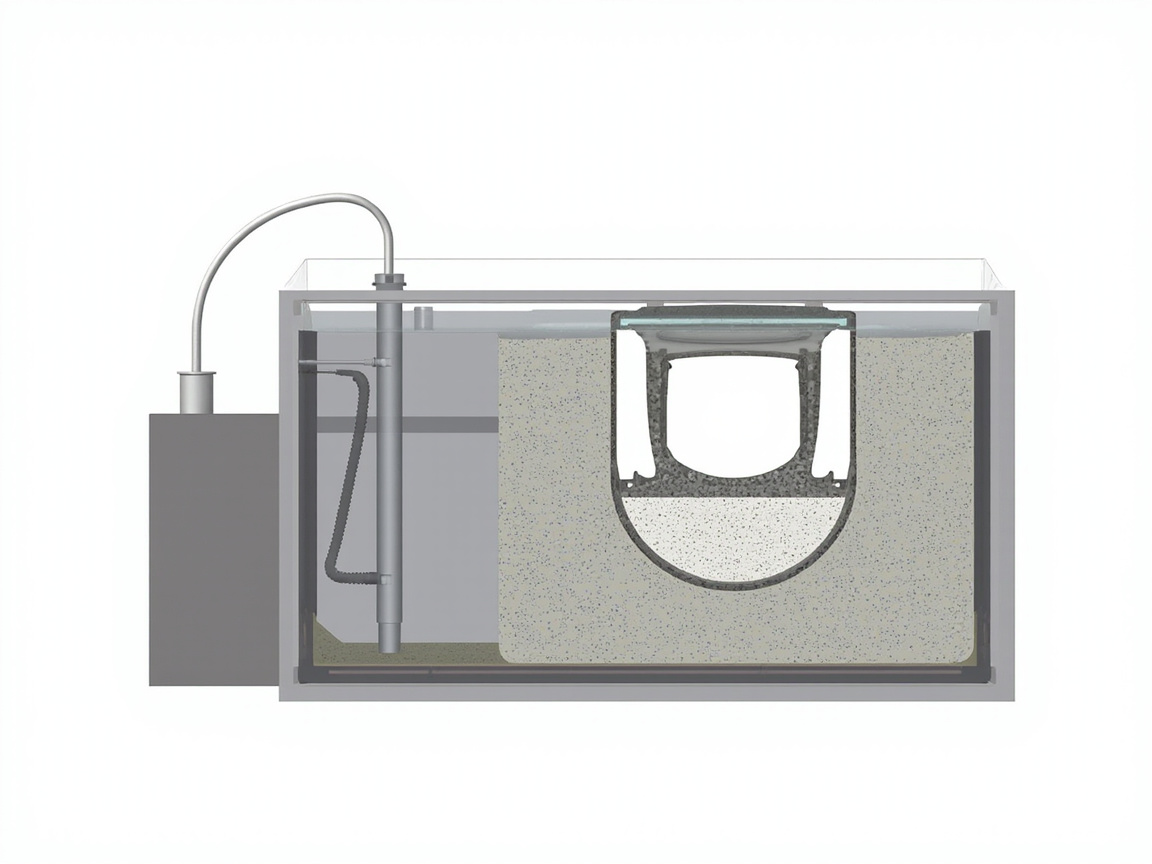
Cathodic electrodeposition is the soul process of OEM coating. The car body as a whole cathode is immersed in a negatively charged coating resin bath, and after applying direct current, the resin particles migrate to the car body and deposit into a film, then crosslinked by baking. Its irreplaceability lies in Throwing Power—the coating can "turn corners" to enter the car body inner cavities, welds, hollow spaces and other dead corners that spray guns can never reach, achieving uniform anti-corrosion of the whole vehicle.
According to the summary of this batch of research archives, typical cathodic electrophoretic process parameters are:
| Electrophoretic process parameter | Typical range | Description |
|---|---|---|
| Voltage | 200–350 V | Voltage determines deposition rate and film thickness; too high easily causes pinholes and rough surface |
| Bath solid content | 15–20 % | i.e. the effective proportion of resin+pigment in the bath; too low gives thin film, too high gives poor stability |
| Bath pH | 5.8–6.2 | Acidic range maintains stable dispersion of resin particles; deviation destroys electrophoretic state |
| Bath temperature | 28–35 ℃ | Temperature affects deposition efficiency and film flatness; requires constant temperature control |
| Throwing power | Engineering indicator | Determines coverage ability of blind areas such as inner cavities and welds; core selling point of CED |
(Parameter source: this batch's TDS_MSDS_RESEARCH.md automotive paint chapter "Electrophoretic parameters: voltage 200–350 V, bath solid content 15–20%, pH 5.8–6.2, temperature 28–35℃, throwing power".)
These parameters are not isolated: pH and solid content together determine bath stability, temperature and voltage together determine deposition rate and film thickness uniformity. Modern high-throwing-power electrophoretic paint can stably form film in the 200–350 V range, enabling the high-shading areas of the car body to also obtain sufficient anti-corrosion layer, which is difficult for aftermarket refinish processes to achieve—refinish can only be applied on visible outer surfaces, while inner cavities can only be done once at the OEM stage.
The anti-corrosion mechanism of electrophoretic primer is essentially "barrier + adhesion": the dense electrophoretic film separates water, oxygen, ions from the steel plate. If the whole vehicle design life requires higher, a zinc-rich or epoxy-based enhanced primer can be overlaid on the electrophoretic layer, but that already belongs to the category of special anti-corrosion models (such as chassis parts).
IV. Primer (Surfacer): The "Filling Layer" Connecting the Upper and Lower
After electrophoresis and before basecoat, there is the intermediate coat (Primer Surfacer, commonly known as intermediate coat or surfacer) that is easily overlooked by ordinary consumers but crucial to the final texture. It undertakes four tasks:
- Fill: the electrophoretic layer is uniform but thin; minor bumps and sanding marks on the body sheet metal need the intermediate coat to smooth out, otherwise they will show through to the topcoat forming "orange peel" or "steps".
- Thickening and stone-chip resistance: gravel impact during driving mainly consumes the energy of the intermediate coat, protecting the basecoat and electrophoresis from being penetrated.
- Enhanced interlayer adhesion: provides compatibility bridging between electrophoresis (epoxy/polyurethane type) and basecoat (mostly acrylic type).
- Uniform base color: provides a consistent reflective base for the basecoat, avoiding color variation in different areas.
From a mechanistic perspective, the intermediate coat is highly homologous to the epoxy micaceous iron oxide intermediate coat in industrial protective coatings: the latter relies on mica iron oxide flakes to extend the diffusion path of corrosive media (barrier effect), while the intermediate coat achieves filling + barrier through filler and resin design. Both reflect the supporting principle that "the intermediate layer is responsible for thickening and blocking". This also explains why in heavy anti-corrosion industrial systems, engineers treat "primer (anti-corrosion/adhesion) + intermediate coat (thickening/barrier) + topcoat (weather resistance/decoration)" as an iron rule—OEM coating just moves this iron rule onto the production line.
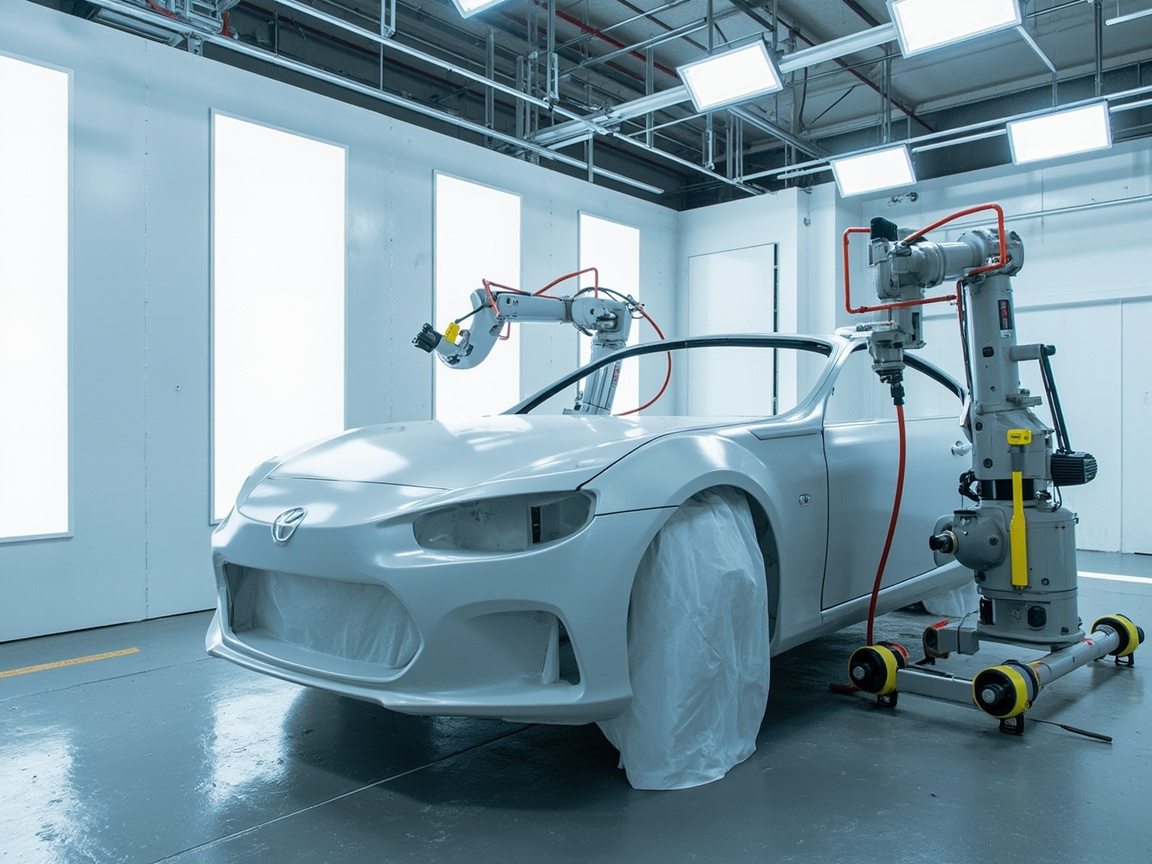
The intermediate coat generally uses electrostatic spraying or robot spraying, with film thickness higher than electrophoresis and lower than clearcoat. After application, it needs to enter the baking oven for curing, then be sanded before entering the basecoat process.
V. Basecoat: The Carrier of Color and Effect
The basecoat is the "visibly colored layer", which determines what color and effect consumers see at first glance. By effect, it can be divided into three types:
- Solid / 1K solid: pigments uniformly dispersed, same color from front and side view, such as ordinary white, red, black.
- Metallic paint: aluminum flake (Aluminium flake) added to the basecoat, light reflected by aluminum flakes produces a shimmering metallic feel.
- Pearl / Mica: mica flakes or pearlescent pigments added, presenting multi-level color shift with viewing angle.
According to research archives, the visual effects of metallic paint and pearl paint come from flake orientation control of aluminum flake/mica flakes—the orientation of the pigment (lying flat or standing up, arrangement density) directly determines the shimmer intensity and color depth. This is exactly the most technically challenging part of basecoat application: spraying pressure, gun distance, flash-off time all affect aluminum flake orientation, ultimately manifesting as "bright front, dark side" or vice versa. Same formula, different masters spray different effects, the root cause is often in flake orientation.
It should be clarified: basecoat (especially 1K basecoat) itself has limited weather resistance and hardness; it provides "color" but not "protection"—the protection task is handed over to the top clearcoat. This is a structural characteristic shared by both OEM and refinish systems.
VI. Clearcoat: The Gloss and Durability Sealing Layer
The clearcoat is a transparent top layer, sprayed over the basecoat, providing:
- High gloss and mirror feel: 60° gloss of high-end clearcoats can reach above 85 GU (according to general testing standards GB/T 9754, ISO 2813, ASTM D523);
- Weather resistance and UV resistance: adding UV absorbers and hindered amine light stabilizers (HALS) to delay aging of the basecoat and substrate;
- Scratch resistance and chemical resistance: resisting erosion from car washing, bird droppings, acid rain, gasoline, etc.;
- Self-healing (some high-end): minor scratches are reversible under thermal or chemical action.
OEM clearcoats are mostly two-component acrylic polyurethane (2K Acrylic Polyurethane), crosslinked by the reaction of acrylic resin with polyisocyanate (e.g., HDI type) curing agent. Its film-forming mechanism is consistent with refinish 2K clearcoat, the main differences being application method and solid content. Regarding the mixing ratio, VOC, and specific TDS data of 2K clearcoat, this batch has a detailed comparison in the refinish paint article (auto-refinish-system), so it will not be expanded here.
The thickness and leveling of the clearcoat directly determine "whether water droplets roll round on the car body and whether reflection is continuous." Insufficient film thickness leads to reveal of basecoat and easy scratching; excessive thickness increases the risk of sagging and pinholes. The clearcoat is the focal area of OEM appearance disputes and also the layer where material and process are most tightly coupled.
VII. Baking Cure: The Final Shaping Step on the Production Line
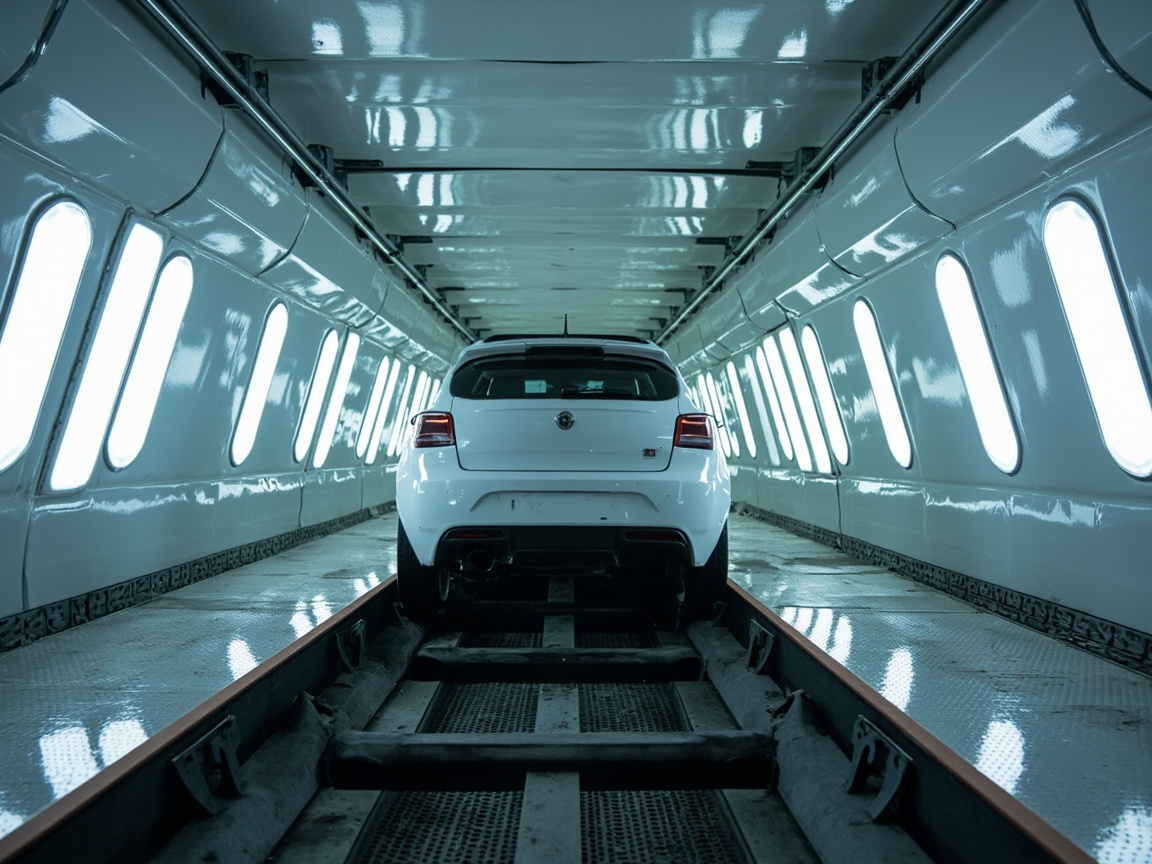
After each layer is sprayed, it must enter the oven for crosslinking cure. The OEM line baking is continuous: the car body is hung on the conveyor chain and passes through heating, holding, and cooling zones in sequence. Different coatings have different curing windows, but generally follow:
- Electrophoretic layer is baked at higher temperature (usually in the 160–180℃ range, depending on the resin system) to ensure complete crosslinking of epoxy/polyurethane;
- Intermediate coat, pigmented paint, and clearcoat mostly use medium-temperature baking (about 130–150℃), balancing efficiency and avoiding heat-induced discoloration of the basecoat;
- Oven temperature uniformity and heating curve determine whether the paint film has uniform internal stress and whether blistering occurs.
(Note: The above temperature ranges are common industry engineering ranges; specifics shall be subject to each OEM process card.)
The essence of baking is thermal curing crosslinking—for the 2K polyurethane system, it is the addition reaction of —NCO and —OH; for the electrophoretic epoxy system, it is the network formation of amine-cured epoxy. Unlike refinish paint which can cure at room temperature or under infrared, OEM baking provides more complete and stable crosslinking, so OEM paint usually outperforms refinish results of the same formula in durability and hardness.
VIII. OEM Four-Process Film Thickness and Function Comparison Table
The table below summarizes the core positioning of each layer in the OEM multi-layer system. It should be noted: specific film thickness (DFT) shall be subject to each OEM engineering specification; the table below gives common industry ranges, used to establish a framework understanding of "what problem each layer solves."
| Coating | Main Function | Typical Film-Forming Method | Key Performance Concerns | Remarks |
|---|---|---|---|---|
| Pretreatment film | Clean and passivate substrate | Chemical conversion (phosphating/ceramic conversion) | Uniform crystallization, no contamination | Extremely thin, the starting point of adhesion |
| Electrophoretic primer (CED) | Whole-vehicle anti-corrosion, cavity coverage | Cathodic electrophoresis + baking | Throwing power, uniformity | Reference data archive: voltage 200–350V, solid content 15–20%, pH 5.8–6.2, temperature 28–35℃ |
| Intermediate coat | Leveling, stone-chip resistance, interlayer bridging | Electrostatic spraying + baking | Sandability, stone-chip resistance | Corresponds to industrial coating "intermediate coat" logic |
| Basecoat | Provide color and metallic/pearl effect | Spraying (1K/2K) | Color, flake orientation | Weak self-protection, relies on clearcoat for gloss |
| Clearcoat | Gloss, weather resistance, scratch resistance | 2K polyurethane spraying + baking | Gloss, hardness, UV resistance | 60° gloss high-end ≥85 GU (according to GB/T 9754) |
The value of this table is: it clarifies "why a certain layer cannot be omitted." Omit intermediate coat → orange peel, stone-chip reveal; omit clearcoat → color easily ages and loses gloss; uneven electrophoresis → cavity rust. Every process step of OEM painting was forced out by failure cases.
IX. The Common Logic with Industrial Protective Coating "Primer—Intermediate—Topcoat" System
Broadening the perspective, one finds that OEM painting and industrial protective coating are highly consistent in engineering philosophy. According to research archives, the typical heavy anti-corrosion配套 of industry is "zinc-rich epoxy primer + epoxy micaceous iron intermediate paint + epoxy polyurethane topcoat," whose logic is:
- Primer: anti-corrosion/adhesion (zinc-rich primer relies on sacrificial anode cathodic protection of zinc powder, or epoxy provides shielding);
- Intermediate paint: thickening/shielding (epoxy micaceous iron platelet extends medium diffusion path);
- Topcoat: weather resistance/decoration (polyurethane provides gloss and color retention and chemical resistance).
OEM's "electrophoretic primer + intermediate coat + pigmented paint/clearcoat" is almost a replica of the same logic: electrophoresis = primer (anti-corrosion adhesion), intermediate coat = intermediate paint (thickening shielding), clearcoat = topcoat (weather resistance decoration). Understanding this, engineers can use the same material selection thinking when switching between "automotive" and "industrial steel structure" scenarios.
Kexin New Materials (kexinMaterials) covers both industrial protective and automotive-related coating systems. In the配套 design of epoxy primer, intermediate shielding layer, and polyurethane top layer, the same layered method consistent with OEM "primer—intermediate—topcoat" can be adopted to provide verifiable配套 schemes for equipment, vehicle body parts, and general industrial protection. If your project involves both automotive parts and plant steel structures, communicating with the same "layered配套" language is often more worry-free and easier to trace responsibility boundaries than finding two separate suppliers.
X. Environmental and Regulatory Trends: Waterborne, High Solid, and Low VOC
Automotive coating is a key area of VOC control. According to research archives, vehicle coatings are constrained by GB 24409-2020 "Limits of Harmful Substances in Coatings for Vehicles", with clear upper limits for VOC, lead/cadmium/mercury/chromium, and benzene series; the EU has directives such as 2004/42/EC. OEM lines have clearly evolved in two directions in recent years:
- Waterborne: water-based basecoat has been massively popularized, greatly reducing emissions from the pigmented paint step that most easily generates VOC; water-based pretreatment and water-based intermediate coat are also advancing.
- High Solid (HS, High Solid) and high throwing-power electrophoresis: reduce solvent usage while maintaining or even improving performance.
This is completely synchronized with the "low VOC, high solid content, waterborne" trend of industrial protective coating. For selectors, to judge whether a system is "future-oriented," one can see whether it can meet the limits of GB 24409 / GB 30981 without sacrificing performance. Regarding how water-based systems balance "performance vs compliance" and the selection framework for industrial scenarios, you can read further How to Select Waterborne Industrial Coatings: Resin Systems and Applicable Conditions and Selection Comparison of Water-based Paint and Oil-based Paint; their underlying logic is consistent with the OEM layered thinking in this article.
XI. Common Defects and Troubleshooting of OEM Painting
No matter how good the process is, problems arise when parameters drift. The table below summarizes high-frequency defects and root causes of each OEM process step, used to build the ability to "reverse-infer the process step upon seeing a defect":
| Process | High-Frequency Defect | Main Cause | Countermeasure |
|---|---|---|---|
| Pretreatment | Phosphating uneven, flash rust | Incomplete degreasing, tank liquid contamination, poor water quality | Strengthen degreasing and pure water rinsing, monitor tank liquid |
| Electrophoresis | Pinholes, surface roughness | Excessive voltage, tank liquid temperature/pH deviation | Return to archive parameters: voltage 200–350V, solid content 15–20%, pH 5.8–6.2, temperature 28–35℃ |
| Electrophoresis | Cavity reveal | Insufficient throwing power, improper workpiece hanging | Optimize electrophoresis liquid throwing power and hanging angle |
| Intermediate coat | Orange peel, sanding marks showing through | Insufficient film thickness, poor leveling | Increase film thickness, optimize spraying and flash-off |
| Pigmented paint | Uneven color, poor aluminum flake orientation | Insufficient flash-off, uneven gun travel | Standardize flash-off time and spraying parameters |
| Clearcoat | Sagging, pinholes | Film thickness too high, heating too fast | Control thickness, optimize oven heating curve |
| Baking | Blistering, loss of gloss | Steep heating curve, residual solvent | Heat gradually, ensure flash-off |
The value of this troubleshooting chain lies in: the vast majority of appearance and durability complaints can be traced back to parameter drift in a certain process step, rather than "bad paint". The core of OEM management is precisely online monitoring and SPC statistical process control of the bath solution, temperature and humidity, voltage, and film thickness of each process step.
XII. Quality Acceptance: Using Standards to Control the Whole-Vehicle Coating
Before a whole vehicle leaves the painting line, it must pass a series of tests, most of which correspond to public standards:
- Adhesion (cross-cut): GB/T 9286-1998 / ISO 2409, grades 0–5, grades 0/1 are excellent (falloff ≤5%);
- Neutral salt spray: GB/T 1771-2007 / ASTM B117, whole-vehicle cutoff parts often require over 500h without blistering, unilateral rust ≤1–2mm; heavy anti-corrosion targets can reach 1000h level;
- Gloss (60°): GB/T 9754 / ISO 2813, high-grade varnish high gloss ≥85 GU;
- Artificial weathering: GB/T 1865 (xenon lamp), 1000h color change ≤ grade 2, chalking ≤ grade 1;
- Pencil hardness: GB/T 6739 / ISO 15184, varnish often requires grade B–H or even higher;
- Flexibility and impact: GB/T 1731, GB/T 1732, bending diameter ≤2mm, impact ≥50cm.
Writing these standards into the technical conditions and incoming material acceptance of whole-vehicle painting can avoid disputes of "appearance is about the same, problems arise after two years of use". For the supply chain, coating performance is not a slogan, but a set of reproducible and traceable numbers.
XIII. Viewing Whole-Vehicle Anti-Corrosion Life Design from the Layered System
Whole-vehicle anti-corrosion is never solved by "a certain magic coat", but by the redundant design of a layered system. Looking at the previous layers together: pretreatment establishes a passivated substrate, electrophoretic paint covers all blind spots with throwing power and provides the main anti-corrosion barrier, intermediate coat increases thickness for stone-chip resistance and extends the medium path, and varnish isolates UV and chemical erosion. If any layer fails, the other layers can still provide a buffer—this is the fundamental reason why layering is more reliable than a single layer.
From the perspective of failure science, for corrosive media to reach the steel plate, they must pass through the three dense organic films of varnish, intermediate coat, and electrophoretic paint in sequence; the longer the path and the greater the resistance. The uniformity of the electrophoretic layer and internal cavity coverage determine whether the "invisible places" rust first; the stone-chip resistance of the intermediate coat determines whether driving damage will break through the defense line; the weatherability of the varnish determines whether the whole vehicle can still lock in gloss and color after years of outdoor exposure. The three layers have their own roles, and lacking any one creates an obvious short board in overall life.
This also explains why OEMs are so sensitive to electrophoretic parameters: according to records, electrophoretic voltage 200–350 V, bath solid content 15–20%, pH 5.8–6.2, temperature 28–35℃ is a set of mutually coupled process windows; any deviation will destroy deposition uniformity, thereby leaving anti-corrosion weak points in the body internal cavities or welds. Incorporating these parameters into online monitoring and statistical process control is more economical than repainting afterwards. For users, behind "durable original factory paint" is this layered system repeatedly verified by failure cases, not the myth of a single material.
XIV. Coating Appearance Evaluation: Orange Peel and Distinctness of Image (DOI)
In addition to anti-corrosion and durability, the most consumer-perceived aspect of OEM painting is "whether it looks good". Two core indicators are often mentioned:
- Orange Peel: Ripples on the paint film surface like an orange peel, originating from insufficient leveling or mismatch between solvent evaporation and curing rate. The leveling of the intermediate coat and varnish directly determines the severity of orange peel; excessive polishing can improve it but loses varnish thickness.
- Distinctness of Image (DOI): The clarity of the reflected image on the paint surface; the higher, the more like a "mirror". It comprehensively reflects flatness, gloss, and purity, and is a key selling point of high-end vehicle painting.
Controlling orange peel and DOI relies on systematic optimization of spraying parameters (air pressure, flow, gun overlap), flash-off time, and oven heating curve, rather than a single material. This is also why the same varnish performs very differently under different production lines and processes. Incorporating appearance indicators into process capability analysis is the only way for modern whole-vehicle painting to go from "qualified" to "refined". It is worth adding that orange peel and DOI are not the higher the better; excessive pursuit of mirror surface may sacrifice varnish thickness and stone-chip resistance margin. Engineering must balance "beauty" and "durability", which is the essence of the whole-vehicle painting process card.
FAQ
1. What is the most core difference between automotive OEM coating and refinish paint?
The core difference lies in the application scenario and objectives: OEM is multi-layer automated painting of a complete body on the OEM assembly line with high-temperature baking, pursuing whole-vehicle consistency and long life; refinish paint is for local damage in repair shops, limited by room temperature/low-temperature baking and manual spraying, pursuing seamless matching of color and gloss with adjacent areas. The two formulation systems can be同源 (e.g., both are 2K polyurethane varnish), but the process windows and acceptance standards differ.
2. Why can cathodic electrophoretic paint prevent rust in the body internal cavities?
It relies on the "throwing power" of electrophoresis: the negatively charged coating resin migrates and deposits toward the body acting as the cathode under the electric field; the coating can bypass obstructions to enter blind spots such as welds and cavities that the spray gun cannot reach, forming a continuous paint film. According to records, typical electrophoretic parameters are voltage 200–350 V, bath solid content 15–20%, pH 5.8–6.2, temperature 28–35℃; a stable bath state is the prerequisite for throwing power to take effect.
3. Can the intermediate coat be omitted?
Not recommended. The intermediate coat undertakes three major functions: filling minor sheet metal defects, stone-chip resistance, and enhancing interlayer adhesion. Omitting the intermediate coat, the pigmented paint easily reveals underlying flaws (orange peel, steps), and road gravel more easily penetrates to the electrophoretic layer, causing early rust and appearance complaints. Although invisible, it is a key transition layer for appearance and durability.
4. How are the effects of metallic paint and pearl paint achieved?
They come from the flake orientation control of aluminum powder (metallic paint) or mica flakes (pearl paint) in the basecoat. The orientation and arrangement density of pigment flakes determine the light reflection mode, producing "bright from front, dark from side" or color shift. Spray air pressure, gun distance, and flash-off time all affect orientation, making it the most technically demanding part of basecoat application.
5. Is varnish just "transparent paint"?
Far from it. Varnish provides high gloss (high-grade 60° gloss can be ≥85 GU, per GB/T 9754), weather resistance against UV, scratch resistance, and chemical resistance, among multiple protections. It is the true sealing layer that makes the car paint "withstand years without yellowing or cracking". The basecoat is responsible for color, the varnish for life.
6. Must OEM painting use high-temperature baking?
Multi-layer systems generally use oven curing; the electrophoretic layer has a higher temperature, the topcoat layer medium temperature, subject to the process card. Thermal curing brings more thorough crosslinking than room temperature, so original factory paint durability usually outperforms the same-formula refinish result. Some low-temperature curing or UV curing systems are used for special parts, but mainstream passenger car OEM lines still mainly use continuous ovens.
7. Will pretreatment phosphating be eliminated?
Traditional zinc phosphating is under pressure due to heavy metals and high wastewater load; nickel-free and phosphorus-free zirconium-based (ceramic conversion) thin-film treatment is replacing it. But the mature performance of phosphating in adhesion and corrosion resistance will keep it coexisting for a long time. The trend is "more environmentally friendly conversion film + stricter bath management".
8. Why does automotive paint need so many layers instead of one layer?
Because a single coat cannot simultaneously satisfy all indicators of anti-corrosion, filling, color, gloss, and weather resistance. Layering lets each layer solve only one type of problem, optimizing overall performance. This shares the same principle as industrial protection's "primer + intermediate coat + topcoat" system: primer for anti-corrosion, intermediate for barrier, topcoat for weather resistance.
9. What does GB 24409-2020 mean for automotive paint?
It is the mandatory national standard for limits of harmful substances in vehicle coatings, setting upper limits for VOC, lead, cadmium, mercury, chromium, and benzene series. Both OEM and refinish systems are bound by it, pushing the industry toward water-based basecoat and high-solid varnish. Confirming that the product can meet this limit during selection is the compliance baseline.
10. Can the matching idea of industrial protective coating be directly applied to automobiles?
The engineering philosophy can be universal (both are primer—intermediate—topcoat layering), but the specific materials and process windows differ: automobiles have higher requirements for appearance, DOI, and stone-chip resistance; industrial coatings are more demanding for heavy anti-corrosion and chemical resistance. The layering logic can be borrowed, but formulations and application must be redesigned according to respective standards.
Further Reading
- How to Select Water-Based Industrial Coatings: Resin Systems and Applicable Conditions: Extends the "primer—intermediate—topcoat" matching idea from automobiles to industrial protection, building a cross-scenario coating decision framework.
- Selection Comparison of Water-Based Coatings and Solvent-Based Coatings: Compares water-based and solvent-based systems from VOC, performance, and cost dimensions, echoing the environmental trend section of this article.
- UV-Cured Wood Coatings—Efficiency, Environmental Friendliness, and Process Boundaries: Relates a cross-category perspective, understanding the process logic of another "factory continuous curing" coating, forming a contrast with OEM baking curing.