Photovoltaic power generation must account for the "full life-cycle cost": module warranties often promise 25 or even 30 years of power output, yet if the supports holding the modules corrode prematurely or lose strength, it may at best affect array tilt and power generation efficiency, and at worst trigger structural safety hazards. Photovoltaic supports are exposed outdoors for long periods, enduring the combined attack of ultraviolet radiation, temperature variations, rainwater, salt spray (coastal and mudflat plants) and industrial atmosphere, placing more stringent and longer-term demands on the coating's "weather resistance + anti-corrosion" than ordinary plant steel structures. Driven by the "dual carbon" goals, ground stations, rooftop distributed systems, fishery-solar complementarity, and large sandy/gobi/desert bases are expanding in parallel, with supports serving across extremely wide environments—a single coating solution cannot fit all, and differentiated配套 must be made according to environmental grades.
As a technical supplier of industrial protective coatings, Kexin New Materials (kexinMaterials) has accumulated extensive data on the配套 painting of new-energy outdoor steel structures, covering various substrates such as hot-dip galvanized steel, aluminum alloy, and Zn-Al-Mg coated steel. This article thoroughly explains the key points of weather-resistant anti-corrosion coatings for PV supports, from corrosive environment, substrate characteristics, coating systems, standards and regulations, construction acceptance, to common failures. It should be noted: film thickness, salt spray duration, etc. in this article are all common industry engineering ranges; actual projects should follow the coating TDS and the plant technical specification, and give priority to the ISO 12944 series framework.
In terms of design philosophy, the support coating should not be treated as the "final painting step", but should be front-loaded as part of the structural durability design. Many plant failures are not due to non-compliant coatings, but "wrong environmental grading"—matching a C5 coastal project as C3, or treating a rooftop project as a non-corrosive environment. The correct approach is to first identify the corrosive environment based on the site, then reverse-derive the coating system and film thickness, and finally close the loop with acceptance data, forming a complete "environment—design—verification" chain.
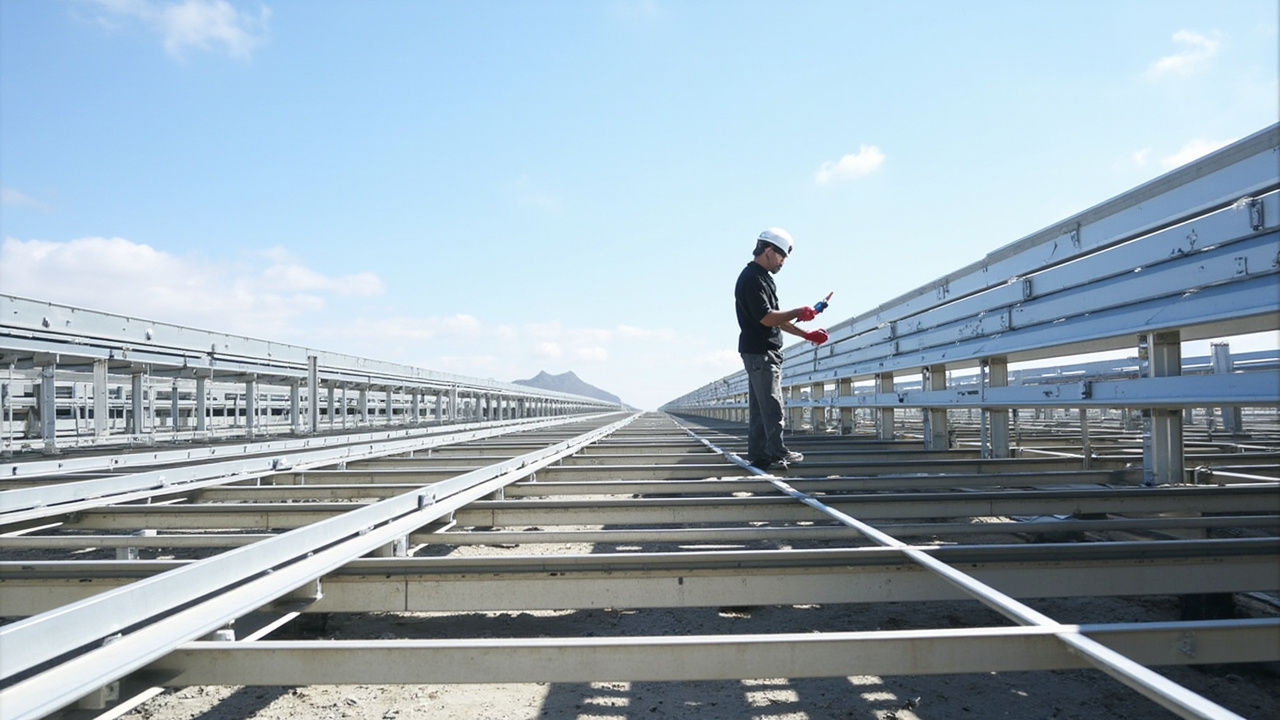
I. Service Environment of PV Supports: Why It Is Harder Than Plant Steel Structures
PV plants are mostly built in three typical environments: arid strong-UV regions in the northwest, high-salt-spray regions along the southeast coast, and humid corrosive regions of mudflats / fishery-solar complementarity. These environments correspond to the atmospheric corrosivity classification of ISO 12944-2:
- C3 (moderate): urban and light industrial atmosphere;
- C4 (high): industrial and coastal (moderate salt content);
- C5 (very high): high-salinity coastal, offshore and heavy industrial pollution;
- CX (extreme): extreme environments such as offshore platforms (separately listed in some newer versions of ISO 12944).
Coastal and mudflat plants often fall in C4–C5, with annual corrosion rates far higher than ordinary plants. More troublesome is that PV supports are thin-walled open sections (C-channel, U-channel, aluminum profiles); once the inner wall corrodes, the section loss ratio is large and the impact on load-bearing capacity is significant—this is the special risk brought by "thin-wall + long-term".
Regionally, China's northwest sandy/gobi/desert bases face the combination of "strong UV + large temperature difference + wind-blown sand abrasion", where UV and thermal cycling are the main causes of coating chalking and cracking; the southeast coast and mudflats face "high salt spray + high humidity + typhoon-borne sand", where chloride-induced pitting and crevice corrosion are more prominent; southern rooftop distributed systems also add "high temperature/high humidity + industrial air pollution". The same coating may perform drastically differently across bases, so "grading by site" is the first step in support painting. Economically, support cost usually accounts for about one tenth of total plant investment, but if premature coating aging causes large-area replacement in 10 years, the dismantling, downtime and labor costs far exceed the price difference of choosing a high-durability配套 upfront—the full life-cycle cost is not worthwhile.
In addition, supports must withstand: alternating coating stress from thermal expansion/contraction, coating fatigue from wind-induced vibration, and local erosion from cleaning water (possibly chlorine-containing). All these require the coating to combine flexibility and durability, and not pursue hardness at the expense of crack resistance.
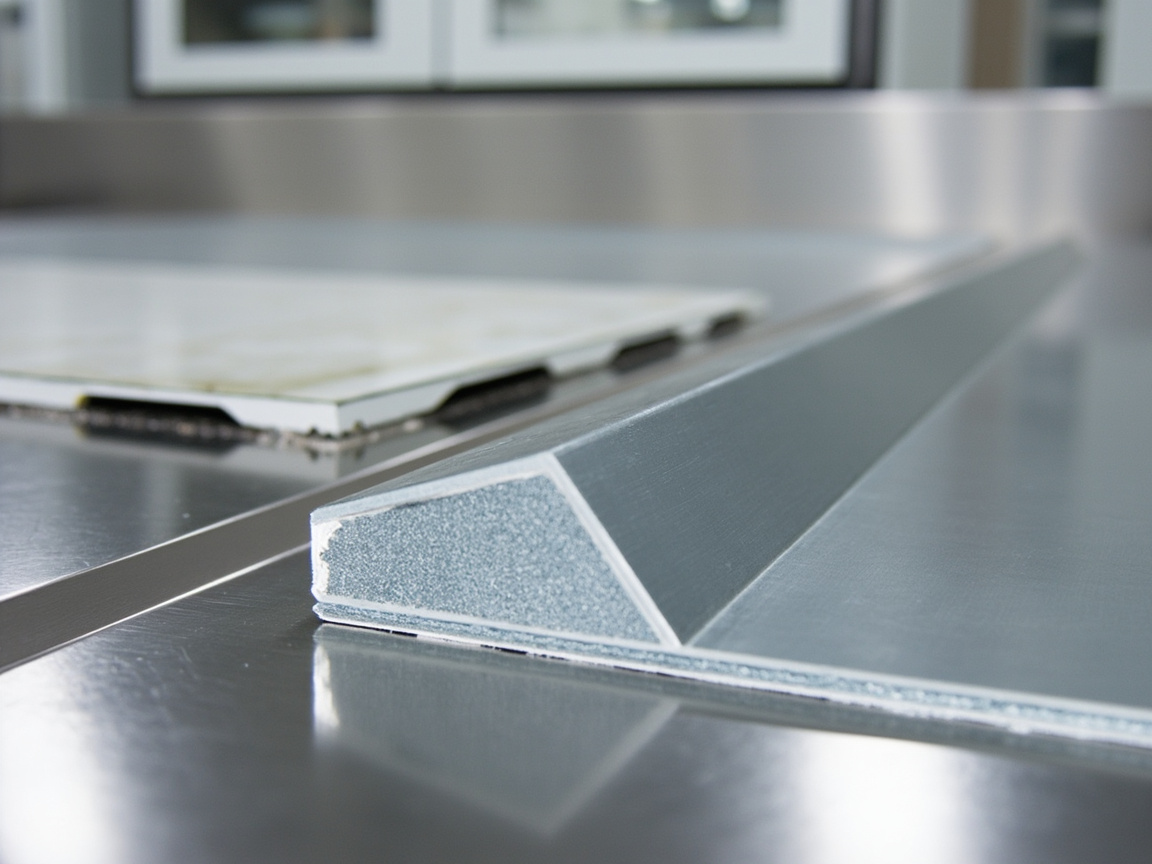
II. Substrate Routes: Hot-Dip Galvanized Steel vs Aluminum Alloy vs Zn-Al-Mg Coated Steel
There are three mainstream substrates for PV supports, each with different painting preconditions.
2.1 Hot-Dip Galvanized Steel (HDG)
Hot-dip galvanizing (per GB/T 13912 / ASTM A123) forms a Zn-Fe alloy layer on the steel surface, protecting the steel substrate by the sacrificial anode of zinc, and is the most cost-effective anti-corrosion solution. But the zinc layer still has a service life limit in C5 environments, and at cuts, welds, and bolt holes the zinc layer is discontinuous, requiring coating reinforcement. Painting on galvanized layer ("painting of galvanized parts") must solve the adhesion problem—the zinc surface is smooth and contains zinc salts, and direct painting easily peels off, which is the most common root cause of PV support coating failure. The galvanized layer itself is divided into "pure zinc coating" and "zinc-iron alloyed coating (galvannealed GA)"; their surface states differ, and surface pretreatment and primer selection should also differ—one size does not fit all.
2.2 Aluminum Alloy Profiles
Aluminum alloy is light and corrosion-resistant, suitable for rooftops and weight-sensitive scenarios, but costs more, still has some pitting risk in Cl⁻-containing environments, and galvanic corrosion must be noted (contact with steel clamps). Although the anodized film of aluminum is corrosion-resistant, as a painting base it still needs a conversion coating to improve paint adhesion. In engineering, also note: during extrusion, aluminum surfaces carry oils and oxide scale; if not cleaned thoroughly, coating adhesion drops sharply; meanwhile the thermal expansion coefficient of aluminum differs from that of organic coatings, and at sites with large day-night temperature differences, interfacial stress accumulates more easily—flexible配套 is advisable.
2.3 Zn-Al-Mg Coated Steel Plate
A new type of coating with better corrosion resistance than ordinary galvanizing, and good self-healing at cuts (the Zn-Al-Mg eutectic forms a dense protective film at damage sites); its application in PV supports has increased in recent years. Painting on it also requires proper pretreatment, otherwise interfacial adhesion is insufficient. Compared with pure zinc coating, the aluminum-enriched layer on Zn-Al-Mg surface is denser, and the requirement for "low-surface-treatment-tolerant primer" is slightly different—it is recommended to do small-sample adhesion verification before scaling up.
2.4 Impact of Substrate Selection on Coating Design
Choosing a substrate is essentially a trade-off among "material cost, structural weight, anti-corrosion capital". Hot-dip galvanized steel relies on the coating itself for cathodic protection, and the coating mostly undertakes "weather resistance + pore sealing reinforcement"; aluminum alloy relies on the passive film, and the coating undertakes "coloring + auxiliary protection"; Zn-Al-Mg sits in between. Understanding this allows spending the limited coating budget where it matters most.
III. Coating System Design: "Duplex Protection" and "Organic Coating" on Galvanized Layer
For weather-resistant anti-corrosion on galvanized substrates, two common routes exist, both with the core idea of "letting the organic coating and metal coating each play its role".
3.1 Galvanizing + Organic Coating (Duplex System)
ISO 12944-1 proposes the "Duplex System" concept: hot-dip galvanizing superimposed with organic coating, with life approximately the sum of both or even longer (synergistic effect). A typical配套 is "galvanized layer + epoxy primer (or zinc-rich primer) + aliphatic polyurethane / fluorocarbon topcoat". The galvanized layer provides cathodic protection and base shielding, and the organic topcoat provides weather resistance and color (PV supports are mostly silver-gray, black). The essence of the duplex system: even if the organic topcoat ages locally, the zinc layer below still protects the steel substrate, avoiding the catastrophic failure of "rust once paint breaks".
3.2 Direct High-Weather-Resistant Coating (no or thin galvanizing)
For aluminum alloy or Zn-Al-Mg, "conversion coating + weather-resistant topcoat / powder" can be used for direct protection, saving thick galvanizing. Powder coating (polyester/TGIC or polyurethane powder) is widely used on supports due to being solvent-free, uniform film thickness, and good weather resistance. For rooftop supports where large-scale on-site pretreatment is impossible, factory powder coating is more controllable than on-site liquid spraying.
Worth elaborating is the synergy mechanism of the duplex system: when the galvanized layer fails, it mainly "uniformly thins" and does not show local perforating catastrophic failure; once the organic topcoat is damaged, the exposed zinc layer continues to sacrifice itself to protect the steel substrate, giving O&M a window to "detect and repair". This "double redundancy" is exactly why the duplex system is promoted in ISO 12944-1. From full-life cost, the initial investment of the duplex system is higher than a single solution, but its durable period often approaches the sum of both lives, and the unit annual cost is lower—especially worthwhile for plants with 25-year design life.
Construction key: galvanized parts must use "primer dedicated for galvanized surfaces" (etch primer or low-surface-treatment-tolerant epoxy), and thoroughly remove zinc salts (white rust). Otherwise adhesion fails, and within a few years large-area peeling occurs—the repair cost far exceeds the process investment upfront.
IV. Comparison Table of Mainstream Coating Systems
The table below lists the durability expectations of different substrates and配套 side by side, for preliminary selection by plant design life.
| Substrate | Coating配套 | Weather resistance | Anti-corrosion life expectation | Typical film thickness | Applicable environment |
|---|---|---|---|---|---|
| Hot-dip galvanized steel | Galvanizing + epoxy primer + aliphatic polyurethane topcoat | Excellent (PU retains gloss 10–15 yrs) | 20–25 yrs under C4 | Primer 40 + topcoat 60 µm | General–coastal |
| Hot-dip galvanized steel | Galvanizing + fluorocarbon topcoat | Superior (retains gloss 15–20 yrs) | 25 yrs+ under C5 | Topcoat 30–40 µm (thin) | Strong UV / coastal |
| Aluminum alloy | Chrome / chrome-free conversion coating + polyester powder | Excellent | 20–25 yrs | 60–80 µm | Rooftop / general |
| Zn-Al-Mg coated steel | Cleaning + polyurethane powder | Good–Excellent | 15–20 yrs | 60–80 µm | General |
| Steel (no coating) | Sandblasting Sa2.5 + epoxy zinc-rich + intermediate coat + PU topcoat | Excellent | Per ISO 12944 system | E.g. 80+100+60 µm | Heavy anti-corrosion scenarios |
Note: The above lifespans are engineering experience ranges; actual results depend on environmental class, film thickness, and construction quality, and should be evaluated in conjunction with the expected durability等级 (low/medium/high/very high, corresponding to 2–5 / 5–15 / >15 years) of ISO 12944-1. Do not infer outdoor years solely from "how many hours of salt spray"; salt spray is only a relative accelerated test.
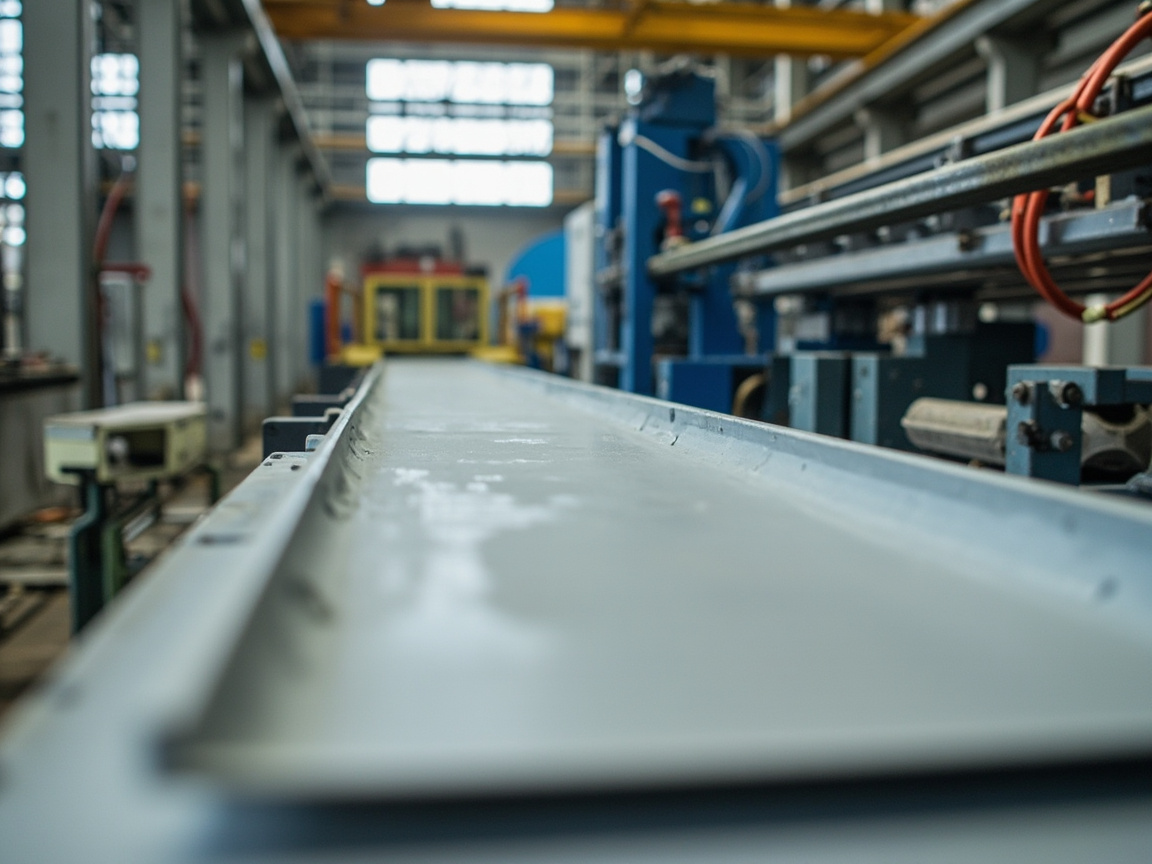
V. Key Performance Indicators and Standards
After selecting the system, accept it with data to avoid "looks about right" type release.
5.1 Neutral Salt Spray Resistance (NSS)
According to GB/T 10125 / ISO 9227 neutral salt spray test, galvanized + coating systems generally require small creep corrosion at scribe, no blistering, and high-durability systems often require 720 h, 1000 h or even longer with no substrate corrosion. For coastal C5 projects, salt spray ≥ 1000 h is recommended, and attention should be paid to "scribe creep width" rather than merely "presence of rust spots".
5.2 Weathering (QUV / Xenon lamp)
According to ISO 16474 (formerly ISO 11507, QUV ultraviolet fluorescence), ISO 11341 (xenon lamp) accelerated weathering, assess gloss retention, chalking, color change. Aliphatic polyurethane topcoat maintains high gloss retention after QUV 1000–2000 h; fluorocarbon is even better. Upon acceptance, the "lower limit of gloss retention after a certain number of hours" should be agreed, rather than just looking at "test was done".
5.3 Adhesion
According to GB/T 9286 cross-cut method, galvanized part systems should reach grade 0/1; pull-off method (ISO 4624) adhesion ≥ 5 MPa is a common threshold. For wind-vibrating frequent wind power / tracking supports, it is recommended to also look at flexibility and adhesion retention after bending.
5.4 Zinc Layer Adhesion and Thickness
Hot-dip galvanized layer thickness according to GB/T 13912, with minimum requirements varying by steel thickness (e.g. average for components ≥ 85 µm, etc.), which is the anti-corrosion capital of galvanizing itself. Before painting, confirm zinc layer thickness meets standard first, otherwise "no coating can save a thin zinc layer". During inspection, also pay attention to the adhesion strength between zinc layer and steel (hammer / bend method per GB/T 13912 appendix); if the galvanized layer itself cracks and falls off, the coating on it will also peel off.
5.5 Humid Heat and Cyclic Corrosion
In addition to single salt spray, more and more power station specifications require "cyclic corrosion (CCT, per ISO 14993 / GB/T 24195)" and "humid heat (GB/T 1740)" assessment, because the real environment is "dry—wet—salt—UV" alternating, rather than constant salt spray. Cyclic corrosion better exposes interface failure; it is recommended that high-durability projects provide both NSS and CCT data sets to avoid "passes salt spray, premature failure in field".
5.6 Color Difference and Appearance Consistency
The color of support topcoat (silver gray, black, white) is not only about aesthetics, but also affects heat absorption and array consistency. Color difference quantified by colorimeter (commonly ΔE) according to GB/T 11186 (or ISO 7724), batch supply should control the upper limit of color difference within same batch and across batches to avoid obvious color difference bands in the array after plant completion.
VI. Key Points of Construction Process
- Galvanized part pre-treatment: Degreasing → water rinse → remove white rust / zinc salts (with dilute acid or special treatment agent) → conversion / phosphating or directly apply galvanized primer; strictly prohibit painting directly with white rust.
- Sandblasting (if no galvanizing): Steel substrate blasted to Sa2.5 (per GB/T 8923.1 / ISO 8501-1), roughness Ry5 40–70 µm, to improve adhesion.
- Film thickness control: Use magnetic thickness gauge (GB/T 4956) to measure dry film; edges, cuts are prone to thin, need focused touch-up.
- Environmental control: Temperature 5–40℃, relative humidity ≤ 85%, substrate temperature 3℃ above dew point (avoid condensation), per ISO 12944-7 construction specification.
- Powder curing: Polyester powder cured per TDS (typical 180–200℃ 10–15 min), oven temperature uniformity affects leveling and performance, need periodic verification with oven temperature tracker.
- Edge and inner corner reinforcement: Profile punched edges, bent inner corners are the thinnest film and most rust-prone positions; the line should set "pre-coat + pre-line touch-up" two checkpoints, and use thickness gauge for special spot-check of inner corners.
- Batch sample retention and first-piece confirmation: Retain sample for each batch of coating, do first-piece adhesion and film thickness confirmation per shift, stop line immediately to investigate if fluctuation occurs, avoid whole batch non-conformance.
Field painting (such as touch-up maintenance of built plants) should also verify "recoatability": old coating surface needs sanding rough and compatibility test, confirm new and old coatings compatible, no delamination, otherwise patch coating will peel in sheets.
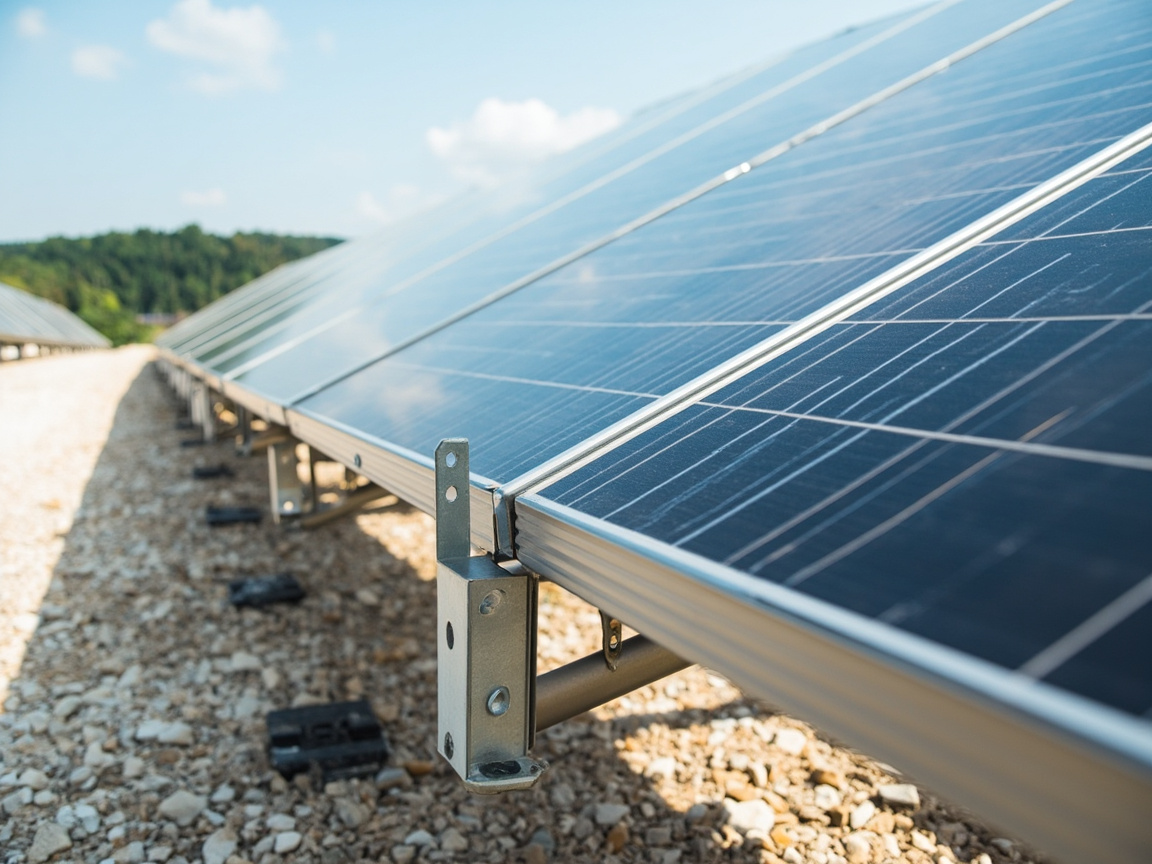
Kexin New Materials (kexinMaterials) emphasizes the trinity of "pre-treatment + coating + film thickness" in support coating systems, and provides thickened topcoat and fluorocarbon upgrade solutions for coastal projects, helping plants minimize maintenance costs over the 25-year cycle. For thin-wall open profiles, we additionally recommend "pre-coat + sealing" for the inner wall to avoid section weakening.
VII. Common Failures and Countermeasures
| Failure phenomenon | Main cause | Countermeasure |
|---|---|---|
| Galvanized part whole-sheet peeling | Zinc salts not cleaned, primer incompatible | Thoroughly remove zinc salts + galvanized专用 primer |
| Cut/bolt hole rust | Coating not covered, zinc layer breakpoint | Touch-up after assembly, sealing |
| Topcoat chalking/discoloration | Wrong topcoat (aromatic PU) | Switch to aliphatic PU/fluorocarbon |
| Seaside pitting | Environment C5 but insufficient system | Upgrade to fluorocarbon + thicker |
| Coating cracking | Substrate deformation, excessive film thickness | Control thickness, select flexible system |
This table is a quick-reference card for on-site "diagnosis". It is worth emphasizing: the vast majority of support coating failures can be traced to "inadequate pre-treatment" or "film thickness not up to standard", rather than coating itself quality problems.
Two easily overlooked failures added: one is "yellowing leading to increased heat absorption" — aromatic polyurethane or inferior topcoat yellows under strong UV, increased heat absorption raises backsheet temperature, indirectly lowering power generation efficiency; this failure does not directly show as rust, but affects revenue; the other is "bimetallic corrosion at cuts" — when bolted steel support connects with aluminum clamp, if contact surface not isolated and coating cracks at compression, steel-aluminum galvanic couple forms, rust starts around compression point. The former is avoided by correct topcoat selection, the latter solved by insulating washers and contact surface oil/paint.
VIII. Coordination with Modules and Tracking Systems
Horizontal single-axis tracking supports move frequently, coating needs better flexibility and bend resistance, otherwise micro-cracks appear after long-term bending; if double-glass module frame uses coated aluminum alloy, pay attention to compatibility with module frame adhesive, avoid coating swelling causing seal failure. Align support anti-corrosion grade with plant design life during design, avoid the awkwardness of "modules still generating, supports already need replacement". For fishing-solar complementary etc. underwater / water-level fluctuation area supports, also consider waterline dry-wet alternating corrosion, system grade should be one level higher than atmospheric zone.
Further, floating water-surface PV support/float support also faces microbial attachment in water, and "repeated waterline immersion" from water level rise-fall; ordinary atmospheric anti-corrosion system accelerates failure at waterline, recommend "thickened + water-resistant" special system for waterline band, and regularly inspect waterline rust. For rotating parts and coating junctions of tracking supports, maintain film thickness at moving friction parts, if necessary do local reinforcement at active hinge zone or use stainless steel parts instead of painting, avoid coating worn through becoming corrosion starting point.
IX. Acceptance and O&M Recommendations
Upon plant delivery, support coating acceptance at least includes: film thickness (GB/T 4956 multi-point), cross-cut adhesion (GB/T 9286 grade 0/1), neutral salt spray (GB/T 10125 by grade), QUV weathering (ISO 16474) report, and appearance no sag orange peel. O&M phase recommend on-site spot-check every 2–3 years: use thickness gauge to recheck remaining film, observe cuts and bolt holes for red rust, local touch-up upon early defects can significantly delay major repair.
Need to establish "defect grading response" mechanism: single pin rust (small area, not expanding) can be local sanding touch-up; continuous red rust along cut or sub-film blistering should evaluate whole batch component replacement; general topcoat chalking but primer intact can do "cleaning + clear coat" renovation rather than full dismantle. Upgrading O&M from "repair when broken" to "intervene by grade" is key to extending plant economic life. For large ground plants, recommend including support coating status in drone inspection and digital twin ledger, use image comparison to track degradation rate.
X. Selection Decision Tree: Five-Step Method from Site to System
Support coating selection can be solidified into a five-step decision process to avoid arbitrary schemes:
- Site environment grading: According to ISO 12944-2, combined with distance to coast, industrial pollution source, annual average humidity and temperature difference, assign project to C3, C4, or C5. If judgment is disputed, can expose test panels on site for three to six months, use measured corrosion rate to support grading, more persuasive than argument.
- Design life alignment: Clarify the plant design life (generally 25 years) and expected first major overhaul (e.g., 15 years), and select the "high" or "very high" durability class per ISO 12944-1 for the coating system—do not gamble on 25 years with a "medium" class system.
- Substrate route determination: For large ground-based plants, prioritize hot-dip galvanized steel composite systems; for rooftop distributed plants with self-weight constraints, choose aluminum alloy + powder coating; for thin-wall tracking mounts with high cut-edge protection requirements, evaluate Zn-Al-Mg coating.
- System and film thickness back-calculation: Back-calculate primer and topcoat types and total dry film thickness based on environmental class and life class—C3 may use "galvanizing + single-coat weather-resistant topcoat", C4 recommends "galvanizing + epoxy primer + aliphatic polyurethane topcoat", C5 upgrades to "galvanizing + epoxy primer + fluorocarbon topcoat" with increased thickness.
- Verification and closed loop: After small-batch trial coating, perform cross-cut adhesion, salt spray and QUV spot checks; release to full volume only when data meets standards; after commissioning, re-test per O&M plan and feed actual degradation rate back to material selection for the next project phase.
The value of this process lies in translating "experience-based judgment" into "auditable decision records", so that the owner, supervisor and O&M parties can all cross-reference and trace.
11. Bidding Technical Clauses and Arrival Re-inspection Checklist
Many support coating disputes stem from vague bidding clauses—stating only "weather-resistant and anti-corrosion, 10-year warranty" without specifying test methods and acceptance criteria, leaving no basis for arbitration when problems occur. It is recommended to at least lock down the following clauses in the technical specification and note the corresponding standard numbers:
| Clause item | Suggested wording | Reference standard |
|---|---|---|
| Zinc coating thickness | Specify minimum average and local minimum values per member steel thickness | GB/T 13912 |
| Dry film thickness | Specify nominal value, minimum value and measurement point density | GB/T 4956, ISO 19840 |
| Adhesion | Cross-cut grade 0/1 and specify threshold by pull-off method | GB/T 9286, ISO 4624 |
| Neutral salt spray | Specify hours and maximum scribe creep width | GB/T 10125 |
| Artificial accelerated weathering | Specify hours and minimum gloss retention, color difference | ISO 16474, GB/T 11186 |
| Hazardous substances | VOC and heavy metal limits comply with current national standards | GB 30981-2020 |
For the arrival re-inspection, it is recommended to implement "three-level sampling": full-item re-inspection for the first batch (including third-party salt spray and weathering); proportional sampling of film thickness and adhesion for normal batches; intensified one-time sampling when batch or line changes (coating lot change, production line furnace change). The handling path for failed re-inspection must also be written into the contract in advance—whether full batch return, downgrade use or rework repainting—to avoid on-site disputes. For time-critical projects, especially guard against the compromise of "trading schedule for acceptance": coating defects are obscured by bolts and clamps after installation, and are almost impossible to inspect point-by-point later; moving the control gate to the factory and arrival ends is the lowest-cost quality strategy.
Kexin New Materials (kexinMaterials) recommends that owners introduce a coating technical consultant or commission a third party to prepare a coating specification at the bidding stage, solidifying environmental classification, system design and acceptance criteria into documents at one time; suppliers respond under the same framework when bidding, so bid evaluation can return from "comparing price" to "comparing system", which is far more important than post-hoc rights protection for achieving the 25-year life target.
12. Tracking Mount Special: Coating Assessment under Dynamic Load Conditions
Horizontal single-axis and dual-axis tracking mounts rotate back and forth with the sun daily; their torque tubes, columns and bearing seats endure continuous alternating loads and micro-vibration, so coating assessment cannot simply copy the static indicators of fixed mounts. Three special focuses: first, flexibility and crack resistance—the topcoat should pass the bend test (GB/T 6742 cylindrical mandrel bend) and cupping test (GB/T 9753) to verify deformation followability, avoiding hairline cracks at repeatedly micro-deformed torque tube locations; second, abrasion and fastening point protection—drive ends, limit blocks and maintenance stepping points are high-incidence areas of mechanical coating damage; design should specify local thickening or protective fittings, and O&M should list them as fixed inspection points; third, adhesion retention under vibration—it is recommended to pre-treat samples with vibration or reciprocating bending, then re-measure cross-cut adhesion to confirm no interlayer detachment after dynamic load. The economy of tracking mounts is built on higher power gain; if the coating ages prematurely due to dynamic load and increases downtime maintenance, the gain will be eaten up. Therefore, the small cost of dynamic-load special assessment protects the revenue model of the tracking system. One more reminder: the control box, gearbox housing and cable tray of tracking mounts are often supplied by different subcontractors with varied coating systems; before delivery, uniformly verify whether the anti-corrosion grade of each component matches the main structure, to avoid the short-board effect of "main beam lasts 25 years, fittings rot in 5", since the whole plant life is determined by the weakest link.
FAQ
Q: Why are photovoltaic mounts commonly hot-dip galvanized rather than simply painted?
A: Hot-dip galvanizing relies on the sacrificial anode of zinc to protect steel; cut edges and damaged areas still self-protect, with long life and low cost; once scratched, paint alone causes local rust. The galvanizing + coating duplex system has longer anti-corrosion life and is the industry mainstream.
Q: Why does paint directly on galvanized layer tend to peel?
A: The zinc surface is smooth and easily forms zinc salts (white rust) and contains trace oxides, so ordinary paint has poor adhesion. A galvanizing-specific primer (etching type or low-surface-treatment-tolerant epoxy) must be used and zinc salts removed first to ensure adhesion.
Q: What grade must coatings for coastal PV plants meet?
A: Mostly C4–C5 (ISO 12944-2). Recommend salt spray ≥ 1000 h, topcoat of aliphatic polyurethane or fluorocarbon, appropriately increased film thickness, and priority duplex galvanizing system to extend life.
Q: How to choose between polyurethane topcoat and fluorocarbon topcoat?
A: Polyurethane offers high cost-performance and 10–15 year gloss retention, suitable for most projects; fluorocarbon retains gloss 15–20 years with excellent weather resistance but is expensive, suitable for strong UV and coastal high-durability requirements. Choose based on plant design life and budget.
Q: Does 1000 hours of salt spray test mean 25 years of use?
A: Not directly convertible. Salt spray is a "relative" accelerated corrosion assessment, not equivalent to outdoor years. It should be judged together with ISO 12944 expected durability class, QUV weathering and actual environment; salt spray is only a necessary, non-sufficient condition.
Q: Do aluminum alloy mounts still need coating?
A: Aluminum alloy is inherently corrosion-resistant, but pitting risk exists in Cl⁻ environments and galvanic issues with steel clamps need attention. Usually chromate-free conversion coating + weather-resistant powder coating suffices, providing both protection and color.
Q: Where is Zn-Al-Mg coated steel better than hot-dip galvanizing?
A: Better corrosion resistance and cut-edge self-healing (Zn-Al-Mg eutectic structure), suitable for thin-wall mounts with high cut-edge protection requirements, but slightly higher cost; its painting also requires proper pretreatment.
Q: What are the consequences of excessive humidity during construction?
A: Relative humidity too high or substrate below dew point by 3℃ causes condensation; water trapped under coating leads to loss of adhesion and blistering. ISO 12944-7 requires humidity and dew point control; stop work in rain and high humidity.
Q: Which is more suitable for mounts, powder coating or liquid coating?
A: Powder is solvent-free with low VOC, uniform thickness and good weather resistance, suitable for batch profiles; liquid is flexible, suitable for repair and irregular parts. Mass production of mounts mostly uses polyester powder; field repair uses liquid.
Q: How to accept mount coating quality?
A: Film thickness (GB/T 4956), cross-cut adhesion (GB/T 9286 grade 0/1), neutral salt spray (GB/T 10125), QUV weathering (ISO 16474), no sag or orange peel appearance, and require supplier to provide system certificate for corresponding environmental class.
Further Reading
- Protection of energy storage cabinet enclosures: coating solutions for outdoor energy storage equipment: Also new-energy outdoor equipment, comparing corrosion environment differences between mounts and storage cabinets.
- Charging pile outdoor weather resistance: coating for charging facilities: Synergistic protection thinking for charging facilities and mounts in coastal high-humidity environments.
- ISO 12944 anti-corrosion coating system selection guide: Use ISO 12944 corrosion class and system framework to evaluate mount protection grade.
- Graphene conductive anti-corrosion coating: in-depth analysis of flake shielding and conductive mechanism
- Hydrogen energy storage and transportation anti-corrosion coating: protection challenges and selection under high-pressure hydrogen environment
- Nano coating overview: nanoparticles, mechanism of action and definition boundaries