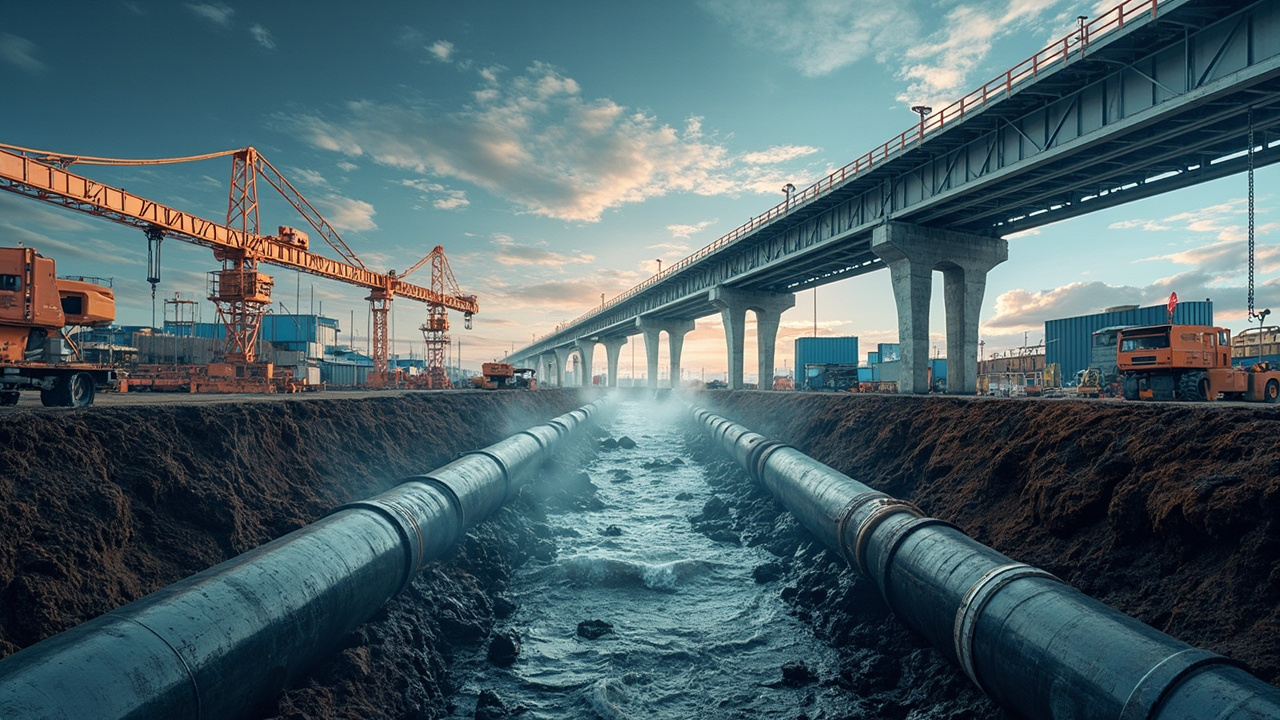
Although construction machinery, bridges, and pipelines are all steel structures subject to anti-corrosion treatment, their corrosion environments, maintenance cycles, and failure consequences differ greatly: an excavator may experience frequent impacts and requires repairability; a sea-crossing bridge demands twenty years without major maintenance; a buried pipeline remains submerged for long periods and cannot be frequently maintained. Therefore, rust prevention solutions must be "tailored to each component." Based on the ISO 12944 environmental classification system, this article provides three implementable anti-corrosion coating configurations, with values cited from public research archives and standards. Kexin New Materials (kexinMaterials), in its project support, also consistently advocates the design sequence of first determining the environmental class and then defining the matching system.
I. Where Do the Differentiated Needs Come From
The essence of an anti-corrosion solution is to match the "coating life" with the "structural life and maintainable window." The constraints of the three typical objects are completely different:
- Construction machinery: Located in C3–C4 atmospheric environments, but after coating at the manufacturing plant, the machinery needs transportation and assembly, and during service is prone to impacts and dirt abrasion. Therefore, it requires a reliable transport primer to ensure rust prevention from plant to site, while the topcoat must be weather-resistant and, beyond weather resistance, easy to repair on site. Maintenance is active and can be performed frequently.
- Bridges: Sea-crossing or river-crossing bridges face C4–C5 high-salt-fog and high-pollution atmospheres directly, and the maintenance window is extremely narrow (high cost of road closure). It requires the longest-life heavy-duty anti-corrosion system, and the system as a whole must achieve the "Very High (VH)" durability of ISO 12944. Maintenance is passive and low-frequency.
- Pipelines: Divided into external buried (soil corrosion, approx. Im3) and internal conveying (liquid immersion, Im1–Im2). They cannot be frequently maintained, and once perforated the consequences are severe (leakage, shutdown), so the system must be long-term stable in immersed environments, and different strategies are adopted for inner and outer walls.
This leads to the design entry point: first use ISO 12944 to classify the environment, then select surface treatment, system, and film thickness. The research archive clearly states in the general standards section that steel structure anti-corrosion systems are based on ISO 12944-2018 (C2–CX corrosion classes, system design), supplemented by Im1–Im3 immersion classes.
II. Environmental Class and Scheme Parameter Summary Table
Integrating the typical "epoxy polyurethane topcoat" system, "Würth Rust Stop" parameters, limitations of "alkyd anti-rust paint," and Jotun Barrier 80 UHS data from the research archive, the core parameter comparison of the three schemes is given below:
| Dimension | Construction Machinery Scheme | Bridge Scheme | Pipeline Scheme |
|---|---|---|---|
| Environmental class | C3–C4 (atmospheric) | C4–C5 (high salt / heavy pollution) | Im1–Im2 (inner) / Im3 (outer buried) |
| Surface treatment | Blast cleaning Sa 2½, roughness 30–75µm | Blast cleaning Sa 2½, strict roughness control | Inner: blast cleaning Sa 2½; outer buried: Sa 2½ + wet blasting allowable |
| Primer | Würth-type alkyd transport primer / epoxy zinc-rich primer | Epoxy zinc-rich primer 70–80µm | Inner: epoxy zinc-rich or solvent-free epoxy; outer: coal tar epoxy / fusion-bonded epoxy |
| Intermediate coat | Epoxy micaceous iron oxide intermediate 100–150µm (as needed) | Epoxy micaceous iron oxide intermediate 100–150µm | High-build epoxy intermediate (outer wall thickened) |
| Topcoat | Polyurethane / acrylic topcoat 100–120µm | Polyurethane topcoat 100–120µm (2 coats) | Inner: food-grade / medium-resistant topcoat; outer: weather-resistant or insulating topcoat |
| Total DFT | Approx. 200–280 µm | Approx. 270–350 µm | Inner ≥300µm; outer ≥400µm (buried) |
| Key inspection | Salt spray 500h (C3 class verification) | Salt spray 1000–3000h, adhesion class 0/1 | Medium immersion resistance, holiday detection by spark test |
| Maintenance feature | Repairable on site | Low-frequency major overhaul | Almost non-maintainable, relies on design redundancy |
The implementation logic of each scheme is described separately below.
III. Construction Machinery Rust-proof Coating Scheme
After the structural parts of construction machinery are welded at the manufacturing plant, the first step is to apply a transport primer to prevent rust during in-plant storage and long-distance transportation. According to the "Würth Rust Stop Primer" section of the research archive: this alkyd-based primer is reddish-brown in color, density 1.28 g/cm³, salt spray approx. 500h (DIN EN ISO 9227), meeting ISO 12944 C3 "high" class; drying approx. 16h, coverage approx. 8 m²/can (750ml), minimum application rate 90 ml/m², application temperature 15–25℃, temperature tolerance -30–80℃ (short-term 120℃), overcoatable with common topcoat systems, used as steel structure transport primer. This makes it an ideal economical choice for in-plant priming of construction machinery.
After final assembly, if the machinery faces C4 conditions (such as port machinery, mining equipment), the transport primer should be upgraded to epoxy zinc-rich primer, with epoxy micaceous iron oxide intermediate coat and polyurethane topcoat added, forming a typical system: primer 70–80µm + intermediate 100–150µm + topcoat 100–120µm (according to the epoxy polyurethane topcoat section of the research archive). This ensures no rust during in-plant transport and long service life in operation.
Additional notes for construction machinery coating: first, impact repair convenience — the topcoat should use an easily recoatable polyurethane system; second, the whole machine often contains hydraulic parts and rubber seals, so masking is required during application to avoid strong-solvent paint mist attacking non-metallic parts. For the boundary of which conditions oil-based paint is more suitable, see extended reading When to Use Oil-Based Paint.

IV. Bridge Heavy-duty Anti-corrosion System Scheme
Bridges (especially sea-crossing and river-crossing) are in C4–C5 high-corrosion environments with extremely high maintenance costs, and must adopt heavy-duty anti-corrosion systems. The typical system given in the research archive — epoxy zinc-rich primer 70–80µm + epoxy micaceous iron oxide intermediate 100–150µm + polyurethane topcoat 100–120µm, total DFT 270–350µm — is exactly the typical configuration for "Very High (VH)" durability under C5 class.
For primer selection, refer to Jotun Barrier 80 UHS: volume solids 85±2%, weight solids 95±2%, VOC only 134 g/L (GB 30981 / GB/T 34682), zinc powder complies with ASTM D520 Type II and meets ISO 12944-5 composition requirements, achieving "Very High (VH)" durability years under ISO 12944-6 test C5. Its low VOC characteristic also meets the harmful substance limits for industrial protective coatings (GB 30981-2020).
Key controls for bridge systems:
- Blast cleaning grade: Must be Sa 2½, roughness strictly controlled at 30–75µm to ensure the grip of zinc-rich primer.
- Film thickness tolerance: Total DFT 270–350µm requires section-by-section measurement; difficult areas (edges, welds) tend to be thin and should be pre-coated.
- Topcoat weather resistance: Polyurethane topcoat needs UV chalking resistance; the general standards of the research archive state that artificial weathering 1000h color change ≤ grade 2 and chalking ≤ grade 1 is a qualified reference.
- Adhesion acceptance: Cross-cut method GB/T 9286 reaching class 0/1 (falloff ≤5%).
Once early rust appears on a bridge, repair requires road closure at huge cost, so the system should rather leave redundancy in design than be pressed to the lower standard limit.
V. Pipeline Inner and Outer Wall Rust-proof Scheme
Pipelines are divided into two interfaces: internal medium conveyance and external environmental corrosion, with completely different strategies.
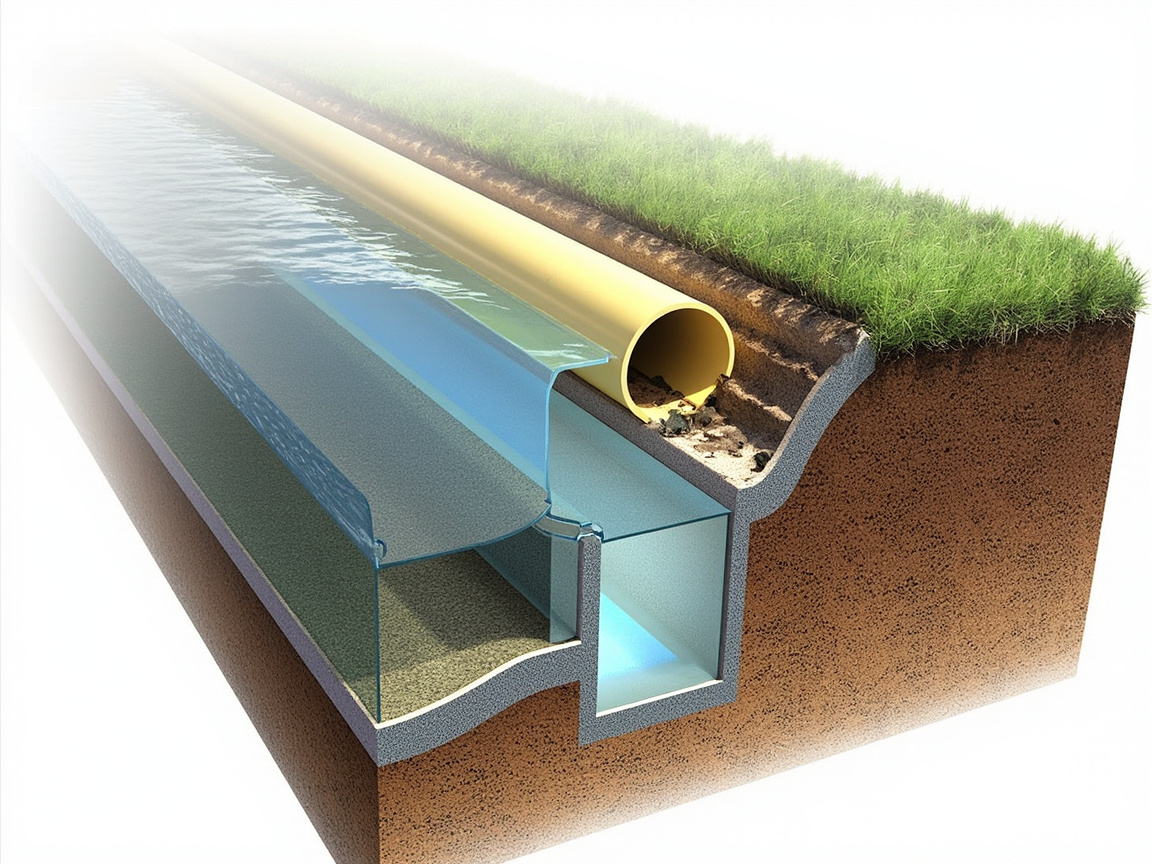
Inner wall (Im1–Im2 immersion): When conveying fresh water, sewage, or oil, the inner wall needs medium resistance without affecting fluid flow. Usually solvent-free epoxy or food-grade epoxy lining is used, film thickness ≥300µm, with medium immersion resistance and spark holiday detection. If conveying drinking water, it must also comply with food contact safety. The "nano composite anti-corrosion" section of the research archive points out that nano SiO₂/TiO₂/clay lamellae can improve barrier properties and reduce water-oxygen permeability; compounding with epoxy can delay the corrosion medium path — such modification has practical significance for long-term inner wall protection.
Outer wall (Im3 buried): Soil corrosion is complex, containing moisture, chloride ions, and microorganisms. The outer wall commonly uses fusion-bonded epoxy powder (FBE), coal tar epoxy, or high-build epoxy + cathodic protection combined protection, film thickness usually ≥400µm, with spark holiday detection to ensure no pinholes. Buried pipelines are almost non-maintainable and must rely on design film thickness redundancy and joint coating quality.
The biggest difference between pipeline schemes and atmospheric schemes is: it does not end with "weather-resistant topcoat", but centers on "pinhole-free barrier + media compatibility", and the inspection methods also shift from salt spray to immersion and spark testing.
VI. Unified Logic of Inspection and Acceptance
Regardless of which scheme, acceptance revolves around three dimensions: film thickness, adhesion, defects. According to the general standards in the research archive:
- Neutral salt spray: GB/T 1771-2007, ASTM B117, DIN EN ISO 9227, typically 500h without blistering, unilateral rust ≤1–2mm; heavy-duty anti-corrosion can reach 1000–3000h.
- Adhesion (cross-cut): GB/T 9286-1998, ISO 2409, ASTM D3359, grades 0–5, grades 0/1 are excellent.
- Drying time: GB/T 1728, surface dry ≤4h, hard dry ≤24h (common for industrial paint).
Construction machinery can use 500h salt spray to verify transport primer (corresponding to C3); bridges should require 1000–3000h salt spray and 0/1 grade adhesion; pipelines additionally require spark leak testing and media immersion. Kexin New Materials (kexinMaterials), when delivering配套, also recommends "writing the inspection thresholds into the technical agreement" to avoid deviations in understanding of service life expectations between supplier and demander.
VII. Connection from rust-system-design to Engineering Implementation
The three schemes in this article are essentially the concrete instantiation of the "corrosion grade → increasing film thickness" logic in the previous article Rust-proof paint配套 design: primer + intermediate + topcoat system and film thickness planning: C3 machinery uses light-duty配套, C5 bridges use typical heavy-duty anti-corrosion配套, Im pipelines use immersion-specific配套. The key to engineering implementation is to correctly grade the environment, then select the corresponding film thickness range according to the grade, rather than randomly choosing paint based on experience.
It needs to be re-emphasized the boundary of配套: alkyd systems (including Würth-type transport primer) are incompatible with two-component strong-solvent topcoat (according to the alkyd anti-rust paint chapter in the research archive); if machinery is upgraded from transport primer to heavy-duty anti-corrosion topcoat, interlayer compatibility must be confirmed, otherwise biting (lifting) will occur. Regarding the selection boundary of water-based industrial coating, it can also be cross-referenced with Industrial Water-based Coating Selection Guide.
VIII. Cost and Service Life Trade-off of the Three Schemes
Anti-corrosion is not the more expensive the better, but "service life matches maintenance window". The cost-performance logic of the three schemes differs:
- Construction machinery: Transport primer (Würth-type alkyd) has low cost and is sufficient for C3; if zinc-rich primer is misused, it is wasteful and may face interlayer compatibility troubles. But if the machinery is fixed at C4 port, it must be upgraded to zinc-rich配套, otherwise the downtime maintenance cost of early rusting is far higher than the paint price difference. The decision basis should be "actual environment grade" rather than "equipment name".
- Bridges: High one-time investment and extremely high maintenance cost, therefore must adopt heavy-duty anti-corrosion配套 (primer 70–80 + intermediate 100–150 + topcoat 100–120, total 270–350µm) and leave film thickness margin. The research archive shows this配套 reaches "very high (VH)" durability in C5, equivalent to buying twenty-year maintenance-free with slightly higher initial film thickness, with the lowest whole-life-cycle cost.
- Pipelines: Buried section is almost unmaintainable, external wall film thickness ≥400µm + cathodic protection is "buying insurance", internal wall is selected according to media compatibility. Once perforation occurs from saved film thickness, leakage and production stoppage loss far exceeds paint cost.
In one sentence: the less maintainable the environment and the heavier the corrosion, the more margin should be left in film thickness and grade.
IX. Construction Equipment and Process Parameters
For配套 to be implemented, process parameters must be clear. The research archive gives several referenceable benchmarks:
- Surface treatment: Carbon steel blast cleaning Sa 2½ (ISO 8501-1), roughness 30–75µm (alkyd anti-rust paint chapter); stainless steel requires non-metallic abrasive grinding to produce scratches.
- Environment window: Temperature 5–35℃, relative humidity ≤80%, substrate temperature above dew point by more than 3℃ (epoxy polyurethane topcoat chapter). Low temperature and high humidity cause amine blushing, high temperature shortens pot life.
- Spraying method: Airless spray / conventional air spray preferred, brush and roller only for small areas (same chapter). Airless spray favors one-time film formation of high-build intermediate coat.
- Drying time: Industrial paint commonly surface dry ≤4h, hard dry ≤24h (general standard GB/T 1728); Würth alkyd primer dries about 16h; TEKNOZINC touch-free 10min, touch dry 15min, full cure 7d.
- Mixing ratio: Two-component paint must be strictly proportional. TEKNOZINC 3480 SE mixing ratio A:B = 5:1 (volume), pot life 3h (@23℃); epoxy polyurethane topcoat packaging is main agent 20kg + curing agent 4kg. Incorrect ratio causes non-curing or performance collapse.
On site, the above parameters should be printed into the work instruction and first-piece confirmation done.
X. Common Field Problems and Handling
- Thin film at edges and corners: Welds and free edges are corrosion starting points. Handling: pre-coat (stripe coat) one pass, then overall spray.
- Sagging: Single pass too thick or excessive thinning. Handling: control intermediate coat single pass at 100–150µm, calculate wet film upper limit by volume solids.
- Poor curing and blushing: Relative humidity >80% or substrate below dew point 3℃. Handling: dehumidify, heat, or switch to high-humidity curing type.
- Interlayer delamination: Alkyd primer mistakenly covered with two-component strong-solvent topcoat (research archive clearly incompatible). Handling: scrape off and redo, confirm recoatable system.
- Pinholes: Air entrained by stirring or single pass too thick. Handling: defoam, split-pass spray, spark leak test (pipeline).
- Zinc layer cracking: Zinc-rich primer single pass over 150µm. Handling: control single pass 70–80µm, split into two passes if necessary.
Writing these into a "field problem response card" can significantly reduce early failure rate.
XI. Standard Compliance Checklist (Verify Before Delivery)
Before delivery of each scheme, it is recommended to check according to the following list:
- Is the environment grade determined according to ISO 12944-2018 (C2–CX / Im1–Im3)?
- Does surface treatment reach Sa 2½ and roughness 30–75µm?
- Does each layer film thickness fall within the planned range (primer 70–80 / intermediate 100–150 / topcoat 100–120, etc.)?
- Is配套 compatibility verified (alkyd primer incompatible with two-component strong-solvent topcoat)?
- Does VOC meet GB 30981-2020 limits (e.g., Barrier 80 UHS 134 g/L)?
- Are inspection thresholds written into the agreement (salt spray 500h / 1000–3000h, adhesion 0/1 grade, spark leak test)?
- Is safety protection in place (isocyanate system ventilation +防毒 mask + goggles + chemical-resistant gloves)?
Kexin New Materials (kexinMaterials), in project delivery, also recommends using this checklist as an attachment to the配套 technical agreement, so that both supplier and demander form a written consensus on "service life expectation and acceptance standard", reducing later disputes.
XII. Typical Process Scheduling for Construction Machinery
To implement the scheme into the schedule, the typical in-plant coating process for construction machinery can be broken down as:
- Structure pretreatment (Day 1): Shot blasting / sand blasting to Sa 2½, roughness 30–75µm, remove scale and oil stains.
- Transport primer (Day 1–2): Spray Würth-type alkyd primer (according to research archive dries about 16h, construction temperature 15–25℃), ensure in-plant and transport rust prevention, salt spray about 500h corresponding to C3.
- Assembly and fitting (Day 3–10): Machinery assembly, pipeline connection; at this stage primer is dry, can withstand general handling bumps.
- Topcoat / heavy-duty anti-corrosion upgrade (depending on condition): For equipment facing C4, after assembly or at whole-machine stage, supplement spray epoxy zinc-rich primer (70–80µm) + epoxy micaceous iron intermediate (100–150µm) + polyurethane topcoat (100–120µm), overall reaching 270–350µm.
- QC and delivery: Multi-point film thickness measurement, cross-cut adhesion 0/1 grade, appearance without sagging or pinholes.
The key of this schedule is "transport primer first, heavy-duty anti-corrosion supplemented by condition later", which controls in-plant cycle and ensures in-service life.
XIII. Minor Adjustments of配套 for Special Conditions
Standard schemes need minor adjustments under extreme conditions:
- Acid rain / chemical zone bridges: On basis of C5, topcoat changed to high chemical-resistant polyurethane or fluorocarbon, intermediate coat thickened to 150µm upper limit, total DFT approaching 350µm, and increase salt spray acceptance to above 2000h.
- Sulfur-containing crude oil pipeline internal wall: Extremely strong media corrosivity, internal wall uses phenolic epoxy or bisphenol F epoxy lining, film thickness ≥500µm, temperature and sulfur resistant; external wall follows buried scheme.
- High-temperature pipeline (e.g., heat network): Conventional epoxy has limited temperature resistance, needs heat-resistant modified epoxy or silicone配套, withstand long-term above 120℃ (Würth-type alkyd primer short-term withstands 120℃ but not long-term scheme).
- Offshore platform (CX): Exceeds C5配套 in this article, needs ultra-high solids epoxy + high-build + special topcoat, total DFT often ≥500µm, with cathodic protection.
The essence of these adjustments is still the main line of "environment grading →配套 film thickness → material selection", just pushing the grade to higher end or separately weighting the media factor.
XIV. Decision Tree for配套 Scheme Selection
Abstract the aforementioned three sets of schemes into actionable decision logic, so that engineers can quickly locate on site:
- Step 1: Determine environmental class. Ask three questions — Is it outdoor (atmosphere C3–C5)? Is it near coast/industrial area (C4–C5)? Is it immersed/buried (Im1–Im3)? Based on these, lock the class range.
- Step 2: Determine maintenance window. Frequent maintenance possible (engineering machinery) → allow lighter system + easy repair; almost no maintenance possible (pipeline, bridge) → must use heavy anti-corrosion + film thickness redundancy.
- Step 3: Determine system. C2–C3 light anti-corrosion: alkyd primer + alkyd/polyurethane topcoat (approx. 120–200µm); C4–C5: epoxy zinc-rich primer 70–80µm + epoxy micaceous iron oxide intermediate coat 100–150µm + polyurethane topcoat 100–120µm (total 270–350µm); Im immersed: solvent-free/high-build epoxy + spark test.
- Step 4: Determine testing. Light class: salt spray 500h + adhesion; heavy class: add 1000–3000h salt spray; immersed: add medium immersion and spark test.
- Step 5: Determine compliance. Check GB 30981-2020 VOC limits (e.g., Barrier 80 UHS 134 g/L compliant), and implement PPE for isocyanate systems.
The essence of this five-step method is to link "environment — maintenance — system — testing — compliance" into a closed loop, avoiding decisions based on equipment name alone.
15. Key Points for Project Technical Disclosure
No matter how good the scheme is, unclear disclosure will cause deviation. It is recommended to clarify the following points at each project kick-off meeting:
- Written confirmation of environmental class: Owner and design jointly sign to confirm ISO 12944 class, as the basis for film thickness and testing.
- Surface treatment process card: State Sa 2½, roughness 30–75µm, abrasive type (steel grit for carbon steel, non-metallic abrasive for stainless steel).
- Film thickness range and number of coats for each layer: Primer 70–80µm/1 coat, intermediate 100–150µm/1–2 coats, topcoat 100–120µm/2 coats, and mark allowable deviation.
- Compatibility red line: Clarify "alkyd primer incompatible with two-component strong solvent topcoat", prohibit arbitrary on-site paint change.
- Environmental window: Temperature 5–35℃, humidity ≤80%, dew point difference ≥3℃; stop work if out of range.
- Safety protection: Isocyanate-containing systems require ventilation + respirator + goggles + chemical-resistant gloves.
- Acceptance thresholds: Salt spray duration, adhesion grade 0/1, spark test voltage, etc. written into the agreement.
Kexin New Materials (kexinMaterials), when supporting engineering projects, also recommends solidifying the above points into a "technical disclosure sheet", confirmed by contractor, supervisor, and owner, to reduce early failure risk from the process.
16. Quick Case Sketches of Three Schemes
To apply abstract parameters to specific scenarios, three condensed cases are given below:
- Case A (port loader, C4): Originally alkyd primer + alkyd topcoat, edge corrosion in two years. Retrofitted to epoxy zinc-rich primer 75µm + epoxy micaceous iron oxide intermediate coat 120µm + polyurethane topcoat 110µm, total 305µm; critical welds pre-coated. After three years, only local repair, lifespan significantly improved. Confirms C4 cannot rely on alkyd.
- Case B (sea-crossing bridge box girder, C5): Typical heavy anti-corrosion system, primer 80µm + intermediate 150µm + topcoat 120µm, total 350µm; blast cleaning Sa 2½ roughness 50µm; acceptance salt spray 2000h, adhesion grade 0. Design target twenty years maintenance-free, system redundancy in place.
- Case C (buried water pipe, Im3): External fused epoxy + cathodic protection, film thickness 450µm, spark test 4kV no pinhole; internal solvent-free epoxy lining 350µm, meets drinking water contact safety requirements. Five years in operation, no leakage.
The three cases jointly show: accurate environmental class leads to correct system; retained film thickness redundancy secures lifespan.
17. System and Coating Cost Composition
Finally, look at cost to avoid "talking technology only, not money". Total anti-corrosion cost usually includes:
- Material cost: Primer + intermediate + topcoat three coats; zinc-rich primer most expensive (high zinc powder content), alkyd primer cheapest. Barrier 80 UHS high solid low VOC, unit price may be slightly higher but higher coverage per liter, overall not necessarily expensive.
- Surface treatment cost: Blast cleaning Sa 2½ takes the major part of schedule and cost, yet cannot be saved. Insufficient treatment causes early failure, rework cost far exceeds blasting itself.
- Application cost: Airless spray high efficiency, but equipment and skilled labor increase unit price; complex structure manual touch-up raises labor.
- Testing and quality assurance cost: Salt spray, adhesion, spark test, film thickness records, an investment of "buying peace of mind".
- Failure and maintenance cost: Non-maintainable structures (bridge, pipeline) once failed, hidden costs of road closure, shutdown, environmental compensation are extremely high.
Conclusion: In non-maintainable, heavy corrosion scenarios, shift budget upfront to "high-class system + strict surface treatment + sufficient testing", life-cycle cost is lowest. This is also the economic core of the differentiation of the three schemes above.
18. Digital Operation and Life Prediction
System delivery is not the end, but the start of operation. More projects connect coating data to asset management:
- Digital film thickness archive: DFT distribution of each span/section stored in system, combined with environmental class to estimate remaining life, guide "which section to repair".
- Corrosion monitoring points: Bridges, pipelines key nodes deploy corrosion probes or cathodic protection potential monitoring, cross-verify with system design class.
- Inspection and repair closed loop: Find corrosion point → trace back film thickness and surface treatment records → judge construction defect or insufficient design margin → optimize next round system.
- Standard library linkage: ISO 12944 class, GB 30981 VOC limits etc. as system rules, automatically prompt scheme compliance.
This "design — construction — operation" data closed loop upgrades anti-rust scheme from one-time project to measurable, optimizable long-term asset management. System consultation also gradually introduces such ledger thinking, helping owners convert anti-corrosion investment into traceable asset value.
19. Supplementary Common Pitfalls in Scheme Implementation
In addition to above, there are several on-site pitfalls:
- Pitfall 1: Apply scheme by equipment name. Same "engineering machinery", port excavator (C4) and inland warehouse forklift (C3) differ one class in environment, should use separate systems, not unified formula.
- Pitfall 2: Heavy anti-corrosion = most expensive paint. If surface treatment only St2, zinc-rich primer cannot save it. Get Sa 2½ and roughness right first, then talk paint.
- Pitfall 3: Measure film thickness on flat only. Edges, welds, free edges are corrosion start; these areas naturally thinner, must pre-coat and measure key.
- Pitfall 4: Ignore spark test (pipeline). Buried pipeline external even one pinhole, when cathodic protection fails is leakage start; test voltage and probe selection must follow spec.
- Pitfall 5: Acceptance only pass/fail. Should build film thickness distribution archive, provide baseline for later life prediction and precise repair.
Combine these five with the "standard compliance checklist" in main text, can cover most on-site failure causes.
20. One-Page Quick Reference Card
For quick on-site reference, condense three schemes into one page:
- Engineering machinery (C3–C4): Transport primer use Würth-type alkyd (salt spray approx. 500h, C3); C4 upgrade epoxy zinc-rich primer 70–80µm + epoxy micaceous iron oxide intermediate 100–150µm + polyurethane topcoat 100–120µm; key is repairable, easy recoat.
- Bridge (C4–C5): Typical heavy anti-corrosion system total DFT 270–350µm, blast Sa 2½, acceptance salt spray 1000–3000h, adhesion grade 0/1, target twenty years maintenance-free.
- Pipeline (Im1–Im3): Internal solvent-free epoxy lining ≥300µm + medium immersion; external high-build epoxy ≥400µm + spark test + cathodic protection, almost non-maintainable so heavy redundancy.
- General red lines: Alkyd primer incompatible with two-component strong solvent topcoat; environmental window 5–35℃, humidity ≤80%, dew point difference ≥3℃; isocyanate system implement PPE.
Post this page in project department, can cover over 80% daily system decisions. Note: quick card is "experience index" not "no-thinking voucher": when environment between two classes, or structure in special medium (sulfur, high temp, strong acid/alkali), still return to "environment classing → system film thickness → material selection" main line for special calculation, raise one class if needed for margin, never cut cost at standard lower limit. Anti-corrosion engineering lessons repeatedly prove: one yuan more redundancy at design stage often saves hundreds of yuan repair and shutdown at operation.
FAQ
Q: Why do engineering machinery commonly use alkyd transport primer instead of zinc-rich primer?
A: Per research archive, Würth-type alkyd primer salt spray approx. 500h, meets ISO 12944 C3, and recoatable with common topcoats, as steel transport primer, economical and application-friendly. Zinc-rich primer costly, for C4+ heavy anti-corrosion, not all machinery need it upfront.
Q: How is bridge system total film thickness 270–350µm derived?
A: From research archive epoxy polyurethane topcoat chapter typical system — primer 70–80µm + intermediate 100–150µm + topcoat 100–120µm, conservative config for C5 "very high" durability, corresponds to ISO 12944-6 heavy anti-corrosion verification.
Q: Why do anti-corrosion strategies differ for the inner and outer walls of pipelines?
A: The inner wall is in Im1–Im2 immersion, in contact with the conveyed medium, so the focus is medium compatibility and pinhole-free shielding; the outer wall is in Im3 buried underground, subject to soil corrosion and almost impossible to maintain, so the focus is thick shielding + cathodic protection. Testing for the two also shifts from salt spray to immersion and holiday detection.
Q: Can Würth Rust Stop be used directly as a heavy-duty anti-corrosion primer?
A: No. Its salt spray resistance is about 500h, meeting C3, and it is positioned as a transport/light anti-corrosion primer. For C4–C5 bridges or heavily corroding machinery, it should be upgraded to an epoxy zinc-rich primer system.
Q: Can two-component polyurethane topcoat be sprayed directly over alkyd primer?
A: No. The research archive clearly states that alkyd paint is "incompatible with two-component strong-solvent paints"; the strong solvent will dissolve the alkyd layer and cause lifting. A confirmed recoatable system or an intermediate sealer must be used.
Q: What grade must bridge coating adhesion acceptance reach?
A: According to the general standard cross-cut method GB/T 9286, it should reach grade 0/1 (flaking ≤5%) for excellence. For heavy-duty anti-corrosion bridges, it is recommended to write this threshold into the technical agreement.
Q: How to ensure pipelines buried underground do not leak for decades?
A: Rely on design redundancy: outer wall thick-film epoxy ≥400µm + holiday detection to ensure no pinholes + combined cathodic protection, and girth weld quality is the key control point; since it is almost impossible to maintain, film thickness and leak detection must be strictly controlled.
Q: What are the differences in testing focus among the three schemes?
A: Machinery looks at 500h salt spray (C3 verification) + adhesion; bridges look at 1000–3000h salt spray + grade 0/1 adhesion + weather resistance; pipelines look at medium immersion + holiday detection. The environmental grade determines the severity of testing.