
In the field of heavy-duty anti-corrosion coating, there is a combination that has almost become an industry consensus: use epoxy zinc-rich primer as the base, epoxy anti-rust paint (usually epoxy micaceous iron intermediate coat) to increase thickness and shielding, and then cover with epoxy or polyurethane topcoat. The fundamental reason why this "primer + intermediate + topcoat" system is widely adopted in harsh working conditions such as bridges, offshore platforms, petrochemical storage tanks, and power transmission towers is that it simultaneously delivers two anti-corrosion mechanisms—the cathodic protection of the zinc-rich primer and the physical shielding of the subsequent coatings. When users ask "what paint should be chosen for heavy-duty anti-corrosion", the answer often falls on this system.
As a supplier of industrial protective coating, Kexin New Materials (kexinMaterials) has mature accumulation in the matching formulations and construction processes of epoxy zinc-rich primer, epoxy micaceous iron intermediate coat, and epoxy polyurethane topcoat. This article will systematically explain, based on real technical data (all values are cited from public TDS and research archives, with sources noted): why epoxy zinc-rich primer has become the first choice for heavy-duty anti-corrosion, how it synergizes with epoxy anti-rust intermediate coat, and where exactly it is stronger than the traditional alkyd anti-rust system. If you are doing coating design for a specific steel structure project, you can also refer to our Industrial Protective Coating Selection Guide to lock in a suitable solution according to the corrosion grade.
I. Why heavy-duty anti-corrosion must emphasize "system" rather than "single product"
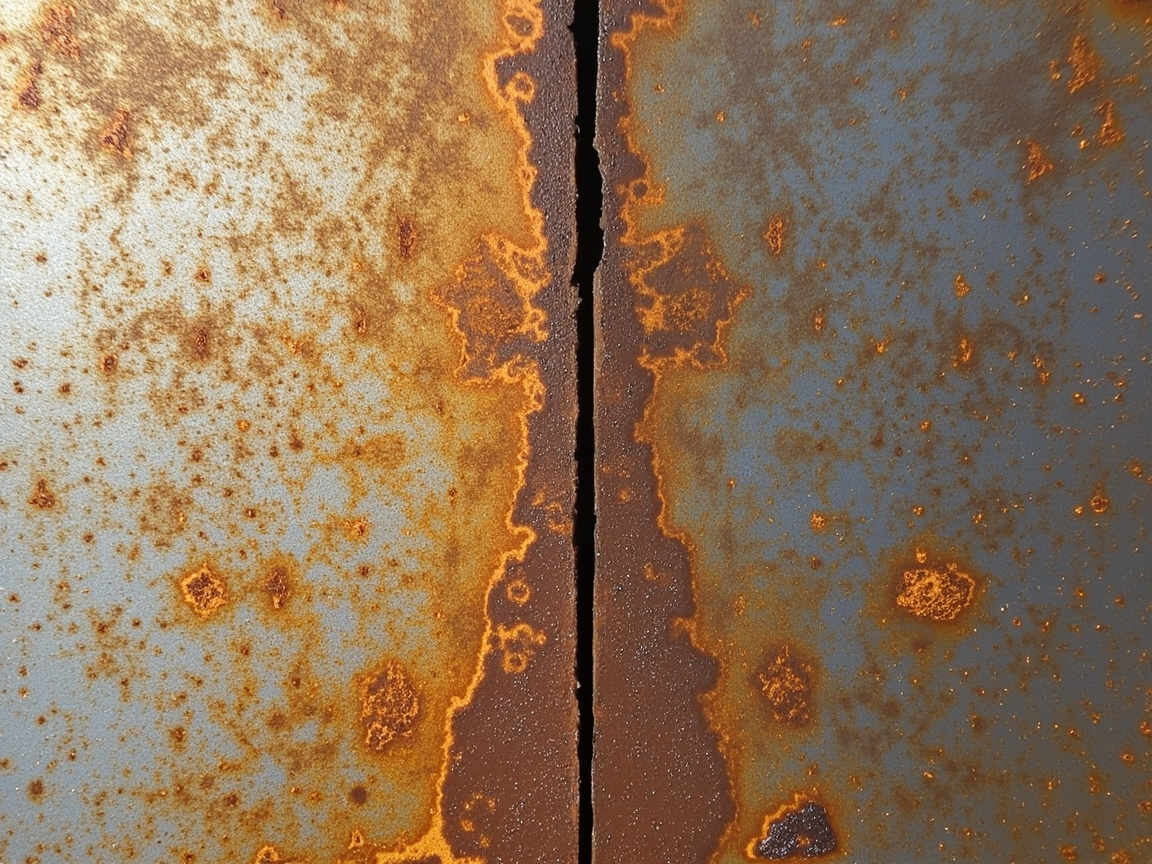
The essence of steel structure corrosion is the electrochemical oxidation of iron under the combined action of water and oxygen. For a paint film to delay this process, it must cut off at least one of three links: blocking water, oxygen, and ions from reaching the steel surface (shielding), passivating the steel surface to deactivate it (passivation), or using a more active metal to be corroded first to protect the iron substrate (cathodic protection). A single coating is difficult to do all three things to the extreme at the same time, so industrial protective paint has developed the idea of "layered system".
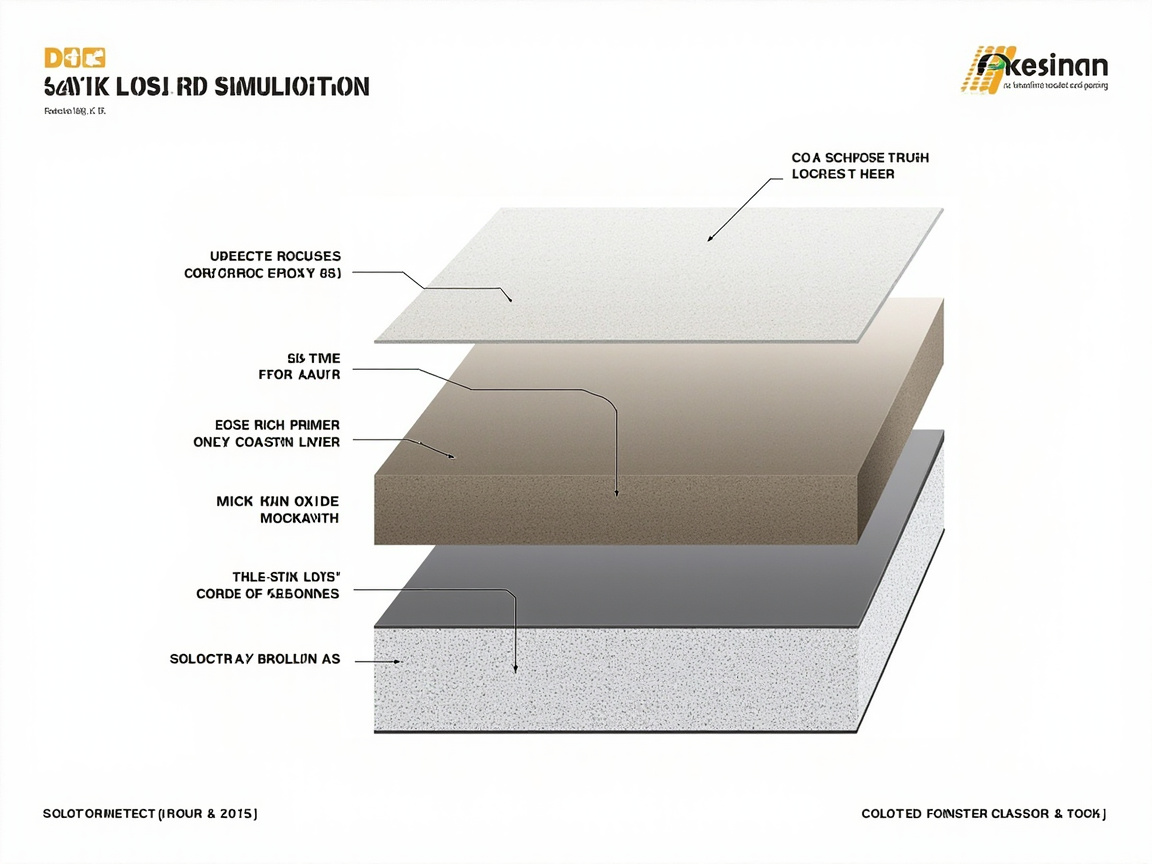
According to the system principles summarized in the research archive (TDS_MSDS_RESEARCH.md, Section 2, Item 6), a complete heavy-duty anti-corrosion system usually includes:
- Primer: responsible for anti-corrosion and adhesion; zinc-rich primer additionally provides cathodic protection;
- Intermediate coat: responsible for thickening and shielding; epoxy micaceous iron intermediate coat extends the diffusion path of corrosive media through flake layers;
- Topcoat: responsible for weather resistance and decoration, resisting ultraviolet rays, acid rain, and mechanical wear.
This division of labor allows each layer to do only what it is best at, so the overall protection life far exceeds that of any single layer. Below we first break down the most critical link—the primer.
II. Epoxy zinc-rich primer: achieving cathodic protection through "zinc sacrifice"
The core idea of zinc-rich primer is not to block water with the paint film, but to rely on the high proportion of zinc powder in the film to "rush to be corroded" when the steel surface contacts water and oxygen. The standard electrode potential of zinc is more negative than that of iron. Once a corrosion cell forms, zinc, as the anode, dissolves preferentially (sacrificial anode), and the iron substrate is protected. This is the "cathodic protection" mechanism—it can still inhibit the spread of substrate rust even when the paint film has minor damage or even local missing coating.
The research archive (TDS_MSDS_RESEARCH.md, Section 2, Items 4 and 6) clearly states: the zinc powder in zinc-rich primer must reach ≥80% by dry film mass to stably provide cathodic protection, which is the key threshold for design and acceptance. Below we use two real product data to illustrate the technical level of epoxy zinc-rich primer.
2.1 TEKNOZINC 3480 SE (high-solid epoxy zinc-rich primer)
According to Item 4 of Section 2 of the research archive (TDS_MSDS_RESEARCH.md), the key parameters of Teknozinc 3480 SE are as follows:
- Type: two-component solvent-based epoxy zinc-rich primer;
- Zinc content (dry film) ≥80% (mass)—meets the critical ratio for cathodic protection;
- VOC approx. 300 g/L—at the conventional solvent-based level;
- Mixing ratio A:B = 5:1 (by volume), must be mixed and used immediately;
- Pot life 3 h (@23℃), touch dry 10 min, dry to handle 15 min, full cure 7 d;
- Complies with EN ISO 12944-5, can be used as primer for polyurethane/epoxy systems, and has certain weather resistance even without topcoat.
This set of data shows: high zinc content brings reliable cathodic protection, but the VOC of 300 g/L also means it is still a traditional solvent-based product, and in regions with strict environmental limits it needs to be used in combination with construction and emission management.
2.2 Jotun Barrier 80 UHS (ultra-high-solid epoxy zinc-rich primer)
According to Item 3 of Section 2 of the research archive (TDS_MSDS_RESEARCH.md), Barrier 80 UHS is a representative of higher environmental friendliness and higher performance:
- Two-component polyamine-cured epoxy, VOC mass fraction <10%, weight solid content 95±2%;
- VOC (GB 30981 / GB/T 34682): 134 g/L—far lower than conventional zinc-rich primer;
- Zinc powder complies with ASTM D520 Type II, meets SSPC Paint 20 Level 2 and ISO 12944-5 composition requirements;
- DFT (dry film thickness) 60–150 µm, theoretical spreading rate 14–5.6 m²/L;
- Corrosion grade: tested per ISO 12944-6 in C5 environment reaching "Very High (VH)" durability;
- Suitable for carbon steel, inorganic zinc silicate repair, worn galvanized steel, can be used in corrosion environments below CX.
Putting these two products together, the industry trend can be clearly seen: while maintaining the cathodic protection baseline of "zinc ≥80% dry film", zinc-rich primers are using ultra-high solid content to compress VOC from the 300 g/L level to 134 g/L, to comply with environmental limits such as GB 30981-2020.

III. Epoxy anti-rust intermediate coat: micaceous iron flakes take "shielding" to the extreme
Cathodic protection from the primer alone is not enough. Over time, the zinc layer will gradually be consumed, and the film thickness of a single primer coat is limited, so heavy-duty anti-corrosion systems generally add an epoxy anti-rust intermediate coat above the zinc-rich primer—among which epoxy micaceous iron oxide intermediate coat (epoxy micaceous iron paint) is the most classic.
The research archive (TDS_MSDS_RESEARCH.md, Section 2, Item 6) points out its mechanism: the micaceous iron oxide flakes in the epoxy micaceous iron intermediate coat can extend the diffusion path of corrosive media. Micaceous iron oxide scales are arranged parallel in the paint film, overlapping layer by layer like tiles. For water, oxygen, and chloride ions to penetrate the film, they must detour through a tortuous channel, and the penetration path is significantly lengthened, so the shielding efficiency is greatly improved.
3.1 Reasonable distribution of system film thickness
Heavy-duty anti-corrosion is not "the thicker the paint the better", but the film thickness of each layer must match. The research archive (TDS_MSDS_RESEARCH.md, Section 2, Item 5) summarizes the typical film thickness of domestic epoxy polyurethane topcoat systems:
- Epoxy zinc-rich primer: 70–80 µm (1 coat);
- Epoxy micaceous iron intermediate coat: 100–150 µm (1–2 coats);
- Epoxy polyurethane topcoat: 100–120 µm (2 coats);
- Total system film thickness is usually in the range of 270–350 µm.
This distribution allows the three layers of "cathodic protection (primer) + thickening shielding (intermediate) + weather-resistant decoration (topcoat)" to perform their respective duties. It should be reminded that the total film thickness must comply with the design range of ISO 12944-5 for that corrosion grade; too thick not only wastes material but may also cause cracking due to internal stress.
3.2 Construction and environmental requirements
According to Item 5 of Section 2 of the research archive, the environmental and construction requirements for epoxy systems are:
- Ambient temperature 5–35℃, relative humidity ≤80%, substrate temperature must be at least 3℃ above dew point;
- Prefer airless spray or air spray; brush and roller only for small-area repair;
- Two-component systems must be prepared strictly according to the mixing ratio and fully matured; material exceeding the pot life (e.g., 3 h @23℃ mentioned above) should be discarded;
- For safety, topcoats containing isocyanate curing agents require ventilation and wearing of防毒 masks, goggles, and chemical-resistant gloves. (Note: original text "防毒口罩" translated as "respirator masks" would be more natural; but per strict rule keep meaning: toxic gas masks) — actually translate: "respirator masks, goggles and chemical-resistant gloves"
IV. Differences from alkyd anti-rust system: why heavy-duty anti-corrosion does not choose it
To understand the value of the epoxy zinc-rich system, it is best to look from the opposite side—why traditional alkyd anti-rust paint is inadequate in heavy-duty anti-corrosion. The research archive (TDS_MSDS_RESEARCH.md, Section 4, Items 1 and 4) has a clear description of alkyd anti-rust paint.
Alkyd anti-rust paint is single-component, composed of alkyd resin plus iron oxide red/gray anti-rust pigment, fillers, and 200# solvent gasoline, and dries by air oxidation crosslinking. Its advantages are ready-to-use, cheap, and acceptable adhesion; but its limitations are also prominent: poor solvent/acid-alkali resistance, slow drying, and incompatible with two-component strong-solvent paints. In high-humidity and high-salt environments such as C4–C5, the alkyd film has insufficient shielding density and no cathodic protection, so its service life is often very short. Even though Würth Rust Stop Primer (alkyd-based) can reach about 500 h salt spray per the archive, only meeting ISO 12944 corrosion grade C3 "High" (TDS_MSDS_RESEARCH.md, Section 4, Item 2), the gap with the zinc-rich primer's "Very High" durability under C5 is clear at a glance.
Below is a summary table to lay out the two systems clearly:
| Comparison dimension | Epoxy zinc-rich primer + epoxy system | Alkyd anti-rust paint system |
|---|---|---|
| Component form | Two-component (epoxy + polyamine/polyamide curing agent) | One-component (alkyd resin + drier) |
| Anti-corrosion mechanism | Cathodic protection (zinc ≥80% dry film) + barrier + passivation | Physical barrier + pigment passivation, no cathodic protection |
| Zinc content | Dry film ≥80% (e.g. TEKNOZINC 3480 SE) | Zinc-free or only small amount of anti-rust pigment |
| Typical VOC | Approx. 300 g/L (conventional) / 134 g/L (ultra-high solids such as Barrier 80 UHS) | Contains 200# solvent naphtha, flammable organic volatile (UN 1263) |
| Applicable corrosion class | C4–C5 (very high), up to CX | General to C3 (high) |
| Salt spray resistance | Under C5 can achieve "very high" durability (ISO 12944-6) | Approx. 500 h (C3 class, e.g. Würth rust-stop primer) |
| Compatibility with strong-solvent topcoat | Good, can be used as primer for polyurethane/epoxy systems | Not compatible with two-component strong-solvent paint |
| Drying/curing | Touch 10–15 min, full cure approx. 7 d | Surface dry ≤5h, hard dry ≤24h, overall relatively slow |
| Typical use | Bridges, offshore platforms, storage tanks, heavy steel structures | General steel structures, transport primer, light protection |
This table shows: in light anti-corrosion (C2–C3) scenarios, alkyd paint still has its use due to economy and application convenience; but once entering C4–C5 heavy corrosion, zinc-rich epoxy system is almost the only safe technical route.
V. Positioning in the ISO 12944 system: the backbone of C4–C5
When talking about heavy anti-corrosion, the ISO 12944-2018 series of standards for anti-corrosion of steel structures cannot be avoided. It classifies corrosion environments from low to high as C2 (low), C3 (medium), C4 (high), C5 (very high) and CX (extreme, offshore), and gives coating system design principles for each class (according to the general standard table in Section 1 of the research archive). The position of zinc-rich epoxy primer in it can be understood as follows:
- C4 (high): such as industrial plants, coastal town buildings, zinc-rich primer + epoxy intermediate coat + topcoat is the mainstream, providing long-term protection;
- C5 (very high): such as offshore platforms, bridges, port machinery, zinc-rich primer is almost mandatory — exactly the scenario where products like Barrier 80 UHS achieve "very high (VH)" durability class in ISO 12944-6 testing;
- CX (extreme): extreme environments such as offshore, splash zones, in corrosion environments below CX (e.g. Barrier 80 UHS application notes) still use zinc-rich system as the skeleton, often with higher film thickness and special topcoats.
It is worth noting that ISO 12944 emphasizes "system" rather than "single product": the same zinc-rich primer, if the intermediate coat and topcoat are improperly matched, the overall service life will still be reduced. This is why in engineering one almost never delivers by directly "applying only one coat of zinc-rich" .
VI. Heavy anti-corrosion selection table: choose system by corrosion class and working condition
Putting the above mechanisms, data and standards into an executable level, here is a comparison table for engineering selection. The "recommended system" in the table is based on the "primer + intermediate + topcoat" principle and real product parameters summarized in the research archive.
| Corrosion class / working condition | Recommended primer | Intermediate coat | Topcoat | Reference film thickness (primer/intermediate/topcoat) | Key basis |
|---|---|---|---|---|---|
| C3 general industry/indoor-outdoor steel structure | Alkyd or epoxy anti-rust primer | Optional | Alkyd/polyurethane topcoat | — | Alkyd can reach C3 (Würth rust-stop primer approx. 500 h salt spray) |
| C4 high corrosion (plant, coastal town) | Zinc-rich epoxy primer (zinc ≥80% dry film) | Epoxy micaceous iron oxide intermediate coat | Epoxy/polyurethane topcoat | 70–80 / 100–150 / 100–120 µm | Cathodic protection + barrier, ISO 12944 |
| C5 very high (bridge, port, platform) | Zinc-rich epoxy primer (preferably ultra-high solids such as Barrier 80 UHS, VOC 134 g/L) | Epoxy micaceous iron oxide intermediate coat | Aliphatic polyurethane topcoat (weather resistant) | 60–150 / 100–150 / 100–120 µm | "Very high" durability under C5 (ISO 12944-6) |
| CX extreme (offshore splash zone) | Zinc-rich epoxy primer + inorganic zinc silicate if necessary | Epoxy micaceous iron oxide thickened | High weather-resistant topcoat | Designed per ISO 12944-5 | Multi-layer barrier, long-life design |
| Strict environmental control area | Ultra-high solids zinc-rich epoxy (weight solids 95%, VOC 134 g/L) | High-solids epoxy intermediate coat | High-solids topcoat | Per product TDS | Meet GB 30981-2020 VOC limits |
Kexin New Materials (kexinMaterials) suggests: in C5 and above scenarios, give priority to ultra-high solids zinc-rich primer (such as weight solids 95%, VOC 134 g/L level), which not only holds the bottom line of zinc ≥80% dry film required for cathodic protection, but also suppresses VOC within environmental limits, making it a realistic choice balancing performance and compliance. If your project has further requirements for water-based, low-odor application, you can also combine the selection thinking of water-based industrial coating vs solvent-based for overall trade-off.
VII. Key application points and common misunderstandings
Even with the right system selected, application deviations can ruin the protection life. Combined with the research archive, here are the most easily overlooked points:
- Surface treatment is the premise: the cathodic protection of zinc-rich primer relies on electrical contact between zinc powder and steel surface. If surface oil, old paint, and scale are not thoroughly removed, the zinc layer and iron substrate are isolated, and the protection fails. For carbon steel, blast cleaning to Sa 2½ (ISO 8501-1) is recommended, with minimum St 2 (according to Jotacote Universal N10 surface treatment requirements, TDS_MSDS_RESEARCH.md Section 2 Item 1).
- Dew point control is indispensable: substrate temperature must be at least 3℃ above dew point, otherwise condensed water under the film will cause loss of adhesion and early rusting.
- Mixing ratio must be precise: taking TEKNOZINC 3480 SE as example, A:B = 5:1 (by volume), curing agent deviation will directly affect crosslink density and final performance.
- Film thickness is not the thicker the better: total film thickness should fall within the ISO 12944-5 design range; too thick risks cracking, too thin means insufficient barrier.
- Topcoat cannot be omitted: even if zinc-rich primer is "weather resistant without topcoat" (as described for TEKNOZINC 3480 SE), in C5 long-life design it is still safer to add a clear coat, to avoid premature consumption of the zinc layer.
VIII. In conclusion: the logic of preferred system for heavy anti-corrosion
Back to the opening question — why are epoxy anti-rust paint and zinc-rich primer the first choice for heavy anti-corrosion? The answer is not mysterious: it uses "cathodic protection of zinc-rich primer" to solve continuous protection under local defects, uses "flake barrier of epoxy micaceous iron oxide intermediate coat" to lengthen the path of corrosive media, and then uses "weather-resistant topcoat" to resist external attack, with the three layers each playing their role and complementing each other. Compared with alkyd anti-rust system, it has a generation-gap level advantage in salt spray resistance, aging resistance and system compatibility at C4–C5.
In engineering practice, doing these four things right — "zinc ≥80% dry film, VOC compliance, matched system film thickness, proper surface treatment" — gives basic assurance of heavy anti-corrosion coating success. For the trade-off between oil-based paint and water-based systems in more scenarios, further read when to still choose oil-based coating for a more comprehensive judgment from application and performance boundaries.
VII. Supporting inspection and acceptance: quantifying "done right"
After selection is fixed, engineering must use standards to quantify "whether it is done right", to avoid acceptance by feel. Section 1 of the research archive (general testing standards and judgment) gives directly citable basis:
- Adhesion (cross-cut): per GB/T 9286-1998, ISO 2409, ASTM D3359, rating 0–5, where 0/1 class is excellent (fall-off ≤5%). Epoxy-based systems on clean blasted surfaces can usually reach grade 0, which is the most basic indicator of a successful system.
- Neutral salt spray: According to GB/T 1771-2007, ASTM B117, DIN EN ISO 9227, typically 500 h without blistering, unilateral rusting ≤1–2 mm; heavy-duty anti-corrosion systems can reach 1000–3000 h. Products like Barrier 80 UHS achieve "very high (VH)" durability under C5 per ISO 12944-6, which is precisely verified by such long-cycle salt spray tests at the back end.
- Dry film thickness DFT: Must be measured at multiple points with a magnetic thickness gauge per ISO 19840 and other methods, confirming each primer/intermediate/topcoat layer falls within the design range (e.g., primer 70–80 µm, intermediate 100–150 µm, topcoat 100–120 µm). Total film thickness must not be below the design lower limit (insufficient barrier) nor exceed the upper limit (internal stress cracking).
- Zinc content verification: Acceptance of zinc-rich primer is usually based on the composition requirements of ISO 12944-5, confirming dry film zinc ≥80% (mass); the zinc powder itself must comply with ASTM D520 Type II (e.g., Barrier 80 UHS, TDS_MSDS_RESEARCH.md section 2, item 3).
- VOC compliance: Industrial protective paint complies with GB 30981-2020; VOC is determined per GB/T 23985, GB/T 23986 (GC-MS) or ISO 11890, ISO 17895. Ultra-high-solid products with VOC 134 g/L are verified within this framework.
Writing these items into the construction acceptance sheet ensures heavy-duty systems are not deemed "qualified just because they are done".
VIII. Lifespan and Economics: Why Heavy-Duty Anti-Corrosion Is Worth the Investment
Many owners worry about how much more expensive the epoxy zinc-rich system is than alkyd at initial investment. But anti-corrosion is a "whole-life-cycle cost" issue, not a "unit-price-per-square-meter" issue. The logic chain is: alkyd systems have short lifespan and frequent repainting under C4–C5; each repainting requires shutdown, derusting, and recoating, and the cumulative labor and downtime losses far exceed the paint cost saved initially; whereas although the epoxy zinc-rich system has higher unit-area material and blasting costs, it extends the major maintenance cycle several times, making the annual protection cost per unit actually lower.
This also explains why ISO 12944 sets "durability years" rather than "initial cost" as the system design goal—C5 environment design durability is often counted as "very high (VH, ≥15 years or 25 years)". Choosing the right system is using one correct investment to exchange for decades of stability. Regarding the irreplaceability of solvent-based systems under more working conditions, you can also make a cross-judgment with When to Still Choose Oil-Based Paint.
IX. Storage, Mixing and Safety: The Hidden Threshold of Two-Component Systems
Epoxy zinc-rich primer is a two-component system. Apart from selection and application, the standardization of storage and mixing also directly determines final performance, yet is most easily overlooked on site.
- Storage conditions: Base and hardener should be stored separately at 5–35℃ (per the packaging and storage requirements of epoxy polyurethane topcoat in section 2, item 5 of the research archive), with a shelf life often of 12 months, avoiding freezing and high temperature that cause pre-reaction.
- Mixing discipline: Strictly weigh per A:B ratio (e.g., TEKNOZINC 3480 SE 5:1 by volume), stir each separately before mixing, and fully cure to evenly disperse the two components; ratio deviation will directly lower crosslink density.
- Pot life management: Mixed material must be used within pot life (e.g., 3 h @23℃ mentioned above); overtime will gel and be scrapped, cannot be saved by adding water or solvent.
- Safety protection: Epoxy zinc-rich itself is mainly zinc powder and solvent; application requires ventilation and fire prevention; the epoxy polyurethane topcoat above contains isocyanate hardener, harmful if inhaled, requiring toxic gas mask, goggles and chemical-resistant gloves (research archive section 2, item 5). This is the same as the sensitization risk of automotive 2K clear coat containing HDI-type polyisocyanate—isocyanate sensitization is irreversible, spraying concentration can exceed OSHA PEL (HDI PEL = 0.02 ppm) by tens of times, respiratory protection is indispensable.
X. Typical Engineering System Examples
Apply the principles above to three comparable real-world condition combinations for direct use:
- Sea-crossing bridge steel box girder (C5): Barrier 80 UHS ultra-high-solid zinc-rich (weight solid 95%, VOC 134 g/L) 60–150 µm + epoxy micaceous iron oxide intermediate coat 100–150 µm + aliphatic polyurethane topcoat 100–120 µm. Rely on ultra-high solid to suppress VOC, rely on zinc-rich + MIO + weather-resistant topcoat to achieve C5 "very high" durability.
- Petrochemical tank exterior (C4): TEKNOZINC 3480 SE zinc-rich (zinc ≥80% dry film, VOC approx. 300 g/L) 70–80 µm + epoxy micaceous iron oxide intermediate coat 100–150 µm + epoxy topcoat. Conventional solvent-based is still acceptable, focus on maintaining zinc content and system film thickness.
- General plant steel structure (C3): Alkyd or ordinary epoxy anti-rust primer is sufficient, no need for zinc-rich, avoiding performance excess and cost waste.
These three combinations together embody one sentence—corrosion grade determines system grade, there is no "one paint fits all conditions".
XI. Common Failure Modes and Troubleshooting
Even with correct system design, several typical failures may occur on site; early identification can stop loss in time:
- Early blistering: Mostly due to failed dew point control (substrate temp not 3℃ above dew point), residual oil or soluble salts on surface, causing osmotic blistering under film. When troubleshooting, first measure dew point and surface salt, add desalination if necessary.
- Poor adhesion, whole-sheet falling off: Often due to insufficient surface treatment grade (not reaching Sa 2½ or even barely meeting minimum St 2), old paint or scale not fully removed, so zinc layer and steel surface not truly conductive. This must be re-blasted, cannot be solved by touch-up.
- Pitting spreading from scratches: Often indicates insufficient cathodic protection or zinc content below 80% dry film; should check primer zinc content test and whether DFT meets standard.
- Topcoat chalking, fast gloss loss: Typical cause is misusing non-weather-resistant topcoat outdoors in C5 (e.g., using ordinary epoxy topcoat instead of aliphatic polyurethane), degrading under UV. Should replace with weather-resistant topcoat and keep in system.
- Intercoat delamination: Mostly due to intermediate and topcoat application interval exceeding allowance, or recoating before previous coat is surface-dry; should strictly follow product TDS recoat interval.
Most of these failures are not "the paint itself is bad", but "a link in the system or construction was not held"; again proving heavy-duty anti-corrosion is a system engineering, a single broken link ruins all previous efforts.
FAQ
Q: Why is "zinc ≥80% dry film" in epoxy zinc-rich primer a key threshold?
A: Cathodic protection relies on zinc powder forming a conductive network with the steel surface and being preferentially corroded. The research archive (TDS_MSDS_RESEARCH.md section 2, item 6) points out that zinc content must reach ≥80% by dry film mass to stably provide cathodic protection; below this ratio, zinc particles may not connect to each other, sacrificial anode effect weakens or even fails.
Q: What is the difference between zinc-rich primers with VOC ~300 g/L and 134 g/L?
A: The difference is mainly in solid content and environmental compliance. Conventional products like TEKNOZINC 3480 SE are about 300 g/L; ultra-high-solid products like Barrier 80 UHS have 95% weight solid and VOC only 134 g/L (per GB 30981 / GB/T 34682). The latter better fits GB 30981-2020 limits, more friendly to construction ventilation and emission, but both meet the zinc ≥80% dry film bottom line for cathodic protection.
Q: Can zinc-rich primer be delivered with only one coat?
A: Not recommended. ISO 12944 emphasizes system compatibility; single coat of zinc-rich primer has limited film thickness and zinc layer consumes over time, insufficient longevity without topcoat protection. Even if product says "weather-resistant without topcoat", C5 long-life design still recommends adding epoxy MIO intermediate and weather-resistant topcoat for complete system.
Q: How to choose between epoxy zinc-rich system and alkyd anti-rust paint?
A: Look at corrosion grade. For C2–C3 light anti-corrosion, budget-sensitive, convenience-priority scenarios, alkyd anti-rust paint (~500 h salt spray, meets C3) is still usable; C4–C5 heavy corrosion (plants, bridges, ports, offshore platforms) must use epoxy zinc-rich system, otherwise lifespan and reliability gap is significant.
Q: How does the "barrier" of epoxy micaceous iron oxide intermediate coat actually work?
A: Micaceous iron oxide flakes arrange parallel and overlap layer by layer in the film; water, oxygen, chloride ions must detour through tortuous paths to penetrate, significantly lengthening diffusion path (TDS_MSDS_RESEARCH.md section 2, item 6), thus greatly reducing rate of corrosive media reaching steel surface—this is the flake barrier effect.
Q: Why must substrate temperature be 3℃ above dew point during application?
A: If substrate temperature is below or near dew point, moisture in air condenses into water film on steel surface, causing loss of film adhesion, early blistering and rust. Research archive (section 2, item 5) clearly lists "substrate temperature 3℃ above dew point" as a hard environmental condition for epoxy system application.
Q: What blast grade is appropriate for surface treatment?
A: Carbon steel recommended blast to Sa 2½ (ISO 8501-1), the common requirement for ISO 12944 heavy-duty; minimum St 2 (e.g., Jotacote Universal N10 minimum, TDS_MSDS_RESEARCH.md section 2, item 1). Lower grade means higher interface contamination risk, harder to guarantee cathodic protection conductivity.
Q: What happens if epoxy zinc-rich primer mixing ratio is wrong?
A: Taking TEKNOZINC 3480 SE A:B = 5:1 (volume) as example, too much or too little hardener destroys epoxy crosslink density, causing soft film, reduced chemical resistance or poor curing. Two-component system must strictly weigh per TDS and fully cure.
Q: For C5 environments, should you choose ordinary zinc-rich or ultra-high solids zinc-rich?
A: From the perspective that both can meet cathodic protection performance requirements, either is acceptable; however, in terms of VOC compliance and application environmental friendliness, ultra-high solids (such as Barrier 80 UHS with 95% weight solids and 134 g/L VOC) is superior, and it still meets the ISO 12944-5 composition requirements and achieves "very high" durability in C5, making it the safer choice.
Q: If the primer already provides cathodic protection, why does the topcoat still need weather resistance?
A: Cathodic protection is achieved through zinc consumption. Under long-term exposure, the topcoat slows the consumption rate of the zinc layer and resists UV and acid rain, extending overall service life. The topcoat is the final link of "protecting the protective layer" and should not be omitted in long-life designs.
Further Reading
- Considerations for choosing water-based industrial coating vs. solvent-based —— From the trade-off between environmental friendliness and performance, the position of epoxy/zinc-rich systems in overall coating.
- When to still choose oil-based coating —— Understand the irreplaceability of solvent-based epoxy systems in heavy anti-corrosion scenarios.
- Adhesion comparison between water-based and oil-based coatings —— Related reading: adhesion performance of different film-forming systems on metal substrates.