High-temperature coating is a type of functional coating that remains intact, non-charring, non-flaking, and non-blistering under continuous or cyclic high temperatures (typically above 200°C, and extremely up to 600–800°C or even higher). The most common high-temperature system in industry is silicone (polysiloxane) high-temperature coating—by combining the high bond energy of the silicon-oxygen backbone with the workability of organic polymers, it performs excellently in the 200–600°C range; when the temperature rises further, pure silicone also decomposes, and at this point aluminum powder, glass frit, and ceramic fillers must be introduced to transition toward "inorganicization", forming heat-resistant layers of 800°C grade or even higher. Steel begins to oxidize noticeably in air above 200°C, and above 400°C oxidation accelerates and strength declines, so the protection of high-temperature equipment is not "decoration" but "life extension and function preservation". From the cost of failure, peeling of exhaust pipe coating is merely a cosmetic issue, but once the heat-resistant layer of boilers, heat treatment furnaces, and flues falls off, it is often accompanied by production stoppage for maintenance and accelerated equipment oxidation, with losses far greater than the coating itself.
In the field of functional powders and specialty coatings, Kexin New Materials (kexinMaterials) provides silicone heat-resistant powders and supporting solutions ranging from 200°C motor insulation, 400°C exhaust pipes to furnace equipment above 600°C, and synergistically designs heat resistance with insulation, anti-corrosion, and thermal conductivity. Based on citable standards (GB/T 1735 heat resistance, GB/T 9286 adhesion, etc.), this article clarifies the mechanism and selection of silicone high-temperature coatings, helping engineers translate "how many degrees it can withstand" into verifiable design parameters.
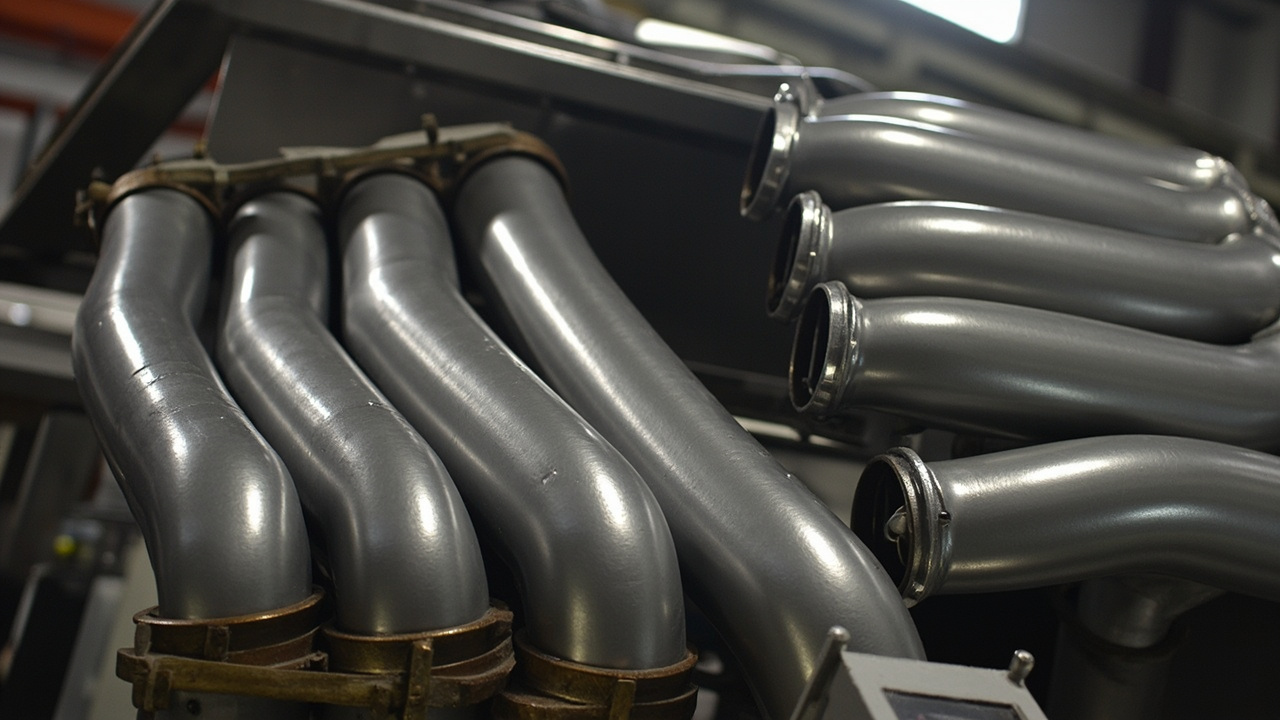
I. Molecular Mechanism of Silicone Heat Resistance
The main chain of polysiloxane is an alternating silicon-oxygen-silicon structure, with large bond angles, high bond energy, and free bond rotation, making the molecular chain flexible and thermally stable. Compared with carbon-chain polymers (such as epoxy, acrylic), the bond energy of the silicon-oxygen bond is about 452 kJ/mol, significantly higher than the about 348 kJ/mol of the carbon-carbon bond; at the same time, silicon can form a continuous silica protective film when heated, preventing further internal oxidation; in addition, silicone has low surface energy and is hydrophobic, reducing the adhesion of pollutants at high temperatures. These three points together constitute the fundamental reason for silicone heat resistance.
However, pure silicone has low mechanical strength, average adhesion, and high cost, so actual coatings are a composite system of "silicone modification + filler reinforcement": using silicone resin (or silicone-modified polyester, epoxy) as the base, with aluminum powder, mica powder, glass powder, ceramic micro-powder, talc powder, etc. The silicone content in the base directly determines the upper temperature limit—the higher the silicone proportion, the better the heat resistance, but the cost and construction difficulty also increase. The formulation is to find a balance among "heat resistance, cost, adhesion, appearance".
It needs to be clarified: silicone heat resistance does not mean "infinite heat resistance". Linear polydimethylsiloxane begins to decompose noticeably in air at about 350–400°C, and can reach above 450°C after introducing phenyl groups; above about 500°C the organic part is basically completely decomposed, leaving a silica skeleton, and the integrity of the coating at this time relies on glass frit and ceramic fillers. Therefore, for coatings "resistant to 600°C", silicone often only accounts for a part, and more relies on inorganic fillers to support through ceramicization.
II. Resin Structure and Modification Routes
The upper temperature limit is essentially a matter of "how long the organic chain can hold, and whether the inorganic skeleton can take over", so the choice of resin structure determines the ceiling:
Pure silicone resin: good heat resistance, excellent flexibility, but low adhesion and hardness, high price, mostly used for high-end heat-resistant powders and liquids.
Silicone-modified polyester/epoxy: grafting silicone-oxygen segments onto the polyester or epoxy main chain, balancing adhesion, hardness, and certain heat resistance (mostly 200–400°C), moderate cost, and is the main force for decorative heat-resistant parts (radiators, motor housings).
Phenyl-modified silicone resin: introducing phenyl to improve thermal oxidation stability and rigidity, can reach above 450°C, but flexibility decreases and cost is high.
Inorganic/silicate system: based on water glass or silica sol, extremely high heat resistance (up to 800°C+), but large brittleness and adhesion dependent on substrate, often used for furnace linings or special parts; often compounded with silicone as a "transition layer".
The engineering implication of the modification route is: do not buy 600°C pure silicone resin for 300°C working conditions (waste), nor use modified epoxy for 600°C working conditions (certain failure). Aligning "budget and heat resistance" is the first principle of material selection.
III. Temperature Grades and Typical Systems
According to long-term tolerable temperature, silicone high-temperature coatings are roughly graded (values are commonly used industry design ranges, subject to manufacturer's technical data sheet and type inspection):
| Heat Resistance Grade | Typical Base/Filler | Typical Application | Key Standard/Test |
|---|---|---|---|
| 200–300°C | Silicone + aluminum powder | Motor housing, radiator, engine components | GB/T 1735 Heat Resistance |
| 300–400°C | Silicone + aluminum powder + glass frit | Exhaust pipe, muffler, chimney | GB/T 1735 |
| 400–600°C | Silicone + glass frit/ceramic | Industrial furnace shell, burner, boiler | GB/T 1735, thermal shock |
| 600–800°C | Silicone resin + large amount of glass frit/ceramic (tending inorganic) | High-temperature flue, heat treatment equipment | Thermal cycling, adhesion |
| > 800°C | Mainly inorganic/ceramic coating | Special furnace lining | Special high-temperature test |
Note: The nominal "resistant to 600°C" usually refers to "long-term tolerance of 600°C without failure", not instantaneous peak. Instantaneous peaks (such as engine backfire) may be higher, but last for a short time. Selection must be based on the dual parameters of "long-term working temperature + thermal cycling frequency", rather than just looking at the advertised number. Treating instantaneous high temperature as long-term working temperature is one of the most common errors in selection.
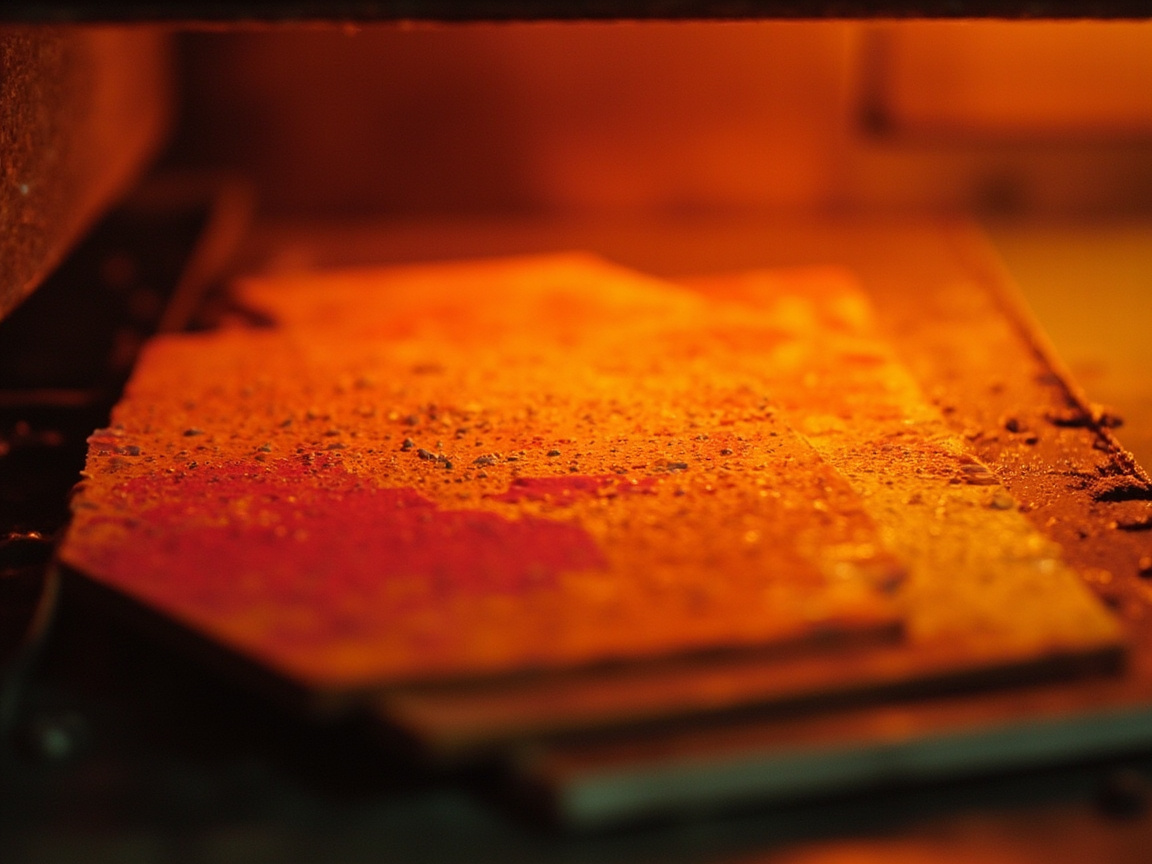
IV. Key Fillers: Aluminum Powder and Ceramicization
Aluminum powder is the "standard" in silicone heat-resistant coatings. On one hand, it reflects thermal radiation and reduces coating heat absorption; on the other hand, at high temperature aluminum melts and forms metallurgical or ceramic bonding with the substrate or silicate, improving adhesion and density. However, aluminum powder in long-term contact with acid and water has a risk of hydrogen generation, so the formulation needs to control pH and moisture content. Glass frit (low-melting glass powder) softens, flows, and seals pores above 400°C, burning off the organic residue to form an inorganic glassy layer, allowing the coating to "seamlessly connect" and remain intact after the organic components decompose. The softening point of the glass frit needs to match the system; premature flow causes wrinkling, and too late causes insufficient pore sealing.
Ceramic and mineral fillers (mica, talc, wollastonite, kaolin, etc.) provide skeleton and thermal stability, reduce cost, and adjust the thermal expansion coefficient, reducing cracking caused by thermal expansion mismatch with metal substrates. High-end heat-resistant powders transform from "organic plus inorganic fillers" to "continuous ceramic phase" when heated, so even if the organic is completely decomposed, the residual skeleton still maintains shape and adhesion—this is the key mechanism for grades above 600°C, called ceramicization. To add: the particle size gradation and dispersion of fillers also determine the pore sealing quality; poorly dispersed glass frit will agglomerate and form defect points, becoming the starting point for cracking or oxidation at high temperatures.
V. Heat Resistance Evaluation Methods
The core standard for heat resistance testing is GB/T 1735 "Determination of Heat Resistance of Paint Films": place the painted test panel in a forced-air oven or heating device, reach the specified temperature and hold for the specified time, then cool and check for loss of gloss, discoloration, blistering, flaking, and cracking. This is the most basic heat resistance test. More stringent is thermal shock or cold-hot cycling, with rapid temperature rise and fall testing thermal expansion mismatch, which is closer to real working conditions than constant temperature, often according to enterprise methods or GB/T 1735 with added cycles. Adhesion (after high temperature) is tested by GB/T 9286 cross-cut, focusing on whether the adhesion "after heating and cooling" is retained, because many coatings have good adhesion at room temperature but crack after high temperature. Color difference and gloss are evaluated by GB/T 11186 and GB/T 9754 for high-temperature discoloration and gloss loss.
It needs to be pointed out: the "temperature—time—cooling method" of the heat resistance test must be consistent with the working condition to be meaningful. Simply "put into a 600°C furnace for 1 hour" if inconsistent with the real "400°C cycling plus vibration plus corrosive atmosphere", the conclusion will mislead. Therefore, acceptance should not only look at one heat resistance temperature point, but also at the number of thermal cycles, cooling method, and whether it contains corrosive media, which are the true mapping of the working condition.
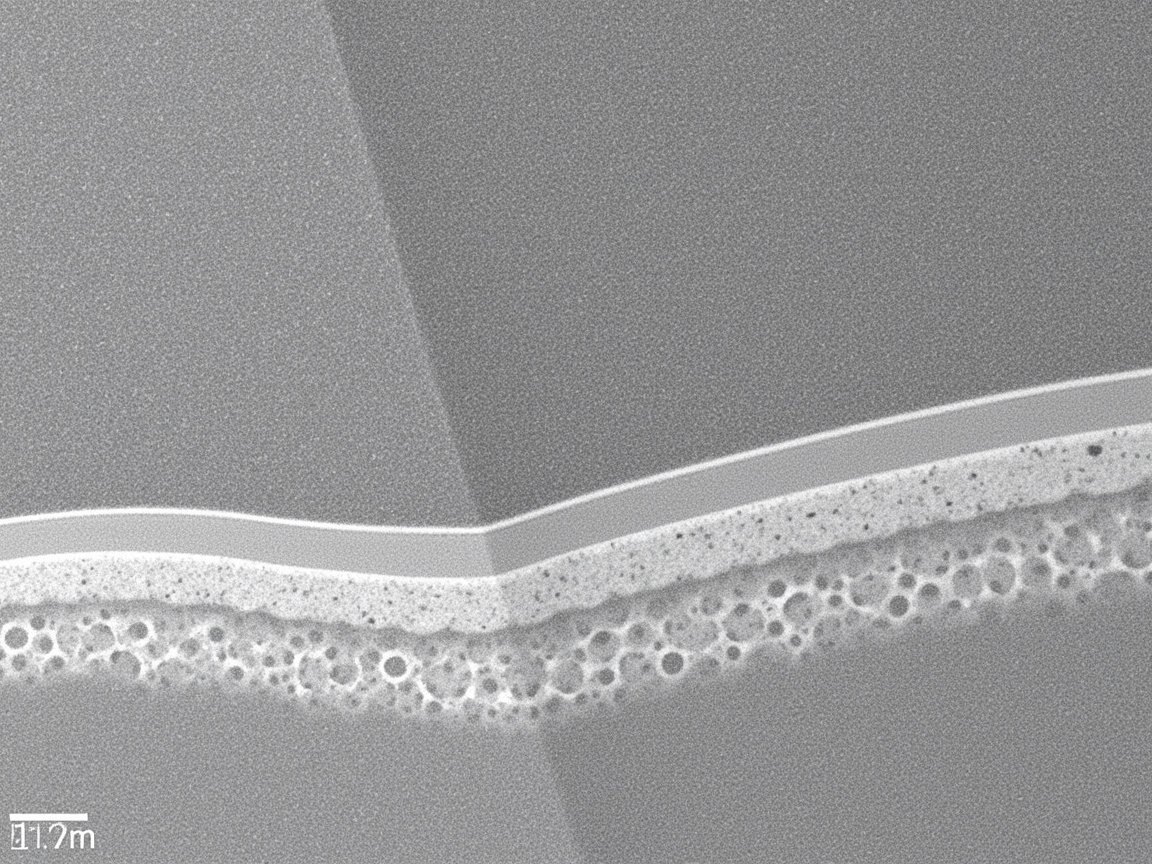
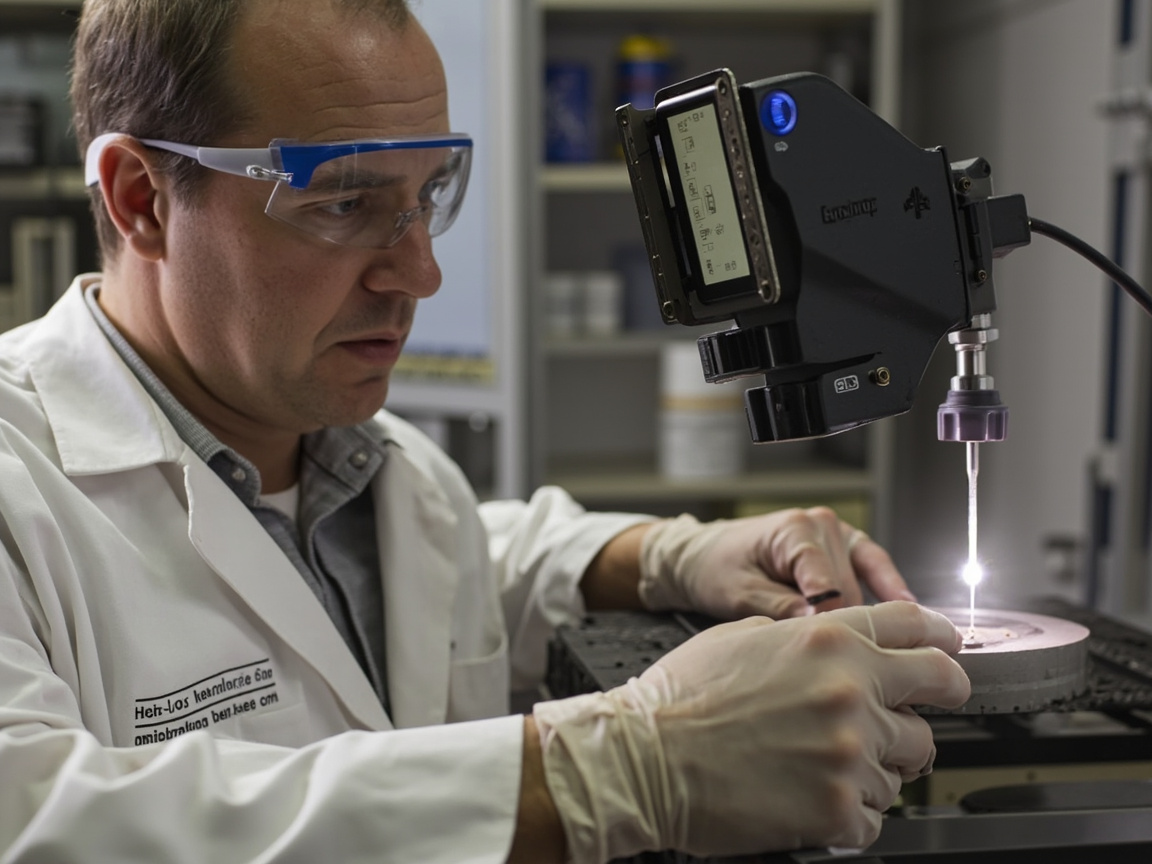
VI. Comparison of Silicone with Other Heat-Resistant Systems
Selecting heat-resistant coatings cannot just focus on silicone; horizontal comparison avoids being blind:
Silicone system: 200–600°C overall optimal, flexible, easy to apply, can be powdered; drawback is pure silicone is expensive, and mechanical strength after high temperature relies on ceramicization.
Epoxy/phenolic system: room temperature to medium temperature (≤200°C) adhesion and anti-corrosion are excellent, but low upper temperature limit and prone to charring at high temperature, suitable for low-temperature sections of "heat resistance plus heavy anti-corrosion".
Acrylic/polyester: good decoration and weather resistance, but heat resistance generally ≤200°C, not truly high-temperature resistant.
Inorganic silicate/ceramic: highest heat resistance (800°C+), but brittle, adhesion dependent on substrate, difficult to apply, suitable for furnace linings or composite bottom layers.
Powder vs liquid: powder-type silicone heat-resistant has zero VOC (GB 30981 counts 0), uniform film thickness, factory prefabrication possible, ceramicization more controllable; liquid type suitable for large on-site non-bakeable parts. Engineering often uses a combination of "powder prefabricated standard parts + liquid for on-site repair".
7. Thermal Cycling and Temperature Gradient Design
Real high-temperature equipment almost always experiences start-stop and load fluctuations, so "thermal cycling design" is more important than "static temperature resistance". Design key points:
First, coefficient of thermal expansion (CTE) matching: the coating CTE should be as close as possible to the substrate (steel approx. 12×10⁻⁶/℃); a large deviation causes interfacial shear stress accumulation and cracking during heating and cooling. Mineral fillers (mica, talc) can adjust the CTE and are key to crack resistance.
Second, temperature gradient: local areas (such as burner roots, flue turns) have temperatures far higher than the average; design should select based on the "hottest point" rather than the "average temperature", and may thicken or locally use a more temperature-resistant system in the hottest zones.
Third, thermal shock tolerance: frequent rapid cooling and heating (such as quench tank covers, intermittent furnaces) is the most severe test for coatings; it is necessary to improve toughness, reduce film thickness, ensure glass frit sealing, and if necessary conduct cold-hot cycle tests for verification.
Fourth, gradient heating curing: newly coated equipment should first run at low temperature, then gradually rise to operating temperature, allowing organic components to decompose in order and glass frit to seal in order, avoiding sudden heating and peeling.
8. Application and Compatibility
High-temperature coatings are equally sensitive to pretreatment and film thickness. Pretreatment requires sandblasting to Sa2.5 (refer to Coating Surface Treatment Sa2.5), removing scale and oil stains; high-temperature equipment often has scale, which must be thoroughly removed otherwise rust expansion under heat will lift the coating. For primers, cast iron and carbon steel can first be coated with organosilicon aluminum powder primer, or directly achieve thickness in one coat; for scenarios above 600℃, matching the expansion coefficient of substrate and coating is more important. In terms of film thickness, heat-resistant coatings generally do not pursue thickness, 20–60 µm is sufficient; too thick instead easily cracks during thermal cycling. But high-temperature flues etc. that need to consider anti-corrosion can be thickened or compounded. During curing, room-temperature air-dry types need to be fully dried before heating (avoid solvent vapor bubbling), baking types should stepwise heat and sinter according to the technical data sheet, facilitating glass frit and ceramization completion.
Kexin New Materials (kexinMaterials) emphasizes "gradient heating curing" in compatibility: newly coated equipment first runs at low temperature, gradually rises to operating temperature, allowing organic components to decompose in order and glass frit to seal in order, avoiding peeling caused by sudden heating. This "process card plus baking curve" compatibility is crucial to the lifespan of high-temperature equipment, and is also the root-cause countermeasure for many on-site failures (direct full-temperature commissioning causing peeling).
9. Application Cases
Case 1: Automotive exhaust pipe (300–600℃ periodic). Uses organosilicon plus aluminum powder plus glass frit system, primer with aluminum powder base, topcoat colored, focusing on controlling film thickness ≤ 50 µm and gradient heating, avoiding cracking and discoloration under cold-hot cycling.
Case 2: Industrial furnace shell (400–600℃ continuous). The furnace shell needs both heat resistance and anti-oxidation, uses high-glass-frit ceramized powder, pretreated by sandblasting Sa2.5, moderately thickened film for anti-corrosion, regular inspection of coating chalking after operation.
Case 3: Heat treatment equipment/flue (600℃+). Uses "organosilicon plus large amount of glass frit/ceramic" tending inorganic system, even locally using inorganic ceramic base layer, selected by hottest point and verified by thermal shock.
Case 4: Motor housing (200–300℃ and needs insulation). Organosilicon aluminum powder system balances heat resistance and insulation (see Insulating Powder Coating), integrating heat resistance and electrical performance design.
10. Synergy with Anti-corrosion and Insulation
High temperature resistance often intersects with anti-corrosion and insulation: exhaust pipes need both heat resistance and resistance to fuel gas condensate corrosion; motor housings need heat resistance and insulation (see Insulating Powder Coating); furnace bodies need heat resistance and some anti-corrosion. Organosilicon systems can achieve both, but performance priority must be clarified—when heat resistance is primary, sacrifice some flexibility; when anti-corrosion is primary, control the upper temperature limit. As a special coating supplier, Kexin New Materials (kexinMaterials) recommends matrix selection based on four dimensions: "upper operating temperature limit, thermal cycling, corrosive atmosphere, substrate", rather than just asking "how many degrees can it withstand".
11. Common Defects and Troubleshooting
| Defect | Cause | Countermeasure |
|---|---|---|
| Cracking under heat | Excessive film thickness, CTE mismatch | Control film thickness, add mineral filler to adjust CTE |
| Peeling and bubbling | Sudden heating, residual solvent/water | Gradient heating, fully dry |
| Discoloration and gloss loss | Pigment not heat-resistant, over-curing | Select heat-resistant pigment, control window |
| Rust expansion and falling off | Poor pretreatment, scale | Sandblast Sa2.5, remove scale |
| Insufficient sealing | Glass frit mismatch | Adjust glass frit softening point |
12. Technology Trends
First, water-based organosilicon heat-resistant coating, reducing construction VOC (still contains small amount of co-solvent); second, ceramization filler optimization, using nano ceramic to improve density and adhesion; third, multi-layer composite, heat-resistant primer plus anti-corrosion topcoat, to cope with "heat plus corrosion" complex conditions; fourth, powderization, making organosilicon heat-resistant into zero VOC powder, suitable for batch heat-resistant parts (see Principles and Classification of Powder Coating).
13. Selection Decision Tree
Selecting heat-resistant coating can follow a simple path: operating temperature ≤ 300℃ and needs decoration, use organosilicon aluminum powder; 300–500℃ exhaust pipe type, organosilicon plus glass frit; 500–700℃ furnace shell flue, high-glass-frit ceramization; > 700℃ mainly inorganic ceramic. Then overlay "whether insulation is needed" (select ceramic filler rather than conductive), "whether contains corrosive atmosphere" (strengthen anti-corrosion primer), "whether substrate can be baked" (determine powder or liquid). Write this path into a process card, and selection will not be by feel.
14. Standard List and Acceptance Ledger
For easy engineering implementation, organize the main standards involved in organosilicon high-temperature coating into a list for item-by-item verification during acceptance. Core national standards include: GB/T 1735 "Determination of Heat Resistance of Paint Film" (temperature—time—cooling); GB/T 9286 (cross-cut adhesion, focus on after high temperature); GB/T 11186 and GB/T 9754 (color difference and gloss, evaluating high-temperature discoloration and gloss loss); GB/T 1732 (impact resistance); GB/T 13452.2 (film thickness); related furnace temperature curves executed according to manufacturer's technical data sheet and process card. International standards can refer to ASTM D2485 (heat-resistant paint), etc.
The acceptance ledger is recommended to include four items: first, heat resistance test record (temperature, holding time, cooling method, result); second, adhesion and appearance after high temperature; third, color difference and gloss loss; fourth, film thickness and pretreatment confirmation (sandblasting Sa2.5 evidence). Special emphasis: the "temperature—time—cooling method" of the heat resistance test must be consistent with the real working condition; a single high-temperature point cannot represent cyclic working condition. Many projects only do "one hour in furnace", but ignore thermal shock and corrosive atmosphere, resulting in on-site peeling in a few months; the root cause is the mismatch between acceptance and working condition.
Make this ledger a traceable document, satisfying quality control and facilitating future operation and maintenance comparison. Kexin New Materials (kexinMaterials) attaches a "furnace temperature curve card + heat resistance test report + pretreatment confirmation sheet" trio when delivering heat-resistant solutions, so customers have evidence from construction to acceptance, rather than judging good or bad by color.
15. Heating Limits and Adaptation of Typical Substrates
The effect of heat-resistant coating is strongly related to substrate characteristics; substrate cannot be ignored during selection. Carbon steel is the most common substrate, with obvious oxidation at high temperature; the core value of heat-resistant coating is to delay oxidation and preserve strength, but the premise is thorough pretreatment to remove scale. Cast iron parts have porous surfaces and thick old scale, must be strongly sandblasted or ground to clean metal, otherwise rust expansion after heating will inevitably lift the coating. Stainless steel substrate has different thermal expansion coefficient from carbon steel, and inert surface, difficult adhesion; if necessary use compatible primer or sandblast roughening to improve mechanical interlocking; it itself has better oxidation resistance, coatings are more used for higher temperature or special media resistance. Aluminum and aluminum alloys have low melting point (approx. 660℃), cannot enter conventional high-temperature curing oven; if heat-resistant coating is needed, must select low-temperature curing or systems dedicated to aluminum, and the upper operating temperature limit is constrained by substrate melting point—never apply "coating withstands 600℃" to 600℃ aluminum parts.
16. Curing Window and Ceramization Sintering of Organosilicon Heat-Resistant Powder
The success or failure of powder-type organosilicon heat-resistant coating largely lies in the "sintering" step. Different from liquid relying on solvent evaporation, powder relies on heating to melt, level, crosslink, and at higher temperature lets glass frit soften, flow, seal, and finally ceramize. The curing window must balance both ends: too low temperature or too short time, organic crosslinking and glass frit sealing are both insufficient, coating loose, easy to oxidize, poor adhesion; too high temperature or too long, organic fully decomposes, ceramic phase embrittles and cracks, even substrate anneals. Therefore must execute according to the stepwise heating curve of the technical data sheet—first low temperature lets organic decompose and vent in order, then rise to glass frit softening range to complete sealing, finally hold for setting. For systems above 600℃, whether ceramization is sufficient directly determines whether the remaining skeleton can remain intact at high temperature; acceptance should use "whether still densely adhered after high temperature" as a hard criterion, rather than just looking at initial appearance.
17. Repair and Refurbishment of Heat-Resistant Coatings
After long-term operation of high-temperature equipment, the heat-resistant layer may locally chalk, crack, or peel due to thermal cycling, mechanical collision, or corrosive atmosphere, requiring repair rather than whole-machine recoating. Small-area repair can use the same system coating to locally clean and then patch, and strictly bake according to the curing window; large-area or systematic aging should evaluate whether to refurbish as a whole. The key to repair is "clean interface, consistent system": loose old layer must be completely removed, new layer and old layer must be compatible, expansion coefficient matched, avoiding the repair point becoming a new cracking starting point. Before refurbishment, it is recommended to first make a sample piece to verify adhesion and heat resistance, then promote to the whole machine, preventing batch rework. Incorporating repair into the operation and maintenance procedure guarantees continuous production better than "wait until broken to stop for emergency repair".
18. Surface Treatment Details for Heat-Resistant Coatings
The pretreatment of heat-resistant coatings is more stringent than ordinary decorative paint. High-temperature equipment commonly has thick scale, old paint, oil stains, and welding slag; if not thoroughly removed, rust expansion after heating will inevitably lift the coating. After sandblasting to Sa2.5, surface cleanliness confirmation (no oil, no water, no dust) should also be done, and coating completed within a short time to avoid secondary pollution or re-rust. For large parts that cannot be sandblasted, power tool grinding to St3 combined with conversion treatment can be used, but the effect is weaker than sandblasting; design film thickness and system should leave corresponding margin. Inert surfaces of cast iron and stainless steel need more roughening to sufficient anchor pattern. In one sentence: the upper lifespan limit of heat-resistant coating is determined by pretreatment quality, not by coating brand—no matter how good the organosilicon, stuck on scale it won't last a few thermal cycles.
19. Quick Reference for Organosilicon Heat-Resistant Powder Selection
For quick on-site selection, a simplified quick reference is given: 200–300℃ motor housing/heater → silicone aluminum powder or modified epoxy-silicone; 300–400℃ exhaust pipe/chimney → silicone with glass frit; 400–600℃ furnace shell/burner → high glass-frit ceramicization; above 600℃ → tend to inorganic ceramic or inorganic system; if insulation overlay is needed → choose ceramic filler instead of conductive aluminum powder (see insulation powder coating); if corrosive atmosphere is present → reinforce anti-corrosion primer. This quick reference is only a starting point; the final confirmation should still be based on the three items of "long-term working temperature plus cycle frequency plus medium", and type testing for heat resistance and thermal shock should be performed, to avoid mistaking instantaneous peak as long-term working temperature.
20. Storage, Transportation and Construction Safety of Heat-Resistant Powder
Although silicone heat-resistant powder is solvent-free, storage still requires moisture-proofing and avoiding high temperature, to prevent caking and additive bleeding; after opening, use up as soon as possible and seal tightly. In terms of construction safety, the spraying area should be managed as general dust explosion prevention (refer to the concept of GB 15577), the high-temperature zone of the curing oven must have isolation and warning signs, and power-off lockout tag during maintenance; powders containing glass frit or ceramic should pay attention to dust prevention during crushing and feeding. During curing, strictly follow the stepwise heating curve to avoid sudden heating causing peeling and energy waste. Writing storage, transportation and oven safety into the work instruction is the foundation for stable delivery of heat-resistant coatings, and also the root-cause countermeasure to avoid typical on-site accidents such as "direct full-temperature commissioning causing immediate peeling".
21. Common On-site Misjudgments
On site, "color unchanged" is often taken as "coating intact", but silicone coatings under long-term heating may chalk and lose gloss without discoloration, with hidden dangers inside; acceptance cannot rely only on appearance, but must measure post-high-temperature adhesion and film thickness. Another misjudgment is "thicker means more heat-resistant" — excessive thickness instead easily cracks under thermal cycling, and construction should follow the designed film thickness. Some also use instantaneous peak temperature as the long-term working temperature rating, causing early field failure. Writing these three points into the work instruction can avoid detours, and also make heat-resistant coatings truly selected by working condition rather than advertising numbers.
FAQ
Q: Why is silicone high-temperature coating more heat-resistant than ordinary paint?
A: The main-chain siloxane bond energy (about 452 kJ/mol) is higher than ordinary carbon-chain C-C bond (about 348 kJ/mol), and silicon can form a silica protective film upon heating for oxidation resistance; the decomposition temperature of silicone resin is significantly higher than epoxy, acrylic, etc., so it can work long-term at 200–600℃.
Q: Is "resistant to 600℃" instantaneous or long-term?
A: Generally it means long-term continuous resistance to 600℃ without failure, not instantaneous peak. Selection should be evaluated by "long-term working temperature plus heating cycle frequency"; instantaneous high temperature such as engine backfire is counted separately. Taking instantaneous peak as long-term temperature leads to wrong selection.
Q: What role does aluminum powder play in heat-resistant coating?
A: Aluminum powder reflects thermal radiation to reduce heat absorption, and at high temperature melts to form a metallurgy-like bond with substrate or silicate, improving high-temperature adhesion and density; but aluminum powder may generate hydrogen in contact with acidic water, so the formula needs to control pH and moisture content.
Q: Why does the coating crack after high temperature?
A: Mostly due to mismatch of thermal expansion coefficient between coating and substrate, excessive film thickness, or lack of glass frit and ceramic filler to absorb stress. The countermeasure is to add mineral filler to adjust expansion coefficient, control film thickness, and use glass frit to seal pores for buffering.
Q: What special requirements for pre-treatment before heat-resistant coating construction?
A: High-temperature equipment often has scale and rust, which must be thoroughly removed by sandblasting to Sa2.5, otherwise rust expansion after heating will lift the coating; also substrate temperature and construction environment must meet the technical data sheet to avoid condensation and oil stains.
Q: Can air-dry room-temperature heat-resistant paint be used at high temperature immediately?
A: Not recommended. Need to dry sufficiently to let solvent volatilize, then cure by gradient heating, allowing organic components to decompose orderly and glass frit to seal pores; sudden heating will cause residual solvent to vaporize and bubble, and coating to peel.
Q: Can silicone still be used above 600℃?
A: Pure silicone gradually decomposes above 400℃, and above 600℃ requires large amounts of glass frit and ceramic filler to achieve "ceramicization", so that after the organic burns out, the remaining inorganic skeleton stays intact. Above 800℃ mostly uses inorganic or ceramic coating as the main system.
Q: What items need to be tested for acceptance of heat-resistant coating?
A: At least perform GB/T 1735 heat resistance (temperature—time—cooling), post-high-temperature adhesion (GB/T 9286 cross-cut), color difference and gloss loss, as well as thermal shock cycling for the working condition; add corrosion-resistance items under corrosive atmosphere.
Q: Can heat resistance and anti-corrosion be combined?
A: Yes, but the primary and secondary must be distinguished. Silicone aluminum powder system can combine heat resistance and corrosion resistance at 200–400℃; at higher temperatures heat resistance is primary, and anti-corrosion relies on dense glass layer and substrate protection. Exhaust pipes and furnace shells often take the "heat-resistant plus moderate anti-corrosion" route.
Q: What are the advantages of powder-type silicone heat-resistant coating?
A: Zero VOC (0 by GB 30981), uniform film thickness, factory prefabrication possible, glass frit and ceramicization more controllable, suitable for batch heat-resistant parts (such as exhaust pipes, motor housings); on-site only for joint repair, quality stable. The mechanism is consistent with liquid silicone, still relying on siloxane bonds and ceramicization for heat resistance.
Q: How to choose between silicone and other heat-resistant systems?
A: For 200–600℃ comprehensively choose silicone; ≤200℃ with heavy anti-corrosion choose epoxy/phenolic; >800℃ or furnace lining choose inorganic ceramic; non-bakeable large parts choose liquid, standard parts choose powder. Determine by the three dimensions of "temperature plus working condition plus construction method", rather than only looking at temperature numbers.
Further Reading
- Powder Coating Principles and Classification: From Film-Forming Mechanism to Resin System Selection: The film-forming and zero-VOC basis of silicone heat-resistant powder, the system background of the mechanism in this article.
- Insulation Powder Coating: Volume Resistivity and Dielectric Strength: Motor housing heat resistance often requires insulation simultaneously, the two articles are complementary.
- Coating Surface Treatment Sa2.5 and Sandblasting Grades: Scale removal of high-temperature equipment is the prerequisite for heat-resistant coating adhesion; pre-treatment determines success or failure.
- Intumescent Fire-Retardant Coating: Flame Retardant Mechanism, Fire Rating and Construction Acceptance
- Thermoset and Thermoplastic Powder Coatings: Film-Forming Mechanism, Performance Boundaries and Selection
- Industrial Paint Construction: Airless Spray Parameters, Film Thickness Control and Coating Interval