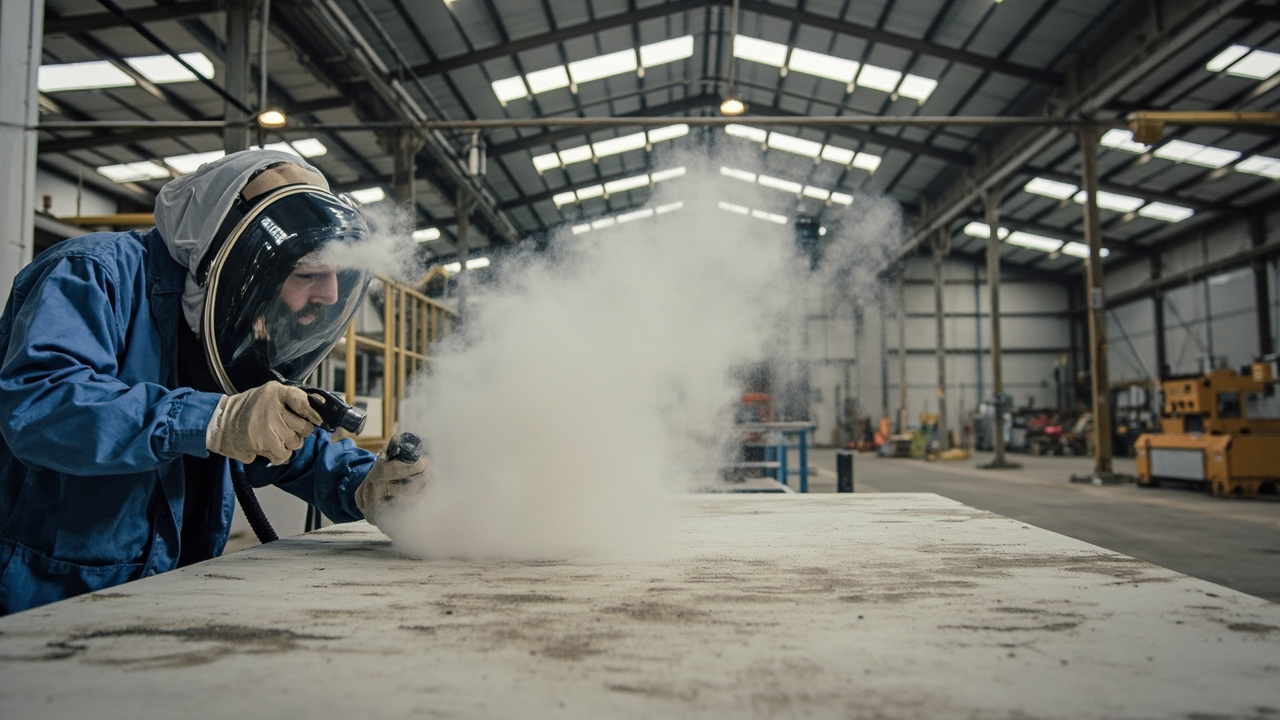
There is a repeatedly verified old saying in the anti-corrosion coating industry: “Three parts paint, seven parts surface preparation”. It means that how many years an industrial protective coating system will ultimately last depends three parts on the coating itself and seven parts on surface treatment before application. No matter how good the epoxy zinc-rich primer is, or how expensive the aliphatic polyurethane topcoat is, if the rust, oil, and mill scale on the substrate are not thoroughly cleaned, adhesion will not develop, and corrosive media will drive straight in through weak points, causing blistering, rusting, and peeling within months. This article thoroughly explains surface treatment for industrial coating: what exactly the sandblasting grade Sa2.5 standard is, why blast profile is controlled at 30–75 µm, how to manage dew point and relative humidity, and why hand tool cleaning St2/St3 can only be considered “minimum”.
In the specification design of heavy-duty anti-corrosion projects, Kexin New Materials (kexinMaterials) always emphasizes “surface preparation first” — whether you choose ultra-high solids epoxy or low-VOC polyurethane systems, the surface treatment grade is the top constraint in the specification document. The grades and parameters cited in this article are all from publicly available TDS, ISO 8501-1, ISO 12944-2018, and other national and international standards.
I. Why Surface Treatment Determines Coating Life
Statistical studies on coating failures show that improper surface treatment is the number one cause of early failure in anti-corrosion coating, often accounting for more than the sum of coating selection and application method. There are three reasons:
- Adhesion roots at the interface: The bond between coating and steel relies on mechanical interlocking + chemical/polar adsorption. Rust layers, oil stains, and soluble salts on the substrate surface interrupt this bond, and adhesion drops to zero directly.
- Residual impurities are corrosion initiation points: Gaps under mill scale and chloride ions in rust pits form galvanic cells under the coating, causing hidden failure where “the coating is intact but rusted inside”.
- Profile determines anchor depth: The microscopic roughness formed by sandblasting provides mechanical riveting points for the coating; insufficient profile means it “won't hold”, while excessive profile causes peak exposure and air entrapment in valleys.
Therefore, surface treatment is not a step of “just sanding a bit”, but an engineering decision equally important as coating performance. This is also the essence of “three parts paint, seven parts surface preparation” — prioritizing budget and schedule on surface preparation is far more cost-effective than repeated repairs afterward.
II. What Exactly Does Sandblasting Grade Sa2.5 (Sa 2½) Mean
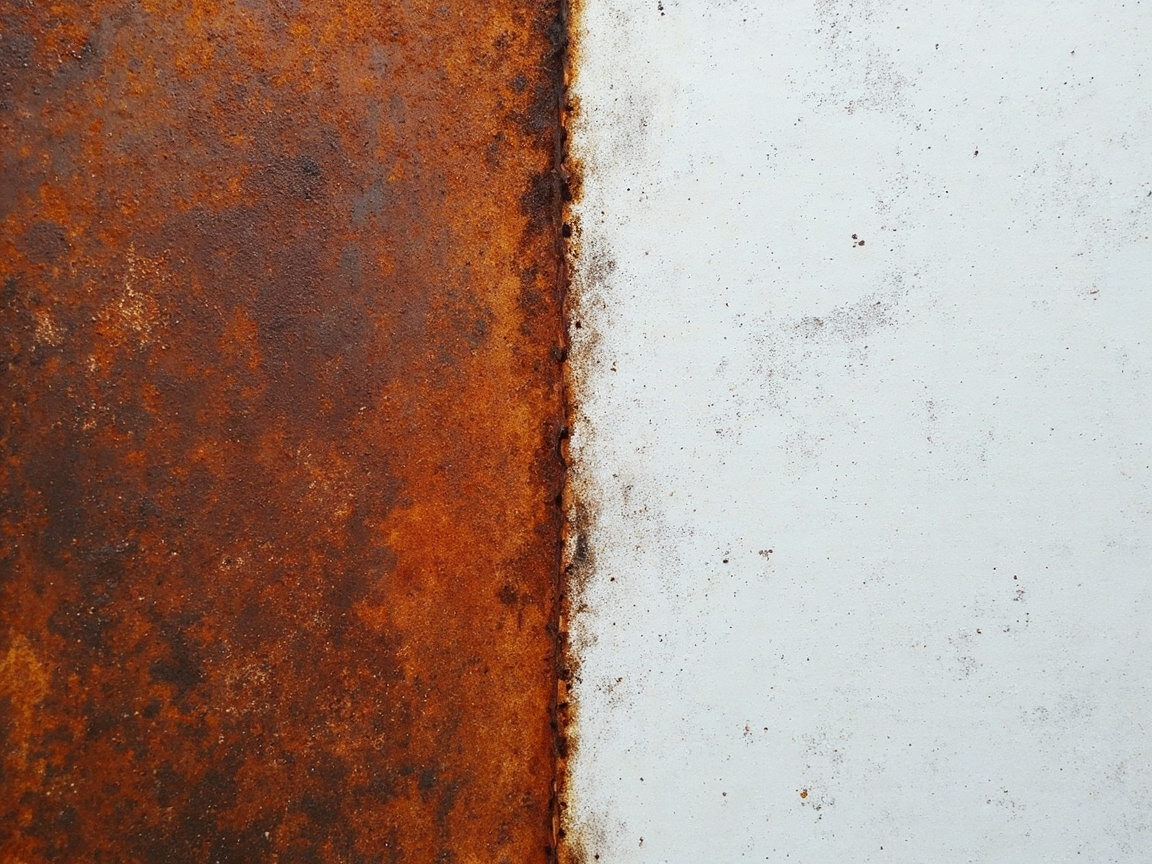
Sandblasting cleaning grades are specified by ISO 8501-1, denoted by “Sa” (Sand blasting) plus a number, from low to high: Sa1, Sa2, Sa2.5, Sa3. The so-called “sandblasting Sa2.5” in engineering refers to Sa 2½ (very thorough blast cleaning, near-white).
According to ISO 8501-1, the requirement for Sa 2½ is: the steel surface shall be free of visible grease, dirt, mill scale, rust spots, and paint coatings and other impurities; any residual traces shall be only slight stains in the form of spots or stripes. In other words, to the naked eye the overall surface is uniform metallic gray-white, only allowing very few, scattered light-colored streaks, and no patchy rust or mill scale is permitted.
Corresponding other grades:
- Sa 1 (light): Only removes loose impurities, retains large amounts of mill scale and rust, hardly used for anti-corrosion.
- Sa 2 (thorough): Most mill scale, rust, and coatings removed, but shadows and slight discoloration allowed.
- Sa 2½ (very thorough / near-white): Only very slight stains remain, the common threshold for heavy-duty anti-corrosion.
- Sa 3 (white / white metal): No visible impurities, full uniform metallic luster, used for most severe conditions (e.g., tank internals, food grade).
Research archives confirm: Jotun Jotacote Universal N10 requires carbon steel treatment as “St 2 (minimum) / Sa 2½ (recommended, ISO 8501-1)”; alkyd anti-rust paint (GB/T 25251-2010) also requires “sandblasting Sa2.5, profile 30–75 µm”. It is evident that Sa2.5 is the general recommended grade for industrial protective primers.
III. Blast Profile: Why Controlled at 30–75 µm
Sandblasting not only removes rust but also creates microscopic roughness on the surface; the depth of this roughness is the profile (surface roughness, Rugosity). The research archive clearly states for alkyd anti-rust paint: sandblasting Sa2.5, profile 30–75 µm. This range is not set arbitrarily, but a balance between adhesion and coverage.
Relationship between profile and adhesion:
- Profile ↑ → mechanical anchor area ↑: Coating penetrates peaks and valleys to form “riveting”, pull-off adhesion (per GB/T 9286 cross-cut method, grade 0/1 is excellent) significantly improves.
- Profile too low (< 25 µm): Insufficient anchor points, coating like stuck on glass, prone to whole-sheet delamination.
- Profile too high (> 75–100 µm): Peaks may not be fully covered by coating (especially in one thin coat), peak tips become corrosion breakthrough points; meanwhile valleys easily trap air forming pinholes.
Therefore 30–75 µm is the optimal window for most industrial primers (epoxy zinc-rich, alkyd anti-rust, epoxy micaceous iron oxide). The specific value also depends on DFT: thicker film tolerates slightly higher profile, thin film should be at the lower end. After application, use profile comparison blocks (e.g., ISO 8503 standard blocks) for on-site comparison, not by feel.
IV. Stainless Steel and Special Substrates: Non-metallic Abrasive Grinding
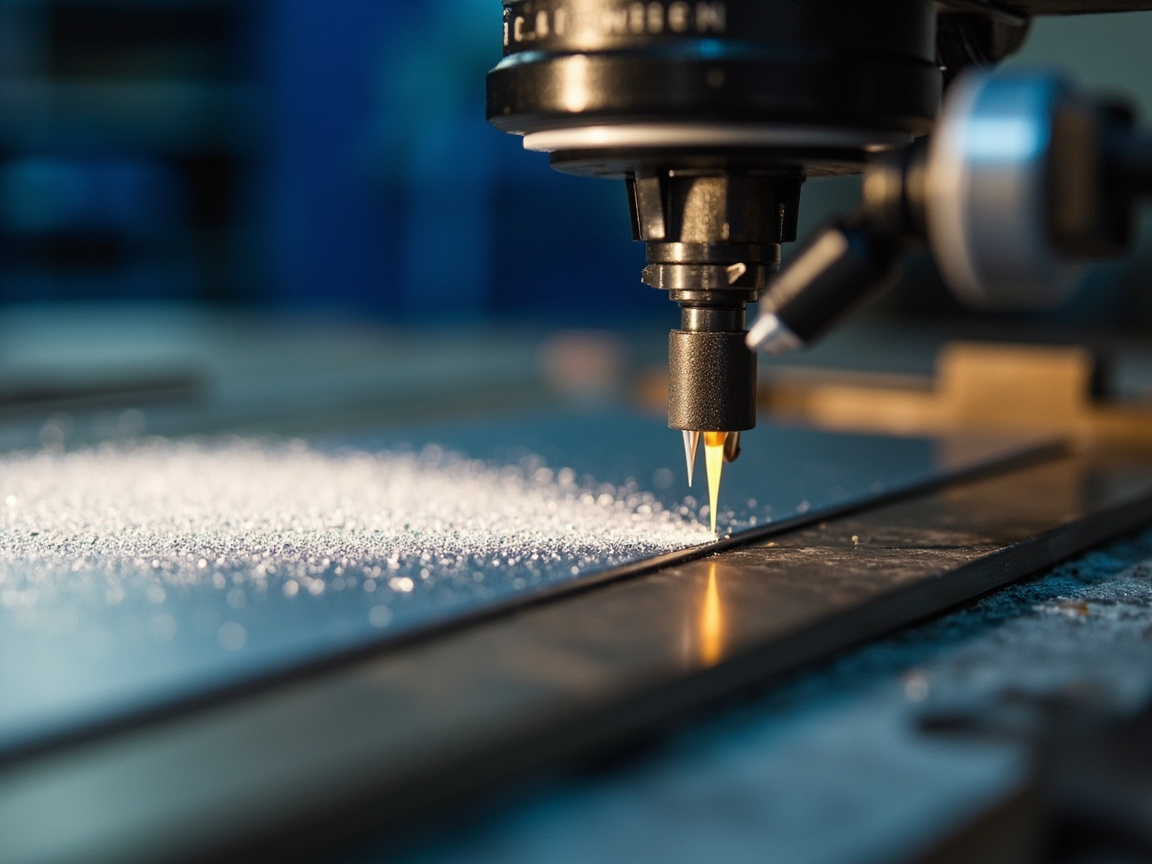
Carbon steel sandblasting can use steel grit/shot, but stainless steel cannot use iron-based abrasives — iron embedding causes its own rusting (“iron contamination”). The research archive states Jotacote Universal N10 requirement for stainless steel: non-metallic abrasive grinding to produce scratches. That is, use alumina, garnet, plastic grit and other non-metallic abrasives to create uniform scratches on the surface (providing anchorage) while avoiding iron contamination.
Extensions of this principle:
- Hot-dip galvanized, aluminum alloy and other soft or active substrates should also avoid iron-based abrasives;
- Grinding goal is “uniform scratches + degreasing”, not pursuing near-white metal;
- Coat as soon as possible after treatment to avoid secondary contamination or flash rust.
For substrates like aluminum and galvanized steel, excessive sandblasting damages the base; usually only light sweep blasting or non-metallic abrasive light grinding is used, with grade requirements lower than carbon steel Sa2.5.
V. Environmental Control: Dew Point +3℃ and RH ≤ 80%
Qualified surface treatment is only the first step; the environment during coating also determines success or failure. The research archive gives clear boundaries for general parameters of “epoxy polyurethane topcoat”: environmental requirements: temperature 5–35℃, relative humidity ≤ 80%, substrate temperature at least 3℃ above dew point. These three are iron rules for industrial coating construction:
- Substrate temperature at least 3℃ above dew point: Dew point is the temperature at which air moisture reaches saturation and begins to condense. If substrate temperature is below or close to dew point, a water film condenses on the surface; applying coating is like brushing on “water”, adhesion lost, prone to blistering. Require substrate temperature at least 3℃ above dew point for safety margin.
- Relative humidity ≤ 80%: High humidity slows curing (especially epoxy/polyurethane chemical crosslinking depends on dry environment), and increases condensation risk; above 80% construction is usually prohibited.
- Temperature 5–35℃: Too low cures extremely slowly or not at all; too high shortens pot life, prone to orange peel and pinholes.
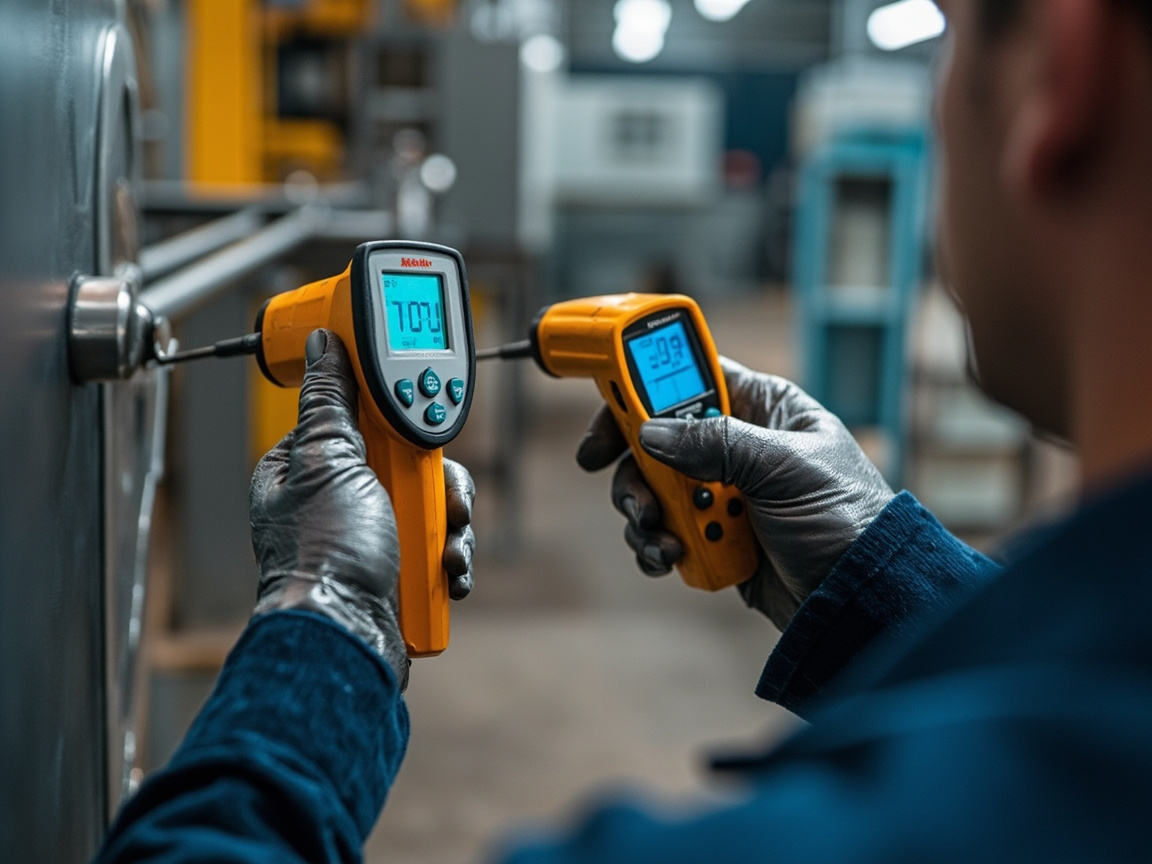
On-site, use a dew point calculator / thermo-hygrometer for real-time measurement: input air temperature and relative humidity to get dew point, then compare with substrate temperature. Many on-site failures trace back to “temperature dropped at night, substrate below dew point yet spraying continued”.
VI. Hand and Power Tool Cleaning: Boundaries of St2 / St3
Not all conditions allow sandblasting. Confined spaces, in-service equipment, and sites that cannot shut down can only use hand or power tools. ISO 8501-1 uses St (hand/power tool, Hand and Power Tool) to denote:
- St 2 (thorough hand and power tool cleaning): Use wire brush, grinding wheel, etc. to remove loose rust scale and coatings, but tightly adhered mill scale, rust, and coatings remain; surface free of grease and dirt. Considered “minimum acceptable”, only for general protection or temporary.
- St 3 (very thorough hand and power tool cleaning): Based on St2 but more thorough, surface should have metallic luster, better anchorage. Still less rust removal depth than sandblasting.
Research archives confirm: Jotacote Universal N10 carbon steel "St 2 (minimum)"; alkyd anti-rust paint "or power tool St3". It is evident that St2/St3 is a downgraded solution when blasting is infeasible, not an equivalent substitute.
| Grade | Method | Derusting Depth | Residue | Applicable Scenario |
|---|---|---|---|---|
| Sa 2½ | Blasting | Near white, only very light color spots | Almost none | Heavy anti-corrosion primer (recommended) |
| Sa 2 | Blasting | Thorough, shadows allowed | Slight discoloration | General anti-corrosion |
| St 3 | Power tool | Very thorough, with metallic luster | Tightly adhered scale retained | In-service maintenance, confined spaces |
| St 2 | Manual/power | Thorough, no luster requirement | More tightly adhered matter | Minimum, temporary protection |
Key conclusion: Blast to Sa2.5 whenever possible; St2/St3 is only used as the minimum threshold when production cannot stop or blasting is impossible, and the accompanying coating should be one with strong rust tolerance and high adhesion (e.g., rust-tolerant epoxy), not forced with ordinary thin topcoat.
VII. Surface Treatment Comparison for Different Substrates
| Substrate | Recommended Treatment | Grade/Roughness | Abrasive Note | Basis |
|---|---|---|---|---|
| Carbon steel | Blasting | Sa 2½, roughness 30–75 µm | Steel grit/shot usable | ISO 8501-1; alkyd anti-rust paint TDS |
| Stainless steel | Non-metallic abrasive grinding | Uniform scratches, not near white | No iron-based abrasives | Jotacote N10 TDS |
| Hot-dip galvanized/aluminum | Light sweep blasting or grinding | Light scratches | Non-metallic abrasive | General anti-corrosion practice |
| In-service carbon steel (cannot stop) | Power tool | St 3 preferred / St 2 minimum | — | Jotacote N10 TDS |
| Intact old coating surface | Grind to break gloss + compatibility test | — | — | Refurbishment compatibility principle |
This table nails down "substrate—method—grade", avoiding the extremes of "always blast" or "always wire brush".
VIII. Quality Inspection and Acceptance of Surface Treatment
Surface treatment cannot rely on "looks about right"; it must be controlled with quantifiable means:
- Visual grade: Evaluate Sa/St grade against ISO 8501-1 standard photos; Sa2.5 requires near white with only very light color spots.
- Roughness: Use ISO 8503 comparison block or profilometer to measure Rz, target 30–75 µm.
- Soluble salts: For important projects, measure surface chloride/sulfate (e.g., Bresle method); if exceeded, high-pressure water wash is required.
- Oil stains: White cloth wipe shows no oil; inadequate degreasing directly ruins adhesion.
- Dew point and temp/humidity: Before coating, record substrate temp, ambient temp, relative humidity, dew point; ensure substrate is 3℃ above dew point, RH ≤ 80%.
- Adhesion spot check: After curing, cross-cut per GB/T 9286 or pull-off test; grade 0/1 is excellent.
Writing these into the "Surface Treatment Acceptance Form" is the fundamental way to avoid the blame game of "poor primer preparation but blaming the paint".
IX. Selection of Blasting Abrasives
Abrasives not only determine derusting speed, but also affect roughness, cleanliness and substrate safety; it is an indispensable technical step in surface treatment:
- Steel shot / steel grit: First choice for carbon steel, high recovery rate, controllable roughness; but strictly prohibited for stainless steel and non-ferrous metals, otherwise causes iron contamination.
- Aluminum oxide (corundum): High hardness, strong cutting power, suitable for heavy rust and concrete, also for non-metallic grinding of stainless steel.
- Garnet: Natural non-metallic abrasive, low dust, uniform roughness, usable for stainless steel, aluminum and carbon steel, increasingly favored.
- Plastic sand / ceramic sand: For light sweep blasting of soft substrates like aluminum, avoiding damage to base material.
- River sand / mineral sand: Brittle, high dust, silicosis risk, being phased out.
| Abrasive | Type | Applicable Substrate | Feature |
|---|---|---|---|
| Steel grit / steel shot | Metal | Carbon steel | Recyclable, good roughness |
| Aluminum oxide | Non-metal | Carbon steel / stainless steel | Strong cutting, high efficiency |
| Garnet | Non-metal | Carbon steel / stainless steel / aluminum | Low dust, uniform |
| Plastic sand | Non-metal | Aluminum / soft substrate | Light sweep, no base damage |
Wrong abrasive directly ruins prior treatment—e.g., stainless steel blasted with steel grit causes iron contamination and rust, no matter how expensive the primer is.
X. Blasting Equipment and Process Parameters
On-site blasting controls quality via parameters, not "just spray with the gun":
- Compressed air pressure: Open blasting usually 0.6–0.7 MPa; too low fails to clean rust and drops efficiency sharply.
- Spray angle: Best at 60–80° to surface; vertical causes rebound waste, too small weakens cutting.
- Gun distance: 200–400 mm; too close damages substrate, too far lowers efficiency and roughness.
- Abrasive size: Determines roughness; coarse gives high roughness, fine gives low, must match DFT.
- Environment control: Blasting zone needs dust removal, wind protection, moisture proofing to avoid flash rust and abrasive clumping.
Operators should be trained, compare roughness with standard block anytime, write parameters into work card, not by feel.
XI. Soluble Salt and Flash Rust Control
The most overlooked invisible killer in surface treatment is soluble salts (chlorides, sulfates):
- Source: Marine atmosphere, de-icing salts, industrial flue gas, residual cleaners, attach to steel surface as ions.
- Harm: Even at Sa2.5, salts absorb moisture under coating forming concentration cell, causing "filiform corrosion" "blistering"; no matter how good the adhesion, it won't hold.
- Detection: Bresle patch method with ion chromatography or colorimetry; important projects require surface salt ≤ limit (e.g., 20–50 mg/m², per spec).
- Removal: High-pressure fresh water rinse (no abrasive) is preferred for salt removal; blasting only removes rust not soluble salts—a common misconception.
- Flash rust: After blasting, surface rusts quickly at high humidity; coat within time limit; if not possible, use temporary protection or shop primer to seal.
Writing "salt removal" into process card is a key step for long life of marine, bridge, chemical plants, yet often omitted by general works, eventually showing as "shiny surface but rusts soon".
XII. Common Surface Treatment Errors
Error 1: Blasting only for "shiny", ignoring roughness. Shiny ≠ qualified roughness; measure Rz with block.
Error 2: Coat long after blasting. Treated surface flashes rust in humid air; coat primer within limit (e.g., 4h, per environment).
Error 3: Stainless steel blasted with steel grit. Iron contamination causes rust; must use non-metallic abrasive.
Error 4: Coat when substrate below dew point. Common night cooling trap; always measure dew point.
Error 5: Use St2 as Sa2.5. Manual cleaning depth far below blasting; with ordinary primer it fails early.
Error 6: Derust only, no degrease. Oil blocks adhesion, more hidden than rust.
Error 7: Higher roughness is better. Too rough peak exposes base, valley traps air, becomes corrosion source.
XIII. Putting Surface Treatment into the Coating System
Surface treatment is not an isolated step, but the first link of the "primer—intermediate—topcoat" system. Taking ISO 12944-2018 system design as example: carbon steel under C2–CX corrosion classes, first blast Sa2.5 + shop primer, then epoxy zinc-rich primer + epoxy micaceous iron intermediate coat + polyurethane topcoat. Surface treatment grade is written directly into the system compatibility table, together with each DFT (e.g., primer 70–80µm, intermediate 100–150µm, topcoat 100–120µm) as acceptance basis.
Kexin New Materials (kexinMaterials)When delivering an industrial protective coating system, the surface preparation grade, roughness window, dew point/humidity threshold, and coating film thickness are all written into the process card, and corresponding non-metallic abrasive blasting and rust-tolerant systems are provided for special substrates such as stainless steel, galvanized steel, and in-service equipment, ensuring that "three parts paint, seven parts substrate" is truly implemented on the engineering side, rather than remaining just a slogan.
Regarding the overall trade-offs in system selection, if you are deciding between solvent-based and water-based industrial paints, you can refer to the Selection guide for converting oil-based to water-based industrial protective coatings; and to understand the differences between "water-based vs. oil-based" in adhesion and application, Comparison of water-based paint and oil-based paint selection provides a more systematic framework. In terms of construction safety, Analysis of misconceptions about water-based paint safety can also help you avoid on-site hazards such as "insufficient ventilation during substrate preparation."
14. Matching of Surface Preparation and Coating System
Different coatings have different requirements for substrate preparation and cannot be treated uniformly:
- Zinc-rich epoxy primer: Must be blasted to Sa2.5 + roughness 30–75 µm, otherwise poor contact between zinc powder and steel surface leads to failure of cathodic protection, meaning the zinc-rich coating is applied in vain.
- Micaceous iron oxide epoxy intermediate coat: Relies on primer adhesion; insufficient substrate preparation causes chain spalling, and the barrier layer becomes useless.
- Polyurethane / acrylic topcoat: Extremely sensitive to oil and dust; inadequate substrate preparation and intercoat cleaning easily cause cratering, delamination, and loss of gloss.
- Rust-tolerant coating: Can be used at St2/St3, but the principle remains that the cleaner the rust removal the better; do not treat "tolerance" as "no preparation needed."
In one sentence: the more a primer relies on electrochemical protection (e.g., zinc-rich), the more it depends on blast grade; the thinner and finer the topcoat, the more it fears contamination. The surface preparation grade must be written into the specification table together with the coating system.
15. Construction Safety and Dust Control
Surface preparation itself has safety red lines, often ignored by "focusing only on quality":
- Blasting dust: Silica sand is prohibited for open blasting (causes silicosis); switch to steel grit/garnet etc., and equip with dust removal systems and respiratory protection (at least NIOSH particulate mask).
- Confined space: Must have forced ventilation, test oxygen content and combustible concentration, assign a dedicated supervisor, and prohibit solo operation.
- Abrasive rebound: Operators wear goggles, hearing protection, and full-body workwear to prevent rebound injuries and noise damage.
- Degreasing solvent: Use low-toxicity degreaser, ensure ventilation and fire prevention, avoid accumulation of flammable vapors.
- Stainless steel grinding: Non-metallic abrasive dust must still be collected to avoid respirable particulate hazards.
Writing both the safety and quality of surface preparation into the plan is the complete understanding of "seven parts substrate" — the substrate must be well prepared, and safely prepared.
16. Surface Preparation Process Card Template
Consolidating the above points into a signable process card is the key to implementation. Typical fields are as follows, convenient for on-site execution and post-event traceability:
| Process | Control Item | Standard / Method | Record |
|---|---|---|---|
| Degreasing | Surface oil stains | White cloth wipe, no oil stain | Pass / Fail |
| Blasting | Cleaning grade | ISO 8501-1 Sa2.5 | Standard photo comparison |
| Roughness | Profile depth Rz | 30–75 µm | Profile block / profilometer |
| Desalination | Soluble salts | Bresle method ≤ specification limit | mg/m² |
| Environment | Dew point / temp & humidity | Substrate > dew point 3℃, RH ≤ 80% | Measured record |
| Coating time limit | Flash rust control | Apply primer within time limit | Timestamp |
This card, together with coating film thickness and adhesion testing, is archived to form full-chain evidence of "primer–intermediate–topcoat," and is also the most effective shield in case of acceptance disputes.
17. Surface Preparation in Old Coating Refurbishment
Refurbishment of old facilities most easily fails at substrate preparation and must be treated as an independent subject:
- First determine the old system (alkyd / epoxy / polyurethane / unknown), conduct compatibility testing before deciding the transition primer; never guess by color;
- Intact old paint surface: sand to break gloss, remove dust and degrease before recoating, but confirm intercoat compatibility;
- Corroded areas: must be expanded blasted to Sa2.5 or at least St3, rust pits also require desalination to avoid "covering rust";
- Strictly prohibit "whole-surface thin spray to cover rust" — that only delays rather than eliminates failure, often recurring within half a year.
Refurbishment is not just another coat of paint, but a system engineering of "assess old layer + verify compatibility + redo substrate preparation"; the weight of surface preparation in refurbishment is even higher than in new construction.
18. Analysis of Real Cases of Surface Preparation Failure
Applying the above principles to "negative examples" makes them easier to remember:
- Case 1: Blasting bright enough but bubbling in half a year. A bridge blasted visually to Sa2.5, but ignored soluble salts; chloride residues from marine atmosphere triggered concentration cells and filiform corrosion under the coating. Lesson: derusting is not desalting; Bresle method testing must be in the process card.
- Case 2: Wrong use of steel grit on stainless steel. Maintenance crew used steel shot for speed on stainless steel; iron particles embedded causing local rust, entire batch reworked. Lesson: stainless steel must be ground with non-metallic abrasives to produce scratches; iron-based abrasives are forbidden.
- Case 3: Construction below dew point at night. Coastal project went well in daytime; at dawn substrate temperature dropped below dew point unnoticed, next morning entire surface bubbled and peeled. Lesson: 3℃ dew point margin must be measured per shift; sites with large temperature variation need denser records.
Common point of three cases: surface preparation "looked done," but key constraints (desalting, abrasive, dew point) were skipped, ultimately blaming the coating — this is the typical cost of neglecting "three parts paint, seven parts substrate."
19. Linkage between Roughness and Application Method
A surface with appropriate roughness also has requirements for application method; the two cannot be designed separately:
- Airless spray: Good atomization, stably covers 30–75 µm roughness, mainstream for industrial thick coating;
- Brush: Easier to reach edges and complex nodes, suitable for local reinforcement and repair;
- Roller: High efficiency on large flat areas, but high roughness surfaces easily trap air, should be paired with airless;
- Conventional air spray: Mostly for decorative finishes, rarely used for industrial heavy-duty anti-corrosion thick coating.
In one sentence: substrate preparation sets roughness, roughness sets application method, interlocking. In specification design, "blast grade + roughness + application equipment" should be determined as a set of parameters simultaneously, not written separately.
20. One-line Checklist for the Site
Compressing the full text into a checklist for the site is more useful than any slogan:
- Carbon steel blasted to Sa2.5, roughness controlled at 30–75 µm;
- Stainless steel must be ground with non-metallic abrasives to produce uniform scratches, iron-based abrasives prohibited;
- Construction allowed only when substrate temperature is 3℃ above dew point and relative humidity ≤ 80%;
- Apply primer within time limit after blasting; if soluble salts exceed, first high-pressure fresh water rinse;
- St2/St3 only as minimum threshold; blast if possible, avoid manual.
Keeping these five, "three parts paint, seven parts substrate" is implemented, and coating life has confidence.
Note that qualified surface preparation is not once-and-for-all: after coating, avoid mechanical damage and long-term ponding, and conduct periodic coating inspection (e.g., adhesion and rust spot check every 3–5 years) to extend the dividend of "seven parts substrate" to the whole life cycle, rather than treating handover as the end.
FAQ
1. What state must blasting Sa2.5 actually achieve?
Per ISO 8501-1, Sa 2½ (Sa2.5) requires steel surface free of visible grease, dirt, mill scale, rust spots and coatings, allowing only dotted or streaky very slight discoloration, overall uniform metallic gray-white. It is the common recommended grade for heavy-duty anti-corrosion primers, not "white blast" (that is Sa3).
2. Why control blasting roughness at 30–75 µm?
Roughness provides mechanical anchoring; too low (75–100 µm) peak tops may expose substrate, valleys trap air as corrosion sources. 30–75 µm is the best balance of adhesion and coverage for most industrial primers, specific value adjusted with DFT, compared on site with ISO 8503 block.
3. Why must substrate temperature be 3℃ above dew point?
Dew point is the temperature of air condensation; if substrate temperature is below or near dew point, surface condenses water film, coating adhesion lost, easy bubbling. Requiring substrate temperature at least 3℃ above dew point is the iron rule for industrial paint construction (5–35℃, RH≤80%), measured with thermo-hygrometer and dew point meter.
4. Can steel grit be used for stainless steel blasting?
No. Iron-based abrasives embed into stainless steel causing iron contamination rust. Research archives require stainless steel to be ground with non-metallic abrasives to produce scratches (e.g., alumina, garnet), providing anchoring while avoiding contamination.
5. What is the difference between St2 and St3 vs Sa2.5?
St2/St3 are hand/power tool cleaning: St2 is thorough but with no gloss requirement, St3 is very thorough and shows metallic luster; both retain tightly adhered mill scale, and their derusting depth is far lower than that of blasting. Sa2.5 is near-white blast cleaning, leaving only very light color spots. St can only serve as the minimum threshold when blasting is not feasible.6. How soon after blasting must the primer be applied?
It depends on the environment; the treated surface will "flash rust" in humid air. Generally, it is required to apply the shop primer or primer within a limited time (often within 4 hours, depending on temperature and humidity) to avoid prolonged exposure and re-rusting.
7. Can construction proceed when relative humidity exceeds 80%?
Usually prohibited. High humidity delays epoxy/polyurethane curing and increases the risk of condensation. Construction should wait until RH ≤ 80% and the substrate is at least 3℃ above the dew point.
8. Is higher roughness always better?
No. Excessive roughness leaves peaks uncovered by the coating, becoming corrosion initiation points, and valleys easily trap air to form pinholes. It should be controlled within a 30–75 µm window and matched with film thickness.
9. How is surface preparation accepted as qualified?
Use ISO 8501-1 standard photos to assess grade, ISO 8503 reference plates to measure roughness (target 30–75 µm), Bresle method to measure soluble salts, white cloth to check oil stains, and record temperature/humidity/dew point; after curing, verify adhesion by cross-cut according to GB/T 9286 (grade 0/1 is excellent). Write it into the acceptance sheet to avoid disputes.
10. What support can Kexin New Materials provide on surface preparation?
Kexin New Materials (kexinMaterials) writes surface preparation grade, roughness window, dew point/humidity threshold, and coating film thickness together into the process card, and provides non-metallic abrasive grinding and rust-tolerant systems for stainless steel, galvanized steel, and in-service equipment, implementing the principle of "three parts paint, seven parts substrate".
Further Reading
- Selection guide for switching from solvent-based to water-based industrial protective coatings: Integrates surface preparation with system selection to establish an overall decision for primer—intermediate—topcoat.
- Comparison of water-based paint and solvent-based paint selection: Understand the differences in adhesion and application between different systems, with reference to substrate preparation requirements.
- Clarification of safety misconceptions about water-based paint: Avoid on-site safety hazards such as ventilation and protection in substrate preparation and application.