Heavy-duty anti-corrosion powder coating refers to a powder coating system applied in severe corrosive environments and requiring a long-term (15–30 years or even longer) protective service life. Typical representatives are fusion bonded epoxy (FBE, Fusion Bonded Epoxy) and FBE-based three-layer polyethylene or three-layer polypropylene (3LPE / 3LPP) external anti-corrosion structures for pipelines. Unlike decorative powders, the value of heavy-duty anti-corrosion powder lies in "no failure for decades underground, underwater, in marine and chemical atmospheres." According to ISO 12944-2, corrosive environments are classified from C1 (very low) to CX (very high) and Im1–Im3 (immersed environments); heavy-duty anti-corrosion powder mainly serves the most severe categories of C4–CX and Im1–Im3. From the perspective of engineering service life, the "heavy" in heavy-duty anti-corrosion powder is not just about coating thickness, but also about heavy system design, heavy pre-treatment, and heavy inspection—any corner-cutting in any link will compress a decades-long design life into a few-year accident.
In the field of functional powders, Kexin New Materials (kexinMaterials) provides FBE single-layer and 3LPE / 3LPP compatible powder solutions, and designs anti-corrosion synergistically with wear resistance and insulation. Based on citable standards (ISO 12944, GB/T 1771, ASTM B117, SY/T 0315, GB/T 23257), this article dissects the technical core of heavy-duty anti-corrosion powder to help engineers turn "long-term anti-corrosion" from a slogan into verifiable film thickness and salt spray design.
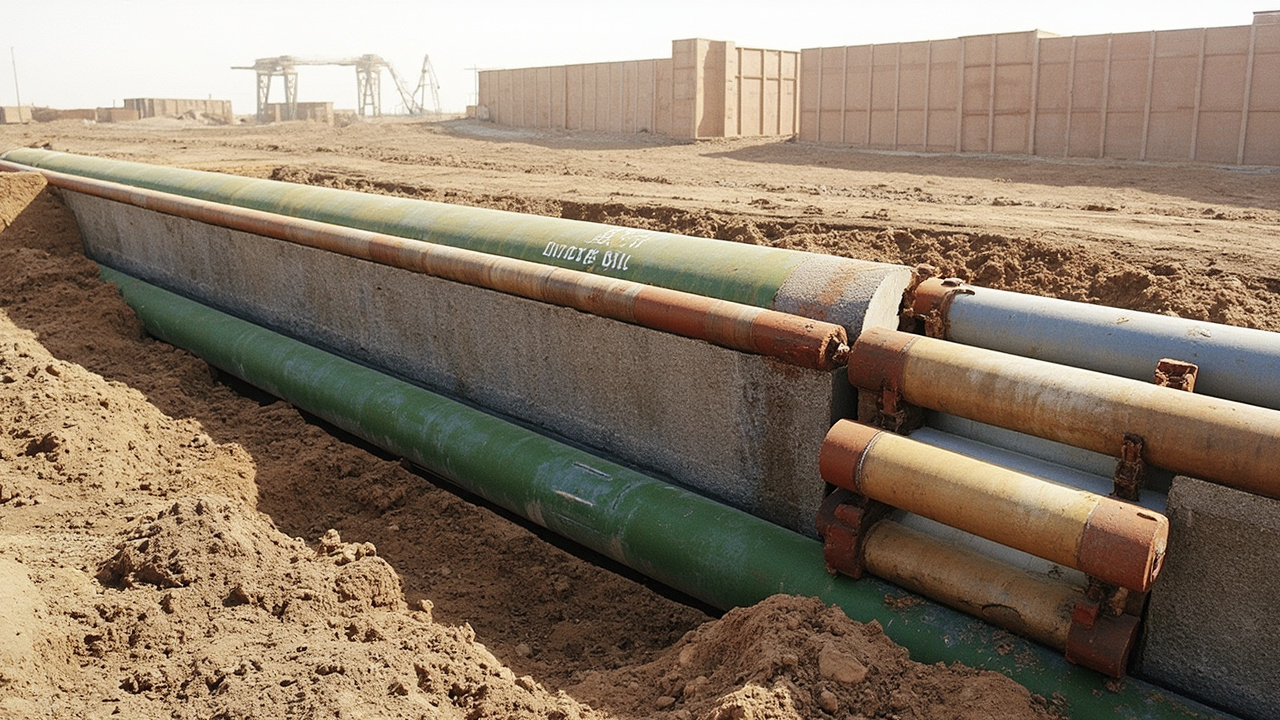
I. Why Powder Can Achieve "Heavy-Duty Anti-Corrosion"
Liquid epoxy zinc-rich relies on zinc sacrificial cathodic protection (see epoxy zinc-rich primer mechanism), while heavy-duty anti-corrosion powder mainly relies on "dense epoxy shielding plus enhanced adhesion plus thick film," and is used in combination with cathodic protection when necessary. First, dense and pore-free: FBE forms a single film of 300–600 microns, with a cross-linked network and no solvent residue, shielding water, oxygen, and ions. Second, extremely strong adhesion: epoxy has excellent adhesion to blasted steel (Sa2.5, refer to coating surface treatment Sa2.5), and the interface is not prone to water penetration. Third, chemical resistance: cross-linked epoxy resists soil media and cathodic disbondment (needs control). Fourth, one-shot thick film forming: powder electrostatic spraying plus melting can achieve thickness in one pass, superior to multiple liquid coats. Fifth, compatibility with cathodic protection: in the pipeline field, FBE combined with impressed current or sacrificial anode cathodic protection is a classic combination recommended by NACE and ISO.
Note: Powder heavy-duty anti-corrosion is mostly used for bakeable metal parts (pipes, rebar, prefabricated steel structures); large structures that cannot be baked on site still mostly use liquid systems (see ISO 12944 anti-corrosion coating system). However, the mode of factory prefabrication plus field joint coating already covers the vast majority of pipelines and standard parts.
II. Fusion Bonded Epoxy Powder (FBE)
FBE is a single-component epoxy powder. After the workpiece is preheated (about 200–230℃), it is electrostatically sprayed or fluidized bed dipped; the powder melts and levels, forming a chemical or physical bond with the steel surface, and cools into a dense epoxy layer. Key parameters: film thickness often 300–600 microns (pipeline 350–500); adhesion per GB/T 9286 cross-cut 0/1 grade; cathodic disbondment per NACE or SY methods (e.g., 65℃ / 30 days ≤ specified); salt spray resistance per GB/T 1771 or ASTM B117 at thousand-hour level; impact per GB/T 1732 or ASTM D2794; curing measured by gel time ISO 8130-6 to match production line speed.
Domestic FBE standards include SY/T 0315 "Technical Standard for External Fusion Bonded Epoxy Coating of Steel Pipelines," and international ones include NACE SP0394, CSA Z245.20, etc. Rebar FBE has separate product standards (e.g., JG/T 502). FBE has excellent soil corrosion and chemical resistance, but is relatively weak in mechanical damage resistance (rock backfill impact), so polyethylene or polypropylene is overlaid in severe mechanical environments to form 3LPE / 3LPP.
| Parameter | Typical Range / Standard | Description |
|---|---|---|
| Film thickness | 300–600 µm (single layer) | Pipeline FBE commonly 350–500 µm |
| Adhesion | GB/T 9286 cross-cut 0/1 grade | Extremely strong to blasted steel |
| Cathodic disbondment | Per NACE/SY method | Evaluate stability with CP |
| Salt spray resistance | GB/T 1771 / ASTM B117 | Thousand hours with no substrate corrosion |
| Impact | GB/T 1732 / ASTM D2794 | Resist transport bumps |
| Curing | Gel time ISO 8130-6 | Match production line speed |
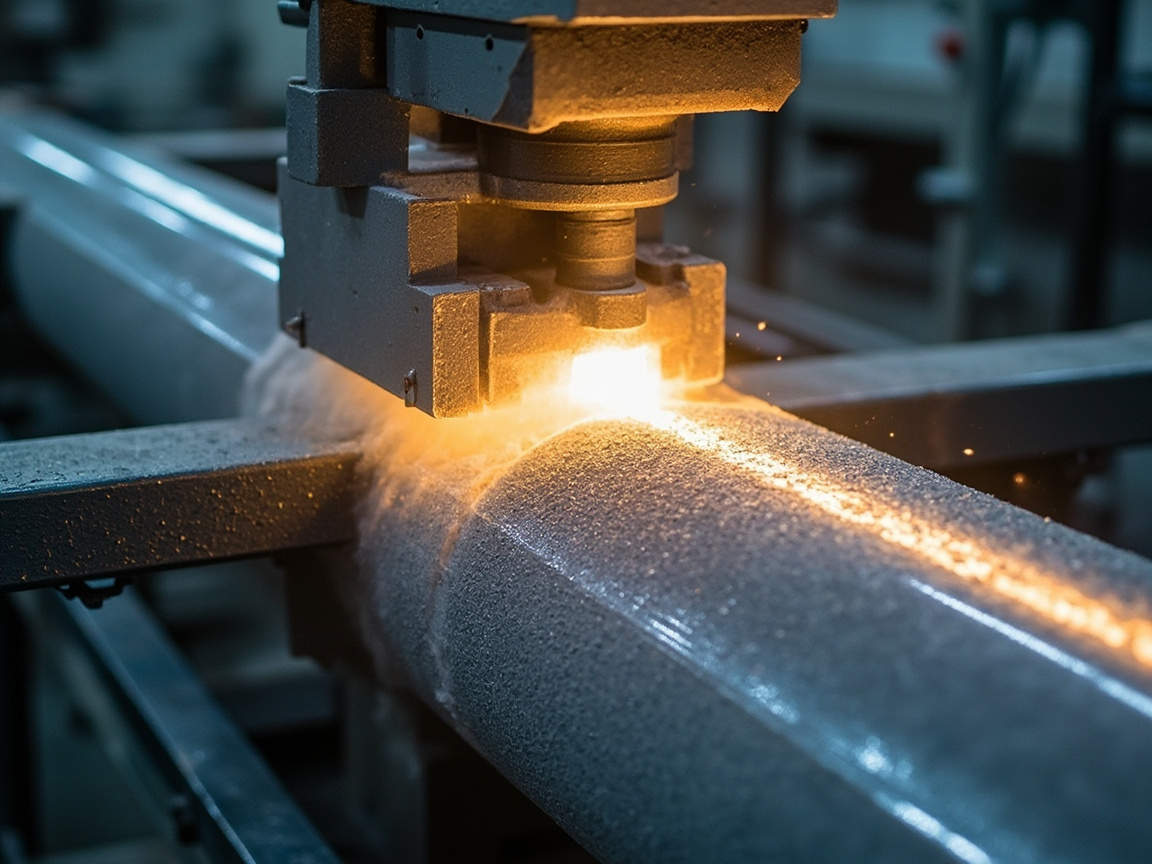
III. Three-Layer Structure (3LPE / 3LPP)
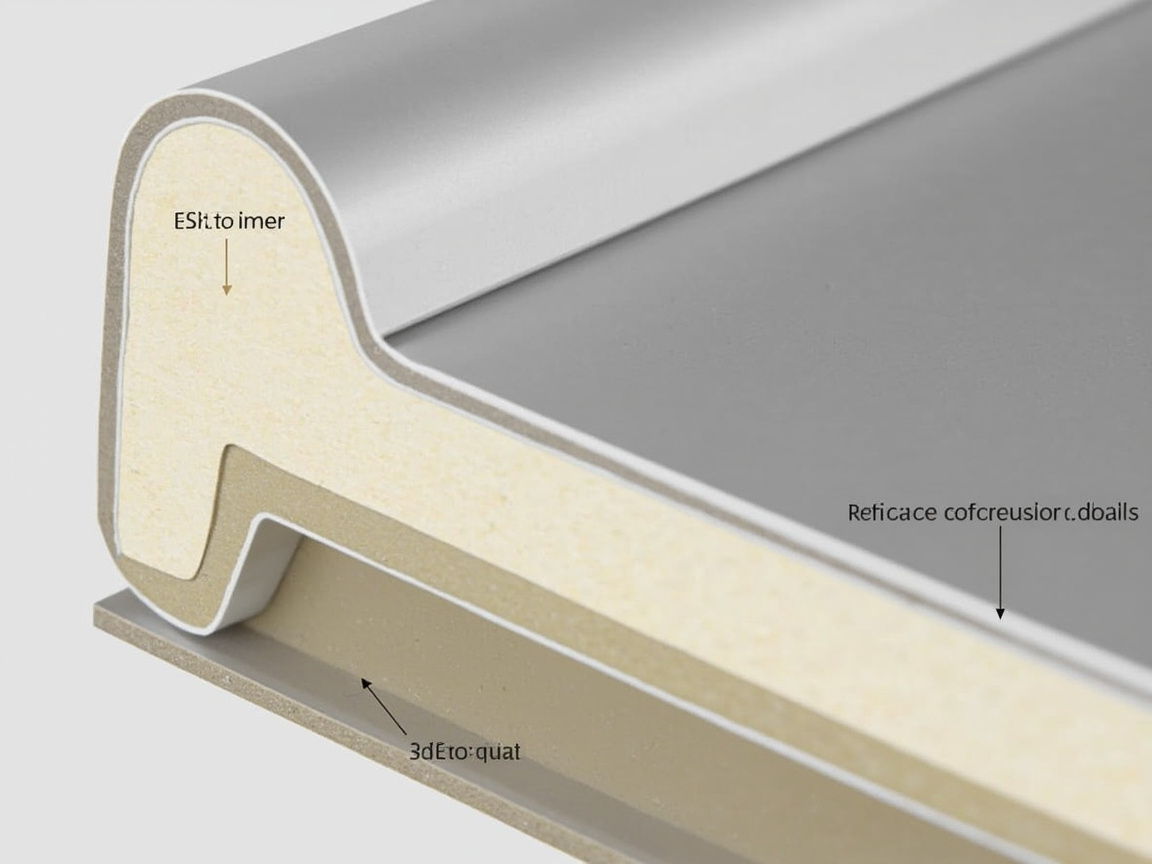
To balance "adhesion & anti-corrosion (FBE) plus mechanical protection (PE/PP)," buried pipelines widely adopt three-layer extrusion coating. The bottom layer FBE (about 150–250 microns) provides adhesion and anti-corrosion; the middle adhesive layer (about 200–400 microns) bridges epoxy and polyolefin to ensure interlayer bonding; the outer layer PE or PP (about 1.8–3.5 mm) provides mechanical protection, soil stress resistance, and UV resistance (PP is more high-temperature resistant). The domestic standard for this structure is GB/T 23257 "Polyethylene Coating for Buried Steel Pipelines," and international is ISO 21809-1. 3LPP has higher temperature resistance (up to 70–110℃ or even higher), used for high-temperature oil or steam injection pipelines; 3LPE is used for normal or medium temperature. Selection is determined by the four dimensions of "soil corrosivity + temperature + mechanical risk + cathodic protection."
Kexin New Materials (kexinMaterials) emphasizes the compatibility of adhesive with FBE in 3LPE配套—insufficient interlayer peel strength (per GB/T 23257 peel test) is a common failure and must be controlled from both powder formulation and extrusion process. There is a frequently overlooked detail: insufficient FBE curing degree leads to poor reaction with adhesive, so it is critical that the FBE section's instantaneous temperature rises enough for complete curing; and the oxidative treatment of the adhesive layer (flame or corona) determines its bonding with PE/PP—over- or under-treatment weakens interlayer force. The "interfacial chemistry" among the three layers is the core of 3LPE durability, rather than simply physically stacking three layers.
IV. Cathodic Disbondment Mechanism and Synergy with Cathodic Protection
Cathodic disbondment is the most critical failure mode of FBE under cathodic protection; understanding the mechanism is necessary for correct design and acceptance. The process is roughly: when cathodic protection is applied to the pipeline and the steel surface potential becomes negative, if the coating has micro-defects or permeation channels, water and ions penetrate the interface, and cathodic reactions occur on the steel surface (hydrogen evolution or alkaline environment formation), alkalizing and hydrolyzing the epoxy-steel bond interface, causing the coating to disbond in sheets from the defect outward. The larger the disbondment radius, the easier the protective current "creeps" to a larger area, and the anti-corrosion system gradually fails.
Three main lines to control cathodic disbondment: first, formulation optimization—add modified epoxy that inhibits alkaline hydrolysis, control fillers and cross-link density to make the interface more alkali-resistant; second, pre-treatment—blasting Sa2.5 cleanliness and anchor profile ensure mechanical interlocking and reduce water migration along the interface; third, reasonable cathodic protection parameters—excessively negative protection potential (over-protection) aggravates hydrogen evolution and accelerates disbondment, so the potential range must be controlled per NACE SP0169 etc. (e.g., -0.85 V to about -1.05 V CSE, depending on environment). Acceptance is measured per standard method (e.g., upper limit of disbondment radius at specified temperature and time), not just by appearance.
V. Durability Design and Environmental Classification
The service life design of heavy-duty anti-corrosion powder must be tied to the environment. ISO 12944-2 environmental classification: C4 (high, industrial or coastal), C5-I (high industrial), C5-M (marine), CX (extreme), Im1 (freshwater immersion), Im2 (seawater immersion), Im3 (soil burial). Powder heavy-duty anti-corrosion targets C4–CX and Im1–Im3. Salt spray and cyclic corrosion: per GB/T 1771 (neutral salt spray NSS, equivalent to ASTM B117) at thousand-hour level; more severe uses cyclic corrosion (see salt spray and cyclic corrosion test) to simulate wet-dry alternation. Cathodic disbondment: FBE used with cathodic protection must measure cathodic disbondment radius and keep it within standard limits. Chemical and temperature resistance: verify per medium (soil pH, chloride ions, hydrogen sulfide, carbon dioxide) and temperature; for high temperature select 3LPP or heat-resistant modified FBE.
Design flow: environmental classification → determine durability target (years) → select system (single-layer FBE or 3LPE / 3LPP) → set film thickness → set joint coating scheme → site inspection (thickness, holiday detection, adhesion). Supplement: the durability target should not be as long as possible, but matched with asset life, maintenance cycle, and life-cycle cost; over-design increases cost, under-design leads to premature failure, both require data-driven decisions.
VI. Double-Layer FBE and Internal Anti-Corrosion Coating
On the basis of single-layer FBE, the industry developed "Dual FBE": the bottom layer is conventional anti-corrosion FBE, and the top layer is a modified FBE with better flexibility, combining adhesion/anti-corrosion with resistance to mechanical damage and bending, often used for pipe sections with high coating flexibility requirements such as directional drilling and crossing sections. Compared with single-layer, dual FBE has better scratch resistance during rock excavation and directional drilling pipe pulling, and the whole remains a pure epoxy system with consistent temperature and chemical resistance.Another direction is "internal anti-corrosion". The inner walls of water, oil and gas pipelines also need anti-corrosion and anti-fouling; internal FBE (or liquid epoxy) can reduce friction, inhibit scaling and internal corrosion; internal spraying has higher process requirements—the pipe needs internal rotating spray gun, uniform curing, and no sagging. Drinking water applications must also meet hygiene requirements (e.g., GB/T 17219 Safety evaluation of equipment for water supply of domestic drinking water), and toxic fillers must not be selected at will. Kexin New Materials (kexinMaterials), in its integrated internal and external anti-corrosion solution, often completes external 3LPE and internal FBE on the same prefabrication line, reducing field joints and improving overall reliability.
VII. Construction and Joint Coating
Factory prefabricated sections have controllable quality, but the weak points of the pipeline system are "joint coating" and "elbows or tees". Pretreatment: steel pipe shot blasting or sandblasting to Sa2.5 (near white), anchor pattern depth according to standard (e.g., 40–100 microns), dust removal grade up to standard. Medium-frequency heating: heat the steel pipe to FBE melting temperature (about 200–230℃), uniform temperature is the key to adhesion. Spraying or wrapping: FBE electrostatic spraying, outer PE or PP extrusion wrapping, water cooling and shaping. Joint coating: field joint coating uses heat shrink sleeve, liquid epoxy or joint coating powder, which must be compatible with the main line layer and sealed against water. Inspection: spark test (no holiday), thickness, peel strength, cathodic disbondment spot check.
The supporting logic of Kexin New Materials (kexinMaterials) is to deliver "main line powder formula + joint coating material + holiday detection process" together, because field joint coating failure is the main cause of pipeline corrosion, and doing only the main line well is not enough. There is another set of key controls during construction: synchronization of steel pipe rotation and axial travel (ensuring circumferential uniform film thickness), axial temperature gradient of medium-frequency heating (avoiding end temperature drop causing uncured), water cooling section temperature (too fast cooling may cause internal stress cracking, too slow limits production line pace). These parameters should be executed according to the process card and records kept.
VIII. Comparison of Joint Coating Materials and Processes
Joint coating is the "Achilles' heel" of pipeline anti-corrosion, and the choice of material and process directly determines system life. Common joint coating schemes:
Heat shrink sleeve (heat shrink tape): easy construction, commonly used in field, relies on heating to shrink the sleeve to wrap and back adhesive sealing; the key is surface treatment and uniform heating, insufficient treatment easily causes debonding and water ingress.
Liquid epoxy joint coating: good compatibility with main line epoxy, can be applied thick, suitable for irregular shapes; but field coating is greatly affected by ambient temperature and humidity and operation, requiring strict surface treatment.
Joint coating powder (FBE field spraying/induction heating): same material as main line, best compatibility, often used for large-diameter pipes and high-standard projects; high equipment investment but stable quality.
Viscoelastic/cold wrap tape: used for repair and special-shaped parts, flexible construction but long-term performance depends on material and construction quality.
Selection principle: joint coating material must be chemically and physically compatible with the main line layer (FBE/PE/PP), continuously sealed, and able to withstand the same cathodic protection and soil stress. Regardless of which, spark test and bond strength spot check cannot be omitted—joint coating holidays are often the starting point of corrosion.
IX. Epoxy Powder for Rebar and Concrete Structures (ECR)
Rebar in concrete is not absolutely safe: chloride ion intrusion (de-icing salt, marine environment) destroys the passive film and triggers rusting; the rust expansion volume expands several times, causing concrete cracking and spalling, which is a typical durability disease. Epoxy-Coated Rebar (ECR) fuses a layer of FBE on the rebar surface to isolate the steel from corrosive media. Its domestic standard includes JG/T 502 "Epoxy-coated rebar", etc., and international such as ASTM A775, ISO 14654.
Key indicators of ECR: coating integrity (holiday detection, requiring extremely low holiday rate), adhesion (no falling off after cross-cut or bending), coating continuity after bending (rebar needs bending processing, coating must not crack). One misconception needs clarification: epoxy-coated rebar is not "rebar never rusts and all is well", but extends life by "isolation"; its bond with concrete is slightly lower than bare rebar, and the design needs to consider bond reduction according to the code, and the code specifies the application location and anchorage length of coated rebar. For splash zones, de-icing salt road sections, and sea-crossing bridges, ECR is a cost-effective durability measure.
X. Factory Quality Control (QC) and Inspection
Quality control of the prefabrication plant is the key to implementing standards into products; it is recommended to establish "online + offline" dual track:
Online control: steel pipe temperature (after medium-frequency heating), film thickness (magnetic thickness measurement, circumferential multi-point), appearance after water cooling, production line speed, full-process recording and alarm.
Offline inspection: each batch does adhesion (GB/T 9286 cross-cut), peel strength (GB/T 23257), cathodic disbondment, salt spray resistance (GB/T 1771), impact (GB/T 1732), spark test. 3LPE also needs interlayer peel and environmental stress cracking resistance (according to GB/T 23257 or ISO 21809 related methods).
Sample retention and traceability: retain process parameters and inspection results of each pipe, form a traceable archive, facilitating later operation and maintenance and dispute definition.
When delivering powder, Kexin New Materials (kexinMaterials) attaches "powder factory inspection + online process window + finished product acceptance list" three-piece set, so that the prefabrication plant has evidence from incoming material to finished product, rather than judging good or bad by color and feel.
XI. Storage, Transportation, Stacking and Field Management
The storage and transportation of heavy-duty anti-corrosion prefabricated pipes after leaving the factory are often overlooked, but frequently cause failure:
Stacking: the bottom of the pipe stack needs padding wood, interlayer isolation, to avoid coating pressure pitting and deformation; PE/PP outer layer is afraid of long-term UV, open-air storage should be covered or time controlled.
Hoisting: use wide nylon sling instead of steel wire rope directly binding, to avoid cutting the coating; dragging is strictly prohibited.
Handling and backfilling: rock backfill area should be backfilled with fine soil first, then gravel; directional drilling section controls curvature and thrust to reduce coating scratches.
Field storage management: partition by specification and batch, clear identification, prepare on-site repair plan for coating damage (same system material, standard surface treatment).
In one sentence: coating life = prefabrication quality × storage and transportation protection × field construction, any section lost will lower the whole.
XII. Synergy with Other Functions
Heavy-duty anti-corrosion powder is often compounded with functions. Wear resistance: pipes, rods, elbows in abrasive environment, FBE plus wear-resistant aggregate (see wear-resistant powder coating). Insulation: battery casing, busbar inner wall anti-corrosion and insulation (see insulation powder coating). Fire resistance: harsh scenarios anti-corrosion primer plus intumescent fire layer (see intumescent fire-retardant coating). As a heavy-duty anti-corrosion system provider, Kexin New Materials (kexinMaterials) advocates "system based on service environment, not selling a can of powder", incorporating environment grading, film thickness, joint coating, and holiday detection into the same delivery.
XIII. Failure Case Review
Case 1: A pipeline had circumferential corrosion at joint coating after three years of operation. Root cause was insufficient surface treatment of joint coating heat shrink sleeve and uneven heating causing local debonding and water ingress; the main line 3LPE was intact but the joint coating became the short board. Lesson: joint coating must be surface treated and holiday detected to the same standard as the main line.
Case 2: A FBE pipe had cathodic disbondment radius exceeding standard. Root cause was cathodic protection potential too negative (over-protection) combined with insufficient FBE cure, interface alkalization hydrolysis. Lesson: CP parameters should be controlled by code, FBE cure degree should be measured.
Case 3: Rebar ECR coating cracked after bending processing. Root cause was too small bending radius, coating toughness mismatch. Lesson: ECR bending should follow code radius, and holiday detection after bending.
Case 4: Storage and transportation dragging caused PE layer scratches, corrosion prioritized at scratches after backfilling. Root cause was illegal hoisting and handling. Lesson: storage and transportation protection should be written into management procedures, not just technical documents.
These cases jointly show: heavy-duty anti-corrosion is a "system engineering", failure almost always occurs at interface, joint coating, storage and transportation and parameter mismatch, not the powder itself.
XIV. Common Misconceptions
Misconception 1: Heavy-duty anti-corrosion powder is the same as liquid heavy-duty anti-corrosion paint. Wrong. Powder is factory prefabricated, solvent-free, one-time thick film, stable quality, suitable for pipeline rebar standard parts; liquid is suitable for large non-bakeable structures on site. Misconception 2: Single-layer FBE is universal. Wrong. Weak mechanical damage resistance, rock backfill should use 3LPE or add sacrificial tape. Misconception 3: Longer salt spray is better. Wrong. Need to time according to environment grading and target life, and combine cyclic corrosion and cathodic disbondment. Misconception 4: Joint coating done casually. Wrong. Joint coating failure is the main cause of pipeline corrosion. Misconception 5: Only look at room temperature performance. Wrong. Need to check working temperature (especially high-temperature oil and gas pipes). Misconception 6: More negative cathodic protection is safer. Wrong. Over-protection aggravates FBE cathodic disbondment. Misconception 7: Storage and transportation don't matter. Wrong. Scratches from hoisting and dragging are the starting point of corrosion after backfilling.
XV. Technology Trends
One is low-temperature curing FBE, reducing energy consumption and thermal damage; two is solvent-free liquid joint coating material better compatible with FBE; three is multi-layer functionalization (anti-corrosion plus wear-resistant plus identification); four is smart holiday detection, embedding tracer layer for real-time monitoring of damage; five is greening, reducing energy consumption and emission of powder and extrusion process.
XVI. Selection Decision Tree
For heavy-duty anti-corrosion powder, first look at environment (C4–CX or Im); then temperature (normal temperature 3LPE, high temperature 3LPP); then mechanical risk (rock backfill choose multi-layer); then whether combined function (wear-resistant, insulation); finally determine joint coating scheme. Write this path into specification, selection not by experience.
XVII. Common Defects and Troubleshooting
| Defect | Cause | Countermeasure |
|---|---|---|
| Large cathodic disbondment | Formula or CP improper | Optimize formula, control CP |
| Interlayer peeling | Adhesive incompatible | Select compatible adhesive |
| Joint coating holiday | Poor joint coating process | Heat shrink sleeve/joint coating powder, holiday detection |
| Mechanical damage | Single-layer FBE | Change to 3LPE/3LPP |
| Poor adhesion | Insufficient pretreatment | Sandblast Sa2.5 |
| Insufficient cure | Temperature/line speed mismatch | Measure PMP, adjust process |
XVIII. Standards and Inspection Checklist
Acceptance coverage: SY/T 0315 or GB/T 23257 (system standards); GB/T 1771 / ASTM B117 (salt spray); GB/T 9286 (adhesion); GB/T 23257 peel strength; cathodic disbondment; holiday test by spark; gel time ISO 8130-6 (process setting). It is recommended to establish a "film thickness + leak detection + peel + salt spray + cathodic disbondment" five-fold check, making long-term anti-corrosion a verifiable indicator.
19. Quantification of Corrosive Environment Media and Life Prediction
The premise of heavy-duty anti-corrosion design is to translate "environment" into measurable numbers, rather than glossing over it with a phrase like "seaside" or "chemical zone". For buried pipelines, key indicators include soil resistivity (low resistivity often implies strong corrosive activity), chloride and sulfate ion content, pH, moisture content, and microorganisms (microbial corrosion MIC caused by sulfate-reducing bacteria SRB); for marine engineering, the chloride deposition rate and the wet-dry alternation frequency in splash and tidal zones are considered; for chemical atmosphere, attention is paid to H2S (acidic, material and coating selection controlled per NACE MR0175 / ISO 15156), CO2 (carbonic corrosion, intensified with rising temperature and pressure), acidity/alkalinity and temperature. Only by mapping these indicators one by one to the C4–CX / Im classification of ISO 12944-2 can "experience" be turned into "quantified input". For example, for the same "coastal" condition, the systems required for open atmosphere (C5-M) and splash zone (wet-dry alternation plus chloride plus mechanical impact) differ greatly; the latter often requires 3LPE or even additional sacrificial tape, rather than a single-layer FBE.
Life prediction cannot rely on a single salt spray duration guess. Engineering practice commonly uses the approach of "lab acceleration + field data from similar projects + safety factor" for cross-verification: first use GB/T 1771 or ASTM B117 to verify the corrosion resistance of the coating itself, then use cathodic disbondment to verify its stability when used with cathodic protection, then refer to the actual service records of similar pipelines in similar soils, and finally back-calculate film thickness, joint coating and inspection frequency according to the target life. It must be emphasized here: no matter how precise the model is, it must be premised on "qualified pre-treatment + reliable joint coating + controlled storage and transportation"; otherwise the predicted life is just a paper number. From the perspective of life cycle cost (LCC), clarifying the environment upfront and doing joint coating and leak detection thoroughly is far cheaper than frequent later excavation and repair—the unit cost of excavating and repairing a pipeline often exceeds the initial investment of all its anti-corrosion coatings, which is the fundamental reason why heavy-duty anti-corrosion is "heavy on design".
20. Key Points for Prefabrication Plant and Site Audit
To audit whether a heavy-duty anti-corrosion powder project is reliable, it is recommended to focus on several hard indicators: first, pre-treatment evidence (Sa2.5 blasting grade assessment records, anchor profile depth inspection); second, curing evidence (induction heating temperature and line speed records, FBE cure degree measurement); third, film thickness and leak detection (circumferential multi-point film thickness, full coverage holiday test by spark); fourth, interlayer and cathodic disbondment sampling (per GB/T 23257, SY/T 0315, NACE methods); fifth, joint coating consistency (same main line material, same leak detection standard). Writing these five items as an audit checklist is more reliable than reading a polished factory inspection report. Kexin Materials (kexinMaterials) often delivers with a "factory inspection + process window + finished product acceptance" three-piece set, facilitating the prefabrication plant and owner to jointly verify per the checklist, turning "long-term anti-corrosion" into auditable actions.
21. Design Review Checklist
To avoid omissions, it is recommended to review item by item before delivering a heavy-duty anti-corrosion powder scheme: is the environment classification (C4–CX / Im) accurate; is the system (FBE / 3LPE / 3LPP) matched with temperature and mechanical risk; does film thickness correspond to cross-section; are joint coating material and main line compatible and is leak detection full coverage; is the cathodic protection potential range reasonable (avoid over-protection aggravating disbondment); are storage, transportation and site management procedures in place. Checking off these six items before signing off can significantly reduce later failure risk. This checklist also facilitates quick verification by owners and supervisors, and is a practical tool for "making long-term anti-corrosion a verifiable indicator", far more reliable than deciding by experience.
FAQ
Q: What is the difference between heavy-duty anti-corrosion powder and liquid heavy-duty anti-corrosion paint?
A: Powder (FBE / 3LPE) is plant-prefabricated, solvent-free (0 VOC per GB 30981), single-pass thick film, stable quality, suitable for pipelines, rebar, standard parts; liquid (solvent-free epoxy, etc.) is suitable for large on-site non-bakeable structures (see ISO 12944 system). The two are divided by whether baking is possible and whether it is factory-based.
Q: What is FBE, and what film thickness should be applied?
A: FBE (fusion-bonded epoxy powder) is a single-component epoxy powder. After preheating the workpiece, it is sprayed and melted into a dense epoxy layer; single-layer film thickness is often 300–600 microns (pipeline 350–500 microns). Long-term anti-corrosion is achieved through dense barrier plus strong adhesion plus compatibility with cathodic protection.
Q: What is the role of each layer in the 3LPE three-layer structure?
A: The bottom layer FBE provides anti-corrosion and adhesion, the middle adhesive bridges epoxy and polyolefin, and the outer layer PE or PP provides mechanical protection and environmental stress resistance. Standards are GB/T 23257 (domestic) or ISO 21809-1 (international).
Q: How long should salt spray be tested to be qualified?
A: According to environment classification and target life, commonly GB/T 1771 (NSS, equivalent to ASTM B117) is used for thousand-hour level; more severe uses cyclic corrosion. Qualification is not no rust instantly, but no red rust on substrate within specified time and controlled scratch propagation. Specific duration depends on product standard and durability target.
Q: What is cathodic disbondment and why is it important?
A: Under cathodic protection, the disbondment radius of the coating (cathodic disbondment) reflects its stability with steel and CP. Excessive disbondment allows protective current to creep in and the coating to shell off entirely. FBE must control cathodic disbondment within specified limits (e.g., 65℃ / 30 days radius ≤ standard value), and avoid aggravating disbondment due to over-protection potential.
Q: How to select environment grade for heavy-duty anti-corrosion powder?
A: Per ISO 12944-2 classification: C4–CX (atmosphere), Im1–Im3 (immersion or soil). Then determine system and film thickness based on temperature, mechanical risk, media (chloride, hydrogen sulfide, carbon dioxide); for high temperature select 3LPP or heat-resistant FBE.
Q: Why is on-site joint coating a key point?
A: Pipeline corrosion mostly starts from joint coating failure (poor site environment, difficult process control). Joint coating material must be compatible and sealed with the main line layer; commonly heat-shrink sleeve, joint coating powder or liquid epoxy, and holiday test by spark. No matter how good the main line is, a leaking joint coating voids all previous efforts.
Q: Can FBE be used alone for all buried pipes?
A: Single-layer FBE has excellent anti-corrosion but weak mechanical damage resistance; for high-risk conditions such as rock backfill and directional drilling, 3LPE or 3LPP plus mechanical outer protection is preferred; or FBE plus sacrificial tape. Determined by soil mechanical risk and construction method.
Q: How to combine heavy-duty anti-corrosion powder with wear resistance?
A: In abrasive environments (elbows, pump parts, pipe rods), add alumina or silicon carbide wear-resistant aggregate into FBE matrix to form anti-corrosion plus wear-resistant composite (see wear-resistant powder coating), achieving both in one coating.
Q: Is there a standard for FBE for rebar?
A: Yes. Rebar epoxy powder coating has dedicated product and construction standards (e.g., JG/T 502, ASTM A775), used to improve rebar durability in concrete and delay corrosion, an important means of building durability; construction also requires clean heating and adhesion control, and control of bending radius and pinhole leak detection.
Q: Is more negative cathodic protection potential better?
A: No. Over-negative protection potential aggravates hydrogen evolution and alkalization at the FBE interface, instead increasing cathodic disbondment radius; a reasonable potential range should be controlled per specifications (e.g., NACE SP0169) to balance protection and disbondment risk.
Q: Does storage and transportation affect heavy-duty anti-corrosion life?
A: Yes. Drag scratches on PE/PP outer layer during lifting, long-term outdoor UV aging, stacking crush will all become corrosion starting points after backfill. Storage and transportation require wide slings, spacer isolation, covering and labeling management, incorporating "storage and transportation protection" into the overall anti-corrosion system.
Further Reading
- Principles and Classification of Powder Coating: From Film Formation Mechanism to Resin System Selection: The film formation and zero VOC basis of FBE and 3LPE, background of this article's system.
- Coating Surface Treatment Sa2.5 and Blasting Grade: The anchor profile and cleanliness of heavy-duty anti-corrosion powder adhesion determine life; pre-treatment is the foundation.
- ISO 12944 Anti-corrosion Coating System Selection Guide: Understand corrosion environment classification C4–CX / Im, placing powder anti-corrosion into the overall protection framework.
- Thermoset and Thermoplastic Powder Coatings: Film Formation Mechanism, Performance Boundaries and Selection
- Industrial Paint Construction: Airless Spray Parameters, Film Thickness Control and Coating Interval