Containers are the "standard cells" of global trade. They are stacked at ports year-round, shipped across oceans, and exposed to high humidity, salt spray, ultraviolet radiation, and mechanical impacts. Unlike fixed steel structures, container coating must be completed within extremely short production cycles—a mainstream coating line produces one container every 2–3 minutes, which dictates that its coating system must be "fast-drying, high-solid, and easy to apply." At the same time, as an industrial product manufactured in very large volumes, container coating is also a key target of environmental regulation.
Kexin New Materials (kexinMaterials) leverages its experience in epoxy and polyurethane industrial protective systems to extend to the optimized配套 of container interior topcoat, chassis paint, and other areas. Based on current standards such as GB 30981-2020, this article analyzes the system composition, process boundaries, and compliance key points of container coating. For the general配套 logic of steel structures, please refer to General Anti-corrosion Supporting Design for Steel Structures.
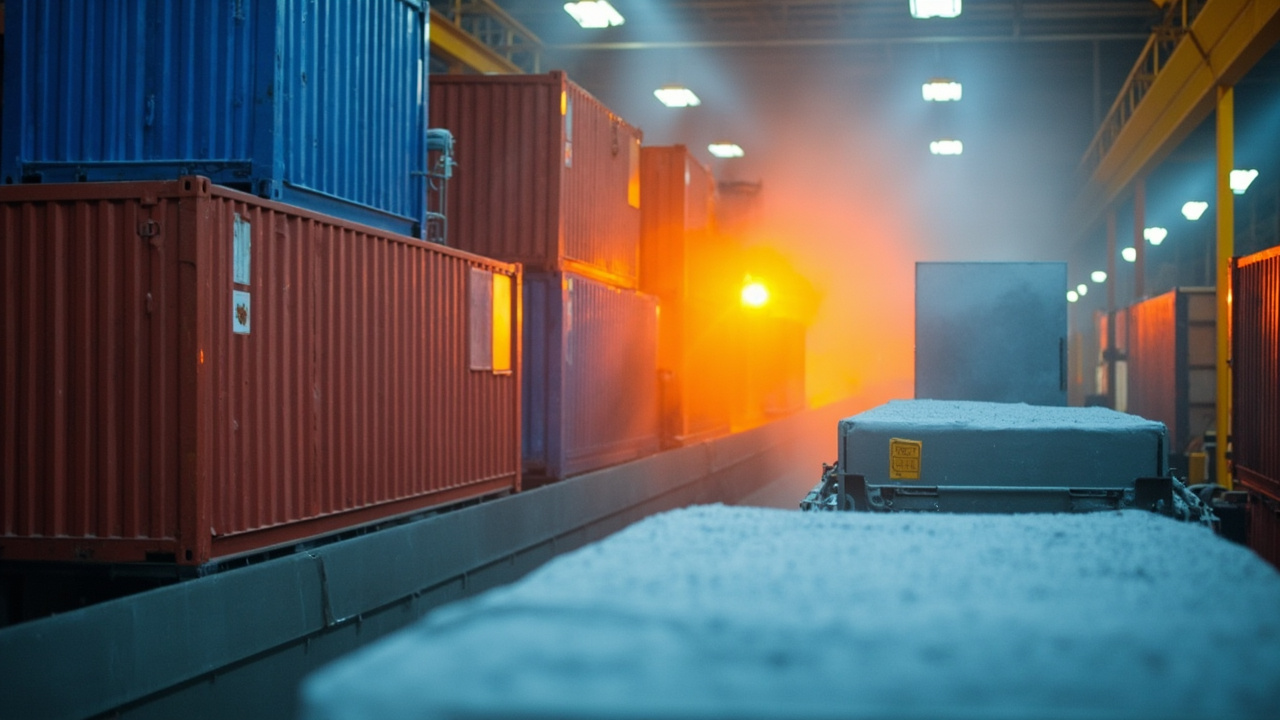
I. Service Environment and Coating Challenges of Containers
The corrosion environment of containers can be regarded as a "mobile version of C4–C5-M": port salt spray, high marine humidity, cross-latitude UV, and frequent lifting collisions. However, its biggest challenge is not the corrosion grade, but production efficiency. The coating of a 20-foot or 40-foot container must be completed on aउत्पादन लाइन with multi-layer spraying and entry into the drying oven within a few minutes, so the coating must:
- Fast-drying: Surface dry measured in minutes to meet the cycle;
- High solid content / low VOC: Meet mandatory limits such as GB 30981-2020;
- Mechanical tolerance: Resist lifting scratches and stacking wear;
- Outdoor durability: Color and gloss retention, salt spray and aging resistance.
This triangular constraint of "efficiency + environmental protection + durability" makes container coating one of the most standardized categories in industrial coating.
II. Standardized Supporting of Container Coating
The industry-common container supporting is usually divided into chassis (primer), interior topcoat, exterior topcoat, and bituminous paint (container bottom), etc.:
- Shop primer / chassis paint: Mostly epoxy zinc-rich or epoxy iron oxide red, providing basic anti-corrosion and welding tolerance.
- Interior topcoat: Water-phase or solvent-based epoxy, resistant to cargo and environmental corrosion inside the box, often requiring low odor and low migration.
- Exterior topcoat: Aliphatic polyurethane or acrylic polyurethane, providing weather resistance, color retention, and marking adhesion.
- Bituminous paint / container bottom paint: The bottom is often coated with black bitumen-based or high-build epoxy, resisting wear and ground-contact corrosion.
The table below summarizes the supporting key points for typical areas:
| Area | Recommended System | Application Requirement | Typical DFT Range | Key Control Point |
|---|---|---|---|---|
| Steel chassis | Epoxy zinc-rich / epoxy primer | Anti-corrosion, welding tolerance | Per specification (often 15–25 µm shop primer + main paint) | Weld edge protection |
| Interior | Epoxy interior topcoat | Corrosion resistance, low migration | Per specification | Low odor, hygiene |
| Exterior (side panel / roof) | Epoxy primer + polyurethane topcoat | Weather resistance, color retention | Per specification | Fast-drying, appearance |
| Container bottom | Bitumen / high-build epoxy | Abrasion resistance, impact resistance | Per specification | High-build, impact/scuff resistance |
It must be emphasized: the DFT in the table above is illustrative; the actual values should be based on container manufacturing specifications and the TDS of the product used. Container coating film thickness is usually thinner than heavy-duty anti-corrosion steel structures, but achieves a balance between cycle and service life through "multi-layer thin coating + fast drying."
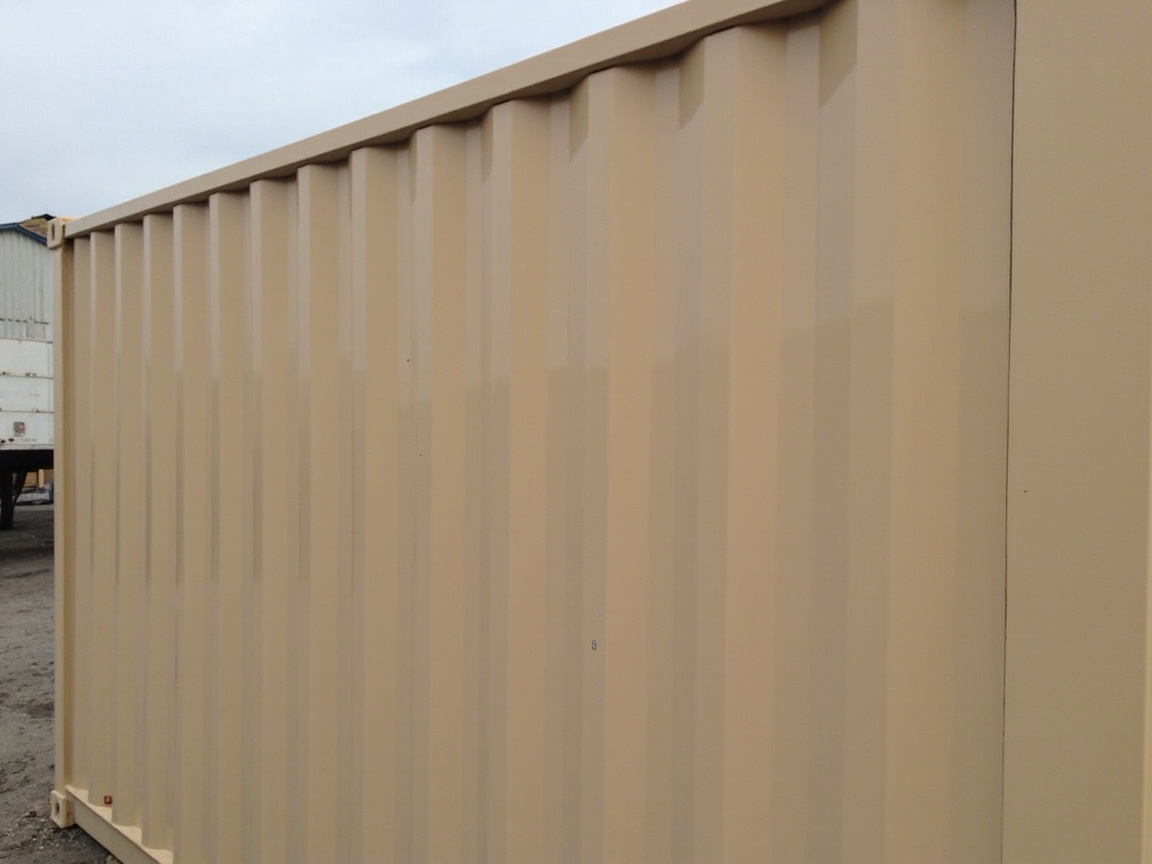
III. GB 30981-2020 and VOC Compliance
Container coating falls within the scope of GB 30981-2020 "Limit of Harmful Substances in Industrial Protective Coatings." This mandatory national standard stipulates the VOC content and harmful substances (such as heavy metals) limits for industrial protective coatings; products exceeding the limits will be rejected in engineering and manufacturing stages. For container manufacturers, requiring suppliers to provide third-party test reports compliant with the corresponding category limits has become routine in procurement technical attachments.
The three main technical paths to meet GB 30981-2020 are: water-based, high-solid, and solvent-free. Due to its fast-drying needs, the container industry has long been dominated by high-solid solvent-based systems, but under tightening environmental requirements, the proportion of water-based container coating (especially interior topcoat) is increasing. It should be noted that VOC limits are usually expressed as "application state g/L"; the addition of thinners will significantly change the measured value, and the sampling and testing methods (e.g., GB/T 23985, GB/T 23986) should be agreed in the contract to avoid acceptance disputes.
For the overall framework of VOC regulations, please read Interpretation of VOC Limit Regulations for Industrial Protective Coatings.
IV. Assembly Line Process and Film Thickness Management
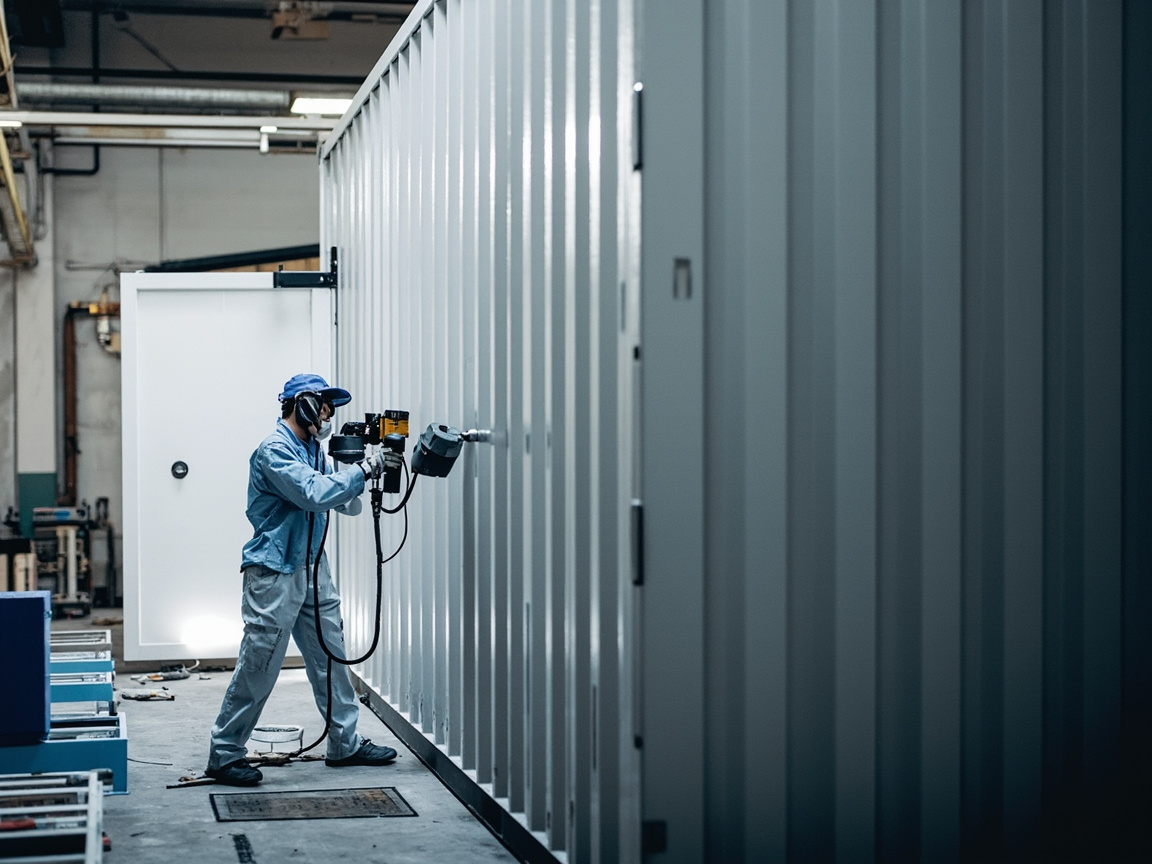
The typical process of a container coating line is: steel pretreatment (shot blasting + shop primer) → sanding / grinding → automatic primer spraying → drying → automatic interior / exterior topcoat spraying → drying → marking → inspection. Key control points:
- Cycle matching: Coating drying rate must match line speed; too slow blocks the line, too fast causes poor leveling.
- Uniform film thickness: Automatic spraying robots controlled by program; dry film randomly checked with magnetic thickness gauge.
- Oven temperature curve: Segmented control of heating, holding, and cooling to avoid yellowing of topcoat from over-baking or tackiness from under-baking.
- Environmental control: Spray booth air velocity, temperature, humidity, and cleanliness affect appearance and defect rate.
V. External Weather Resistance and Marking Adhesion
Container exterior topcoat must maintain clear markings and intact appearance under global climates. Aliphatic polyurethane, due to weather resistance and color retention, is the mainstream topcoat; marking paint must be compatible with the topcoat and abrasion-resistant. The adhesion of owner logo and container number markings often becomes a visual acceptance criterion.
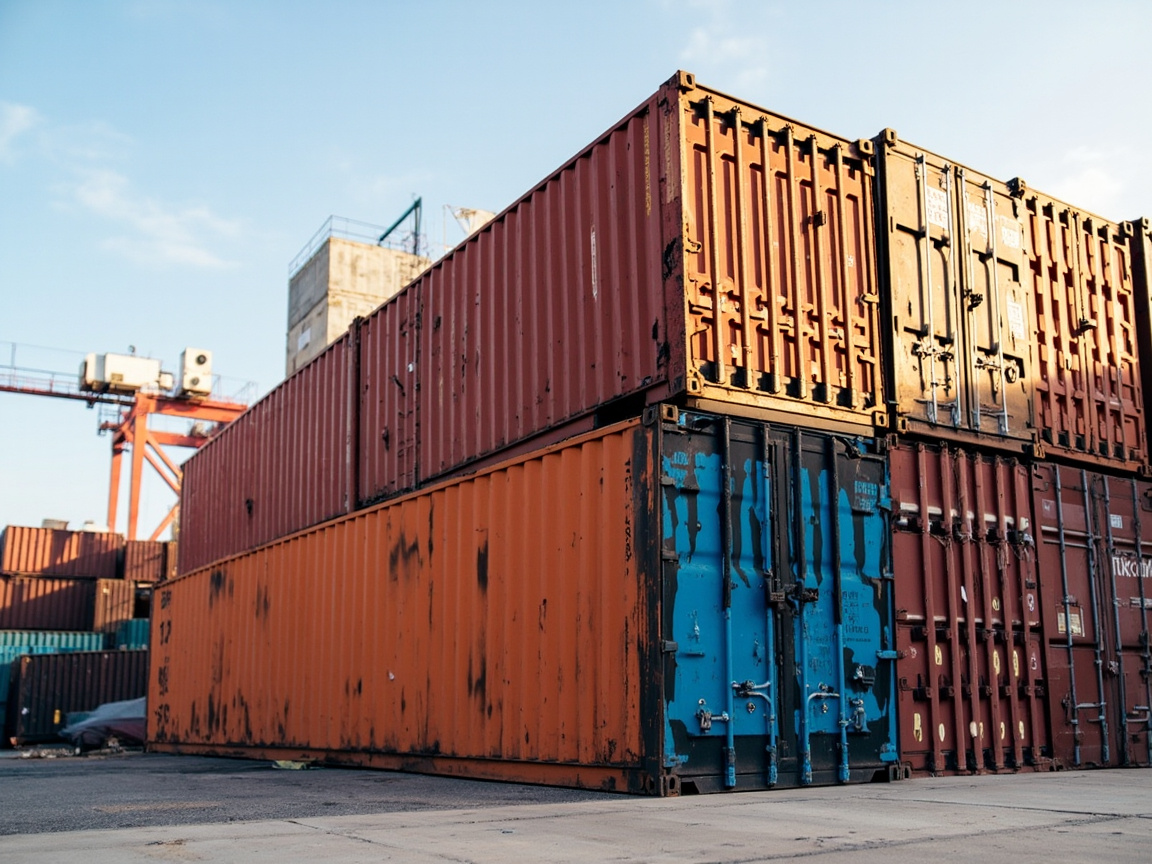
VI. Abrasion-Resistant Design for Container Bottom and Chassis
The container bottom is in long-term friction with ground, twistlocks, and trailers, making it a high-incidence area for mechanical damage. In addition to using bitumen or high-build epoxy, design often extends service life by increasing film thickness and local reinforcement. Weld seams on the chassis should be pre-coated and ensure edge and corner coverage to prevent rust expansion after coating cracking caused by transport vibration.
VII. Maintenance and Refurbishment
Old container refurbishment requires assessment of the original coating condition: lightly chalked surfaces are sanded and recoated with topcoat; rusted areas are locally blasted and repaired with primer and topcoat; severe corrosion requires full redo. Refurbishment is also subject to VOC limits; compliant low-odor systems should be selected to reduce health impact of on-site work.
VIII. Selection Misconceptions and Specification Recommendations
Misconception 1: Thicker container paint is better. Wrong. Excessive thickness affects cycle and cost, and may crack; should be controlled within the specification range.
Misconception 2: VOC only looks at factory value. Wrong. Application state (including thinners) is the limit basis; the contract must specify the test method.
Misconception 3: Aromatic polyurethane can be used for exterior topcoat. Wrong. Aromatics yellow easily; container exteriors should prioritize aliphatic to ensure color retention.
Misconception 4: Odor of interior topcoat does not matter. Wrong. The box may load sensitive cargo; interior topcoat should be low-migration, low-odor, and comply with relevant hygiene and safety requirements.
Kexin New Materials (kexinMaterials) recommends that container supporting technical documents clearly specify the DFT of each layer, curing window, and environmental limits, and use third-party VOC test reports as delivery basis to comply with the mandatory requirements of GB 30981-2020. For the full picture of the standard system, please read Overview of Industrial Coating Standard System.
IX. Techno-economics and Global Compliance of Container Coating
Containers are highly standardized globally circulating products, and their coating decisions feature a distinct dual character of "economies of scale + global compliance." A mainstream line produces one container every 2–3 minutes; the drying rate and application stability of the coating directly determine line throughput and unit cost. Coating unit price is only a small part of the cost; hidden costs come from line blockage due to slow drying and rework due to high defect rates. Therefore, in the container industry, the "process adaptability" of coating often determines total cost of ownership more than unit price.
Environmental compliance is another main thread of container coating. GB 30981-2020 brings container coating into the limit scope of harmful substances in industrial protective coatings, requiring VOC and heavy metals to meet standards. At the same time, major global shipping companies and container owners increasingly focus on the environmental footprint of coating, with some international buyers attaching VOC or specific substance restrictions in procurement terms. If suppliers only meet factory testing while ignoring the measurement of application state (including thinners), disputes easily arise at acceptance. Specifying sampling methods (e.g., GB/T 23985, GB/T 23986) and limit basis in the contract is key to risk avoidance.
Water-based conversion is an important evolution direction for container coating. Water-based interior topcoat, due to its low odor and low migration, has more advantages in scenarios involving sensitive cargo such as food and clothing; however, water-based systems are sensitive to temperature and humidity, drying slowly and easily turning white under low temperature and high humidity, requiring supporting upgrades of production line baking ovens and air-conditioning dehumidification. Currently, the industry is dominated by high-solid solvent-based coating, with water-based gradually penetrating; this transition is not a simple material replacement, but a systematic reconstruction of production line process, energy consumption, and cost.
From a full life cycle perspective, the refurbishment market for containers is also huge. If old containers are refurbished using high-VOC systems, the impact on health and the environment during on-site operations is more pronounced, so the demand for water-based and low-odor systems in refurbishment is often stronger than in new container manufacturing. For coating service providers, establishing an integrated compliance solution of "new containers + refurbishment" is more competitive than supplying coating at a single point.
It is worth emphasizing that "fast" in container coating never means "rough". The film thickness uniformity of automatic spraying, the stability of the baking oven temperature curve, and the reliability of marking adhesion are all factors affecting the appearance and protective performance of the container body throughout its life cycle. Integrating production line takt, environmental limits, and quality indicators into the same technical specification for overall planning is the hallmark of mature container coating selection.
X. In-depth Reading of Formulation and Construction Details of Container Coating
The fast-drying demand for container coating stems from the production line takt, which is backed by a precise balance of formulation and process. The shop primer must provide temporary rust prevention in a short time without interfering with subsequent adhesion; the main paint must surface-dry within minutes, rapidly cure in the baking oven, while maintaining sufficient leveling and appearance. High-solid epoxy reduces solvent to the lower limit while maintaining application viscosity and increasing single-coat film thickness, making it the mainstream route that balances efficiency and environmental friendliness; water-based systems replace solvent with water, further reducing odor and health risks, but impose higher requirements on baking oven dehumidification and leveling control.
The formulation concerns of interior topcoat differ from those of exterior paint. The interior may briefly contact various cargoes, so interior topcoat emphasizes low migration, low odor, and resistance to heat and humidity; some sensitive applications also require compliance with relevant hygiene and safety frameworks. This drives interior topcoat toward water-based epoxy or low-migration modified systems. Exterior paint is mainly aliphatic polyurethane, whose weather resistance and color retention come from a stable aliphatic isocyanate structure, which is not prone to yellowing under long-term UV exposure; if an aromatic system is used, although the cost is slightly lower, it visibly yellows within months, affecting the box owner's markings and appearance, so exterior paint should not compromise on weather resistance.
The container bottom and chassis bear mechanical damage, and their coating design focuses on wear resistance and resistance to bruising. Asphalt-based or high-build epoxy absorbs impact through higher film thickness and toughness, but asphalt-based systems have dark colors, making defects hard to identify, and are restricted under some environmental requirements. The modern trend is to replace them with high-solid high-build epoxy, balancing wear resistance and inspectability. Welds and corners of the chassis are high-incidence points of damage; the process discipline of pre-coating and edge coverage directly determines the corrosion starting points of the container bottom during its service life.
Film thickness management on the production line relies on automation. Spraying robots control gun travel and overlap according to preset programs, combined with random inspection using wet film combs and dry film thickness gauges, ensuring uniform and compliant film thickness on each layer. The baking oven temperature curve is controlled in segments to avoid over-baking causing topcoat yellowing or under-baking causing tackiness. Any drift in any parameter will be amplified in the defect rate, so the quality management of container coating is essentially steady-state control of the four-dimensional parameters of "takt—viscosity—temperature—film thickness".
The technical logic of the refurbishment market differs from that of new containers. Old container refurbishment is often carried out on-site or at regional repair centers, where ventilation and environmental constraints are more prominent, and low-odor, low-volatile systems are preferred; at the same time, refurbishment needs to assess the status of the original coating—lightly chalked surfaces are sanded and repainted with topcoat, rusted areas are locally blasted and patched, and severe corrosion requires a full redo. The selection of refurbishment formulation should balance compatibility with the new system, avoid interlayer problems, and clearly specify environmental limits and testing methods in the contract to provide a basis for acceptance.
The global compliance perspective of container coating is worth elaborating. Containers circulate worldwide, and different countries have different control scales for hazardous substances and emissions, and restrictions attached by buyers in procurement terms are increasingly common. If suppliers only meet factory exit testing but ignore the actual measurement of volatile substances during transportation and construction, disputes easily arise during acceptance or port arrival. Therefore, clarifying sampling methods, limit benchmarks, and testing agency qualifications in the contract is key to avoiding cross-border compliance risks, and also an implicit threshold for large container owners to screen suppliers.
The water-based transformation is a systematic reconstruction for the production line. Although water-based interior topcoat has low odor and low migration, its drying depends on ambient temperature and humidity, and it easily turns white and has poor leveling under low temperature and high humidity. This means the production line must be equipped with air-conditioning dehumidification and more refined baking oven curve control, increasing energy consumption and equipment investment. Many factories underestimated the complexity of process transformation when switching to water-based systems, leading to low initial pass rates. The correct path is to plan material switching and production line upgrades synchronously, exchanging process stability for long-term environmental and brand benefits, rather than treating water-based as a simple replacement.
The refurbishment market is reshaping the supply landscape. Old container refurbishment is mostly carried out on-site or at regional repair centers, where ventilation and environmental constraints are more prominent, and low-odor, low-volatile systems are preferred. Refurbishment needs to assess the original coating status—lightly chalked surfaces are sanded and repainted with topcoat, rusted areas are locally blasted and patched, and severe corrosion requires a full redo, and compatibility between old and new systems must be considered. Incorporating new container manufacturing and refurbishment into an integrated compliance solution is more competitive than supplying paint at a single point, and also more in line with the trend of asset life extension under the circular economy.
Steady-state control of quality data is the internal skill of container coating. The production line's takt, coating viscosity, baking oven temperature, and film thickness distribution form an interdependent parameter network, and any drift will be amplified in the defect rate. Mature factories incorporate these parameters into statistical process control, using trend early warning instead of post-hoc rejection, which improves first-pass yield and reduces coating and energy waste. For a product like containers that pursues extreme efficiency, the degree of refinement in quality management often determines total cost more than single material performance.
The durability and appearance of container coating require a balance between rhythm and quality. The production line takt determines extremely short dwell time per container; the coating must surface-dry within minutes and enter the baking oven, otherwise it will block the line or cause sagging and particles. But the faster the rhythm, the higher the requirements for coating stability and application window, and any parameter drift will be amplified into batch defects. Therefore, mature factories focus quality management on steady-state parameter control, using trend early warning instead of post-hoc rejection, and using process discipline to ensure consistent appearance and protection, rather than relying on final inspection remediation.
Environmental trends are reshaping the supply chain of container coating. Many container owners attach hazardous substance limits and emission requirements in procurement terms; if suppliers only meet factory exit testing but ignore actual measurement under construction conditions, disputes easily arise at port arrival or acceptance. Clarifying sampling methods, limit benchmarks, and testing qualifications in the contract is key to avoiding cross-border compliance risks, and also an implicit threshold for large container owners to screen partners. Pre-positioning environmental compliance into the technical specification is more economical than post-hoc rectification, and also more beneficial to brand image.
Customer factory audits and inspection concerns deserve attention. When selecting coating and coating plants, international container owners often send audit teams to check the production line environment, baking oven capacity, testing equipment, and record systems. A complete set of process records and traceable archives often wins more trust than single-point test reports. If coating plants can structurally retain each batch's film thickness, environmental parameters, and inspection results in daily operations, they can respond calmly during audits, reduce the cost of repeated inspections, and lower compliance risks.
The technical logic of the refurbishment market differs from that of new containers. Old container refurbishment is mostly carried out on-site or at regional repair centers, where ventilation and environmental constraints are more prominent, and low-odor, low-volatile systems are preferred. Refurbishment needs to assess the original coating status—lightly chalked surfaces are sanded and repainted with topcoat, rusted areas are locally blasted and patched, and severe corrosion requires a full redo, and compatibility between old and new systems must be considered. Incorporating new container manufacturing and refurbishment into an integrated compliance solution is more competitive than supplying paint at a single point, and also more in line with the direction of asset life extension and circular economy.
The future development direction of container coating is the unification of higher solid content, lower odor, and better appearance. Material advances make it possible for water-based systems to replace solvent-based in more parts, but supporting production line upgrades cannot be ignored. Only by planning material, equipment, and process as a whole can we, under stringent delivery rhythms, hold the environmental bottom line while maintaining protection and aesthetics, and truly make every standard container circulating globally withstand the test of time and environment.
As the basic carrier of global trade, the coating quality of containers directly affects cargo safety and transportation image. A standard container undergoes thousands of lifts, stacking, and cross-border circulations in its decades-long life cycle, and the coating must maintain sufficient anti-corrosion and wear resistance even at extremely thin film thickness. This efficiency-first protection logic contrasts with the thick-coat approach of fixed steel structures, and also determines that container coating must achieve a delicate balance among fast drying, low volatility, and durability. Understanding this prevents being misled by a single indicator when selecting配套 (supporting solutions).
From an industrial chain perspective, container manufacturing is a highly intensive industrial activity, and any fluctuation in the coating process will be amplified into batch differences. Therefore, leading enterprises regard coating as a system engineering rather than a simple material application. From steel pretreatment, shop primer, automatic spraying to baking oven curing, each process has quantifiable control parameters and is maintained in steady state by statistical methods. This engineering mindset makes the cost-performance of container coating no longer depend on the experience of individual workers, but on replicable and monitorable process discipline, and also provides a path for the overall quality improvement of the industry.
Returning to the origin of container coating, its meaning lies in protecting the safety and integrity of cargo circulating globally with the lowest resource consumption. A container has limited coating area, yet must resist the combined effects of salt spray, UV, wear, and temperature variation within a ten-plus-year life cycle. This extremely intensive protection demand forces continuous innovation in materials and processes, and also drives the industry's gradual transformation from solvent-based to high-solid and water-based. Understanding container coating means understanding how modern industrial coating seeks a dynamic balance among efficiency, cost, and environmental friendliness—which is also the inherent logic of why such standardized products endure.
From an industry-wide perspective, the evolution of container coating reflects the dual pursuit of efficiency and responsibility in the entire industrial coating field. It protects the operation of global trade in the most intensive way, and constantly innovates itself in the environmental wave. To understand it is to understand the persistence for reliability and sustainability behind standardized products.
Looking back at the development of container coating, from solvent-based to high-solid, and then to the exploration of water-based systems, each step echoes the dual expectations of global trade for efficiency and responsibility. It carries far from simple engineering wisdom in an extremely minimal standard form, and also sets a sample about balance for the entire industrial coating.
FAQ
FAQ
Q: Why does container coating emphasize fast drying?
A: Containers are produced on the production line at a takt of one every 2–3 minutes; the coating must surface-dry within minutes and enter the baking oven, otherwise it will block the line or cause defects such as sagging and particles. Fast drying is a hard requirement to match production efficiency, not a mere performance preference.
Q: What does GB 30981-2020 mean for container coating?
A: It is a mandatory national standard that specifies VOC and hazardous substance limits for industrial protective coating. Container coating falls within its control scope; products exceeding the limits cannot be used compliantly, and suppliers must provide corresponding third-party test reports as delivery basis.
Q: Why is aliphatic polyurethane mostly used for container exterior paint?
A: Aliphatic polyurethane is weather-resistant, color-retentive, and resistant to UV yellowing, suitable for containers exposed long-term under global climates while keeping markings clear; aromatic polyurethane easily yellows and is generally not used for exteriors.
Q: What is the typical film thickness of container coating?
A: The film thickness of container coating is usually thinner than that of heavy anti-corrosion steel structures, using "multi-layer thin coating + fast drying" to balance takt and service life; specific DFT depends on manufacturing specifications and product TDS, and this article does not assert with numbers, but should be based on technical documents.
Q: What does the "application state" of VOC limits mean?
A:GB 30981-2020 usually uses g/L in the application state (including thinner) as the limit basis. Adding thinner significantly changes the measured VOC, so the contract should specify the sampling and testing methods (e.g., GB/T 23985, GB/T 23986) to avoid disputes during acceptance due to unclear basis.
Q: What are the special requirements for container interior topcoat?
A: The interior may carry sensitive cargo such as food and clothing. The interior topcoat should be low-odor, low-migration, and meet relevant hygiene and safety requirements, while also resisting high humidity and salt spray corrosion inside the container; ordinary epoxy cannot be used as a simple substitute.
Q: What should be noted for old container refurbishment?
A: First assess the original coating: lightly chalking surfaces are sanded and recoated with topcoat, localized rust is spot-blasted and patched, and severe corrosion requires a full redo. Refurbishment is also subject to VOC limits, so compliant low-odor systems should be selected.
Q: Why is the container bottom prone to damage?
A: The bottom is in long-term friction with the ground, twistlocks, and trailers, and bears lifting impacts, making it a high-incidence area for mechanical damage. Wear-resistant systems such as asphalt or high-build epoxy should be used with local reinforcement, and weld seams should be pre-coated to ensure edge and corner coverage.
Q: Can water-based container coating completely replace solvent-based coating?
A: Water-based systems have greater environmental advantages, especially with the increasing proportion of interior topcoat, but fast drying and low-temperature application remain challenges. Currently, high-solid solvent-based coatings dominate, with water-based gradually penetrating; the final choice depends on the comprehensive balance of line speed, climate, and cost.
Q: How to confirm container coating compliance and traceability?
A: Require the supplier to provide third-party test reports compliant with the corresponding category of GB 30981-2020, and specify in the technical documents the VOC limits, test methods, DFT of each layer, and curing window, so that each batch of products can be inspected and traced.
Further Reading
- Interpretation of VOC Limit Regulations for Industrial Protective Coatings: In-depth understanding of the limit structure and compliance path of GB 30981-2020.
- General Anti-Corrosion Specification Design for Steel Structures: How the primer-intermediate-topcoat logic maps to the multi-layer thin-film container system.
- Overview of the Industrial Coating Standards System: Systematically sorting out the positioning of GB 30981-2020 in the standards hierarchy.
- Hygienic Coating for Food Plants: Hygienic Design and Food Contact Compliance
- Wind Turbine Tower Coating: Anti-Corrosion Specification for Onshore and Offshore Wind Turbines
- General Theory of Industrial Protective Coating Systems: ISO 12944 Corrosion Grades and Specification Design