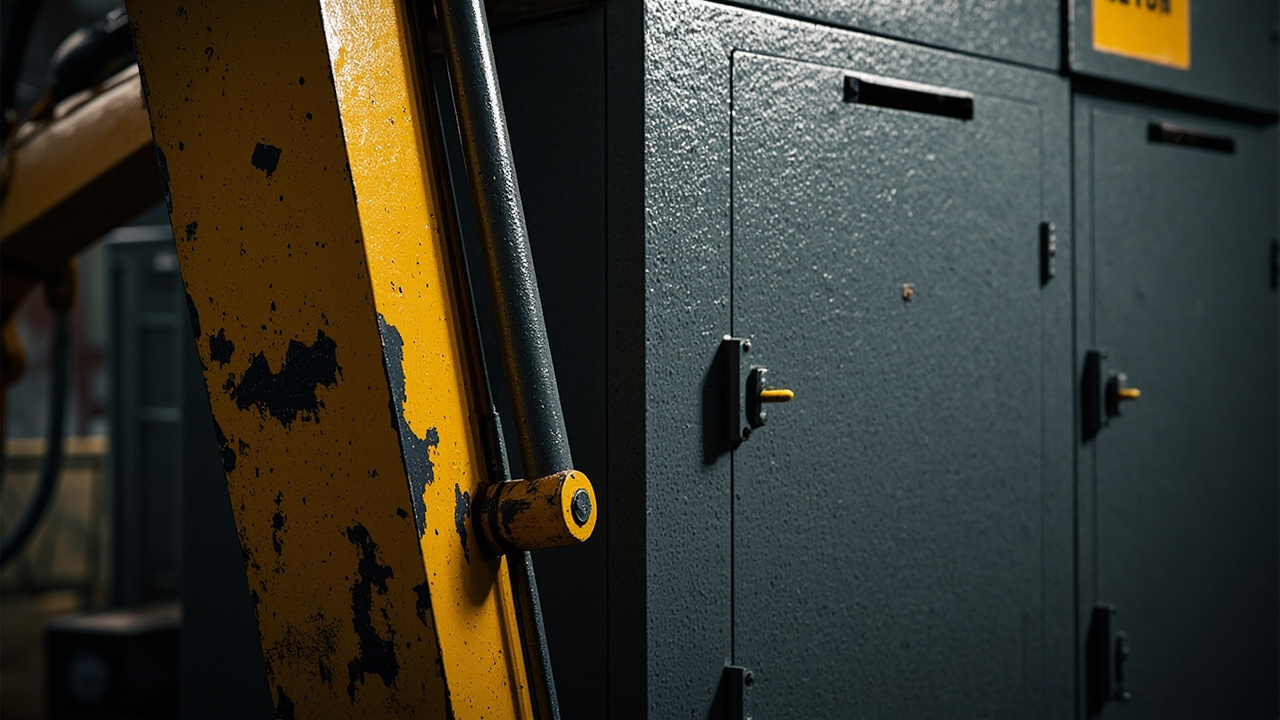
Hammer-tone paint and wrinkle paint are collectively referred to as "artistic texture paint" or "pattern paint". They are a class of industrial coatings that actively create micro-surface undulations through formulation and process to achieve unique decorative and functional effects. They are the opposite of ordinary industrial paints that pursue mirror-smooth flatness: ordinary paints fear orange peel and wrinkles, while hammer-tone/wrinkle paints precisely make "texture" their selling point. Such coatings are extremely common on engineering machinery, electrical cabinets, tool equipment, and instrument housings—they can both conceal substrate defects and weld scars, and enhance texture, slip resistance, stain resistance, and hide scratches, representing a combination of industrial aesthetics and pragmatism.
From the perspective of materials science, the essence of artistic texture paint is "precise programming of surface tension and curing shrinkage". Ordinary coating engineering tries every means to eliminate surface defects, while artistic texture paint actively induces, constrains, and cures these defects, turning them into repeatable, mass-producible decorative language. This reverse thinking determines that its formulation and process are very different from conventional coatings: orange peel, cratering, and wrinkling, which are "accidents" in conventional systems, must be precisely controlled in artistic texture paint. Understanding this is the prerequisite for comprehending all the content in this article.
From an industrial history perspective, wrinkle paint can be traced back to early 20th-century oil-based alkyd systems, which relied on cobalt-manganese driers to create "retro wrinkles" on small metal parts (lighting, instruments, stationery) for defect concealment and decoration; hammer-tone paint emerged with the maturity of non-leafing aluminum powder and surface tension control technology, and was widely used on machinery and electrical housings after World War II. Under the concept of "creating beauty from defects", the two converged into the family of artistic texture paints, and with the advancement of the resin industry (epoxy, acrylic, polyurethane, polyester), continuously expanded the boundaries of weather resistance, chemical resistance, and automation. Today, it is no longer a "low-end defect-hiding paint", but a mature "tactile-visual" language in industrial design.
Kexin New Materials (Guangdong) Co., Ltd. (kexinMaterials), located in Foshan, is a coating manufacturer serving industrial customers. It has mature formulations and batch delivery experience in the fields of resin-effect pigment synergy for artistic texture paints, andcompatible for engineering machinery and electrical equipment housings. This article thoroughly explains the mechanisms, raw materials, formulations, application, quality control, and applications of hammer-tone and wrinkle paints, helping engineers avoid detours in selection and troubleshooting, and providing procurement and project management personnel with implementable acceptance standards.
I. What are hammer-tone paint and wrinkle paint
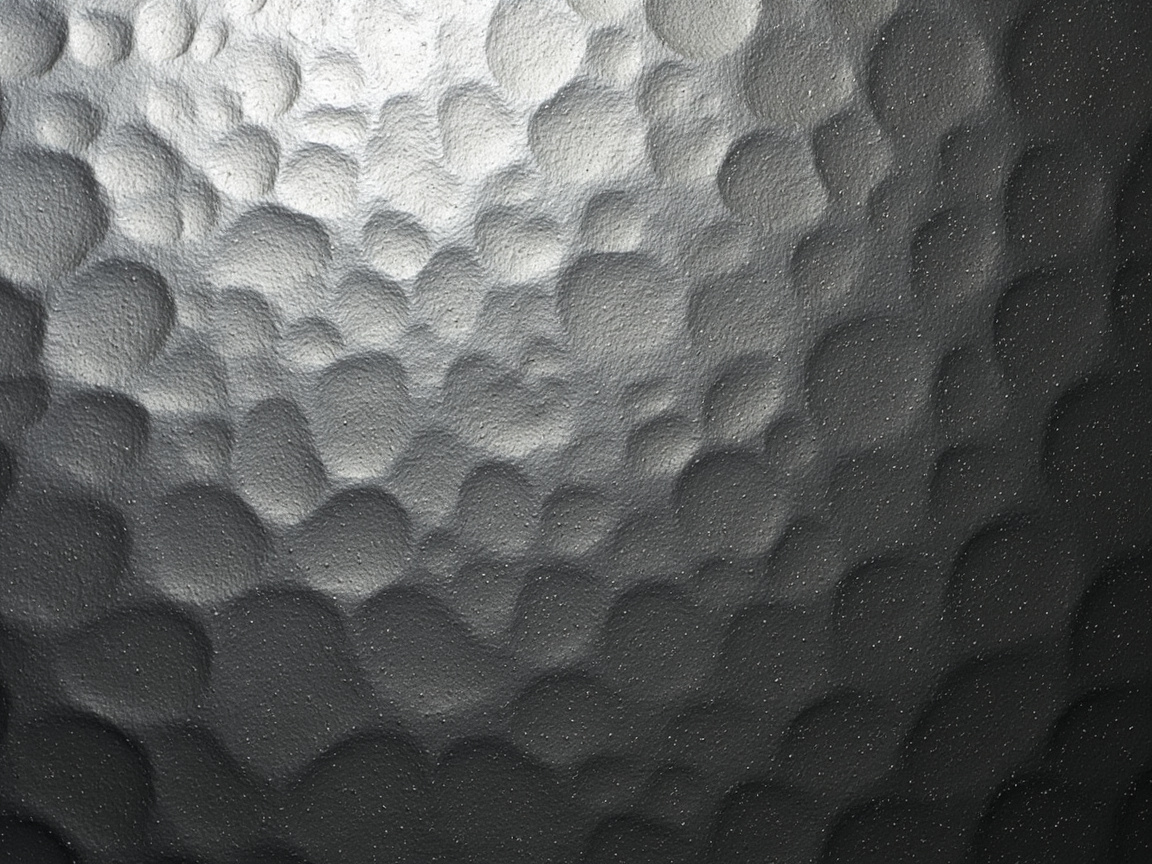
Hammer-tone finish exhibits dense small dent patterns similar to those left by hammering metal, looking like countless miniature hammer marks, hence the name. It typically uses non-leafing aluminum powder (or mica, stainless steel powder) to provide the "core" of metallic spots, and then relies on surface tension differences to pull the paint film into undulations. Wrinkle finish (also known as a branch of wrinkle paint or orange-texture paint) has a surface of uniform fine wrinkles or cracked undulations, like a dried riverbed or aged skin. Both create texture through "controlled unevenness", but the physical mechanisms of pattern formation differ: hammer tone is tension-driven non-uniform flow, while wrinkle is skin wrinkling caused by asynchronous curing shrinkage.
What must be strictly distinguished is: the "wrinkle" of wrinkle paint is caused by the coating's own chemical/physical shrinkage and is a design goal; whereas the "orange peel" of ordinary paint is a defect caused by poor application or rheological loss of control and must be eliminated. The texture of artistic texture paint is designed, repeatable, and batch-stable, while orange peel is uncontrolled, random, and to be eliminated—the two are opposite in direction and fundamentally different. In engineering, "orange-texture paint" is often also grouped into the artistic texture paint family, but its pattern formation lies between hammer tone and wrinkle, relying on thixotropy + fast volatile accumulation to produce orange-peel-like undulations, with a mechanism closer to the hammer-tone side.
Visually, hammer tone leans toward "metallic mottled, rugged, forceful", suitable for engineering machinery and heavy equipment; wrinkle leans toward "fine, matte, thick handfeel", suitable for instruments, power distribution, and retro decoration. When selecting, customers often first decide "which texture is wanted", then reverse-engineer the mechanism and formulation, which is more scientific than first asking "what resin to use".
II. Formation mechanism of hammer tone
The core mechanism of hammer tone is "non-uniform flow driven by surface tension difference". In the wet film, effect pigments (aluminum flakes) locally enrich and alter the surface tension there; at the same time, uneven evaporation of solvent from the film surface and aluminum flake edges creates a surface tension gradient. Areas of low surface tension are "pulled" by surrounding high-tension areas, forming local depressions; the aluminum flakes serve as visual anchors for the texture, making the depressions appear as metallic spot hammer marks. In short: aluminum flakes define the "points", tension difference defines the "dents", and solvent evaporation defines the "rhythm". The coupling of these three determines the density, depth, and three-dimensionality of the hammer points.
From a rheological perspective, the hammer-tone wet film must maintain a certain yield value and thixotropy before finger-dry, so that the depressions pulled out by tension do not re-level under gravity and self-flow. If the system is too thin and thixotropy too low, after tension pulls the film into dents, the film slowly re-levels, and eventually the texture disappears leaving only aluminum powder; if the system is too thick and thixotropy too high, the film cannot be pulled and texture fails to form, becoming a matte flat surface. Therefore, hammer-tone formulations demand far higher "real-time rheology" than ordinary paints—they need a narrow window of "flow enough to form texture, yet viscous enough to lock it".
The density and depth of hammer tone are controlled by multiple factors: coarser aluminum powder particle size and higher dosage make spots more obvious; faster solvent evaporation and greater surface tension difference make depressions deeper; greater film thickness enhances three-dimensionality but may lose fineness. Formulators combine these three to create different styles such as "coarse hammer", "fine hammer", "large flower", "small flower". In practice, small amounts of silicone-based surface tension modifiers are introduced to deliberately create "low surface tension points", making depressions sharper and spot edges clearer.
III. Formation mechanism of wrinkle paint
The texture of wrinkle paint comes from "controlled shrinkage wrinkling during film formation". There are two typical paths. One is oxidative polymerization wrinkling: early wrinkle paints used oil/alkyd systems, adding metal soap driers (such as cobalt, manganese, calcium, zinc soap blends) that promote surface oxidation; the surface layer's oxygen-crosslinking is far faster than the inner layer, the surface skins first and the inner layer cures and shrinks later, pulling the skin into wrinkles. The other is thermoplastic/thermoset wrinkling: relying on resin glass transition temperature difference or crosslinking rate difference, causing inconsistent volume shrinkage between surface and inner layers during drying/curing, thus wrinkling. Modern wrinkle paints more often use modified resins + dedicated wrinkling agents to control wrinkle scale, avoiding the odor and yellowing of early oil-based systems.
Regardless of path, the key is "asynchronous curing/shrinkage between surface and inner layers": if synchronized, no wrinkle (film shrinks uniformly); if too different, cracking (skin torn); the window must be precisely set. Oxidative polymerization types are extremely sensitive to oxygen concentration and temperature—oven airflow, workpiece placement density, and heating ramp all change wrinkle morphology, which is why the same formulation can "change appearance" in different workshops. Thermoset/thermoplastic types rely more on resin selection and hardener ratio, less disturbed by oxygen, more suitable for automated lines.
It is worth adding that the "scale" of wrinkles (wavelength and amplitude) is determined by three factors: film thickness, shrinkage difference, and surface layer strength. Thicker film, greater shrinkage difference, and tougher surface layer yield longer, deeper wrinkles; otherwise fine and dense. Engineering often uses a baking curve of "low-temperature skinning first, then stepwise heating to pull apart" to stabilize this window, see Section XV.
IV. Overview of key raw materials
The raw material system of artistic texture paint can be broken down into six functional modules:
- Resin: Hammer-tone paints mostly use short-oil alkyd, acrylic, epoxy, or polyurethane-modified resins; wrinkle paints traditionally use alkyd/phenolic, modern use epoxy, polyester, UV systems. Resin determines film properties (adhesion, weather resistance, chemical resistance) and the pattern window.
- Effect pigments: Non-leafing aluminum powder is the "spot core" of hammer tone; mica, bronze powder, stainless steel powder are also used for colored or special hammer tones.
- Wrinkling agents/driers: Metal soap blends (oxidative type for wrinkle paint); or dedicated silicone, fluorinated additives to regulate surface tension (hammer-tone type).
- Fillers: Talc, barium sulfate, calcium carbonate, etc., adjust viscosity and texture bearing; excessive amounts flatten texture and reduce three-dimensionality.
- Rheological additives: Fumed silica, bentonite, polyamide wax, etc., as thixotropic agents control flow and prevent texture leveling out.
- Solvent/co-solvent: Volatility gradient determines pattern rhythm; the hidden protagonist of formulation, often underestimated.
These six modules are not simply added but a strongly coupled system. For example, changing a resin alters wetting of aluminum powder, further affecting spot brightness; adding a thixotropic agent changes film thickness load-bearing, thus changing wrinkle wavelength. Therefore, formulation development of artistic texture paint almost inevitably goes through "full/fractional factorial experimental matrices", and mere empirical fine-tuning rarely hits the mark at once.
More specifically, the "hidden interactions" of modules are often underestimated: solvent polarity changes aluminum powder orientation and settling rate, so the same aluminum powder shows more scattered spots in ketone-rich systems and more aggregated in aromatic-rich systems; filler particle size distribution absorbs thixotropic agent surface hydroxyls, weakening thixotropic strength, causing "same formulation sheet, different actual viscosity"; metal ions in driers may also catalyze thermal-oxidative aging of certain resins, reducing storage stability. These interactions mean artistic texture paint is "change material, change formula", and also why mature factories include raw material batch numbers in formulation management (see Section XXX). For beginners, the safest strategy is to first fix the "main variables" of resin and aluminum powder, then fine-tune solvent gradient and thixotropy/wrinkling around them, avoiding moving multiple main variables simultaneously and getting lost.
V. In-depth analysis of resin systems
Resin is the "skeleton" of artistic texture paint, determining film-forming temperature, upper property limits, and pattern compatibility range. Common types and trade-offs are as follows:
- Short-oil alkyd resin: Low cost, good wetting of aluminum powder, bright hammer spots, but average weather and chemical resistance; mostly for indoor equipment, tools. Oxidative wrinkle paint often based on it.
- Acrylic resin (thermoplastic/thermoset): Good weather resistance, gloss and color retention, suitable for outdoor engineering machinery hammer tone; thermoset can high-temperature crosslink, better properties but needs baking.
- Epoxy resin (amine/phenolic cured): Excellent adhesion, chemical resistance, salt spray resistance, suitable for heavy anti-corrosion primer-texture integrated or electrical equipment wear-resistant wrinkle; but easy yellowing, caution for outdoor topcoat.
- Polyurethane (PU, two-component): Strongest overall properties (tough, weather-resistant, chemical-resistant, wear-resistant), preferred for mid-high-end engineering machinery hammer tone; two-component has requirements on application window and pot life after mixing.
- Polyester/saturated polyester: With amino baking paint, high-temperature curing, high hardness, controllable leveling, suitable for automated line wrinkle/hammer tone.
- UV-curable resin: Zero/low VOC, second-level curing, but 3D part shadow areas hard to cure; artistic texture UV-ization still exploratory.
Selection logic: First lock "service environment (indoor/outdoor, corrosion level)" and "application method (air-dry/baking)", then determine base in resin matrix, finally design effect pigment and wrinkling/tension system around it. Kexin New Materials' Foshan line usually customizes solutions for customers along two main lines: "epoxy primer + polyurethane/acrylic topcoat" or "alkyd air-dry", covering the span from heavy machinery to indoor instruments.
VI. Non-leafing aluminum powder and effect pigments
The "spots" of hammer tone are essentially the spatial distribution and reflection of aluminum flakes within the film. Non-leafing aluminum powder must be used, not leafing type. Leafing aluminum powder enriches on the surface forming a continuous mirror silver layer, covering texture and unable to form "points"; non-leafing aluminum powder suspends uniformly and randomly orients within the film, aggregating at depressions under tension pull, forming discrete silver spot cores. Particle size distribution is the style switch: 8–20 µm fine powder gives "fine hammer small flower", 30–60 µm coarse powder gives "coarse hammer large flower"; flake thickness affects sparkle and hiding.
Surface treatment of aluminum powder directly affects hammer-tone stability. Uncoated aluminum powder easily reacts and generates gas, blackens in acidic/alkaline or high-humidity systems; silica/fatty acid coating improves chemical resistance and dispersion stability. Colored hammer tone overlays transparent color paste (e.g., transparent yellow, transparent blue) or switches to bronze powder, colored pearlescent, stainless steel powder. Bronze powder gives "gold hammer" high-end feel but easily oxidizes and discolors, needs clear coat or weather-resistant resin; colored pearlescent gives "iridescent hammer" modern feel, but hiding and spot sharpness weaker than aluminum, often as accent.
Addition method of non-leafing aluminum powder is also key: low-speed dispersion at paint mixing stage, avoid high-speed shear damaging flake shape; for water-based systems, silica-coated aluminum powder needed to isolate water-phase reaction, see Section XXVIII water-based. Aluminum powder ratio (by formula mass) commonly 1%–6%; too low spots sparse, too high settles and over-hides thus "blurring" texture.
VII. Wrinkling agents and cobalt-manganese driers
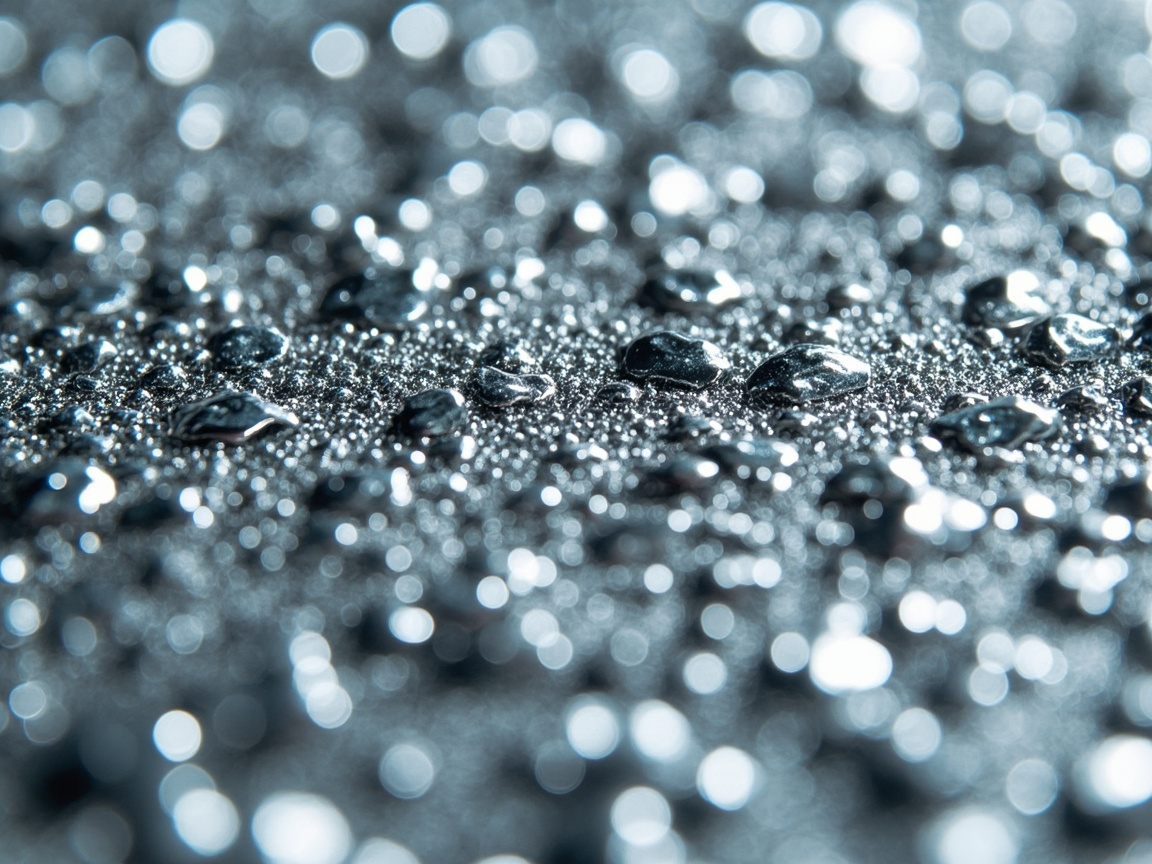
The soul of oxidative wrinkle paint is drier blending. Cobalt soap alone dries extremely fast but tends to "surface over-oxidation, inner layer uncured, wrinkled yet sticky"; manganese soap promotes bottom oxidation, deepens wrinkles but darkens film; lead soap (mostly restricted now) once used for synergy; calcium/zinc soap as auxiliary and color stabilizer. Classic industry practice is "cobalt + manganese + calcium/zinc" ternary or quaternary blend, cobalt sets skinning speed, manganese sets wrinkle depth, calcium zinc stabilize color and synergize. Cobalt content (as metal Co) often 0.02%–0.08% of resin solids, manganese 1–3 times that, excess causes wrinkle-crack, yellowing, heavy odor.
Besides metal soaps, modern wrinkle paints also use "dedicated wrinkling agents"—mostly high-molecular-weight unsaturated polyester or special wax/silicone systems, which preferentially film or migrate at surface during film formation, artificially creating a "skin layer", thus freeing from strong oxygen dependence, more stable texture, lower odor, suitable for eco-friendly and automated lines. Such agents commonly 1%–5%, with high compatibility requirement to base, selection needs matching test with base.
Be warned: driers are sensitive to storage stability. High-temperature warehouse slowly pre-oxidizes coating in can, opening shows "half-wrinkled", scrapping application. Therefore artistic texture paint storage should control temperature (suggest 5–35℃), avoid light, FIFO; also a supply-chain failure point often overlooked.
VIII. Thixotropic agents and rheological control
Thixotropic agent determines "whether texture can be locked". Three common types: fumed silica (hydrophilic/hydrophobic), organic bentonite, polyamide wax/hydrogenated castor oil derivatives. Their common point is forming 3D network, giving high viscosity at rest (anti-sag, bear film thickness), thinning under shear (spraying, easy atomization), rebuilding structure after rest (lock texture, anti-settle). Hammer-tone paint needs "thin enough to form, thick enough to lock", thixotropic agent is the unifier of this contradiction.
Different thixotropic agents have different styles: fumed silica strong thickening, friendly to fine texture but easily matte, excess "eats" gloss; organic bentonite good compatibility in solvent systems, fast thixotropic recovery; polyamide wax excellent anti-settle, suitable for heavy filler and aluminum systems, but may introduce slight haze. Engineering often blends to balance anti-settle, thixotropy, and appearance.
Thixotropic agent dosage must link with film thickness and baking: thicker film needs stronger thixotropy against sag, but too strong flattens texture, reduces three-dimensionality. A practical tip: quantify with Stormer viscosity (KU) or IC rotational viscometer "thixotropic loop area", not just feel, so cross-batch controllable.
IX. Solvent system and volatility gradient
Solvent is the "invisible protagonist" of artistic texture paint. Pattern rhythm is determined by volatility gradient (hierarchy of fast/slow evaporation): whether "slow first then fast" or "fast first then slow" depends on pattern mechanism. Hammer tone usually needs "fast evaporation to create tension difference, yet leave some slow evaporation to maintain flow for pattern", thus commonly "medium/fast ketone-ester + slow alcohol/aromatic" gradient combo; wrinkle (oxidative) relies more on oxygen and temperature, solvent mainly manages leveling and atomization, improper gradient causes pinholes or scattered texture.
Specific example: butyl acetate, MEK, MIBK are medium-fast solvents, responsible for initial tension difference and atomization; xylene, high-boiling aromatic, DAA are slow solvents, responsible for later flow and anti-blush. Too much fast solvent → surface skins instantly, inner solvent trapped → pinholes, bubbles, dead texture; too much slow solvent → over-leveling, scattered texture, slow dry, dust-prone. Adjusting solvent is adjusting the "timeline".
Under environmental pressure, high-boiling harmful solvents (e.g., some aromatics, halogens) restricted, shifting to low-toxic esters, alcohol ethers, but volatility gradient must be rearranged or pattern window drifts. Kexin New Materials in solvent substitution projects often uses GC volatility curve measurement to reverse-engineer formulation, more reliable than boiling point tables.
X. Formulation design key points
The table below summarizes single-factor adjustment directions (note: actual is coupled system, single change oftenaffects others):
| Formulation factor | Increase | Decrease | Remarks |
|---|---|---|---|
| Aluminum powder dosage | Denser, brighter hammer points | Sparser, darker hammer points | Excess easily settles, over-hides |
| Aluminum powder particle size | Coarser spots | Finer spots | Coarse powder strong sparkle but rough surface |
| Solvent evaporation rate | Deeper dents, stronger texture | Shallower, near flat | Too fast pinholes, too slow scattered |
| Resin viscosity | Better texture retention | Easily levels out | Too high orange peel, too low no texture |
| Thixotropic agent | Stable shaping | More flow, weaker texture | Excess surface matte |
| Wrinkling agent (wrinkle paint) | Denser wrinkles | Tends flat | Excess cracks, yellows |
| Film thickness | Stronger 3D texture | Shallow, flat | Too thick sags, texture piles dead |
| Baking heating rate | Wrinkles pulled more open | Texture tightens | Too fast cracks, too slow loose |
This table shows: artistic texture paint is a "multi-factor coupled" system, single change often moves the whole body, must use formulation matrix experiments to lock window. Suggest establishing "base formulation + single-variable gradient" development discipline, each variable at least 3 levels, use orthogonal table to compress experiments, and solidify results with texture panel + film thickness + viscosity three parameters.
During engineering implementation, this table should also be overlaid with the "cost matrix": for example, "increasing aluminum powder particle size" can coarsen the speckles, but it will increase sparkle and surface roughness, and may exceed the customer's gloss requirements, so it must also be counted; "increasing wrinkling agent" deepens the wrinkles but sacrifices weather resistance and odor. Therefore, the formulator's real job is not to "create the texture", but to "find the feasible region at the intersection of five constraints: hiding defects, texture, physical properties, cost, and compliance". This is also why this article repeatedly emphasizes "narrow window" and "sealed sample arbitration" — decorative coating has no single correct answer, only the optimal compromise under customer acceptance.
XI. Formula Matrix and Quantitative Examples
To turn "experience" into "reproducible", two quantitative teaching-type formula matrices (parts by mass, binder solid content approx. 50%, for understanding structure only, not production formulas) are given below.
Hammer-tone paint (two-component polyurethane, air-dry/low-temp bake) example matrix:
| Component | A Fine Hammer | B Medium Hammer | C Coarse Hammer |
|---|---|---|---|
| Hydroxyl acrylic resin (60%) | 45 | 45 | 45 |
| Non-leafing aluminum powder (18 µm) | 2.0 | 3.0 | 0 |
| Non-leafing aluminum powder (45 µm) | 0 | 0 | 4.5 |
| Fumed silica | 0.6 | 0.8 | 1.0 |
| Medium pigment carbon black paste | 0.3 | 0.3 | 0.3 |
| Butyl acetate/xylene (7:3) | 12 | 12 | 12 |
| Leveling agent | 0.3 | 0.3 | 0.3 |
| Curing agent (N75 equivalent) | By NCO:OH=1.05 | Same | Same |
It can be seen: fine→coarse mainly relies on switching aluminum powder particle size and dosage; thixotropic agent increases with coarser powder to lock larger depressions; other structures remain unchanged. This exactly reflects the idea of "four factors (aluminum powder specification, film thickness, solvent gradient, resin viscosity) combination to customize style".
Wrinkle paint (alkyd oxidative type) example matrix:
| Component | Fine Wrinkle | Medium Wrinkle | Deep Wrinkle |
|---|---|---|---|
| Short-oil alkyd resin (50%) | 50 | 50 | 50 |
| Cobalt soap (6%) | 0.4 | 0.6 | 0.9 |
| Manganese soap (6%) | 0.6 | 1.0 | 1.6 |
| Calcium soap (4%) | 0.8 | 0.8 | 0.8 |
| Organic bentonite | 0.5 | 0.7 | 1.0 |
| 200# solvent oil | 15 | 15 | 15 |
It can be seen: wrinkle deepening relies on increased cobalt-manganese ratio and total amount, but exceeding the "deep wrinkle" level enters the cracking zone, requiring reducing film thickness or slowing heating. This is the quantitative boundary of the "window".
XII. Construction Process Overview
Hammer-tone and wrinkle paints have certain tolerance in construction (which is exactly why they can hide substrate defects), but there are also red lines. Mainstream construction methods: air spray (most common, controllable texture), airless spray (high efficiency for large parts, coarse atomization needs adjustment), curtain/dipping (regular small parts, but uniformity weaker than spray), electrostatic spray (saves paint, requires conductivity and resistance matching). Roller/brush coating is generally not used for decorative coating — manual marks will destroy texture uniformity.
Substrate pretreatment determines the lower limit of success: steel needs degreasing, derusting, sanding, recommended blasting Sa 2.5 or power tool St 3; casting welds, pores should be filled with putty before applying texture paint (texture paint can hide "shallow" defects, not "deep" ones). Plastic parts need flame/plasma treatment or primer to improve adhesion. Construction environment: temperature 10–35℃, relative humidity ≤85%, avoid low temp and high humidity causing slow drying, sagging, blushing.
Regardless of method, the three-step "first sample, then standard, then mass production" is an iron rule. Samples must be verified on equipment, film thickness, and bake line consistent with the customer; texture style and batch consistency count.
XIII. Viscosity Control and Ford Cup
Viscosity is the first ruler for decorative coating construction. The industry commonly uses Ford Cup No. 4 (FC4) to measure outflow seconds as a quick on-site indicator. Hammer-tone paint spray viscosity is often controlled at 25–40 seconds (FC4, 23℃), wrinkle paint 20–35 seconds, specifically adjusted with spray gun and film thickness target. Low viscosity → over-fine atomization, thin film, weak or even disappeared texture; high → orange peel, particles, gun clogging.
But Ford cup is only a "single-point rough measurement"; what really needs to be managed is "real-time rheology": use rotational viscometer to measure apparent viscosity vs shear rate curve, and thixotropic loop area. A more practical on-site approach: calibrate with FC4 + spray test panel every shift, bind "seconds — panel texture" into SOP. Temperature significantly affects viscosity; same seconds in winter and summer have different actual viscosity, need constant temp water bath or temperature correction table.
Regarding dilution: must use formula-specified thinner, do not arbitrarily add ordinary thinner, otherwise volatile gradient disorder, texture out of control. After adding thinner, re-measure FC4 and spray test, prohibit "adding by feel".
XIV. Film Thickness Control
Film thickness is the first lever for texture stereoscopy. Decorative coating dry film is usually 35–70 µm, significantly higher than ordinary industrial topcoat (20–35 µm). Too thin → texture absent, poor hiding; too thick → sagging, texture "piled dead" into paste, wrinkle cracking, cost waste. Control means: wet film comb for instant feedback, dry film gauge for spot check after curing; spray gun speed, distance, pressure, overlap rate jointly determine.
Different styles correspond to different film thickness bands: fine hammer 35–45 µm, medium hammer 45–60 µm, coarse hammer 55–70 µm; fine wrinkle 30–45 µm, deep wrinkle 50–70 µm. Uneven film thickness on same workpiece will show "fine hammer here, coarse hammer there", so automatic lines commonly use reciprocator + thickness closed-loop, manual lines rely on technician rhythm stability. Kexin New Materials often writes "film thickness window" into acceptance standard when delivering to customers, e.g. "coarse hammer 55±8 µm, texture uniformity visual grade A".
Film thickness also matches substrate and primer: directly spraying on rough castings needs thicker to fill; with epoxy primer, topcoat can be moderately reduced. But reduction must keep texture as bottom line.
XV. Bake Curve Design
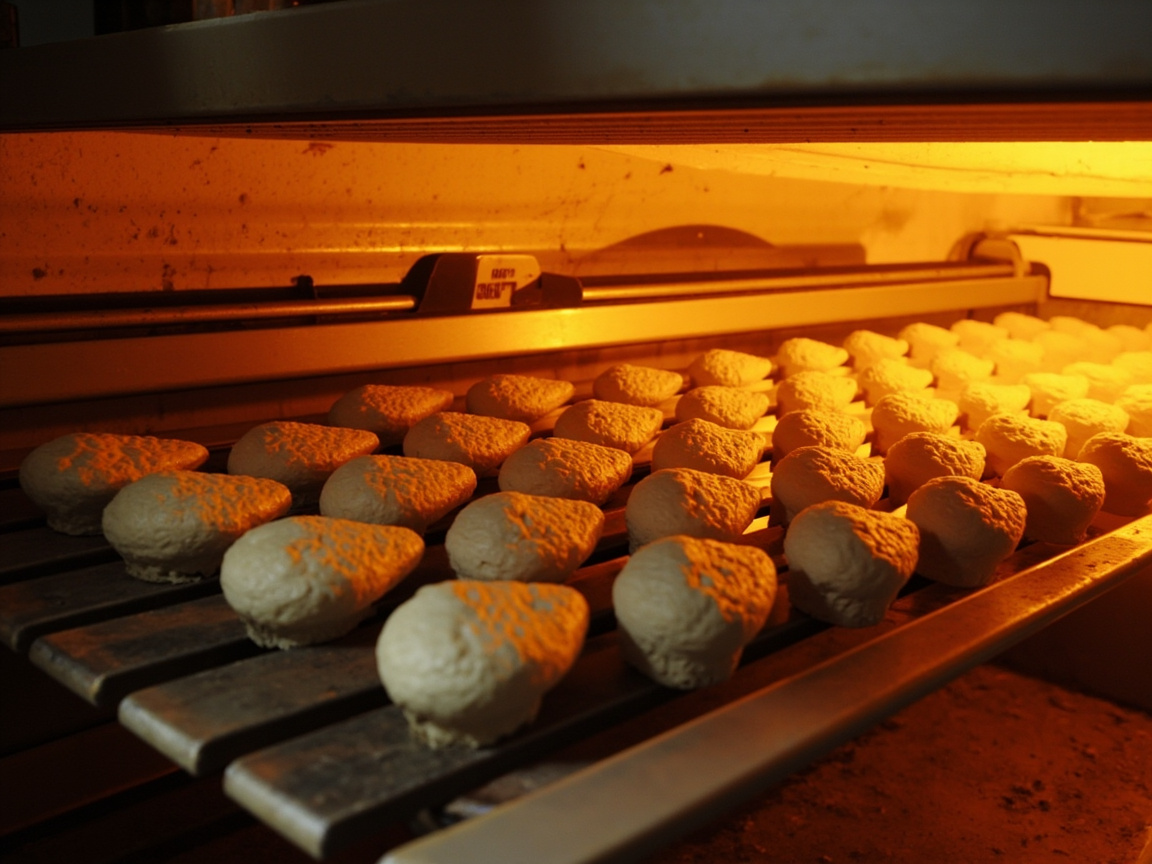
The bake curve of wrinkle paint is extremely critical; core logic is "first low temp to let surface oxidize/skin, then heat up to make inner layer cure and shrink to pull out wrinkles". Typical step curve: room temp workpiece into oven → 80–100℃ hold 8–15 min (skinning period, surface oxygen-crosslink leads) → step up to 120–150℃ hold 15–30 min (pulling period, inner shrink pulls out wrinkles and fully cures) → slow cool out. Too fast heating will "wrinkle dead" or crack, too slow makes loose texture, high energy.
Hammer-tone paint (air-dry/low-temp bake type) depends less on baking, but low-temp bake (60–80℃ 15–20 min) can accelerate setting, lock texture, discharge solvent, improve appearance consistency. Two-component polyurethane hammer-tone avoids high temp (>120℃ easily yellows, loses gloss), mostly air-dry or low-temp bake; epoxy/polyester baking type can use 140–180℃ standard bake curve.
Oven itself must be uniform temp: top-bottom, front-back difference ≤5℃, uniform airflow, not directly blowing workpiece surface (avoid texture blown crooked). Many on-site defects actually stem from oven curve arbitrarily changed or temp measurement point inaccurate — suggest using oven temp tracker (data logging) to measure actual workpiece surface temp curve, not just dial.
XVI. Spray Equipment and Guns
Air spray gun is most mainstream: gravity (small batch, fast color change) and pressure-feed (large batch, continuous supply). Nozzle size often 1.3–1.8 mm, hammer-tone coarse can use 1.5–1.8 mm to reduce over-atomization, keep speckles; wrinkle uses 1.3–1.5 mm. Pressure 2.5–4.0 bar, gun distance 15–25 cm, uniform speed, overlap 1/2–2/3.
Key is "atomization particle size": hammer-tone needs "coarse atomization, keep granular feel", so pressure not too high, distance not too close, let aluminum powder land as flakes not mist, speckles obvious; if too fine, aluminum powder too evenly dispersed, hammer points blur. Wrinkle opposite, need uniform thin multi-layer, stable film thickness and oxygen contact.
Automatic line uses reciprocating spray machine + electrostatic bell, advantages programmable, uniform film, traceable data; difficulty is bell high shear may damage aluminum flakes, static changes landing distribution, need re-calibrate hammer-tone parameters. Regardless manual or automatic, gun and pump pressure fluctuation must be stable, unstable pressure = film fluctuation = texture fluctuation.
XVII. Baking and Curing Equipment
Oven types: convection hot air (most common, low cost, uniformity by duct design), infrared/far-infrared (fast heat, good for thin parts, but thick parts inside-out uneven), UV (only UV systems), gas catalytic infrared. Decorative coating mainly uses convection hot air, because need "slow rise, uniform temp, oxygen control".
Equipment points: temp uniformity (empty/loaded diff), adjustable airflow not directly blowing parts, exhaust removes solvent and reaction byproducts (oxidative type needs moderate oxygen, but not solvent vapor accumulating to explosion limit). Chain/mesh speed determines residence time, with temp forms "time—temp curve". Suggest each line do "oven temp distribution map" and "product temp tracking" double calibration.
Energy and cost also here: step curve saves time vs constant temp but complex control; heat recovery, zone control reduce unit energy. Kexin New Materials when planning lines for customers, jointly simulates oven length, chain speed, temp zones with formula window, avoid "formula can make texture, equipment cannot" disconnect.
XVIII. Quality Control Methods
QC of decorative coating has "physical-chemical" and "appearance" two layers. Physical-chemical: viscosity (FC4/rotational), fineness, solid content, density, storage stability (50℃ 7 days no gelation/stratification), drying time, adhesion (cross-cut), hardness (pencil/Shore), impact, bend, salt spray, water, chemical — basically industrial paint standards, but add "texture stability" special item.
Appearance QC is difficult: texture is "subjective + objective" mix. Objective method: multi-angle gloss/texture meter, confocal microscopy to measure depression depth and wavelength; subjective by standard panel comparison (A/B/C grade), unified visual angle and light (e.g. D65 source, 45° observation). Suggest establish "customer sealed sample panel" as arbitration, each batch compare with sealed sample, out of tolerance stop line.
Process QC: each shift first-piece confirm (film + texture + dry), online thickness, oven temp record, thinner batch check. SPC puts film thickness and FC4 into control chart, texture defect rate from "post-pick" to "pre-control". Kexin New Materials promotes "batch retain + data card", customer complaint can trace to specific batch formula and process params.
XIX. Common Defects and Countermeasures
| Defect | Cause | Countermeasure |
|---|---|---|
| Hammer texture not showing | Little aluminum powder, thin film, slow volatilization, low thixotropy | Add aluminum powder, increase film, speed volatilization, add thixotropy |
| Texture leveling disappeared | Low viscosity, insufficient thixotropy, thin film, much slow solvent | Increase viscosity, add thixotropy, control film, reduce slow solvent |
| Wrinkle cracking | Excess wrinkling agent, rapid heating, excessive film | Reduce wrinkling agent, slow heating, lower film |
| Wrinkled but uneven | Uneven spray, uneven oven temp, oxygen fluctuation | Standardize spray, uniform oven, stable airflow |
| Surface tacky | Insufficient cure, drier imbalance, low temp high humidity | Extend bake, adjust drier, improve environment |
| Color floating | Effect pigment stratification, poor leveling, messy aluminum orientation | Optimize dispersion, add leveling, stable shear |
| Pinhole/bubble | Too much fast solvent, sudden film increase, substrate pores | Adjust volatile gradient, control film, fill substrate |
| Uneven gloss | Excess thixotropic local aggregation, uneven clear coat | Optimize thixotropy, uniform clear coat |
| Yellowing | Epoxy/alkyd poor weather, excess drier, high temp | Change weather resin, control drier, lower oven temp |
| Batch color diff | Aluminum batch, resin hue, film fluctuation | Material standard, film closed-loop, sealed sample compare |
Troubleshooting discipline: first fix film and bake, then move formula, avoid multi-factor simultaneous change causing no attribution. Change only one variable each time and record, is basic skill of decorative coating engineering.
XX. Troubleshooting Case Studies
Case 1 (hammer disappeared): an engineering machinery factory sprayed dark gray hammer "like ordinary gray paint". Check: FC4 only 18 sec (low), film 28 µm (thin), thinner replaced by worker with fast-dry type. Counter: FC4 to 32 sec, film to 58 µm, restore specified thinner and add 0.2% fumed silica. Re-spray recovered speckles. Lesson: on-site "rush" randomly change thinner is number one killer.
Case 2 (wrinkle cracking): a distribution cabinet factory deep wrinkle paint 30% crack after line. Curve: into oven straight 150℃ (no skin period), film 75 µm. Counter: change to 90℃/12 min skin + 140℃/20 min pull, film to 60 µm, cobalt-manganese total down 20%. Crack zero. Lesson: heating curve and film are wrinkle's "double red lines".
Case 3 (floating): an instrument shell hammer local dark "cloud spot". Root: aluminum powder settled in can, uneven stir, and gun pressure fluctuation. Counter: add anti-settle wax, can stir, pressure regulator + online pressure monitor. Lesson: aluminum system "uniform dispersion" more often ignored than formula itself.
Case 4 (storage gel): customer warehouse summer 40℃ storage, open can half wrinkled. Root: drier pre-oxidized under hot storage. Counter: temp-controlled warehouse + dark + FIFO, supplier small pack. Lesson: supply chain temp control is hidden failure point.
XXI. Application on Engineering Machinery and Equipment
Engineering machinery (excavator, loader, pump truck boom, paver) is main battlefield of hammer-tone paint: field work, many welds, easy bump, hammer can one-time hide substrate uneven, hide scratches, show texture, dark gray or machinery yellow with hammer is classic. Construction booms etc large parts mostly two-component polyurethane hammer, air-dry or low-temp bake, balance weather and toughness and fast beat.
Selection points: outdoor weather priority acrylic/polyurethane; with epoxy primer for anti-corrosion; film medium-coarse hammer 50–65 µm to balance hiding and cost; for force parts like boom note film flexibility (avoid over hard brittle). Kexin New Materials supplies hammer system to many engineering machinery factories around Foshan, experience is bind "texture style, film window, bake/air-dry curve" into customer exclusive SOP, turn "art effect" into "batch-consistent deliverable appearance".
Maintenance: hammer surface stain-resistant, easy wipe, scratch not show, reduce warranty appearance complaint; but deep scratch still shows base, need touch-up — touch-up texture hard consistent with original, so suggest provide "repair kit + method note".
XXII. Distribution Switchgear Application
Distribution cabinet, electrical control box, switchgear mostly use wrinkle paint: wrinkle surface matte, non-reflective, thick feel, and fingerprints dust not obvious, easy maintenance; also can add anti-static function (distribution safety). Wrinkle paint on indoor equipment low weather need, alkyd/epoxy system ok, cost controlled.
Process points: distribution parts mostly thin steel, pretreatment phosphating/electrophoretic primer best; wrinkle film 40–60 µm, with step bake; for heat parts note film not block heat (texture increases surface area slightly helps heat, but too thick insulates). Anti-static wrinkle paint need control resistivity (usually 10^6–10^9 Ω·cm), by conductive filler (e.g. conductive carbon black, metal powder) and formula synergy, and not break texture.
Kexin New Materials developed "epoxy wrinkle + anti-static" integrated system for electrical customers, by controlling conductive filler shape and content, keep wrinkle form while reaching anti-static index, used in multiple distribution projects.
XXIII. Hand Tool Application
Hand tools (wrench, pliers, jack, power tool shell) earlylarge amounts of used oil wrinkle paint, heavy odor, average corrosion. Now shift to epoxy/polyurethane for corrosion and feel. Tool paint needs wear, sweat, oil, strong adhesion, wrinkle/hammer provides anti-slip and texture, typical "practical + beautiful".
Process tools mostly small, large batch, suitable dip/curtain + hanging bake, or auto spray line; note hanging contact "no-paint zone" touch-up and rust. Color besides classic black, red, blue, color hammer (e.g. blue hammer, green hammer) boost brand ID.
Cost sensitive is tool industry feature, so weigh "resin grade, film, yield": use mid alkyd/epoxy air-dry reduce equipment, rely film and texture hide substrate, yield for cost.
XXIV. Instrument and Meter Application
Instrument shell (flow meter, controller, analyzer) values both beauty and hiding, hammer/wrinkle both common. Instruments mostly indoor, small, refined, tend "fine hammer/fine wrinkle" for premium feel; also need fingerprint, cleaner resistant, low gloss no glare.
Materials mostly use acrylic/epoxy fine-texture systems, with thin film thickness (35–50 µm) to preserve details; for instruments with display screens, the paint film must not affect assembly clearance. High-end instruments also use "hammer finish + clear coat" to enhance weather resistance and tactile feel. Kexin New Materials once customized a zoned coating scheme of "matte fine hammer + local high-gloss logo area" for a testing instrument manufacturer, balancing brand recognition with an overall understated look.25. Application Expansion in Other Industries
The application of artistic texture paint is also spilling over: fire-fighting equipment (matte red wrinkle, weather resistance + identification), fitness equipment (colored hammer finish, anti-slip and sweat-resistant), agricultural machinery (coarse hammer finish to hide rust and resist weathering), communication equipment cabinets (dark gray wrinkle, matte and non-reflective), military/special equipment (camouflage texture + functional overlay), furniture metal parts (artistic hammer finish, decorative). Its characteristics of "defect hiding + texture + stackable functions" make it almost irreplaceable in the mid-range metal decoration field.
The direction of functional overlay is especially worth attention: anti-static, antibacterial, chemical resistance, high temperature resistance, flame retardancy—upgrading "decorative texture paint" to "functional coating". For example, food machinery uses wash-resistant hammer finish paint, and laboratory benches use reagent-resistant wrinkle paint. Such customization is the incremental space for factories like Kexin New Materials that have formula development capabilities.
26. Cost and Supply Chain
The cost structure of artistic texture paint: resin (largest share, 30%–50%), aluminum powder/effect pigments (significant for hammer finish), solvent, additives, fillers. A cost-reduction misconception is "cutting resin grade"—which sacrifices physical properties and the texturing window, instead lowering yield and increasing overall cost. Better cost reduction lies in: targeted aluminum powder procurement (fixed specs and batches), local solvent substitution (preserving gradient), yield improvement (reducing rework), and lower film thickness limit (reducing consumption while ensuring texture).
Supply chain risk points: aluminum powder is affected by aluminum prices and coating processes; drier metal soaps are subject to environmental production limits; special additives rely on imports. It is recommended to establish a "dual supplier + safety stock + batch sample sealing" mechanism. The temperature control in storage (see Sections 7 and 20) is often underestimated, yet it is a hidden cost for batch stability. Through local chemical support in Foshan and stable raw material channels, Kexin New Materials supplies customers with hammer/wrinkle systems with controllable lead times, and solidifies a "film thickness—yield—unit price" linkage model in quotations to avoid later disputes over film thickness.
27. Environmental Protection and Safety (VOC, Occupational Safety)
Solvent-based artistic texture paint has high VOC and faces restrictions under tightening environmental regulations. Compliance paths: high-solid (solid content ≥70%, reducing solvent), water-based (see 28), UV/powder (texture realization is difficult, under research), and VOC collection and incineration (RTO). Enterprises need to benchmark against local "Technical Requirements for Low Volatile Organic Compound Content Coating Products".
Occupational safety: aluminum powder dust is combustible and explosive, requiring explosion-proof storage and feeding, grounding, and concentration control; solvent vapor is flammable, requiring strict workshop ventilation and hot-work management; some drier metal soaps contain cobalt (CMR substance of concern), requiring MSDS control and exposure protection. Although water-based reduces VOC, water-based aluminum powder treatment and wastewater require separate management.
Green transformation is not "just switch to water and done", but a system engineering of formula—process—equipment—compliance. Kexin New Materials designed its new production line according to low VOC and occupational health management, providing customers with compliance support documents (test reports, SDS, construction VOC accounting) to reduce customer environmental assessment risks.
28. Water-Based Transformation
The water-based transformation of artistic texture paint is a hard nut to crack in the industry. Difficulties: high water-based surface tension, aluminum powder easily reacts with water to produce gas and blacken, complex coupling of volatilization rhythm and water phase, narrow texturing window. Breakthroughs lie in three points: ① silicon/silica-coated water-based aluminum paste, isolating the water phase and stabilizing dispersion (see water-based aluminum paste and water-based metallic paint); ② dedicated water-based wrinkling/tension additives, reconstructing surface tension difference; ③ redesigning the baking curve (water-based requires longer flash-off for bubble removal, then heating).
Water-based hammer finish can currently achieve effects close to solvent-based in indoor instruments and cabinets; outdoor engineering machinery is still climbing due to weather resistance and texture stability. Water-based wrinkle is relatively easier (changing oxidative type to thermosetting/additive type), but matte and feel need re-adjustment. In cost, water-based is currently higher (coated aluminum paste is expensive, equipment modification), but long-term driven down by policy and carbon constraints.
Kexin New Materials has laid out a trial production line in water-based aluminum powder treatment and water-based artistic paint, aiming to reduce VOC below water-based standards while retaining the "hammer point/wrinkle" language, reserving a compliance upgrade path for outdoor customers.
29. Standards and Specifications
Artistic texture paint spans multiple standards; selection and acceptance require "puzzle solving": basic general see GB/T industrial paint general methods (viscosity, adhesion, weather resistance, etc.); anti-corrosioncompatible see ISO 12944 (protective coating systems), GB/T 9276, etc.; safety compliance see low VOC limits, GB 30981 (industrial protective coating VOC), EU labeling (such as cobalt CMR marking); industry application see coating specifications for construction machinery and electrical equipment.
Texture itself currently relies mostly on "enterprise standard + sealed sample panel" for arbitration; there is no unified national standard texture grade. It is recommended that customers and suppliers agree in the contract: texture style sealing sample, film thickness window, texture uniformity grade, batch consistency tolerance, dispute reproduction method. Writing "subjective texture" as "acceptable clauses" is the key to avoiding disputes. Kexin New Materials provides a texture sealing sample card and corresponding process parameter card upon delivery as the acceptance baseline for both parties.
30. Digital Color and Formula Management
The "digitalization" of artistic texture paint has two layers: color digitalization and formula/process digitalization. In color, because texture affects light reflection, ordinary color difference meters easily misjudge; it is necessary to use multi-angle (including texture appearance) or "color difference + texture meter" combination, and fix observation geometry and light source; establish customer-specific color library and sealed sample spectral archive.
In formula management, use LIMS/formula system to record each batch's resin batch number, aluminum powder batch number, additive dosage, viscosity, film thickness, oven curve, forming a traceable data chain; combine with DOE (design of experiments) software for factor analysis to shorten new style development cycle. Process digitalization is to connect spray gun parameters, chain speed, temperature zones to MES, monitor "texture-related variables" in real time, and use SPC to control defect rate.
For multi-base/multi-customer, cloud formula library + permission management can prevent "master leaving with formula". Kexin New Materials precipitates mature styles of artistic texture paint as customer-specific formula cards (including raw material substitution list and emergency troubleshooting table), ensuring delivery stability and reducing dependence on individuals.
31. Project Selection Checklist
A practical checklist for engineers and procurement (can be copied to requirement document):
- Usage environment: indoor/outdoor? corrosion grade? temperature range? determines resin and film thickness.
- Texture language: hammer finish or wrinkle? coarse/fine/deep/shallow? colored or metallic? define style sealing sample.
- Substrate and pre-treatment: steel/cast/plastic? whether to pair with primer (epoxy/plastic primer)? defect hiding lower limit?
- Application method: spraying/curtain coating/electrostatic? manual/automatic? production tempo?
- Film thickness window: dry film µm target and tolerance, written into acceptance.
- Baking curve: step parameters (skin-forming temp/time, pulling temp/time), measured with oven temperature recorder.
- Viscosity SOP: FC4 seconds + designated thinner + temperature correction.
- Functional overlay: anti-static/chemical resistance/high temperature/antibacterial? list indicators.
- Environmental compliance: VOC limit, low VOC or water-based route? need test report and SDS.
- Acceptance standard: texture sealing sample grade, color difference tolerance, batch consistency, dispute reproduction process.
- Supply chain: lead time, safety stock, dual supplier, storage temperature control requirement.
- Repair scheme: touch-up method and texture difference expectation, prepare repair kit.
Putting this checklist upfront in the quotation stage can greatly reduce later "goods not as described".
32. Common Cognitive Misconceptions
Misconception 1: "Texture paint comes out with random spraying". Wrong. Texture is a narrow-window design; any out-of-bounds of film thickness/viscosity/oven curve means failure.
Misconception 2: "More aluminum powder means more obvious texture". Excess instead settles, over-covers, blurs the texture, and raises cost and sedimentation risk.
Misconception 3: "Deeper wrinkle looks better". Too deep easily cracks, harbors dirt, rough feel; electrical parts prefer fine wrinkle.
Misconception 4: "Thinner substitution doesn't matter". Wrong, disordered volatilization gradient is the number one killer on site (see Case 1).
Misconception 5: "Water-based means environmentally done". Water-based requires coated aluminum paste, wastewater and equipment modification, is a system engineering (see 28).
Misconception 6: "Orange peel = hammer finish". Orange peel is uncontrolled defect, hammer finish is controlled design; mechanism and appearance are different.
Misconception 7: "Texture need not be written into contract". Subjective items not quantified will surely dispute; must seal sample + clauses (see 29).
33. Capability Positioning of Kexin New Materials
Kexin New Materials (kexinMaterials) is located in Foshan, serving industrial customers such as construction machinery, electrical equipment, tools and instruments, providing "formula development—sampling and sealing—mass delivery—on-site troubleshooting" integrated service for artistic texture paint. Its capabilities focus on three points: first, a synergistic formula library of resin—effect pigment—additive, covering alkyd/epoxy/acrylic/polyurethane multi-systems and coarse/medium/fine hammer, fine/medium/deep wrinkle multi-styles; second, binding texture style, film thickness window, baking/air-dry curve into customer-specific SOP for batch consistency; third, low VOC and water-based reserves, reserving compliance upgrade for customers.
Typical value to customers: shortening selection and sampling cycle (using mature matrix to quickly approach target style), reducing defect rate (film thickness closed loop + sealed sample arbitration), avoiding compliance risk (test report + SDS + accounting). In Foshan's mature chemical and equipment manufacturing cluster, such "nearby, customizable, traceable" supply capability is becoming a pragmatic choice for mid-to-high-end artistic texture paint.
34. Future Outlook
The next step for artistic texture paint is the three-line parallel advance of "texture as function, greenization, digitalization". Texture as function: on the basis of wrinkle/hammer point, overlay anti-static, antibacterial, chemical resistance, high temperature resistance, even use texture structure itself to regulate hydrophobic/acoustic/tactile. Greenization: high-solid popularization, water-based from indoor to outdoor, UV/powder texture exploration, coupled with VOC treatment and carbon constraints. Digitalization: formula—process—quality control full-chain dataization, using AI to assist DOE and troubleshooting, texture also "measurable, predictable, traceable".
For manufacturers like Kexin New Materials, competition will upgrade from "can it produce texture" to "is the texture stable, compliant, customizable, traceable". Whoever first turns artistic texture paint from "master craft" into "dataized product" holds the initiative in the next stage of industrial decorative coating. For users, it is recommended to incorporate texture into standardized acceptance and supply chain management as early as possible, so that "artistic effect" truly precipitates into "deliverable, replicable asset".
FAQ
Q1: Which hides defects better, hammer finish paint or wrinkle paint?
Hammer finish paint relies on aluminum spot + depression, most thoroughly covering substrate weld scars and scratches, preferred for construction machinery; wrinkle paint has shallower folds, slightly inferior defect hiding but finer texture. Both are far better than flat paint in defect hiding. If substrate is extremely poor (deep pores, large weld beads), any texture paint needs putty filling first; texture paint only hides "shallow" defects.
Q2: Why does my hammer finish paint come out without texture?
Mostly the film is too thin or solvent volatilizes too slowly causing leveling. First increase film thickness, raise fast-volatile solvent ratio, confirm aluminum powder dosage and spec are in place, then check if thixotropy is insufficient or thinner was randomly changed. It is recommended to troubleshoot single variable in order of "fixed film thickness → adjust viscosity → verify aluminum powder → check thixotropy", and record each change.
Q3: What causes wrinkle paint cracking?
Excess wrinkling agent, too rapid oven temperature rise, or excessive film thickness all cause cracking. Reducing wrinkling agent, changing to step heating (skin first then pull), controlling film thickness usually solves. If still cracks, check if cobalt-manganese ratio is unbalanced, or workpiece locally overheated (oven air blowing directly).
Q4: Can hammer finish paint be made colored?
Yes. Using colored effect pigments (bronze gold powder, colored pearl) or transparent color paste over aluminum powder, can make gold hammer, green hammer, blue hammer, etc., mechanism unchanged. Note bronze gold powder easily oxidizes and discolors; outdoor or high-demand occasions need weather-resistant resin or clear coat; pearl as accent is safer.
Q5: Does artistic texture paint need primer?
Recommended to pair. Texture paint film is thicker, direct application easily causes problems due to insufficient adhesion or rust prevention; metal parts use epoxy primer, plastic parts use plastic primer, balancing anti-corrosion and adhesion. Heavy anti-corrosion scenarios (outdoor machinery, coastal) must use "epoxy primer + texture topcoat" system, cannot skip primer.
Q6: Why is water-based hammer finish paint difficult?
Water-based high surface tension, aluminum powder easily reacts, complex volatilization rhythm and water phase coupling, narrow texturing window. Need silicon-coated aluminum powder + dedicated wrinkling/tension additives, and redesign baking curve (longer flash-off for bubble removal). Currently feasible in indoor instruments and cabinets, outdoor still climbing.
Q7: Can texture style be customized?
Yes. Through aluminum powder spec, film thickness, solvent gradient, resin viscosity four-factor combination, can customize coarse/fine, deep/shallow, large/small flower; recommend first make texture panel to confirm. Complex styles (such as zoned high-gloss) need customized coating process, delivery should have sealed sample card.
Q8: What if film thickness is not well controlled?
Too thin no texture, poor defect hiding; too thick sag, texture piles into blur, wrinkle cracks, cost waste. Recommend wet film comb + dry film thickness gauge dual control, automatic line add thickness closed loop. Writing film thickness window into acceptance standard saves more cost than picking defects afterwards.
Q9: Can thinner be randomly changed on site?
Absolutely not. Thinner determines volatilization gradient; random change disorders texturing rhythm, is the number one failure source on site (see Case 1). Must use formula-designated thinner, re-measure Ford cup and test spray after addition. Different winter/summer temperatures also need conversion by correction table, not by feel.
Q10: Is there a national standard grade for artistic texture paint texture?
Currently texture grade mostly relies on "enterprise standard + sealed sample panel" for arbitration; national level has no unified texture grading. Recommend agreeing in contract on texture sealing sample, film thickness window, uniformity grade, batch tolerance and dispute reproduction method, quantifying subjective items to avoid disputes.
Q11: Can Kexin New Materials make customized artistic texture paint?
Yes. Kexin New Materials (kexinMaterials) is located in Foshan, providing integrated service from formula development, sampling sealing to mass delivery and on-site troubleshooting, covering alkyd/epoxy/acrylic/polyurethane multi-systems and various hammer/wrinkle styles, and has low VOC and water-based reserves, can customize specific SOP for construction machinery, electrical equipment, tools and instruments customers.
Further Reading
- Metallic Flake Paint Film Formation Mechanism and Aluminum Powder Directional Arrangement — Understanding aluminum flake orientation is the underlying logic of hammer finish "spots".
- Sprayed Chrome-Plating Alternative / Vacuum Plating Alternative Metallic Coatings — A comparison route when wanting more "real metal" rather than "textured metal".
- Water-Based Aluminum Paste and Water-Based Metallic Paint — The aluminum powder treatment foundation needed for water-based transformation of artistic texture paint.