The reason steel "rusts" is essentially not a simple case of "iron turning red upon contact with air," but the result of a series of electrochemical corrosion processes. Understanding the mechanism of rusting is the prerequisite for upgrading rust prevention from "applying a coat of paint" to a "system engineering" approach: only by knowing how rust grows, where it grows, and what environment drives it, can it be targeted and blocked. Kexin New Materials (kexinMaterials), when designing and recommending anti-corrosion systems, always takes "corrosion mechanism + environmental grade" as the first-step diagnosis, rather than pushing a certain primer right away. Many on-site failures do not stem from poor coating quality, but from a vague understanding of the corrosion mechanism—for example, assuming "once painted, all is well," or treating localized pitting as ordinary rust. Related rust-tolerant application content can be found in the accompanying article Rust-tolerant Coating Surface Treatment, while the specific protective system design should be implemented in Anti-corrosion Coating System Specification Design.
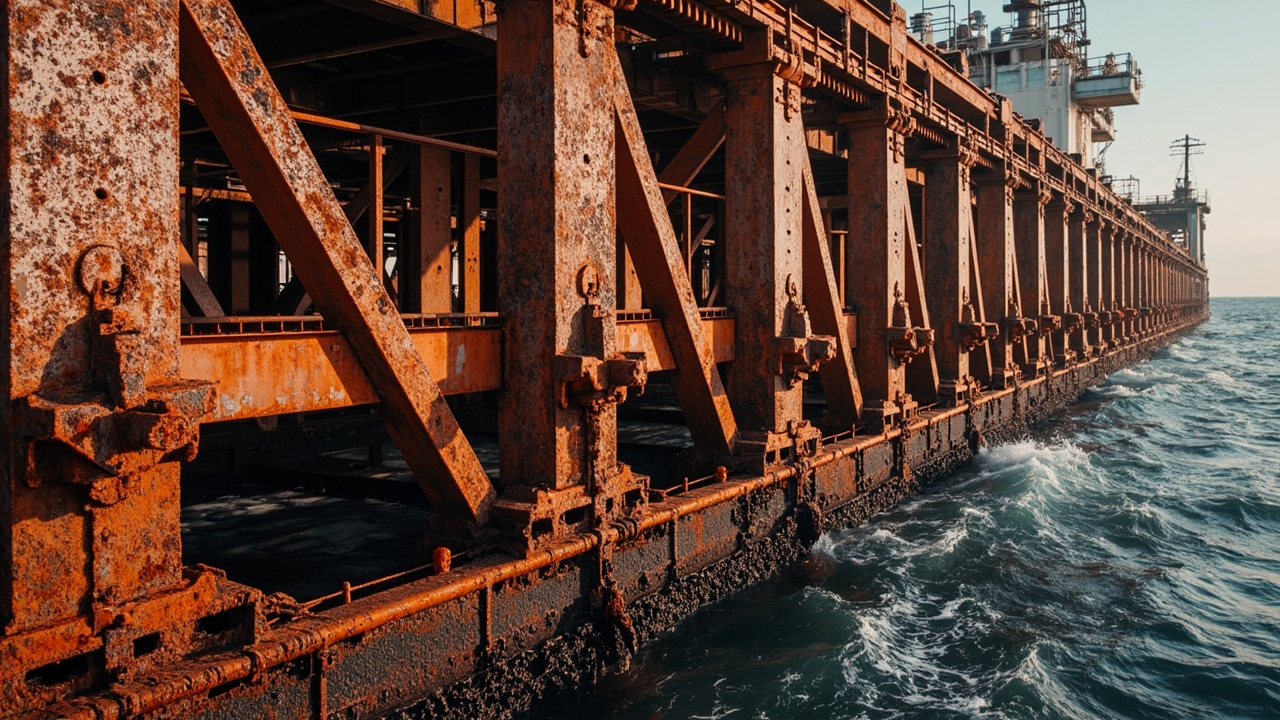
I. The Electrochemical Nature of Steel Rusting
Pure iron is relatively stable at room temperature in dry air. The occurrence of rusting requires the simultaneous presence of three elements: anode, cathode, and electrolyte (water film). When an invisible thin water film (from moisture absorption, condensation, or rainfall) forms on the steel surface and dissolves carbon dioxide, sulfur dioxide, chloride ions, etc., it constitutes a conductive electrolyte. At this point, due to non-uniformity in composition, stress, and oxygen concentration on the metal surface, countless micro-batteries are formed:
- Anodic reaction (iron oxidized): Fe → Fe²⁺ + 2e⁻
- Cathodic reaction (oxygen reduction, neutral or alkaline environment): O₂ + 2H₂O + 4e⁻ → 4OH⁻
- Product combination: Fe²⁺ and OH⁻ form Fe(OH)₂, which is further oxidized to Fe(OH)₃, and after dehydration forms Fe₂O₃·xH₂O (reddish-brown rust).
Note that the cathodic reaction is dominated by oxygen reduction, which is why "good ventilation and dryness" can significantly slow down rusting—lack of oxygen stalls the cathodic reaction. This is also why steel hardly rusts in sealed dry environments, but rapidly rusts in humid, salty, and condensation-prone areas with temperature differences. We call this process of forming micro-batteries via a water film electrochemical corrosion, which differs from mere "oxidation": mere oxidation is extremely slow in dry air, whereas once a water film is established, the rate of electrochemical corrosion can increase by several orders of magnitude.
More deeply, steel itself is not a homogeneous material; it contains impurities and alloying elements such as carbon, manganese, sulfur, and phosphorus, and its surface also has non-uniform points such as processing stress, weld heat-affected zones, and broken oxide scale. These non-uniformities are the "natural electrodes" of micro-batteries. Regions with high impurities or stress tend to act as anodes and dissolve, while surrounding regions act as cathodes—this is the fundamental reason why rust distribution is uneven on the same steel plate. Understanding this, one can see why welds, heat-affected zones, and bolted connections always rust first. From a thermodynamic perspective, the electrode potential of iron is far lower than the equilibrium potential of the oxygen reduction reaction; as long as the electrolyte is connected, the electromotive force of the corrosion cell drives the anode to continuously dissolve, which is the fundamental reason why steel inevitably tends toward a stable oxidized state (rust) in nature.
II. Key Factors Affecting Corrosion Rate
Corrosion is not uniform; it is strongly driven by the following factors:
- Moisture and relative humidity: Steel corrodes extremely slowly when relative humidity is below about 60%; once critical humidity is exceeded (about 60–70%, varying with pollutants), a surface water film forms and corrosion surges. For every 10°C rise in temperature, the reaction rate roughly doubles (Arrhenius law).
- Chloride ions (marine and de-icing salts): Cl⁻ has a small radius and strong penetrating power; it can destroy the passive film and trigger pitting corrosion, making it the number one driver of corrosion in marine and bridge environments. Under the same environment, the closer to the coast, the more severe the corrosion.
- Industrial pollutants such as sulfur dioxide: Dissolve in water to form acids, lower pH, and accelerate anodic dissolution. The sulfur content in industrial and urban air directly determines the atmospheric corrosivity grade.
- Oxygen concentration difference: Crevices and overlapping areas with low oxygen concentration form anodes, causing crevice corrosion; this is common local corrosion at bolted connections and coating damage edges.
- Temperature and wet-dry cycles: Alternating wet and dry causes corrosion products to repeatedly absorb moisture, expand, and spall, damaging the coating; most typical in tropical and subtropical regions with day-night temperature differences and rainy seasons.
- Galvanic effect: Contact between different metals (e.g., steel with copper, aluminum) in an electrolyte forms a macro-cell, accelerating the corrosion of the active metal; mixing different materials at pipe flanges often plants hidden dangers.
- Microorganisms: In certain humid, oxygen-deficient environments (such as soil, cooling water), sulfate-reducing bacteria etc. participate in corrosion, known as microbially influenced corrosion (MIC).
The above factors often act in combination rather than alone. For example, coastal industrial zones are both high-chloride and high-sulfur, and the corrosion rate is a multiplicative superposition of single factors, which explains why ISO 9223 classifies near-coastal industrial zones as C5 or even CX. In engineering, evaluating the corrosion risk of a site cannot rely on a single indicator; humidity, ionic pollution, temperature cycling, and structural design must be integrated into a single risk map for comprehensive judgment, otherwise the actual corrosion intensity is easily underestimated.
III. Chemical Composition and Morphological Classification of Rust
Rust is not a single substance, but a mixture of various hydrated iron oxides and iron hydroxides. The color and stability of each major constituent differ greatly, directly determining the feasibility of subsequent coating:
| Corrosion product | Chemical formula | Color | Characteristic |
|---|---|---|---|
| Ferrihydrite and lepidocrocite | γ-FeOOH | Yellow-brown | High activity, loose |
| Goethite | α-FeOOH | Yellow-brown to brown | Common stable rust layer component |
| Hematite and hydrolyzed iron oxide | Fe₂O₃·xH₂O | Red-brown | Loose volume, moisture-absorbing |
| Magnetite | Fe₃O₄ | Black | Relatively dense, but corrosion continues underneath |
| Green rust (containing Cl⁻/SO₄²⁻) | Complex hydroxy salt | Green to black | Strong activity, expansive |
Morphologically, rust can be classified as:
- Flash rust (powdered layer): Loose surface, easily brushed off, poor adhesion;
- Adherent rust (firm rust): Colored rust layer relatively firmly bonded to the substrate;
- Pitting and cavity corrosion: Localized deep erosion, most dangerous, often accompanied by plate thickness reduction;
- Layered and flaky spalling rust: Volume expansion under wet-dry cycles (rust volume is about 2–4 times that of iron) causes coating cracking and spalling.
Understanding that "rust is loose, moisture-absorbing, and its volume expands" is the fundamental reason why traditional coating requires thorough rust removal—live rust left underneath will burst the new coating like a time bomb. In engineering it is often said, "If rust removal is not thorough, painting is just plastering over." In addition, different rust products respond differently to conversion-type or stabilization-type rust-tolerant coatings: trivalent iron hydrated oxides are more easily complexed by tannic acid and turned black, while chlorine- and sulfur-containing green rust is more active and requires more thorough passivation and sealing. This is why on-site identification of rust type is far more important than simply looking at "red or black."
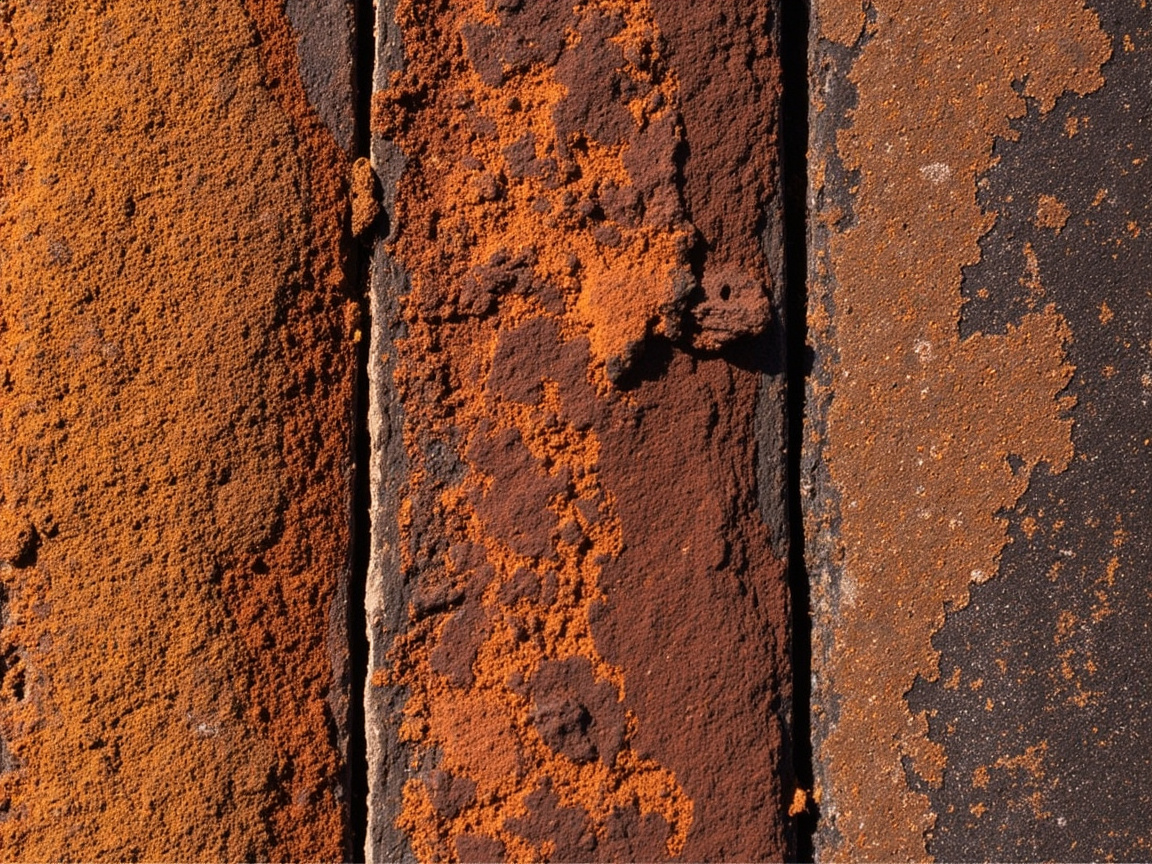
IV. Rust Severity Grading: GB/T 8923.1 and ISO 8501-1
In pre-coating surface treatment, rust grade and rust removal grade are the core language. According to GB/T 8923.1 (equivalent to ISO 8501-1 "Preparation of steel substrates before application of paints and related products — Grades of preparation"):
- Grade A (fully covered with oxide scale, almost no rust)
- Grade B (oxide scale has started to rust, with slight pitting)
- Grade C (oxide scale has fallen off, general surface rusting)
- Grade D (oxide scale fallen off, general pitting or cavity corrosion)
Corresponding rust removal grades:
- Sa1 / Sa2 / Sa2.5 / Sa3: Blast cleaning (increasing thoroughness; Sa2.5 is "very thorough blast cleaning," surface free of visible grease, oxide scale, rust, only slight color stains allowed);
- St2 / St3: Hand and power tool cleaning (St3 is more thorough than St2, with metallic luster);
- F1: Flame cleaning.
Rust conversion and stabilization-type rust-tolerant coatings are usually only suitable for maintenance scenarios of Grade C or D + St2/St3; severe Grade D pitting should still prioritize blasting or plate patching. Grade assessment should not be based on a rough visual glance, but should combine sounding by chipping, thickness measurement, and local grinding exploration, to avoid misjudging "looks not severe" pitting as rust-tolerant treatable. The root of many maintenance failures is treating Grade D pitting as Grade C flash rust, resulting in continued corrosion under the conversion layer and rust return within half a year. The standard also specifies a standard photo comparison method; the site should be equipped with ISO 8501-1 reference photos or color cards, assessed and archived by experienced personnel, so that "how severe is the rust" becomes an acceptable technical language rather than a verbal description.
V. Environmental Corrosivity Classification: ISO 9223 and GB/T 19292
To select the right product scientifically, the environment must first be "quantified." ISO 9223 (corresponding to GB/T 19292.1 "Corrosion of metals and alloys — Corrosivity of atmospheres — Classification") classifies atmospheric corrosion into several grades based on corrosion rate:
| Grade | Name | Typical environment | Carbon steel corrosion rate magnitude |
|---|---|---|---|
| C1 | Very low | Dry indoor, humidity-controlled environment | Extremely low |
| C2 | Low | Rural atmosphere | Low |
| C3 | Medium | Urban, light industrial | Medium |
| C4 | High | Industrial, coastal | Relatively high |
| C5-I | Very high (industrial) | Highly polluted industrial | High |
| C5-M | Very high (marine) | Offshore, at sea | High |
| CX | Extreme | Offshore platforms, tropical coasts | Extremely high |
The specific basis for corrosivity determination is the corrosion mass loss of exposure test panels after the first year: according to the methods of ISO 9223 and GB/T 19292.1, the annual corrosion rate of low-carbon steel in C1 environment is typically below 1.3 microns, C2 about 1.3–25 microns, C3 about 25–50 microns, C4 about 50–80 microns, C5 about 80–200 microns, and CX above 200 microns (magnitude reference only, actual values subject to on-site testing). These figures turn "corrosivity" from a vague feeling into a calculable input. ISO 12944-2 then provides the minimum total dry film thickness (DFT) and durability expectation (low, medium, high, very high, corresponding to approximately 2, 5, 15, 25 years) for protective coating systems under different grades. For example, in C4 environment with high durability (ISO 12944 high durability ≥15 years), the total DFT of the system is usually required to be in the range of 240–320 microns (specific values subject to system design). This language turns "rust prevention" from a vague concept into a calculable design input, and also allows horizontal comparison of solutions from different manufacturers.
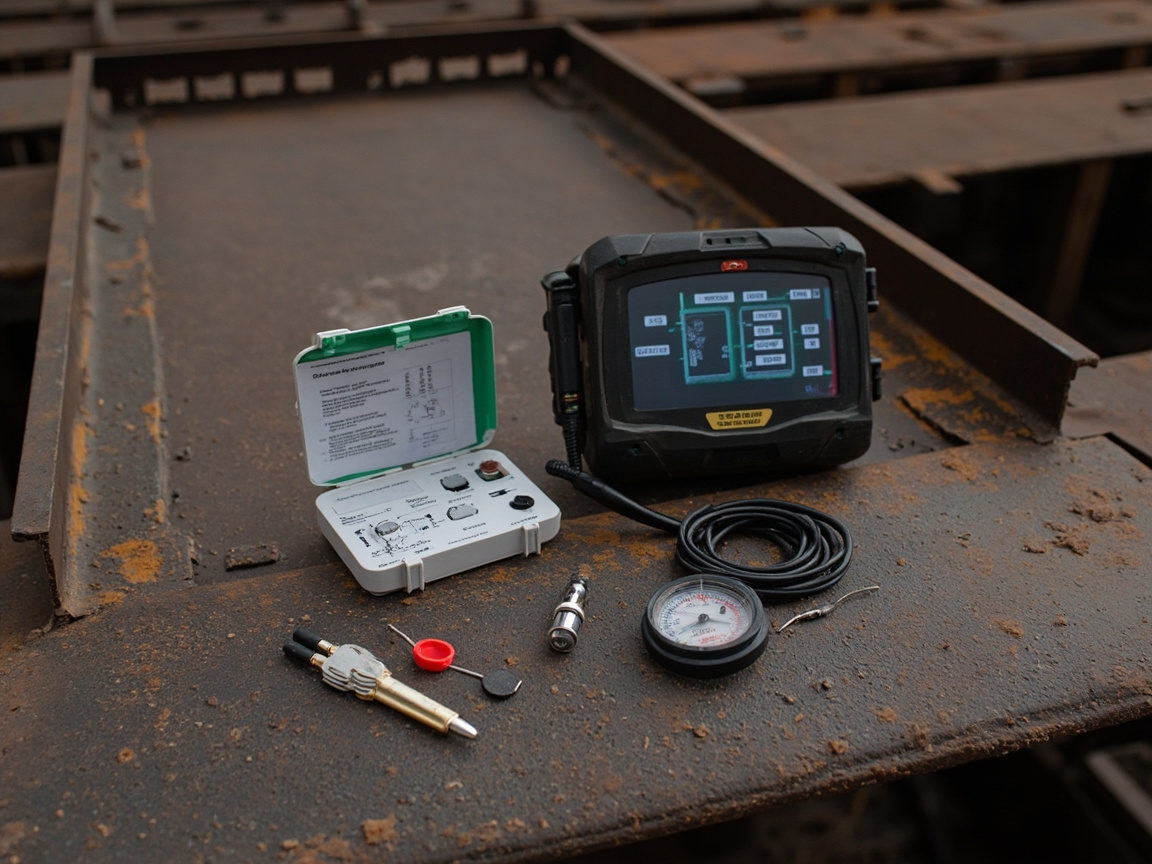
VI. Localized Corrosion: More Terrifying Than Uniform Corrosion
Uniform corrosion thins the material evenly and its life can be estimated; localized corrosion is hidden and sudden, and is the main cause of engineering failure:
- Pitting corrosion: Cl⁻ breaks through the passive film, forming deep pits, typical in marine environments;
- Crevice corrosion: Oxygen concentration differential cells at bolts, overlaps, coating edges;
- Galvanic corrosion: Contact between dissimilar metals;
- Stress corrosion cracking (SCC) and corrosion fatigue: Combined action of tensile stress and corrosive media;
- Abrasion and erosion: Scouring by particle-laden fluids.
Protection measures include: eliminating crevices (continuous welding, sealant), insulating dissimilar metals (gaskets), selecting pitting-resistant alloys, and thickening the coating or applying cathodic protection at prone locations. The danger of localized corrosion lies in its small area and difficulty to detect, yet it can rapidly penetrate the plate thickness at a single point, causing structural safety issues, while the large surface area may appear intact. During on-site inspection, welds, bolts, edges, and water accumulation areas should be prioritized, and a thickness gauge should be used for periodic spot checks of plate thickness, rather than relying solely on visual inspection of "whether there is rust." Writing down the high-incidence points of localized corrosion as a checklist and incorporating it into each maintenance inspection is a low-cost, high-benefit means to prevent sudden failure.
VII. Underlying Logic of Protection: Barrier, Passivation, Cathodic Protection
All anti-rust coating systems essentially perform three things simultaneously, corresponding to interrupting different stages of corrosion:
- Barrier: Dense paint film isolates water, oxygen, and ions, such as micaceous iron oxide lamellar barrier, high-solid epoxy;
- Passivation: Inhibitive pigments (zinc phosphate, molybdate) form a passive film at the interface, suppressing the anode;
- Cathodic: Zinc-rich primer (epoxy zinc-rich) protects the iron substrate through sacrificial dissolution of zinc, see details in water-based epoxy zinc-rich primer.
A single mechanism is often insufficient; engineering uses a combination of "primer (cathodic or passivation) + intermediate coat (barrier) + topcoat (weather resistance)" for multiple defenses. This also explains why anti-rust coating system specification design is so important—each layer has its own role. A robust system often combines some form of these three mechanisms, rather than relying on a single means. It should be added that the three mechanisms reinforce each other: the barrier layer prevents media from reaching the interface, slowing the consumption of the passive film and zinc powder; the passive film reduces anode activity, lowering the probability of the barrier layer being penetrated by pitting; cathodic protection still protects exposed iron points when the barrier layer is locally damaged. Understanding this synergy allows rational allocation of film thickness during design, rather than simply "the thicker the better."
VIII. Quantitative Understanding of Corrosion Rate
Although precise prediction of outdoor service life is difficult, the industry has some empirical knowledge: in C3 urban environments, the annual corrosion of unprotected carbon steel may be on the order of tens of microns; in C5 coastal environments it can be an order of magnitude higher; coating systems can reduce the corrosion rate by tens to hundreds of times. These numbers are not absolute values, but help engineers establish a "risk magnitude" concept: for the same painting, an alkyd system may hold up in C3 environment, but the same system will rust through quickly in C5 environment. Correlating environmental grade with material corrosion resistance is the basic skill of anti-rust design. For the application boundary of alkyd in light corrosion scenarios, refer to alkyd anti-rust primer application.
Furthermore, the corrosion rate is also affected by the "time–environment" coupling: a bridge may corrode slowly in the first few years after completion, but as the coating ages and micro-cracks appear, the media permeability increases over time, and corrosion accelerates. Therefore, design life is not as simple as "average annual corrosion rate × years," but must consider the performance decay curve of the system before reaching its durability endpoint. The low, medium, high, and very high durability given by ISO 12944 is an engineering expression of "the probability that the system will last until the specified year," not a precise life promise.
IX. Rust Characteristics of Typical Industries
Rust forms differ significantly across industries:
- Bridges and wind power: Mainly atmospheric corrosion plus crevice corrosion; bolts and box girder interiors are difficult points;
- Chemical and power: Multiple factors such as sulfur dioxide, hydrogen chloride, cooling water, etc., with pitting and uniform corrosion coexisting;
- Marine and ports: Chloride-dominated pitting and pit corrosion, splash zone most severe;
- Municipal pipe galleries and underground: Soil corrosion and microbial corrosion superimposed, humid and oxygen-deficient.
These characteristics determine that the system cannot be generalized, but must be finely designed "by industry, by location." For example, in the same bridge, the enclosed high-humidity interior of the box girder, the salt-spray-laden splash zone, and the crevice corrosion at bolted connections may have completely different environmental grades, and the systems should also be differentiated. Another example: a chemical zone has both atmospheric corrosion and occasional acid mist spray; when selecting, the chemical resistance list of the topcoat must be confirmed, rather than just looking at salt spray hours. Translating industry characteristics into specific "environmental grade + media list + location difficulties" is the core competence of anti-rust engineers.
X. Common Misconceptions
Misconception 1: Rust is "iron turning into something else and disappearing." Wrong. Rust is iron oxides and hydroxides, whose volume actually expands 2–4 times, which will push through the coating and must be treated or converted.
Misconception 2: Dry regions do not rust. Wrong. In dry conditions (relative humidity below 60%) corrosion is slow, but as long as condensation, day-night temperature differences, or salt-containing dust appear, micro-cells are still established.
Misconception 3: Painting once means forever. Wrong. Coatings age and get scratched; at damaged areas a large cathode and small anode accelerate local rust, requiring regular maintenance.
Misconception 4: Red rust is less dangerous than black rust. Wrong. Color does not represent activity; green rust (containing chlorine or sulfur) is often more active and expands more.
Misconception 5: Local rust does not affect the whole. Wrong. Pitting can rapidly penetrate at a single point; the large surface may be intact while internal pitting has already occurred.
Misconception 6: Expensive paint must mean better anti-rust. Wrong. No matter how good the paint, if the surface treatment grade is insufficient, film thickness does not meet standards, or environmental boundaries are out of control, performance will drop to zero.
Kexin New Materials (kexinMaterials) in on-site diagnosis uses humidity records, chloride ion detection, rust layer morphology, and ISO 9223 grade for comprehensive assessment, then provides a "rust removal grade + coating system + maintenance cycle" plan, rather than deciding by experience. This "mechanism first, product later" diagnosis is the key to avoiding wrong system selection. For large in-service structures, it is also recommended to make a small-area sample with rust treatment, go through the full process of "cleaning—conversion or stabilization—system—curing" and retest adhesion before promotion, keeping risks under control at the bud.
XI. Relationship Between Rust Mechanism and Standards
Final emphasis: the mechanism is "why", and the standard is "how to evaluate". GB/T 1771 salt spray, GB/T 9286 adhesion, ISO 9223 environmental classification are all about translating the mechanism into quantifiable and acceptable language. Only by understanding the mechanism and then reading the standard report, can you avoid being misled by isolated numbers such as "1000 hours salt spray". For details on salt spray judgment, see Neutral Salt Spray Test NSS Judgment. The role of standards is to turn "good paint" from subjective feeling into comparable data: for the same epoxy zinc-rich, whether the zinc content, volume solids, and salt spray resistance hours meet the standard must be verified by returning to the standard method. Understanding the mechanism lets you know "what to test", while the standard tells you "how to test and how much counts as qualified".
XII. Decision Framework from Mechanism to Protection
After understanding the corrosion mechanism, the next step is to translate "why it rusts" into executable decisions of "how to prevent". This framework can be summarized in four steps: Step 1, judge the environment—use ISO 9223 to classify the site into one of C1–CX levels, and clarify whether the corrosion driving force is chloride ions, sulfur dioxide, or simply humidity; Step 2, set the service life—according to ISO 12944, set low, medium, high, and very high durability targets, corresponding to different protection investments; Step 3, select the mechanism—light corrosion only needs shielding plus passivation, medium to heavy corrosion must introduce cathodic protection (zinc-rich), and harsh environments also need to add weather-resistant topcoat and thick shielding; Step 4, implement into process—surface treatment grade, film thickness distribution, painting interval, and environmental boundaries are all quantified and written into the specification.
Take a concrete example: a pedestrian overpass in an inland city, with atmosphere classified as C3 and medium design life (7–15 years). Its main corrosion driving forces are humidity and light pollution, so the system of "water-based epoxy ester primer + epoxy micaceous iron intermediate coat + aliphatic polyurethane topcoat" is sufficient, and there is no need for zinc-rich. However, if the same bridge is built at the estuary, the environment jumps to C5-M, with chloride ions as the main cause, then it must be blasted to Sa2.5 and adopt a heavy anti-corrosion system of "epoxy zinc-rich + epoxy micaceous iron + polyurethane or fluorocarbon", and the total film thickness must be doubled accordingly. The cost of the two schemes may differ by a factor of two, but if you do not grade by mechanism, either waste or early rusting will result—both are failures.
XIII. Economic Perspective of Corrosion Prevention and Control
Corrosion is not only a technical issue about "whether it rusts", but also a heavy economic issue. Globally, the direct economic loss caused by corrosion has long accounted for a considerable proportion of GDP, and the indirect losses (downtime, accidents, replacement) are several times that. In the steel structure field, one severe early corrosion may lead to the entire bridge being overhauled prematurely, with costs far exceeding the painting budget saved at the beginning. Therefore, anti-rust investment is never a "cost center" but a "risk hedge"—every yuan spent on correct protection can often avoid ten or even a hundred times the later loss. From the full life cycle perspective, the economy of protection is reflected in three nodes: selecting the right system at initial installation, establishing inspection and repair mechanisms during maintenance, and conducting remaining life assessment at the end. Many owners only stare at the initial unit price and ignore the latter two ends, resulting in higher total cost. Putting the corrosion mechanism ahead into the design stage is the most cost-effective prevention and control strategy.
XIV. Rust Risk Checklist for Design
Translating the mechanism into design actions can form a risk checklist to be checked item by item:
- Is the environmental grade clear (C1–CX)? Is the driving force chloride, sulfur, or humidity?
- Are there local corrosion-prone points such as crevices, overlaps, bolts?
- Is there contact between dissimilar metals forming a galvanic couple?
- Are there dry-wet cycles, condensation, or immersion sections?
- Is the maintenance access reachable for regular inspection?
- Does the design life target match the total DFT of the system?
- Is the surface treatment grade consistent with the on-site equipment capability?
Implementing item by item, rust prevention changes from post-event firefighting to pre-event risk control. This checklist and the process requirements of Steel Structure Anti-rust Engineering Specification are complementary: the specification manages "how to do", and the checklist manages "think clearly first". Only the combination of the two is a mature corrosion prevention and control system. It should be reminded that the risk checklist is not one-time, and should be updated after each maintenance—the development of rust and changes in the environment will alter the risk ranking, and dynamic management can remain continuously effective.
FAQ
Q: Is steel rusting an oxidation reaction or an electrochemical reaction?
A: It is electrochemical corrosion. Iron forms micro-batteries under the electrolyte water film, the anode iron is oxidized to Fe²⁺, and the cathode undergoes oxygen reduction to generate OH⁻, which combine and oxidize and dehydrate to form Fe₂O₃·xH₂O rust. In purely dry air, oxidation alone is extremely slow; the water film plus electrolyte is the key.
Q: Why does steel by the sea rust much faster than in the city?
A: Large amounts of Cl⁻ in seawater can penetrate the passive film and trigger pitting, and have strong hygroscopicity, keeping the surface water film present for a long time. ISO 9223 classifies the coastal area as C5-M (very high) or even CX (extreme), with corrosion rates far higher than rural C2.
Q: Which is more dangerous, red rust or black rust (Fe₃O₄)?
A: Color does not determine danger. Fe₃O₄ is relatively dense but still covers the active corrosion below; green rust containing chloride or sulfur is more active and has greater volume expansion. To judge danger, look at whether there is pitting and whether the plate thickness is reduced, not the color.
Q: What is the use of the C1–CX grades of ISO 9223?
A: It quantifies and grades environmental corrosivity, and is the basic input for the ISO 12944 protection system design, directly determining the required total film thickness (DFT) and durability expectation of the coating system (e.g., high durability ≥15 years corresponds to higher DFT), making anti-rust selection calculable.
Q: Why is derusting required to Sa2.5?
A: Sa2.5 (GB/T 8923.1 / ISO 8501-1) is "very thorough blast cleaning", with no visible grease, mill scale, or rust on the surface, only slight color spots remaining, which ensures the primer fully adheres to the substrate and avoids residual active rust breaking through the coating. Heavy anti-corrosion almost always requires Sa2.5.
Q: Why does the coating "rust faster" after being damaged?
A: The damaged area exposes a small anode, while the large area of metal under the surrounding coating becomes the cathode, forming a "large cathode—small anode", with high local current density and sharply accelerated pitting. This is also why timely repair rather than letting it go is necessary.
Q: What is the relationship between cathodic protection and anti-rust paint?
A: The two are complementary. Zinc-rich primer (zinc sacrifice) itself is electrochemical cathodic protection; ordinary shielding or passivation coatings are physical and chemical barriers. In engineering, the combination of "zinc-rich primer + shielding intermediate coat + weather-resistant topcoat" is often used for multiple protection.
Q: Are temperature and humidity records really important for anti-rust design?
A: Very important. When relative humidity exceeds the critical value (about 60–70%), corrosion increases sharply; construction below the dew point causes the paint film to turn white and poor adhesion. ISO 12944 requires the substrate temperature to be at least 3℃ above the dew point before construction, precisely based on this mechanism.
Q: Why is pitting more dangerous than general corrosion?
A: General corrosion uniformly thins and the life can still be estimated; pitting has small area, is hidden, and has high local current density, which can corrode through the plate thickness in a short time and cause structural failure, while the surface may look intact and be difficult to find by inspection.
Q: Why can the volume expansion of rust break through the coating?
A: The volume of rust is about 2–4 times that of iron. Residual active rust repeatedly expands under wet-swell and dry-shrink cycles, generating outward mechanical stress on the coating above, causing cracking and peeling, making the shielding fail, and further accelerating corrosion, forming a vicious cycle.
Further Reading
- Rusty Surface Treatment: Implementing rust grading into specific St2/St3 on-site treatment processes.
- Water-based Epoxy Zinc-rich Primer: Understand how the zinc sacrifice mechanism of cathodic protection blocks the rust electrochemical reaction.
- ISO 12944 Anti-corrosion Coating System Selection Guide: A complete framework for driving system design using C1–CX environmental grades.
- Anti-rust Paint Salt Spray Resistance Test: DIN EN ISO 9227 and GB/T 1771