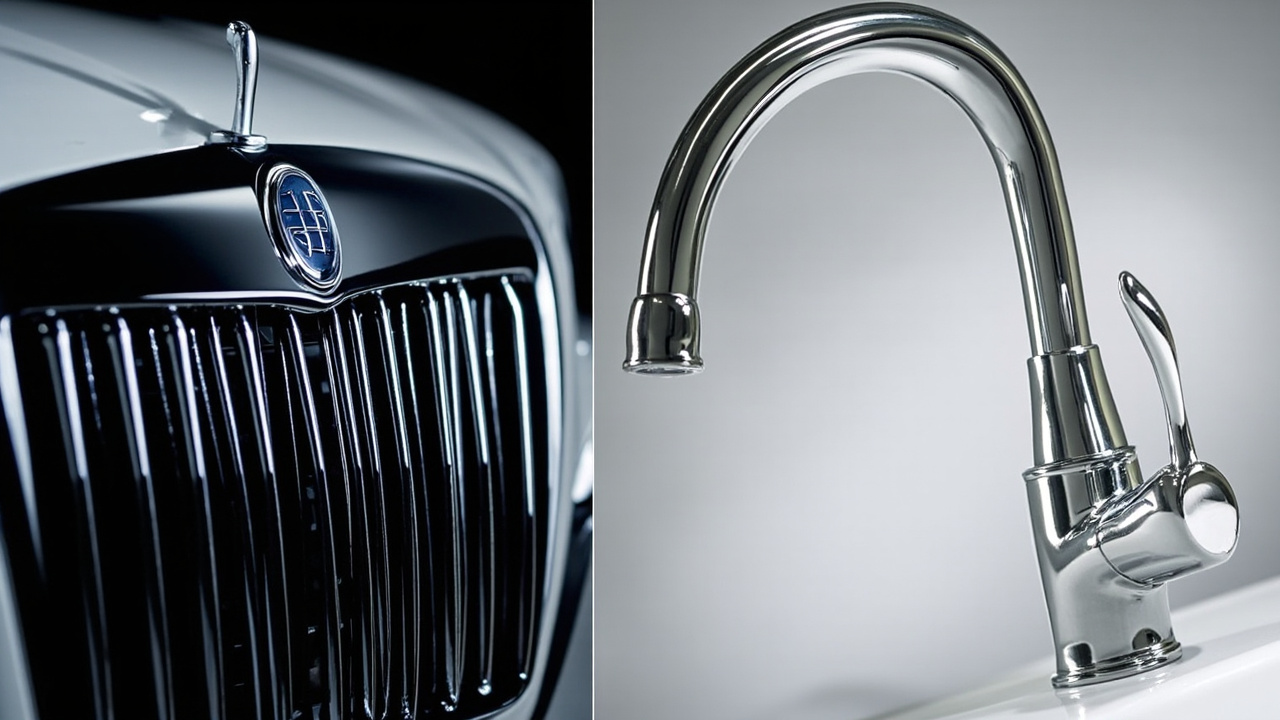
When a client says "I want that shiny chrome-like metallic feel," the traditional answer is only electroplating. But electroplating faces hard constraints such as hexavalent chromium wastewater, heavy metals, shape limitations, and the requirement that the substrate must be conductive, making it increasingly difficult under the dual pressures of environmental protection and cost. Thus the "electroplating alternative coating" — using spray or vacuum plating on non-metallic or arbitrarily shaped parts to achieve a near-mirror-chrome texture — has become a popular alternative route over the past decade. It splits into two branches: one is spray-type chrome-alternative / electroplating-alternative coating (relying on stacked layers of high-gloss silver paint + mirror clear coat to build up the chrome feel), and the other is vacuum plating (PVD) companion coating (depositing a metal film in a vacuum chamber and then covering it with a spray protective layer). This article clarifies these two types of "alternative metal coatings," systematically reviewing raw materials, formulations, processes, equipment, testing, troubleshooting, cost, regulations, supply chain, and standards, to help you weigh "does it look like chrome" against "can it be implemented."
Kexin New Materials (Guangdong) Co., Ltd. is located in Foshan and has multiple mature systems for metallic-alternative and electroplating-alternative coatings, serving customers in automotive grilles, sanitary ware, home appliances, and 3C. It has systematic experience in interlayer matching for "spray chrome alternative" and PVD companion coatings. In the technical discussion below, actual cases from the Foshan production line will be interspersed to help readers map theory onto mass production.
I. Why Alternatives to Electroplating Are Needed
The pain points of chrome electroplating are straightforward: hexavalent chromium is highly toxic, wastewater treatment costs are high, and the plating bath contains heavy metals; the workpiece must be conductive and rackable, so complex internal cavities and plastic parts cannot be directly plated; large and irregular parts show poor coating uniformity; and capital investment and environmental compliance are burdensome. As regulations progressively push hexavalent chromium out, manufacturers must find alternatives. Electroplating-alternative coatings bypass electrochemistry through "physical film formation," enabling substrates from plastic to metal to glass, and produce no electroplating wastewater, precisely compensating for electroplating's shortcomings.
It must be clarified: electroplating-alternative coatings achieve a "visual chrome feel," not a true metallic chromium layer — they are non-conductive and not highly abrasion-resistant, but in decorative and light-functional scenarios they are convincing enough, with clear cost and environmental advantages. Notably, the meaning of "alternative" is layered in the industry: at the decorative appearance level, spray chrome alternative has long been massively replacing electroplating; at the functional level of conductivity, wear resistance, and electromagnetic shielding, PVD companion coatings can partially replace it; truly thick structural functional plating remains hard to replace, so the three solutions coexist long-term rather than eliminating one another.
From an industry driver perspective, replacing electroplating is not purely for cost, but also compliance pressure and supply chain security. EU RoHS, REACH, ELV (End-of-Life Vehicles Directive), and domestic "Water Pollution Prevention and Control Law" and "Comprehensive Prevention and Control of Heavy Metal Pollution '12th/13th Five-Year' Plan" all list hexavalent chromium as strictly controlled. Coupled with the elevated comprehensive cost from electroplating racks, stripping, and three-waste treatment, many small and medium parts factories proactively seek spray or PVD routes, turning "environmental debt" into "product differentiation selling points."
II. Process Route for Spray Chrome Alternative Coating
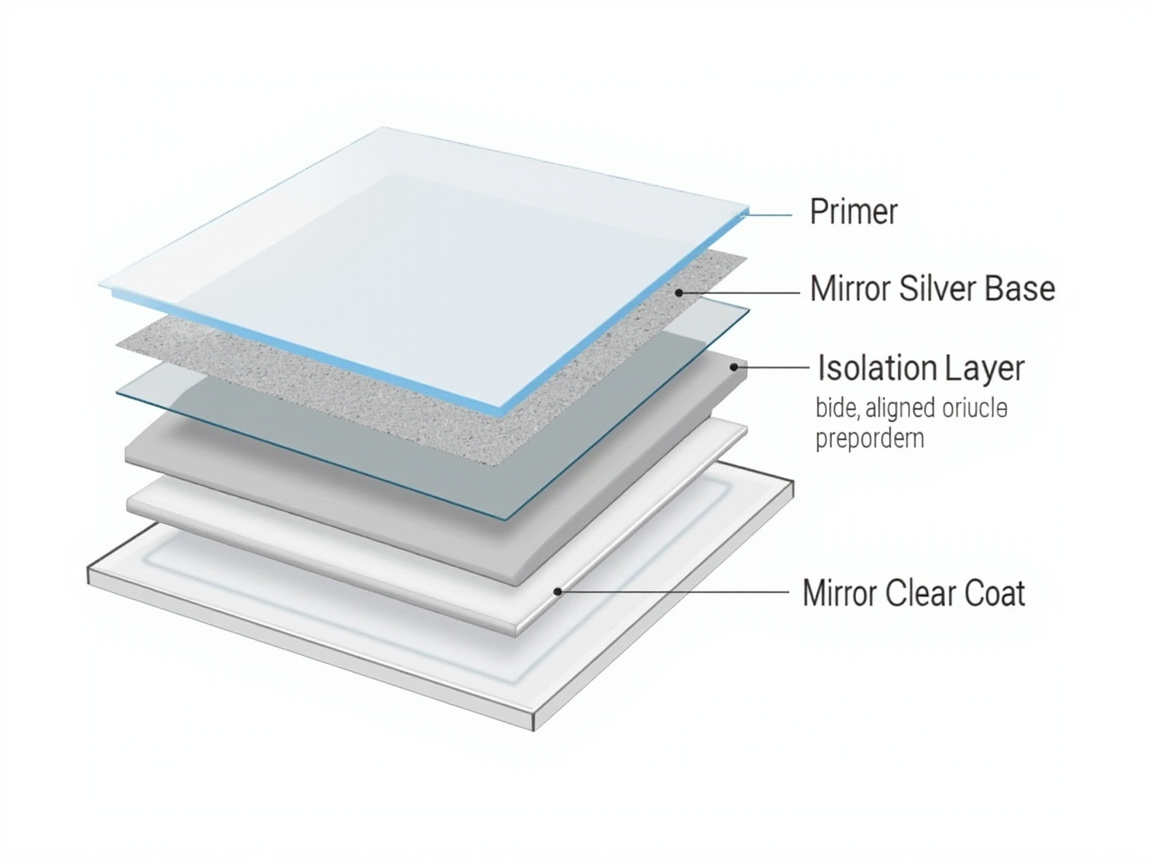
Spray chrome alternative is not "one paint," but a multi-layer coating system, typically structured as: primer (sealing, filling) → mirror silver base (high-reflective aluminum/glass flake silver paint) → isolation layer (preventing interlayer dissolution) → mirror clear coat (high transparency, high fullness). The mirror feel comes from three-layer synergy: the primer provides a flat mirror substrate, the silver base provides high reflection, and the clear coat provides clarity and depth. If any layer fails, the chrome feel collapses.
The key is the "mirror silver base": it requires aluminum or glass flakes to be extremely parallel, narrowly sized, and highly bright, and the resin must be highly transparent and low-yellowing. Ordinary metallic paint's aluminum flake orientation is insufficient for mirror effects; dedicated mirror silver paste + precise solvent gradient must be used to push flop (angle-dependent color shift) toward near-mirror reflection. The isolation layer is often overlooked, but it determines whether the silver base is eroded by the clear coat solvent — without it, the mirror "fogs."
More precisely, the visual essence of spray chrome alternative is simultaneously achieving high "specular reflectance" and "Distinctness of Image (DOI)." Ordinary silver powder paint has randomly oriented aluminum flakes, scattering reflected light and looking like "metallic matte"; the mirror silver base uses narrow particle size distribution + strong parallel orientation to concentrate reflected light into a clear reflection, then overlays high-transparency clear coat to compensate for refractive loss in the thickness direction, ultimately approaching chrome's mirror appearance. This logic is the basis for all subsequent formulation and process discussions.
III. Vacuum Plating (PVD) Companion Coating
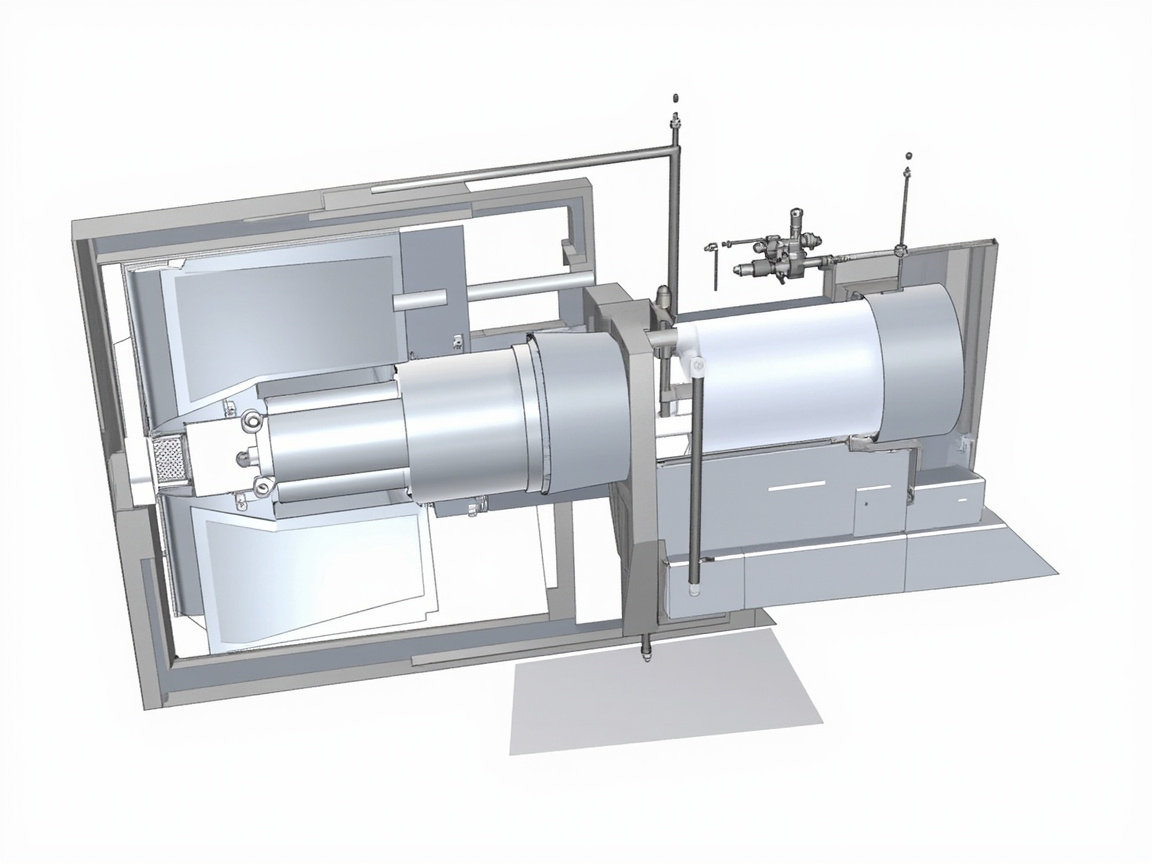
PVD (Physical Vapor Deposition) evaporates or sputters metal (aluminum, chromium, titanium, indium, etc.) onto the workpiece surface in a vacuum chamber, forming a true metal thin film that is conductive, wear-resistant, and strongly adhesive, with a texture closest to electroplating. But it has two prerequisites: the workpiece must enter the vacuum chamber, limiting shape and size; the metal film is too thin (micrometer or even sub-micrometer level), requiring an external spray protective layer (topcoat) for weather and scratch resistance. Thus "PVD metal film + spray companion coating" becomes the high-end route to replace electroplating, often used in high-end sanitary ware, automotive logos, and consumer electronics.
Here the "companion coating" is the main battlefield for spray enterprises: the basecoat handles flatness and adhesion before PVD, and the topcoat handles protection and hue fine-tuning after PVD (e.g., dyed to champagne, gunmetal gray). Both basecoat and topcoat must have good interlayer force with the PVD metal film, and the topcoat must not corrode the metal film. Special attention must be paid to the basecoat's "low outgassing" — if the basecoat releases small molecules in the vacuum chamber, it forms pinholes or contaminates the chamber on the metal film, directly causing plating fog or delamination, which is the core indicator distinguishing PVD companion coatings from ordinary primers.
Understanding PVD companion also requires distinguishing "decorative plating" from "functional plating": decorative mainly uses aluminum film for brightness and color, while functional may plate chromium, titanium, indium, or even alloys for hardness, corrosion resistance, or conductivity. Companion coatings must be adjusted accordingly — chromium film is harder and demands higher topcoat adhesion, indium film is softer and needs thicker topcoat protection. This is also why Kexin New Materials in Foshan does "one customer one formulation" for different clients: no universal topcoat can cover all metal films.
IV. Comparison of Three Solutions
| Dimension | Chrome Electroplating | Spray Chrome Alternative | PVD + Spray |
|---|---|---|---|
| Texture | True mirror chrome | Visual approximation | Near true metal, dyeable |
| Substrate | Conductive parts | Almost unlimited | Must enter chamber, shape limited |
| Environmental | Chromium-containing wastewater | No electroplating wastewater | Vacuum, no liquid waste |
| Conductivity | Conductive | Non-conductive | Conductive |
| Weathering | Good but prone to passivation | Depends on clear coat | Excellent (with topcoat) |
| Cost | High (three-waste + equipment) | Medium | High (equipment) |
| Production flexibility | Low | High | Medium |
| Film thickness | Several to tens of micrometers | 40-80 micrometers (multi-layer) | Metal 0.05-2 micrometers + topcoat |
| Image distinctness DOI | Extremely high | Medium-high (depends on silver base) | High |
| Multi-color metallic feel | Limited | Adjustable hue | Alloy target + dyed topcoat |
The selection logic is clear: for high volume, unlimited substrate, mainly decorative — choose spray chrome alternative; for true metallic feel + conductivity + high-end — choose PVD companion; only consider PVD when small high-value parts can enter the chamber. Electroplating is retained only when regulations permit and performance is mandatory. It should be added that "spray chrome alternative" and "PVD companion" are not mutually exclusive in practice: many high-end projects first use PVD to plate a true aluminum film for the metal base, then cover with a spray chrome alternative clear coat system for thickening protection and color effects, forming a "true metal + spray decoration" composite route that balances texture and production flexibility.
V. Substrate Adaptation Key Points
- Plastics (ABS/PC/PA): First flame/plasma treat to raise surface energy, then apply plastic primer, spray chrome alternative multi-layer thin coats, mind heat deflection temperature. ABS is easiest to coat; PC needs annealing to remove stress and prevent crazing; PA is hygroscopic and needs baking pretreatment.
- Metals (steel, aluminum, zinc alloy): Pretreatment degreasing phosphating or passivation, primer sealing, mirror silver base thin multi-pass. Zinc alloy die-cast parts must prevent "blistering," mind oven temperature gradient.
- Glass/ceramic: Silane primer coupling, apply mirror system directly, mind thermal expansion coefficient matching.
- Complex parts: Spray chrome alternative is more friendly than PVD, since PVD vacuum chamber gives uneven coating on deep cavities and shielded parts; but spray also needs spray gun reachability and multiple thin coats to compensate for deep-cavity film uniformity.
- Elastomers (TPU/TPE): Need flexible primer and flexible clear coat, otherwise bending cracks.
VI. Common Defects and Countermeasures
| Defect | Cause | Countermeasure |
|---|---|---|
| Mirror fogging | Isolation layer missing, clear coat attacks silver base | Add isolation layer, switch to mild clear coat |
| Unclear reflection | Poor silver base aluminum flake orientation, uneven primer | Use mirror silver paste, sand primer |
| Interlayer delamination | Poor primer/topcoat compatibility | Do compatibility matrix, switch companion system |
| Yellowish tint | Clear coat yellowing, silver paste oxidation | Use aliphatic low-yellowing clear coat |
| Uneven PVD film | Chamber shielding, uneven temperature | Optimize rack, uniform temperature |
| Poor weathering | Insufficient topcoat protection | Add UV absorber and HALS |
| Orange peel | Viscosity too high, poor atomization, solvent flash too fast | Lower viscosity, change nozzle, adjust solvent |
| Pinholes | Primer outgassing, substrate porosity | Select low-outgassing primer, seal substrate |
| Cratering | Substrate contamination, uneven surface tension | Purify pretreatment, add leveling agent |
VII. Application Scenarios
Spray chrome alternative is widely used in automotive grilles/trim, sanitary ware faucets/showerheads, home appliance panels, lighting, cosmetic packaging, footwear accessories — anywhere "bright metallic feel is wanted but true metal performance is not needed." PVD companion is mostly used in high-end watch parts, automotive emblems, phone mid-frames, high-end sanitary ware. Together they liberate "metallic premium feel" from the electroplating workshop to ordinary spray lines. Specific implementation also depends on part structure: grilles are large-area decorative with high DOI demand but tolerant of slight unevenness; sanitary parts contact water vapor and cleaners long-term, so topcoat chemical resistance must be strong; cosmetic caps are small high-value parts with the strictest demand for mirror purity.
Kexin New Materials' Foshan base stably delivers spray chrome alternative systems for multiple sanitary ware and automotive trim customers; their experience is: writing the film thickness and compatibility of the "primer—silver—isolation—clear" four layers into customer-specific SOPs makes the mirror chrome feel a replicable yield. For sanitary customers, they additionally strengthen topcoat cleaner resistance and thermal cycling tests; for automotive trim, weathering and scratch resistance are batch-mandatory inspections.
The industry often ignores how "part structure design" affects mirror effect in application: deep cavities, sharp edges, and large flat surfaces each have difficulties. Sharp edges easily show thin film exposing base, needing local touch-up; large flat surfaces most test DOI uniformity, so gun overlap and chain speed must be strictly controlled; deep cavities rely on gun reachability and multiple thin coats. Many "chrome alternative done poorly" complaints root in the part structure not being optimized for coating, not the coating itself. Kexin New Materials reviews part coatability before accepting orders, giving mold modification advice early to block yield risk before sampling.
VIII. Trend: Greener, Truer, Thinner
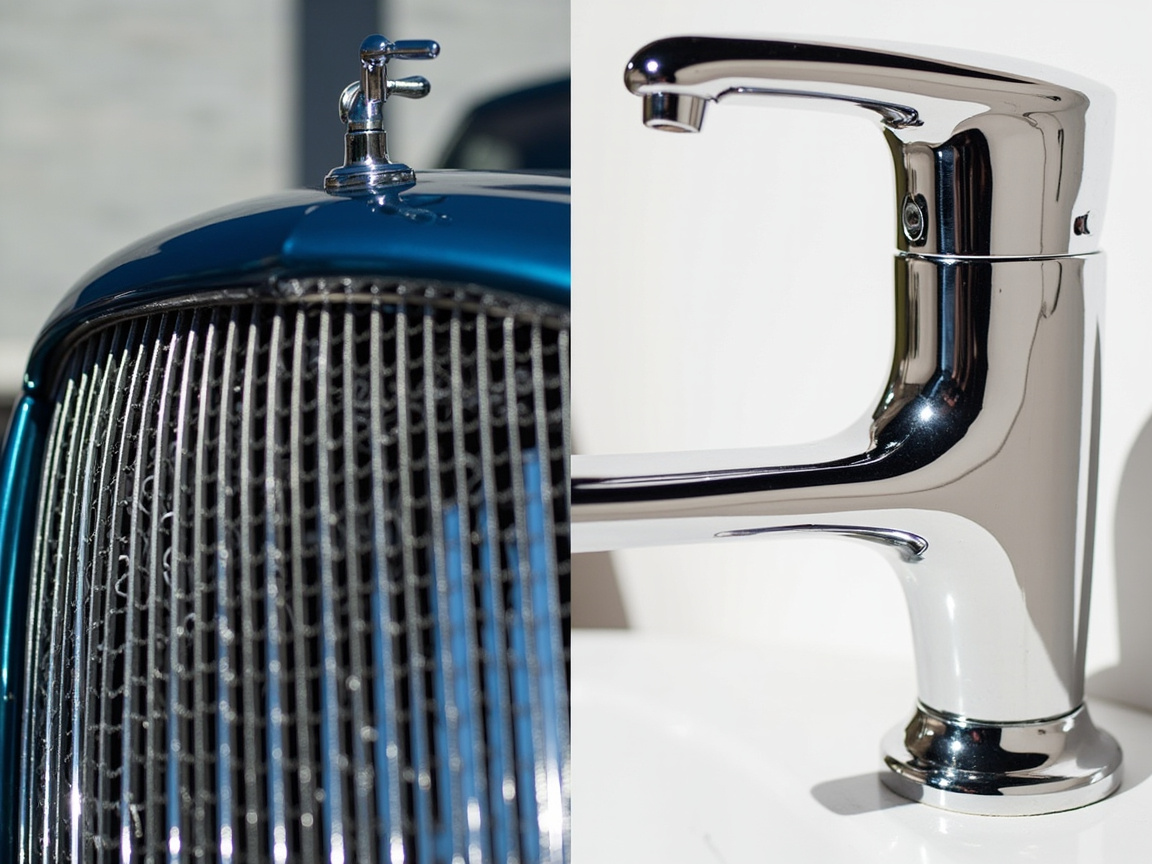
Electroplating-alternative coatings are moving in three directions. First, de-chromization and water-based: mirror silver paste and clear coat shift to water-based/high-solid, VOC continuously drops. Second, "more like true metal": through alloy target PVD and dyed topcoat, produce champagne gold, gunmetal, rose gold, and other multi-color true metallic feels, approaching electroplating's color library. Third, thinning and flexibility: adapt to 3C thin-wall parts and bendable substrates, topcoat moves to flexible, low-film-thickness. Future "spray chrome alternative" and "PVD companion" will coexist long-term, serving the market by performance and cost tiers.
Deeper, the industry is also exploring "one-step mirror" and "UV chrome alternative" to further reduce consumption: one-step tries to merge silver base and clear coat to reduce interlayer risk, UV route replaces thermal cure with radiation cure to lower energy and raise tempo. These technologies are still climbing yield, but the direction is clear — reproducing electroplating's "single-layer mirror" simplicity with more eco-friendly spray/radiation curing.
IX. Raw Material One: Vacuum Plating Basecoat Resin System
PVD companion basecoat resin must meet several seemingly contradictory requirements: high adhesion on substrate, self-high-flatness and sandable, low outgassing after cure, strong bonding with evaporated metal film, and tolerance of subsequent topcoat solvent. Common systems are thermoset acrylic amino baking paint, saturated polyester/polyurethane, special epoxy, and UV-curable acrylate. Among these, "low outgassing" is the soul of PVD basecoat — small-molecule additives, unreacted monomers, and residual solvent in resin all escape under vacuum, lightly contaminating the chamber, or severely generating micron-scale bubbles or fog spots on the metal film. Thus PVD basecoats generally use high-purity, high-crosslink-density resins, and strictly control cure degree (often fully baked before chamber entry).
Chemically, thermoset acrylic/amino systems are the most mature PVD basecoat due to dense crosslinking and low residue; polyurethane has better flexibility and chemical resistance, suited for impact-demanding parts; UV basecoat is fast but harder to control outgassing, mostly for capacity-sensitive electronic parts. Kexin New Materials' Foshan line matches different basecoat resins to different substrates: soft acrylic for plastic, epoxy/polyester for metal, to lock PVD layer adhesion and mirror purity at the source.
X. Raw Material Two: Metallic Effect Pigments
Core pigments for mirror feel are three types. First is Vacuum Metallized Pigment (VMP): high-purity aluminum deposited on PET film under vacuum to form a mirror aluminum layer, then stripped and crushed into extremely thin flakes, single-flake reflectance near whole aluminum foil, the main force of "mirror silver base." Second is silver glass flake: glass-based with metal plating or itself high-refractive glass flake, corrosion-resistant, non-oxidizing, suited for sanitary and exterior walls with high weathering and chemical demands. Third is copper-zinc alloy flake, stainless steel flake, for special hue or conductivity needs.
Key pigment parameters include particle size distribution (narrower = easier parallel orientation), aspect ratio (larger = more parallel, stronger reflection), surface treatment (silane/fatty acid coating affects dispersion and antioxidant). Ordinary "sparkle" aluminum powder has wide size and chaotic orientation, only making star-flash; mirror silver paste relies on narrow distribution + ultra-thin + orientation aids to minimize scattering. Understanding this explains why "mirror silver base" cannot use ordinary silver powder.
Besides aluminum, stainless steel flake is inert, non-oxidizing, acid-alkali resistant, used in strong corrosion environments (e.g., chemical equipment decoration, outdoor signage), but higher cost and slightly lower reflection than aluminum. Mica titanium (pearlescent) pigment can produce metallic iridescence but not mirror silver, only used in "fantasy metallic" routes. Conductive silver paste (flake silver powder) is used for 3C and automotive electronic parts needing EM shielding — in chrome alternative systems it is a "function overlay" role: both bright and conductive, often as silver base blend or independent conductive layer. When selecting pigments also see "metal content" and "solvent compatibility": high metal content boosts reflection but thickens, needing suitable carrier resin to balance applicability. Kexin New Materials scores pigments on "reflectance/corrosion resistance/cost/function" four axes in its formula library, avoiding guesswork.
XI. Preparation and Orientation Mechanism of Mirror Silver Base
The essence of preparing mirror silver base is "letting aluminum flakes lie parallel." Process relies on three synergies: first, solvent gradient — use slow-dry solvent to keep film open, flakes settle to bottom under gravity and shear and parallel to substrate, then medium-fast solvent to set; second, orientation aids (e.g., specific acrylic microgel, cellulose ester) form a "gel network" on film surface to flatten flakes; third, spray parameters — low viscosity, low flow, multi-pass thin coat, avoid high-speed airflow standing flakes up.
If flakes stay randomly upright, light scatters all directions, giving "metallic matte"; if largely parallel, incident light reflects by mirror law, giving clear reflection. This is the watershed between spray chrome alternative and metallic flake paint. Industry quantifies with "flop" and "20° specular gloss": mirror silver base 20° gloss can reach 90+, while ordinary silver paint often below 70. The formulator's job is to push these two numbers as high as possible without sacrificing adhesion and application window.
Quantitatively, "flop" refers to the variation amplitude of brightness/hue with the observation angle. Mirror silver base aims for "low flop, high specular", meaning it looks bright and does not turn gray from both front and side views; whereas ordinary flake paint pursues "high flop" to create angle-dependent color-shifting brilliance. Apart from gloss meters, characterization tools include multi-angle colorimeters (e.g., 15°/45°/110° three-angle) and DOI image clarity meters, the latter directly scoring "how mirror-like" using the clarity of a slit image. When developing silver base, Kexin New Materials adopts "20° gloss ≥ 88, DOI ≥ 80, Δflop ≤ a certain threshold" as release criteria, turning the mirror feel from subjective review into comparable data, and facilitating cross-batch traceability.XII. Formulation Design Principles and Solvent Gradient
In formulation design, mirror silver base should have "extremely clear resin, extremely bright pigment, and extremely particular solvent". Resins are mostly aliphatic polyurethane or high-clarity acrylic to avoid aromatic yellowing; pigments are narrow-distribution mirror aluminum paste, with addition controlled at 6%-14%—too much disrupts parallelism, too little gives insufficient reflection. The solvent gradient is the most subtle part of this layer: usually formulated as a three-stage combination of "slow-drying main body + medium-drying regulator + small amount of fast-drying to prevent sagging", with the evaporation curve matching the time window for aluminum flake settling and orientation.
The isolation layer formulation is the opposite, requiring "inert, dense, thin"—commonly a highly crosslinked, low-swelling varnish (such as two-component polyurethane or UV varnish) sprayed thin at 5-8 microns, sealing the silver base without being bitten by the topcoat above. The mirror clear coat layer should be "high-clarity, high-build, weather-resistant": aliphatic polyurethane or acrylic, with sufficient UV absorbers (such as benzotriazole class) and hindered amine light stabilizers (HALS), some also adding nano silica for scratch resistance. The overall formulation logic is "hard below, tough above; clear below, protective above", with clear responsibilities for each layer.
XIII. Full Process of Vacuum Deposition (PVD) Technology
PVD is mainly divided into evaporation plating and sputtering plating. Evaporation plating uses resistive heating or electron beam to melt and evaporate aluminum wire/chromium pellets, and the vapor condenses into a film on the workpiece surface—fast, but with low high-purity metal utilization; sputtering plating uses argon ions to bombard the target and sputter out metal atoms for deposition—dense film, strong adhesion, can plate alloys, but with high equipment and cycle cost. Regardless of type, the chamber must be pumped to high vacuum of 10^-4 to 10^-5 mbar, otherwise residual gas will oxidize and darken the metal film.
Before entering the chamber, workpieces are mounted on fixtures to ensure no shielding and uniform heating; the distance between evaporation source and workpiece, and the workpiece rotation speed determine film thickness uniformity. Deposited metal film thickness is usually between 0.05-2 microns—too thin fails to cover the base color, too thick wastes and easily cracks. Workpieces with aluminum film plated appear as highly reflective silver mirror, but the bare film is extremely brittle, afraid of scratches and oxidation, and must be sprayed with topcoat out of the chamber as soon as possible. When cooperating with PVD factories, Kexin New Materials often aligns the in-chamber curing curve of the primer with the chamber cycle of the plating factory, reducing film surface pollution caused by intermediate storage.
In process details, the evaporation rate of evaporation plating, chamber base vacuum, and workpiece rotation linear speed jointly determine the film's "density" and "reflectivity". Insufficient base vacuum causes residual oxygen and water vapor to form alumina/aluminum hydroxide on the aluminum film, visibly darkening and hazing; uneven rotation causes film thickness streaks. Although sputtering plating has expensive equipment, the film is denser and can plate alloys (such as chromium target for direct chrome-like color, titanium target for gunmetal gray), eliminating the need for dyed topcoat, with a more "real" texture. In recent years, "multi-arc ion plating" has emerged to improve adhesion, suitable for high-wear parts. For coating manufacturers, metal films from different plating methods have different surface energies, and the topcoat adhesion formulation must be adjusted accordingly—this is exactly why matching coatings need to "know the plating to formulate".
XIV. Function and Application of PVD Primer
The PVD primer has three tasks: filling micro-defects of the substrate (providing a mirror base), bridging substrate and metal film (high adhesion), and low outgassing (not polluting the chamber). Application requires "thin, flat, clean": film thickness generally 10-20 microns, too thick amplifies internal stress, too thin fails to cover defects; the surface must be sanded or self-leveled to mirror-grade flatness (because the metal film faithfully "copies" underlying flaws); curing must be complete, commonly 60-80℃ baking for 30-60 minutes or even higher, ensuring no residual releasable substances.
The cleanliness of the primer is often underestimated: workshop dust, fingerprints, and mold release residue all become outgassing sources or pollution points under vacuum, manifesting as plating pinholes and local hazing. Therefore, PVD supporting production lines require cleanliness close to the electronics industry. Mature contract factories in Foshan use dust-free transfer and time-limited chamber entry for primed workpieces, reflecting this logic.
XV. Function and Formulation of PVD Topcoat
The PVD topcoat is the "moat" of the entire route: it seals the fragile metal film, providing weather resistance, scratch resistance, chemical resistance, and hue fine-tuning. The topcoat must not contain components that corrode the aluminum film (such as high acid value resin, halogen solvents), otherwise the metal film discolors or falls off. Formulations mostly use aliphatic two-component polyurethane or UV-curable acrylate, film thickness 20-40 microns, with UV absorbers and HALS, and if necessary, colorants for "dyed metallic feel" such as champagne, gunmetal, rose gold.
Topcoat application should be "gentle"—avoid high shear damaging the metal film; commonly low-flow multi-pass spraying or curtain coating, and curing temperature must not be too high (thermal expansion difference between aluminum film and substrate causes wrinkling). The weather-resistant topcoat is the main actor: without it, the bare aluminum film oxidizes and loses gloss in months. In sanitary ware PVD projects, Kexin New Materials additionally passes CASS and thermal cycling on the topcoat, ensuring faucets do not delaminate in humid bathroom environments for years.
XVI. Single-Stage and Multi-Stage Systems for Sprayed Chrome-Like
In the industry, "sprayed chrome-like" has simplified and luxury types. The simplified version is "single-can mirror silver paint + varnish" two coats, relying on high-quality mirror silver paste for direct effect, suitable for parts with medium DOI requirements, high yield, low cost. The luxury version is the aforementioned "primer—silver—isolation—clear" four coats, with highest DOI and purity, used in demanding scenarios like cosmetics and automotive emblems. There is also "single-component fast-dry" for small-batch prototyping, and "two-component" for mass production with high durability requirements.
Choosing which system is essentially a triangle trade-off of "yield/cost/texture". Kexin New Materials usually defines the system level by customer needs first, then reverse-designs each layer's formulation and SOP, rather than forcing the same paint on all parts—this is also why the Foshan team can stably replicate the mirror chrome feel. For new customers, they suggest first going through the four-coat luxury version to verify the upper limit of appearance, then compressing to the two-coat simplified version based on yield and cost.
XVII. Process Parameters: Viscosity, Film Thickness, and Curing
The process window for sprayed chrome-like is narrow, and parameters must be quantified. In viscosity, mirror silver base with Ford cup #4 is mostly 12-18 seconds (about Coating-4 cup 20-30 seconds); too thick gives poor aluminum flake orientation, too thin sags; varnish viscosity is slightly higher for build. Film thickness is a key control point: primer 10-20 microns, mirror silver base 8-15 microns (too thick reduces reflection due to disordered aluminum flake stacking), isolation layer 5-8 microns, mirror clear coat 25-40 microns, total film thickness about 50-80 microns.
In curing, two-component polyurethane is air-dried or force-dried at 60℃, UV varnish requires precise light intensity and energy (e.g., 800-1200 mJ/cm²). Temperature loss of control directly reflects on appearance: too high baking temperature yellows the silver base resin, too low gives insufficient crosslinking and weak interlayer force. Between each layer, "interlayer interval" must be controlled—too short causes solvent mutual dissolution and biting, too long attenuates interlayer adhesion, usually specifying 5-15 minutes flash-off before next coat. These numbers must be written into the SOP rather than relying on the master's feel.
Spraying hardware parameters must also be quantified: spray gun nozzle mostly 1.2-1.6 mm (silver base finer, varnish coarser), atomization pressure 2-4 bar, gun distance 15-25 cm, chain speed determines single-coat film thickness; fan and overlap rate suggested at 1/2 to 2/3 overlap for uniformity. Spray booth temperature 23±2℃, relative humidity 60±10% is a common window; too high temperature/humidity slows solvent evaporation causing sagging, too low causes orange peel and static dust attraction. For mirror products, even "oil and water content in compressed air" must be filtered to minimal, otherwise oil spots become mirror black spots. Kexin New Materials' Foshan line connects the above parameters to MES with alarm lines, automatically stopping the line on any deviation, minimizing human fluctuation—this is also the key to making DOI a stable number rather than luck.
XVIII. Spraying Equipment and Coating Line Layout
Sprayed chrome-like requires equipment focused on "clean + stable". Spray booths need class 10,000 to 100,000 cleanliness (at least dust removal), because dust directly becomes mirror highlight defects; spray guns mostly fine-atomization HVLP or electrostatic rotary bell, ensuring aluminum flake parallelism without splashing; conveyor line must be constant speed, constant temperature, avoiding film thickness fluctuation. PVD supporting line additionally needs vacuum plating machine and pre-chamber clean room.
Typical layout: pre-treatment (degreasing/plasma) → primer spraying → leveling oven → mirror silver base spraying (multi-pass) → isolation layer → mirror clear coat → curing → inspection. If PVD is included, insert vacuum plating after primer curing, then return to topcoat. Kexin New Materials' Foshan line connects each section's temperature/humidity, chain speed, spraying parameters to MES for batch traceability, critical for mirror products—a slight parameter drift drops the whole batch's DOI.
XIX. Quality Control (QC): Adhesion and Reflectivity
QC for mirror products is stricter than ordinary paint. Adhesion uses cross-cut method (GB/T 9286 / ISO 2409) and tape test; PVD projects also need boiling water and thermal cycling to see interlayer delamination. Reflectivity and DOI are appearance cores: use 20°/60° specular gloss meter for gloss, DOI meter (or imaging clarity) to quantify "how mirror-like"; color difference controlled by spectrophotometer for ΔΕ, avoiding batch-to-batch darkening or color shift.
More professional also measures "reflection curve"—a true mirror should have a sharp reflection peak at the specular angle, while matte silver is a broad diffuse peak. This objectively distinguishes mirror silver base from ordinary silver powder. Kexin New Materials generally establishes "gloss lower limit + DOI lower limit + color difference upper limit" three thresholds for delivered parts, turning subjective "chrome-like or not" into inspectable numbers, which is also the root cause for long-term cooperation with sanitary and automotive customers.
Besides appearance, QC must watch "film thickness distribution"—using eddy current or X-ray thickness gauge to spot-check primer, silver base, varnish layers, ensuring total film thickness and layer ratio within window; and "hardness and wear"—pencil hardness (GB/T 6739) and Taber abrasion for topcoat scratch resistance. For PVD parts, also "cross-cut + boiling water" to verify metal film false adhesion; this destructive sampling is costly but necessary to intercept the hidden danger of "bright appearance but falls off when scratched". Upgrading QC from "a glance" to "digital gate" is a hard condition for replacing electroplating to enter major customer systems.
XX. Corrosion and Weathering Tests: CASS and Salt Spray
Metallic-feel coatings most fear "rust" and "aging". Neutral salt spray (NSS, GB/T 10125 / ASTM B117) tests basic corrosion resistance; Copper-accelerated acetic acid salt spray (CASS) is stricter, commonly used in sanitary ware and automotive, simulating chlorine-containing humid environment. If PVD aluminum film has micropores in topcoat, CASS will start white rust diffusion from pores, so topcoat density directly determines CASS duration (high-end sanitary ware often requires 24-96 hours no abnormality).
Weathering uses xenon arc aging (GB/T 16422) with UV absorbers to verify yellowing and gloss loss, and thermal cycling (e.g., -30℃ to 80℃) to verify film and substrate expansion match. These tests are not "icing on the cake", but hard thresholds for replacing electroplating to pass OEM/sanitary brand access. Foshan production lines insist on batch retention for accelerated aging on automotive and sanitary parts, to make "electroplating replacement" certifiable rather than merely "looks like".
XXI. Troubleshooting: Orange Peel
Orange peel is the most frequent defect in sprayed chrome-like, appearing as orange-skin-like ripples on the surface, destroying mirror flatness. Three causes: viscosity too high preventing leveling; poor atomization (low pressure, small nozzle, far gun distance) causing large paint drops; solvent flash-off too fast, film surface-dries before leveling. Countermeasures in order: lower viscosity, change to larger nozzle/adjust pressure, use slower solvent or add leveling agent (such as silicone/acrylic), and control booth temperature not too high.
Note orange peel is often confused with "aluminum flake orientation": orange peel is macroscopic undulation, poor orientation is microscopic scattering, their superposition makes mirror neither flat nor bright. Troubleshoot by first using 60° gloss + visual ripple to distinguish, then treat accordingly. Kexin New Materials specifies in SOP the silver base application environment temperature/humidity window (e.g., 23±2℃, humidity 60±10%), to suppress orange peel from the source.
XXII. Troubleshooting: Hazing
Hazing means the mirror becomes gray-white, not clear, the second most common defect in sprayed chrome-like. Main cause is "varnish biting silver base"—topcoat solvent dissolves or swells isolation layer/silver base resin, disturbing parallel aluminum flakes; or missing isolation layer directly bites silver base. Secondary: high environmental humidity causing slight hydrolysis on silver paste surface, or primer outgassing forming fog at interface. Countermeasures: add isolation layer, switch to low-swelling mild varnish, control humidity, fully cure primer.
For PVD route, hazing may also come from chamber residual oxygen oxidizing aluminum film, or topcoat corroding aluminum film. Diagnose by hazing location: uniform whole-surface hazing is mostly formulation/solvent issue, local hazing is mostly pollution or outgassing point. Establishing "mirror clarity baseline" quickly finds early hazing, avoiding whole batch scrap. Foshan team's experience is isolation layer rather thick than thin (within acceptable DOI), the safest insurance against biting.
XXIII. Troubleshooting: Adhesion Failure
Adhesion failure manifests as cross-cut paint loss, boiling blistering, interlayer peeling. Root causes are mostly at interfaces: substrate pre-treatment unclean (oil/mold release), primer under-cure, excessive interlayer interval forming weak boundary layer, PVD primer outgassing causing false metal film adhesion. Countermeasures: strengthen pre-treatment (plasma/sanding/degreasing), standardize curing curve, control interlayer window, select low-outgassing resin.
Especially note "PVD film false adhesion": if primer not fully cured, outgassing under vacuum lifts the metal film, appearance normal mirror but falls off when scratched, very hidden. Therefore PVD support must have "pre-chamber cure confirmation". Kexin New Materials writes this into work instructions and requires recording oven temperature curve, using process control to replace post rework.
XXIV. Automotive Industry Application Details
Automotive is one of the largest single markets for chrome-like coatings. Intake grilles, window frame trims, door handles, tail emblems, interior trim panels extensively use sprayed chrome-like or PVD support, to replace traditional chrome-plated parts, reduce weight and meet ELV chromium-free requirements. Technically, automotive parts value weather resistance (5-10 years no gloss loss), scratch resistance, thermal cycling and stone impact, often requiring OEM-specific cyclic corrosion and xenon standards.
Sprayed chrome-like on automotive exterior must balance "bright" and "durable": too thin mirror easily damaged, too thick easily cracks. PVD support is favored on small high-value parts like emblems and letter marks, for true metal texture and conductivity (some marks need antenna integration). Kexin New Materials supplies systems to many Tier2 trim factories in Foshan and Pearl River Delta; their approach is "certify first then supply" per OEM standards, achieving both mirror appearance and weather resistance before mass production.
XXV. Sanitary Ware Industry Application Details
Sanitary faucets, showerheads, bathroom accessories contact water, cleaners and hand sweat long-term, with extremely high corrosion and chemical resistance requirements, making it the main battlefield for PVD support (also common mid-range sprayed chrome-like). Technical requirements focus on CASS duration, cleaner resistance (such as chlorine toilet cleaner), thermal cycling no cracking. Topcoat density and metal film integrity determine lifespan, so sanitary parts mostly use "PVD aluminum/chromium film + thick topcoat" structure.
Unlike automotive, sanitary parts more fear "pitting corrosion"—topcoat micropores become corrosion entry under CASS. Countermeasures: multi-layer thin topcoat for density, primer sealing, if necessary a barrier layer. Kexin New Materials designs CASS from 24h toward 96h target in sanitary projects, and tests different cleaner immersions, accumulating a formulation database for bathroom environment, which is its confidence to stably supply in Foshan sanitary cluster.
XXVI. Electronics 3C Industry Application Details
Phone middle frames, camera rings, logos, laptop hinge covers are typical PVD applications in 3C, pursuing "premium metal feel + thin/light + no delamination". 3C parts are thin-walled, small, picky on appearance, with extreme DOI and hue consistency requirements, often needing dyed metal (gunmetal, champagne, space gray). Difficulty is thin-wall thermal deformation and film internal stress; primer must be thin and tough, topcoat flexible low film thickness.
Sprayed chrome-like in 3C is mostly for non-structural decorative pieces and local large-shell parts, PVD dominates middle frames and logos. Both require extremely high line cleanliness and batch consistency. Kexin New Materials cooperates with South China electronics customers by making film thickness tolerance, color difference ΔE, adhesion online full-inspection items, adapting to 3C "zero-defect appearance" pace—also forcing its Foshan line to complete automation and digitalization upgrade.
3C parts have two special demands: one is "multi-color metal unity"—same model's middle frame, camera ring, logo must be same color, requiring dyed topcoat colorant batch lock and cross-part ΔE control; two is "signal no shielding"—if metal film continuous and too thick weakens antenna, solved by local disconnection, conductive paint avoidance or non-continuous spray pattern. These are engineering points where chrome-like coatings must coordinate with whole-device design in electronics, cannot be solved by coating formulation alone.
XXVII. Decorative and Home Application Details
Lighting, furniture hardware, photo frames, gifts, shoe accessories, cosmetic bottle caps form the decorative category. These parts have low functional requirements, high "chrome-like" requirements, batch and cost sensitive, natural ground for simplified sprayed chrome-like. Cosmetic caps and high-end gifts even require "near zero-defect mirror", returning to four-coat luxury. Home hardware values hand-sweat and daily wipe resistance.
Hidden difficulty in decorative projects is "hue trend"—champagne gold, rose gold, gunmetal and other fashion colors change yearly, formulation must switch fast. PVD via dyed topcoat is most flexible, sprayed chrome-like can directly tint varnish with colorant. Kexin New Materials' Foshan line keeps small-batch flexible production for such multi-variety small orders, using rapid prototyping to convert "trendy metal color" into producible formulation, shortening customer time-to-market.
XXVIII. Cost Analysis: Chrome-Like vs Electroplating vs PVD
Cost must be seen from "total cost" not just material. Chrome electroplating seems cheap in material, but with fixtures, stripping, chromium wastewater treatment, hazardous waste disposal and compliance cost, unit area total cost is high and rising yearly. Sprayed chrome-like material (mirror silver paste expensive) plus multi-layer labor/equipment, unit cost medium, but substrate unlimited, yield controllable, no three-waste pressure, comprehensive advantage. PVD equipment investment huge, chamber utilization low, per-piece cost highest, but true metal texture brings high premium, suitable for high-value parts.
Take automotive grille: traditional electroplating fixtures and three-waste push hidden cost up, sprayed chrome-like generalizes line to lower threshold; take sanitary faucet: PVD expensive equipment but high premium and avoids electroplating compliance risk. Kexin New Materials' selection advice to customers is usually "choose route by per-piece value and volume"—high-volume decorative choose sprayed chrome-like, high-value small parts choose PVD, rather than blindly chasing lowest material price.
XXIX. Environmental and Heavy Metal Regulation Limits
One core driver of electroplating replacement is regulation. EU RoHS limits hexavalent chromium in electrical/electronic products; REACH strictly authorizes chromium compounds; automotive ELV directive requires vehicle recycling no heavy metals; domestic "Water Pollution Prevention Law", "Soil Pollution Prevention Law" and heavy metal reduction plan continuously tighten chromium emissions. Additionally, many local environmental inspections limit approval for electroplating parks, making electroplating capacity scarce and cost rising.
Chrome-like coatings contain no hexavalent chromium, no plating liquid discharge, naturally fit above regulations; but note: some mirror silver paste contains aluminum powder with dust explosion risk needing explosion-proof; water-based is further VOC reduction direction; PVD though vacuum no liquid waste, but target and chamber maintenance have small solid waste. Kexin New Materials manages dust and solvent recovery by green factory standard in Foshan line, making "compliance" a system capability rather than inspection response, important for EU-export and domestic brand customers.
In terms of specific limits, RoHS sets the threshold for hexavalent chromium at 0.1% (1000 ppm) for homogeneous materials, and requires Cr(VI) test to be negative; REACH requires registration and authorization for specific chromium compounds; domestic "GB 30981 Anti-corrosion Coating for Building Steel Structures" and various local VOC emission standards set upper limits for industrial coating VOC, forcing mirror systems to shift to water-based / high-solid. For export-oriented enterprises, they also need to pay attention to California Proposition 65 and various countries' packaging / water-contact regulations. Pre-positioning these "compliance checklists" into formula design can avoid recalls after market launch—replacing electroplating is not just a technical issue, but also a regulatory adaptation issue.
30. Supply Chain and Industrialization Status
The supply chain of electroplating-imitating coating is divided into three layers: upstream pigments (mirror aluminum paste, glass flakes, target materials) are mostly supplied by professional metal pigment and vacuum material manufacturers; midstream resins and formulations are completed by coating enterprises (such as Kexin New Materials); downstream are coating subcontractors and brand terminals for electroplating replacement. In recent years, domestic substitution of upstream mirror aluminum paste has accelerated, and cost reduction has promoted the popularization of spray chrome-imitating; PVD equipment localization has also lowered the supporting threshold.
The industrialization bottleneck mainly lies in "yield" and "consistency"—mirror products have zero tolerance for defects, and any parameter drift becomes visible. Therefore, enterprises with SOP-based and data-driven capabilities are more likely to win. As a manufacturing cluster, Foshan has both sanitary ware, home appliances, 3C terminals, and mature subcontracting and coating support, forming a "terminal—coating—coating" short chain, which is conducive to the rapid iteration of electroplating-imitating coatings. Kexin New Materials relies on this geographical and industrial advantage to establish rapid prototyping to mass production capabilities.
31. Standards and Certification System
Common industry standards include: adhesion GB/T 9286 (ISO 2409), gloss GB/T 9754 (ISO 2813), pencil hardness GB/T 6739, salt spray GB/T 10125 (ASTM B117/CASS), xenon lamp aging GB/T 16422, color difference ISO 11664 (CIE Lab). Automotive and sanitary ware have additional OEM / brand internal standards, which are often stricter than national standards (such as cyclic corrosion, specific cleaner immersion).
For "electroplating replacement" products, certification is not only compliance, but also a ticket to enter the supply chain of major customers. For example, automotive parts must pass IATF 16949 system and OEM material approval; sanitary ware exported to Europe often requires WRAS/ACS and other water-contact certifications; 3C follows brand appearance and reliability specifications. Kexin New Materials operates in Foshan according to IATF and ISO 9001, and internalizes the above tests into incoming and outgoing inspections, enabling "chrome-imitating / PVD supporting" to directly meet stringent customer access.
32. Water-based and High-solid Routes
To reduce VOC, mirror silver base and varnish are evolving toward water-based, high-solid, and solvent-free UV. Water-based mirror silver paste is difficult: the high surface tension of water makes it hard for aluminum flakes to lie parallel, and aluminum reacts with water to produce gas easily; it requires silane-coated aluminum flakes + dedicated film-forming aids + low-shear dispersion. High-solid relies on low-viscosity resins to increase solid content and reduce solvent, with a narrower application window requiring precise temperature control. UV route has low energy consumption and fast cycle, but aluminum film / pigment is sensitive to light-curing volume shrinkage, prone to cracking.
The value of water-based is not only environmental protection, but also export compliance (VOC regulations of multiple countries). However, current water-based mirror systems still have high cost and slightly inferior DOI to solvent-based, mostly used in mid-range decorative parts. Kexin New Materials has reserved laboratory formulations for water-based mirror silver base, and conducted small-batch verification on VOC-sensitive export orders—the direction is clear but the pace is pragmatic—not trading yield for eco-labels.
33. UV Curing Chrome-imitating System
UV curing replaces thermal baking with light curing, with advantages of low energy consumption, fast cycle (seconds), and no solvent emission, suitable for large-volume thin parts. Difficulties are: mirror aluminum flakes reflect / scatter UV affecting light penetration, making thick film hard to fully cure; volume shrinkage causes interlayer stress; aluminum flakes may catalyze side reactions under UV. Therefore UV chrome-imitating mostly uses "UV base + UV top" or "thermoset base + UV top" hybrid, and controls film thickness and light intensity energy matching (e.g., 800-1500 mJ/cm² multi-lamp curing).
UV route has good prospects on cycle-sensitive parts such as 3C decorative sheets and cosmetic caps. Kexin New Materials' Foshan trial line has used UV topcoat to improve PVD part capacity, the core is selecting low-shrinkage, aluminum-film-inert light-curing resin, and writing the energy curve into the process card. For factories wanting further energy reduction, UV is a better next step than thermal baking, but the premise is solving the curing uniformity of the aluminum flake system.
34. Adaptation to Flexible Substrates and Thin-wall Parts
Flexible substrates such as 3C thin-wall, bendable TPU/TPE, soft automotive interior require the coating to be "bendable without cracking". Ordinary hard mirror system cracks white upon bending, requiring flexible resins (such as aliphatic polyurethane elastomer, flexible acrylic) for base and top, and reducing film thickness, increasing elongation. The difficulty is flexible resins often have slightly lower DOI and weaker scratch resistance, requiring trade-off between "flexible" and "bright".
Process-wise, flexible parts need low-temperature curing to avoid substrate deformation, and spray chrome-imitating multi-layer should be thinner; PVD is limited on flexible parts (thin film brittle under vacuum, cracks easily on bending), mostly using spray chrome-imitating flexible version. Kexin New Materials has developed flexible mirror systems for shoe materials and flexible trims, the key is modulus matching of basecoat and topcoat to substrate, taking "100,000 bends without cracking" as acceptance criterion, expanding the application boundary of electroplating-imitating on elastomers.
35. Kexin New Materials Foshan Production Line Case
Kexin New Materials (kexinMaterials) Foshan base has made "spray chrome-imitating" and "PVD supporting" into two switchable production lines: one general multi-layer spray line serving automotive trims, home appliance panels and decorative parts; one clean PVD supporting line for sanitary ware and 3C. Its methodology is "three-layer lock"—lock basecoat resin and substrate matching, lock silver base directional solvent gradient, lock topcoat weather-resistant formulation, then write these into customer-specific SOP and MES parameters.
A typical case is a PVD replacement project for a leading South China sanitary ware factory: the original electroplating line was restricted by environmental approval, Kexin team used "epoxy primer (low outgassing) + vacuum aluminum plating + two-component polyurethane topcoat (with HALS/UV absorber)" structure, extending CASS from customer-required 24 hours to 72 hours without abnormality, and stably passing thermal shock cycle, helping the customer complete the line switch from electroplating to PVD supporting. Another case is automotive grille spray chrome-imitating, through four-layer deluxe version pushing DOI close to mirror, yield from trial 70% to mass production over 95%. These cases show replacing electroplating is not relying on a single paint, but a system engineering.
36. Selection Decision and Future Outlook
Practical selection framework for readers: first ask "do you need real metal function (conductive / wear-resistant / shielding)"—if yes, then PVD supporting or keep electroplating; if no, then spray chrome-imitating. Then ask "substrate and shape"—plastic / irregular / large part choose spray chrome-imitating, small high-value cavity-compatible choose PVD. Then ask "volume and cost"—large-volume decorative go spray chrome-imitating simplified version, high-value small batch go PVD or four-layer deluxe version. Finally ask "regulation and export"—export to EU prioritize chromium-free route and prepare VOC and water-contact certifications.
Looking forward, electroplating-imitating coatings will evolve along four lines: "greener (water-based / UV / high-solid), more real (alloy target + dyed topcoat multi-color metal), thinner and more flexible (3C and elastomers), smarter (online DOI full inspection and data closed loop)". Electroplating will not disappear overnight, but in decorative and light-function fields, spray chrome-imitating and PVD supporting will become the absolute mainstream. Coating enterprises like Kexin New Materials with full-chain capabilities of "formulation + process + SOP + testing" will play a key supply role in this replacement wave. For manufacturing enterprises, establishing process and certification reserves for electroplating replacement early is both required for environmental compliance and an opportunity for product differentiation.
FAQ
Q1: Can spray chrome-imitating replace real electroplating?
In decorative and light-function scenarios it can "pass as real", saving electroplating wastewater and substrate restrictions; but it is non-conductive, not wear-resistant, and cannot replace electroplating's functions in conductivity, wear resistance, and thick coating. If conductivity or EMI shielding is needed, turn to PVD supporting or conductive coating route.
Q2: Why does chrome-imitating coating become "hazy" and not like a mirror?
Most commonly it is lack of isolation layer causing topcoat solvent to bite the silver base, or insufficient aluminum flake orientation in silver base, uneven primer, high ambient humidity causing slight hydrolysis of silver paste. Adding isolation layer, using mirror silver paste, sanding primer, controlling humidity usually solves it; PVD route also needs to check chamber residual oxygen and topcoat corrosiveness.
Q3: How to choose between PVD and spray chrome-imitating?
Need real metallic feel, conductive, high-end and workpiece can enter vacuum chamber—choose PVD supporting; need large batch, irregular, unlimited substrate, mainly decorative—choose spray chrome-imitating. High-value small parts can go PVD, large-volume decorative go spray chrome-imitating simplified version, the two can also be used in combination.
Q4: Can plastic parts be chrome-imitated?
Yes. First plasma / flame treatment, then plastic primer, multi-layer thin spray mirror system, pay attention to temperature control to avoid thermal deformation, is a mature process for 3C and automotive trims. PC needs annealing to remove stress first, PA needs baking pretreatment to prevent bubbles.
Q5: What does weather resistance of chrome-imitating coating rely on?
It relies on the outermost mirror varnish: select aliphatic polyurethane / acrylic, add sufficient UV absorber and HALS, to maintain clarity and no yellowing long-term. PVD route relies on dense topcoat to isolate the metal film from the outside, CASS and xenon lamp aging are key verifications.
Q6: Can water-based chrome-imitating achieve mirror?
Yes, but more difficult than solvent-based, requires water-based mirror silver paste and dedicated film-forming aids to control orientation and leveling, currently slightly higher cost, is the focus of water-based research. Mid-range decorative parts can already be small-batch applied, high-end mirror still mostly achieved by solvent / UV systems.
Q7: Why can't mirror silver base use ordinary silver paint instead?
Ordinary silver powder has wide particle size, random orientation, light scattered into "metal matte"; mirror silver base uses narrow-distribution ultra-thin mirror aluminum paste + orientation aid + solvent gradient to lay aluminum flakes parallel, to form clear reflection. The two differ significantly in 20° gloss and DOI, cannot substitute each other.
Q8: Why spray topcoat after PVD aluminum film?
Bare aluminum film is extremely brittle, afraid of scratches and oxidation, and has no weather resistance, loses gloss and rusts in months. Topcoat seals the metal film, provides weather resistance, scratch resistance, chemical resistance and hue fine-tuning (champagne, gunmetal gray, etc.), is the indispensable "moat" layer of PVD supporting.
Q9: Is the cost of electroplating replacement definitely lower?
Not necessarily just by material. Electroplating material is cheap but three-waste and compliance cost high; spray chrome-imitating comprehensive medium and saves three-waste; PVD equipment expensive per-piece highest but has high premium. Should evaluate by "per-piece value + volume scale + regulation" comprehensively, not just compare material unit price.
Q10: What kind of electroplating replacement solutions can Kexin New Materials do?
Kexin New Materials (kexinMaterials) Foshan base provides two types of systems: spray chrome-imitating (two-layer simplified version to four-layer deluxe version) and PVD supporting (low outgassing primer + topcoat), covering automotive trims, sanitary ware faucets, 3C middle frames, home appliances and decorative parts, and supporting SOP, testing and certification support, helping customers complete the line switch from electroplating to eco-friendly replacement.
Further Reading
- Mechanism of Metallic Effect Coatings and Aluminum Powder Orientation — Understanding metallic effect pigments is the basis of the "metallic feel" of electroplating-imitating.
- Formulation Principles of Hammer-tone and Wrinkle Coatings — Alternative route when you want "textured metal" instead of "mirror metal".
- New Energy Battery Insulation and Thermal Management Coatings — Related ideas for battery shell metallization / conductivity control.